📌 HOME FOOD Blog: tips on care, health, and nutrition for cats and dogs. 🩺 Up-to-date articles for caring pet owners ❤️
Bengal cat: breed origin, appearance, temperament, care, health, nutrition, training, living with children, and who this bright and very active cat is best suited for

When a Bengal cat appears in the home, it feels as if a small piece of the wild has settled nearby. It looks like a miniature leopard, yet it can be very affectionate, attentive, and deeply attached to people.
Bengals captivate not only with their appearance. These are very intelligent, charismatic, and active cats that do not let either themselves or their owners get bored. Their temperament combines independence, curiosity, hunting excitement, and the ability to form real friendships with people.
Below, we will look at how the breed emerged, what the Bengal cat looks like, what temperament it has, how to care for it properly, what to feed it, how to train it, and who it suits best.
Brief breed profile
| Origin | USA, 1960s–1970s; a hybrid of the Asian leopard cat and domestic breeds |
| Other name | Bengal Cat |
| Breed type | Shorthaired, hybrid, selectively bred |
| Size and weight | Medium to large size, approximately 4–8 kg |
| Life expectancy | On average, 12–16 years |
| Color | Spotted or marbled tabby; brown, snow, silver, golden, and other variations |
| Coat type | Short, dense, silky, often with a “glitter” effect |
| Temperament | Energetic, intelligent, confident, playful, independent, yet affectionate |
| Care | Minimal for the coat, but high demands for activity, play, and environment |
| Best suited for | Active people and families ready to devote time to interaction, movement, and training |
History of the breed’s development
The history of the Bengal cat is not simply breeding for a beautiful coat pattern, but a true attempt to combine wild aesthetics with a domestic temperament. The breed’s origins are connected with the work of American breeder Jean Mill, who wanted to create a cat with the look of a small predator but the character of a companion.
The first attempts to cross the Asian leopard cat with domestic breeds were difficult. Over time, however, kittens appeared in which exotic appearance and more stable behavior were successfully combined. Domestic cats also participated in the breed’s development, including Siamese, Burmese, and Egyptian Mau cats.
The breed was fully established in the 1990s and received its name in honor of its spotted ancestors. After that, Bengal cats quickly became popular in different countries, including Ukraine, where they came to be valued for their rare combination of wild beauty, high intelligence, and sociability.
- The Bengal cat emerged as an attempt to combine the appearance of a wild animal with a domestic temperament.
- Behind the striking coat pattern is a complex breeding history, not an accidental cross.
- Today, it is one of the best-known exotic breeds with a very recognizable appearance.
Appearance
Bengal cats truly resemble small predators. Their bodies are flexible, strong, very agile, and well muscled. They do not look heavy, but they feel like real athletes — compact, springy, and extremely coordinated.
The breed has a broad wedge-shaped head, expressive cheekbones, short ears, large oval eyes, and very lively facial expression. Eye color may vary depending on the coat color, although blue is not standard for most types except lynx points.
The Bengal’s coat is short, silky, and has a special shine often called “glitter.” This shine makes the pattern look even more impressive in the light. Colors vary: brown, snow, silver, blue, charcoal. The pattern may be spotted with rosettes or marbled.
Kittens sometimes go through “fuzzing” — a temporary darkening or blurring of the pattern that disappears around six months of age, when the coat becomes clearer and more contrasting.
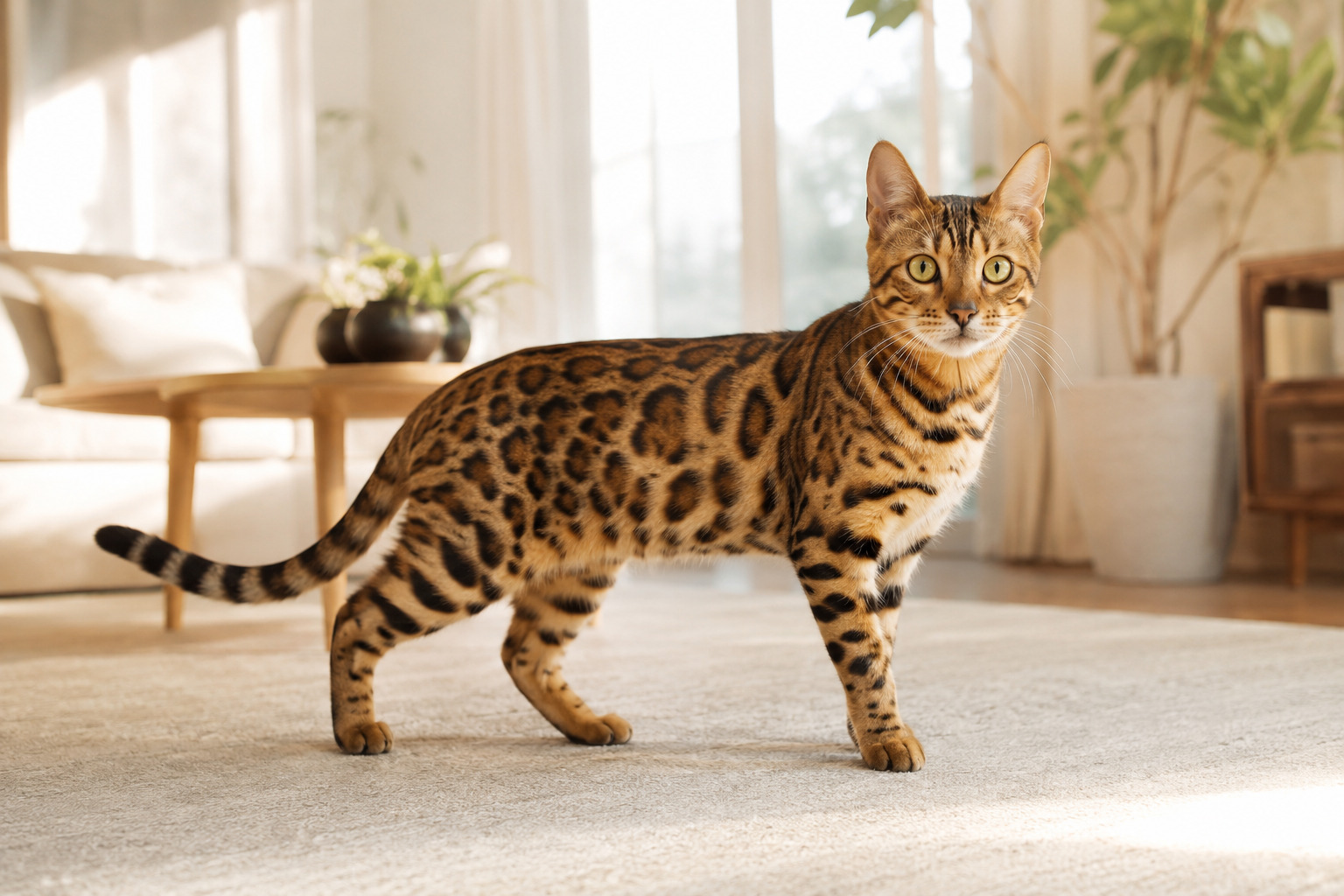

The Bengal cat captivates not only with its “leopard” pattern, but also with a sense of strength, movement, and living wild grace rarely seen in domestic breeds
Temperament and behavior
The Bengal cat is a very intelligent, energetic, and charismatic pet. Its behavior is nothing like that of a slow sofa cat: a Bengal is constantly exploring something, looking for new stimuli, watching people, checking its surroundings, and wanting to take part in household events.
These cats love communication and often “talk” a lot with their owners. Their vocal range may include purring, chirping, and quite expressive throaty sounds. They easily show when they are hungry, bored, or want play or attention.
Bengals do not like boredom. They have a strong hunting instinct, love movement, heights, complex games, and even show interest in water. They can fetch toys, learn to open doors, turn on water, quickly remember commands, and respond very well to rewards.
At the same time, they are not cats without character. These are strong, active, often dominant animals that need boundaries, rhythm, and reasonable stimulation. Without enough attention and activity, a Bengal may start misbehaving not out of spite, but from excess energy and curiosity.
Behavioral features of the Bengal cat:
- Very high playfulness even in adulthood.
- A love of jumping, high levels, shelves, and cat trees.
- A high need for movement, hunting, intellectual tasks, and interaction with people.
- Strong interest in water and the surrounding environment.
- Fast learning and a good response to treat-based training.
Health: what to pay attention to
Overall, the Bengal cat is considered a robust breed, but it has several important risk areas that owners should know about in advance. The source specifically highlights possible issues with the heart, gastrointestinal tract, and joints.
One common concern for the breed is sensitive digestion. In some Bengals, a sudden diet change, unsuitable food, or an unstable routine can trigger stomach upsets and diarrhea. That is why stable, high-quality nutrition without chaotic experiments is especially important for them.
Another significant concern is the risk of hypertrophic cardiomyopathy. This heart disease may remain unnoticed for a long time, so veterinary monitoring and, if possible, a heart ultrasound at a young age are highly desirable for a responsible owner.
To support a Bengal’s health, it is important to follow several basic principles:
- Do not change food abruptly or unnecessarily.
- Maintain a stable feeding schedule and monitor digestion.
- Provide regular physical activity, as the breed is very energetic.
- Attend preventive veterinary checkups and monitor the cardiovascular system.
How and what to feed a Bengal
The Bengal cat needs a balanced, nutritious diet that supports its activity, coat condition, muscle tone, and digestive health. High-quality dry or wet food selected according to the pet’s age, activity level, and health status is best.
Because Bengals lead a very active lifestyle, high-quality proteins, fats, vitamins, and minerals are important for them. At the same time, the cat should not be overfed: excess calories may lead to weight gain, while a lack of nutrients can affect energy, digestion, and coat appearance.
Feeding is best divided into several meals a day, and fresh water should always be available. If dry food predominates in the diet, drinking habits are especially important for a Bengal.


HOME FOOD For active — dry food for active adult cats, chicken and shrimp
Buy
HOME FOOD Hairball control — food for hairball control, turkey and berries
Buy
HOME FOOD With sensitive digestion — dry food for sterilized cats, lamb and salmon
Buy
HOME FOOD Hypoallergenic — dry food for sterilized cats, seafood mix
Buy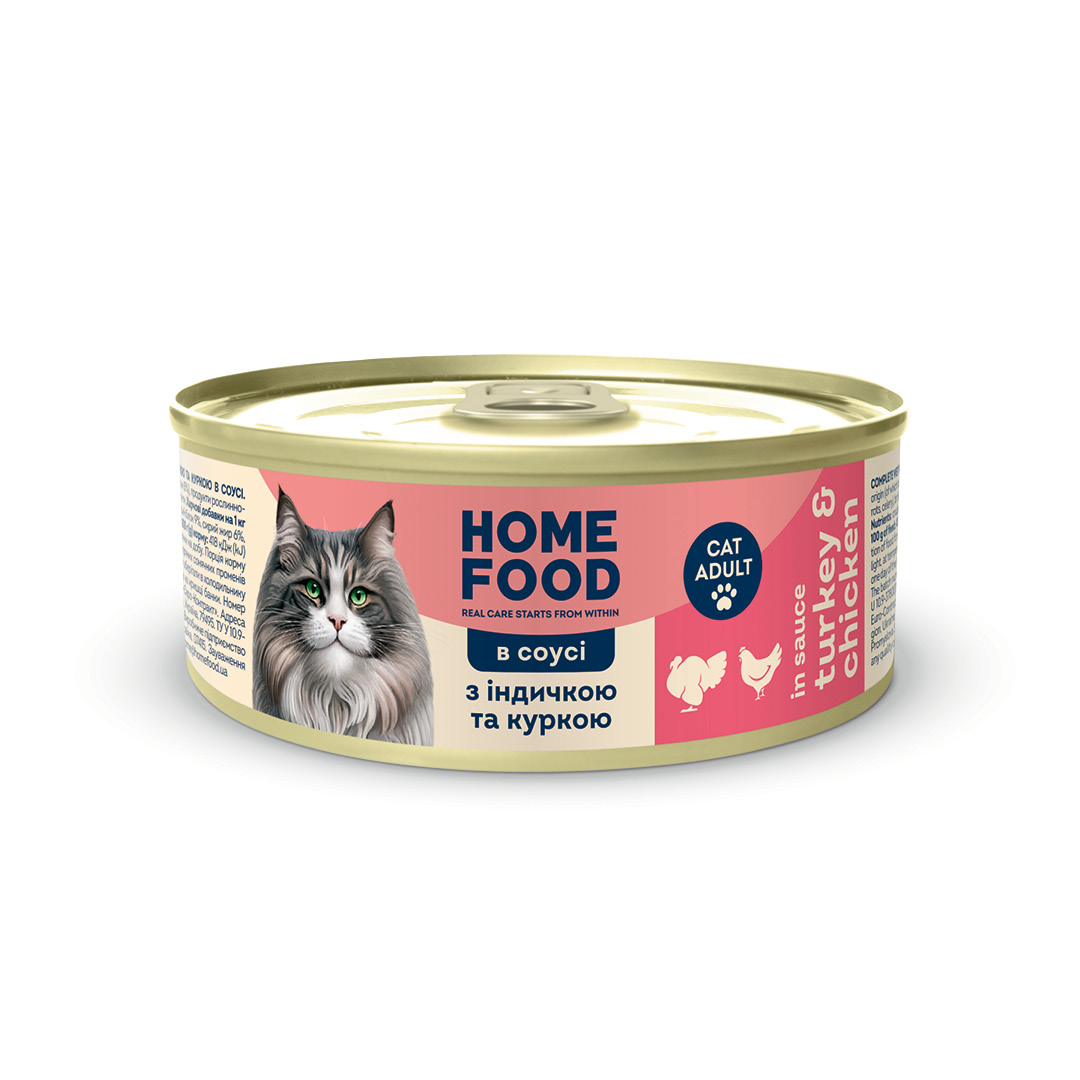
HOME FOOD — complete food for adult cats with turkey and chicken in sauce
Buy
HOME FOOD — drinking water for cats for urinary stone prevention
Buy
Training Bengals
The earlier a Bengal kitten’s socialization begins, the easier it will be to build healthy contact with it. Bengals quickly learn to trust people and respond well to a calm voice, praise, and consistency.
It is very important to show this breed the boundaries of what is allowed early on. Without this, excess energy and curiosity may turn into mischief: jumping on forbidden surfaces, checking doors, cabinets, and any new objects in the home.
Shouting and force-based methods do not work here. Short, clear signals, consistency, and positive reinforcement are far more effective. Treats, play-based learning, and repeated routines help not only train a Bengal, but also strengthen the bond with it.
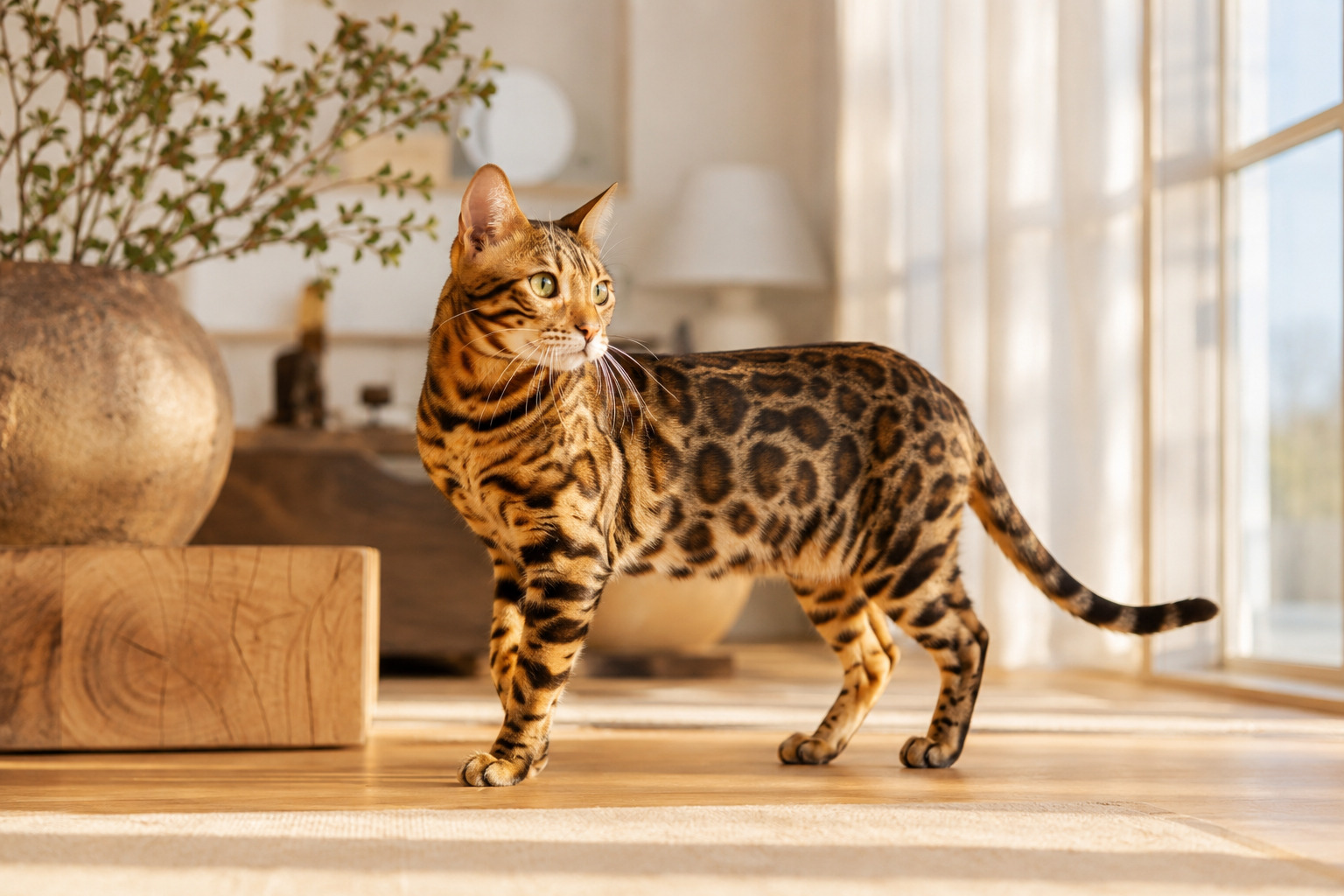
The Bengal cat needs not so much complicated care as an enriched environment, rules, games, and constant mental and physical interaction with people
Caring for a Bengal cat
Coat care for a Bengal is quite simple: brushing once a week is usually enough to remove excess hair and keep the skin and coat in good condition. But the real challenge of this breed is not grooming, but organizing the environment.
A Bengal cat needs space, height, scratching posts, tunnels, puzzles, interactive toys, and opportunities to express hunting instincts. This helps reduce the risk of destructive behavior caused by boredom.
It is also important to regularly check the ears, eyes, and teeth, trim the claws, or provide a good scratching post. If the owner plays with the Bengal, includes it in the household rhythm, and provides enough stimulation, the cat usually behaves much more calmly and harmoniously.
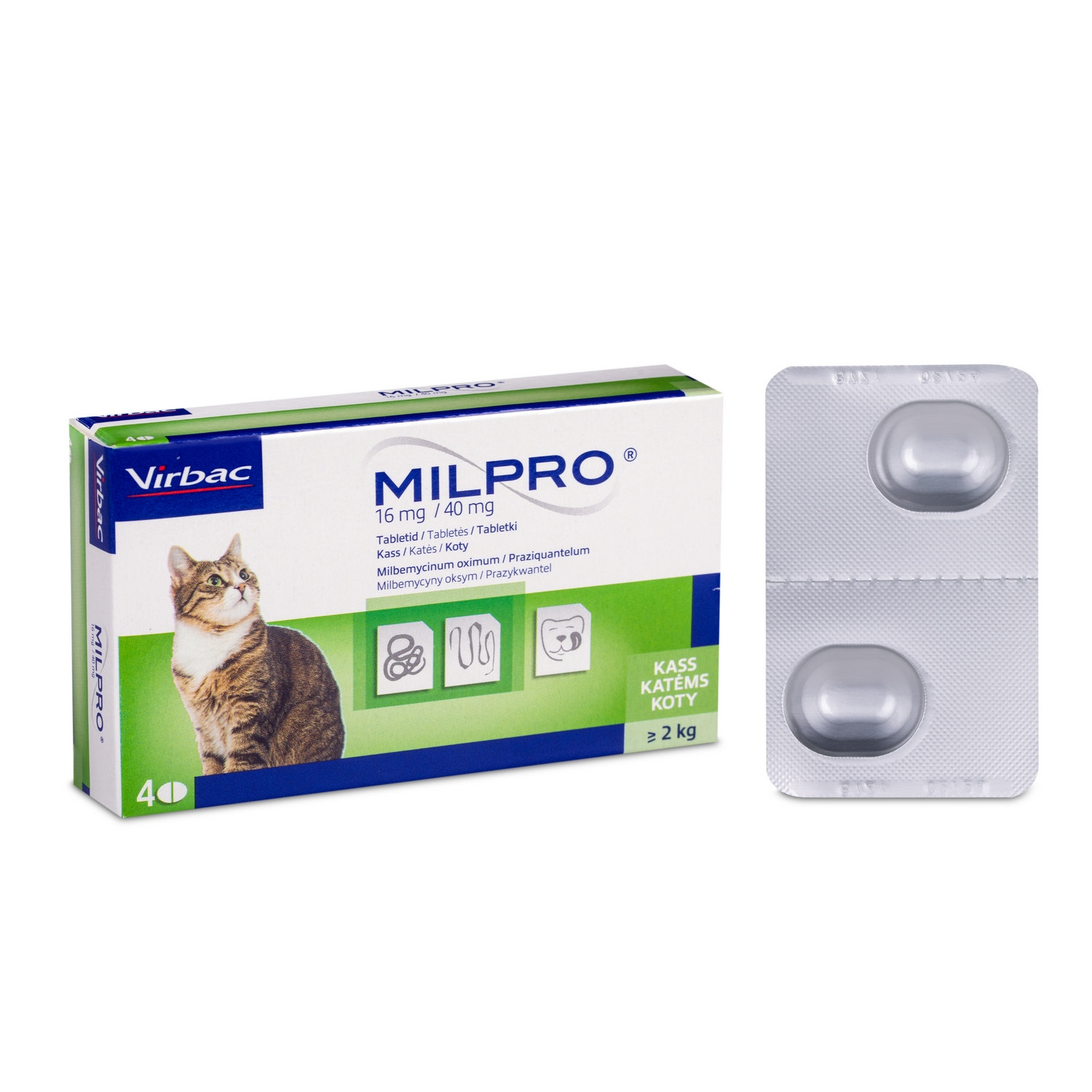
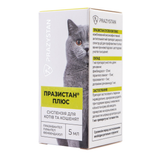
Virbac Milpro — antiparasitic medication for adult cats
Buy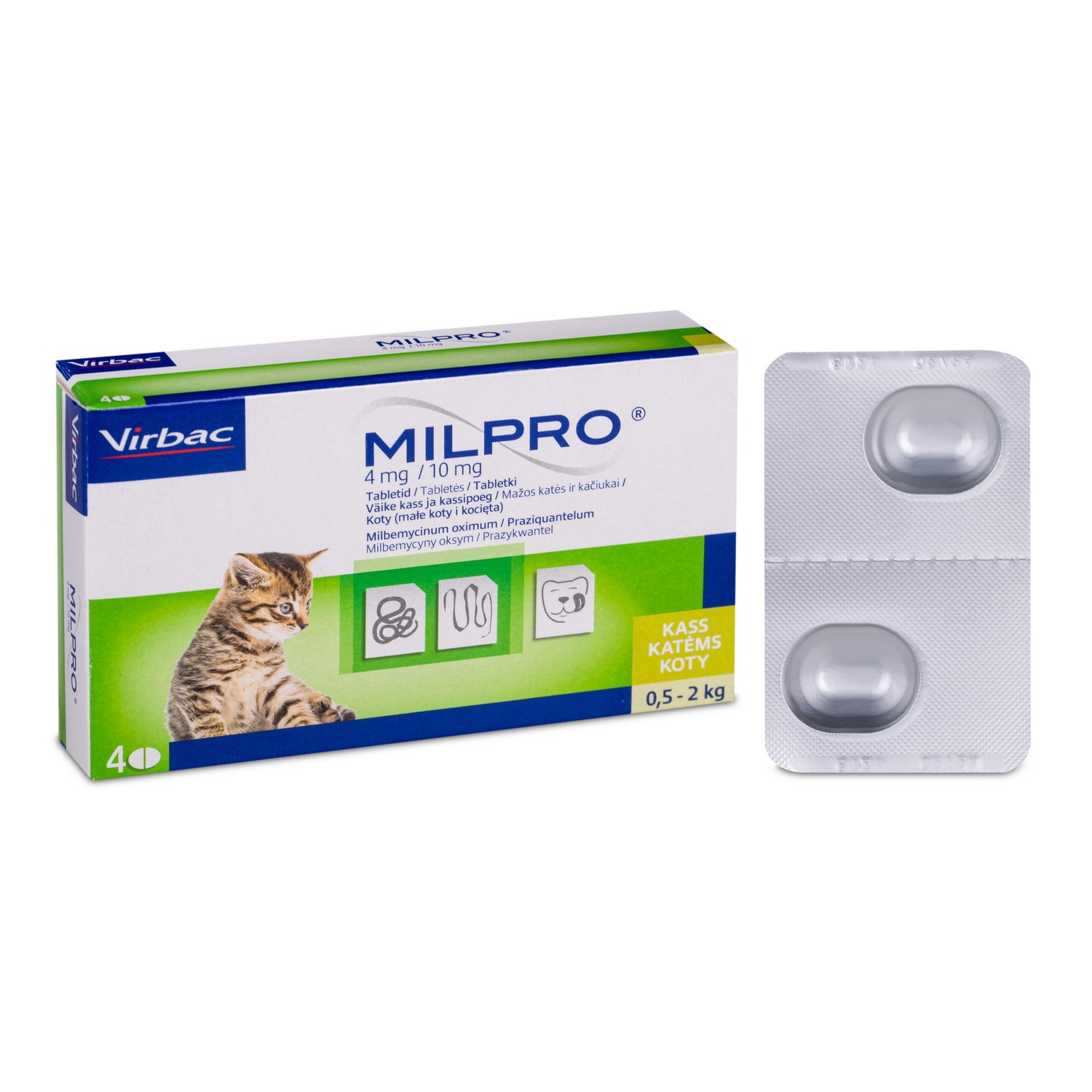
Virbac Milpro — antiparasitic medication for kittens
Buy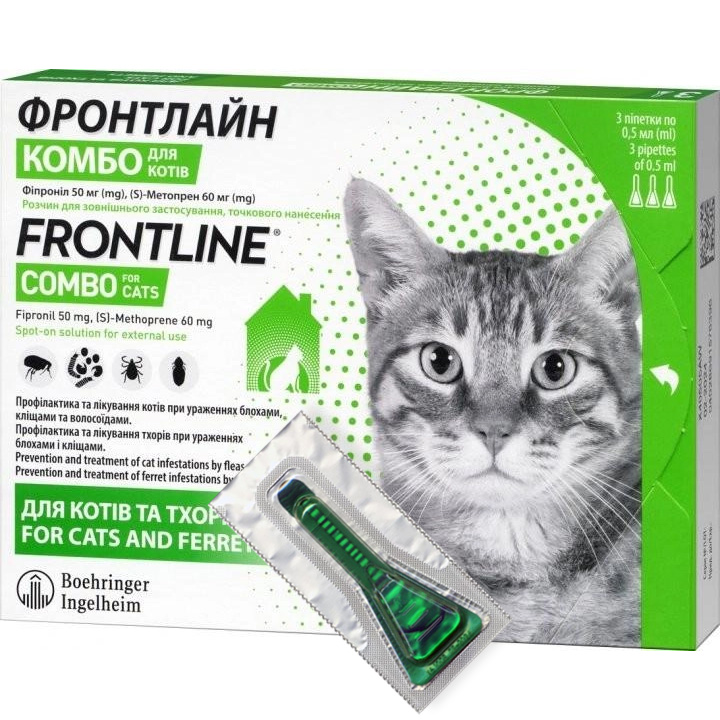
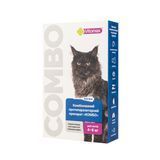
Frontline Combo Cat — spot-on drops against fleas and ticks for cats
Buy
Trixie — large nail clippers for dogs and cats, 13 cm
Buy
Bengals and children
A Bengal cat can become a wonderful friend for a child who knows how to respect an animal’s boundaries. This is a patient, intelligent, and very people-oriented breed, but it will not tolerate rough handling or pulling its tail or ears.
With school-age children, Bengals often form very warm and active relationships: they play, accompany them, and explore the space together. But if there is a baby in the home, it is important to realistically assess whether the family has enough resources for two “little ones” at once — the human and the feline.
Is this breed right for you?
The Bengal cat is a choice based not only on appearance, but also on lifestyle. It will not suit those looking for the calmest and least demanding pet. It needs partnership, interaction, movement, and an engaged owner.
If you like active animals, do not mind games, want a pet with bright intelligence, and are ready to include it in home life, a Bengal may be an ideal choice. If you are rarely at home or need a cat that will calmly lie on the sofa, another breed may be worth considering.
Conclusion
The Bengal cat is not just a striking appearance, but a true lifestyle. It combines wild beauty, sharp intelligence, energy, and the ability to form a strong attachment. This is what makes it so fascinating and, at the same time, demanding of its owner.
If you are ready for active communication, games, rules, and daily involvement, a Bengal will reward you with devotion, a bright personality, and an incredible presence in the home. This is a cat that does not merely live nearby, but truly fills the space with movement, warmth, and meaning.