In a world where many cat breeds are easily confused with each other, the Cymric is remembered immediately. It has no tail or a severely shortened one, hind legs longer than front legs, and movements and hops resemble those of a rabbit. But the true value of this breed lies not only in appearance, but also in a wonderful combination of strength, restraint and devotion to humans.
The Cymric is considered the long-haired version of the Manx and belongs to the same breed group. It is rare, very recognizable and well-suited to those who want to have not just a beautiful cat at home, but an intelligent, family-oriented companion with a gentle character and strong attachment to its owner.
In this article, we'll explore where the Cymric comes from, what it looks like, what its temperament is like, how it behaves in the family, what's important to know about the health of tailless lines, how to care for thick fur and what the daily diet of this breed should be.
Brief breed characteristics
| Origin | Isle of Man, Great Britain; modern breed development is also associated with Canada |
| Other name | Cymric, long-haired Manx |
| Breed type | Semi-long-haired, natural mutation |
| Size and weight | Medium or large size, approximately 4–7 kg |
| Lifespan | On average 12–16 years |
| Coloring | Virtually all colorings and patterns, except colorpoint |
| Coat type | Semi-long, dense, double: dense undercoat and guard hairs |
| Character | Devoted, affectionate, balanced, family-oriented |
| Care | Regular: brushing 2–3 times a week, undercoat control, basic hygiene |
| Suitable for | Families and people who value a calm but emotionally close cat |
Breed origin
Although the name Cymric is etymologically associated with Wales, the history of this cat is closely intertwined primarily with the Isle of Man, where tailless cats have lived for centuries. It was the natural mutation of the gene affecting tail formation that became the foundation for the entire Manx group, which includes the Cymric.
In its modern form, the breed began to take shape in the 1960s, when Canadian breeders noticed semi-long-haired tailless cats and began consciously working to establish this type. This is how the Cymric was formed—the long-haired version of the Manx, which retained its signature anatomy but acquired thicker, more voluminous fur.
Kittens in a litter can be born with varying tail lengths: from complete absence to short 'stumps' or longer variants. This is a normal part of breed genetics. Today, the Cymric is considered a rare breed, but is well-known among lovers of natural and very distinctive cats.
- Cymric and Manx belong to the same breed group and differ primarily in coat length.
- The breed's taillessness is associated with a natural mutation, not human intervention.
- The modern development of the Cymric as a separate type is associated with Canadian breeding programs of the 1960s.
Appearance: rounded silhouette, strong hind legs and no tail
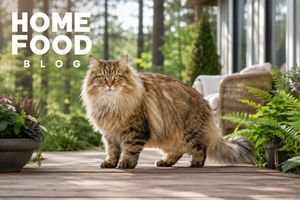
The Cymric is a medium or large-sized cat with a compact body, well-developed muscles and a very distinctive body line. Its hind legs are longer than its front legs, which causes the silhouette to rise slightly toward the croup, and its jumps can indeed resemble those of a rabbit. This anatomy, combined with the absence of a tail, forms its recognizable profile.
The Cymric's head is rounded, ears are set wide apart, eyes are large and expressive. The coat is semi-long, dense, with a well-developed undercoat, which makes the cat appear even more rounded and soft. All of this creates a very cohesive visual image: sturdy, warm, voluminous, but not coarse.
The breed's coloring can be very varied—from solid to tabby, tortoiseshell, silver or white. Typically, only colorpoint variants are not allowed. Regardless of coat color, the Cymric looks striking precisely because of the combination of dense fur, rounded forms and characteristic taillessness.
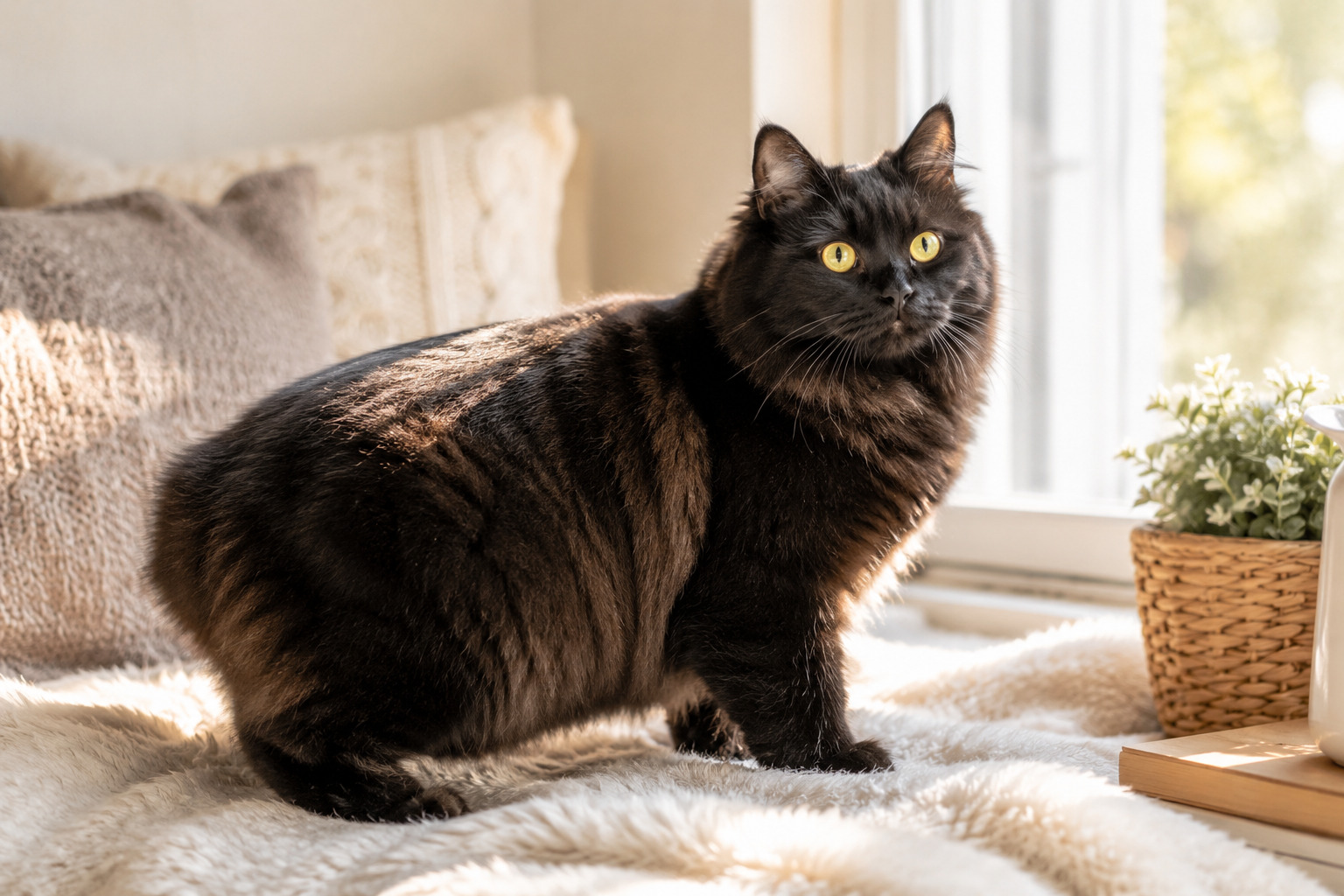

The Cymric gives the impression of a cat that cannot be confused: a rounded body, thick fur, powerful hind legs and no tail create an image in which softness and strength are surprisingly well balanced
Character and behavior
Despite its strong appearance, the Cymric is a very gentle cat at home. It can be reserved with strangers, but gives true trust to its own people. Many Cymrics even in adulthood retain a slight 'kitten-like' liveliness: they love to play, jump, run and carefully observe everything that happens at home.
The breed values contact, but is not intrusive. A Cymric can literally follow its owner around, but usually does so calmly, without excessive demands. It likes to be nearby, not necessarily in the center of attention. This restrained presence is often one of the main reasons why owners become so attached to the breed.
According to TICA, Cymrics don't like prolonged solitude, although during a typical work day they often behave reliably and without destructive boredom. They feel best in a stable, predictable environment where there are games, safe elevated zones and constant contact with the family.
Attitude toward children and other animals
Cymrics typically get along well with children: they are patient, playful and not prone to sharp reactions if respected. This is why this breed is often considered a good choice for calm families where the cat won't live in a chaotic atmosphere but will have plenty of friendly contact.
With other cats and dogs, Cymrics also usually get along well. They are not a conflict-prone breed and often easily integrate into a household group of animals if introductions happen gradually. For them, clear boundaries, a stable environment and the opportunity to occasionally rest at height, observing everything from a distance, are important.
- The Cymric is calm, affectionate and very family-oriented.
- The breed interacts well with children and other animals with proper socialization.
- This is an intelligent and observant cat that needs play, height and a sense of stability in the home.
Behavior and housing features
The Cymric feels comfortable in an apartment or house if it has a familiar, predictable space and several safe elevated zones for observation. It is not an overly hyperactive breed, but loves to play, explore territory and periodically have short bursts of energetic running around the house.
The ideal resting place for such a cat is a bed at height or a quiet corner where it can control everything with its gaze. As with any cat, the basis of a calm life remains clean water, balanced food and a clean litter box. For the Cymric, these details are especially important because it loves stability in its environment.
If you arrange a space for it with scratching posts, beds, convenient jumping routes and a calm rhythm of life, the Cymric will quickly show itself to be a very comfortable and balanced home companion.
Health and possible breed traits
The main medical nuance of the breed is related to the taillessness gene. In Manx and Cymrics, the so-called Manx syndrome is possible—a complex of congenital problems that can affect the lower spine, nervous system, intestinal function or urinary control. Therefore, tailless anatomy looks striking, but requires careful attention.
Not every Cymric develops such disorders, and many cats live long and comfortably. However, owners should be aware of symptoms that require examination: weakness in the hind legs, unsteady gait, litter box problems, constipation, or recurring discomfort in the pelvic area. According to veterinary sources, early observation of neurological and orthopedic signs makes it possible not to miss the problem.
In addition, regular preventive check-ups, vaccinations, weight control, and sufficient physical activity are important for a Cymric. Due to the load on the hind limbs and spine, it is especially useful to maintain normal body condition and prevent obesity, which increases orthopedic risks.
- For a Cymric, it is important to consider the possible risk of Manx syndrome, associated with the tailless anatomy.
- Weakness in the hind legs, constipation, coordination problems, or litter box control issues require veterinary evaluation.
- Weight control, physical activity, and regular check-ups are especially important for a long and comfortable life for the breed.
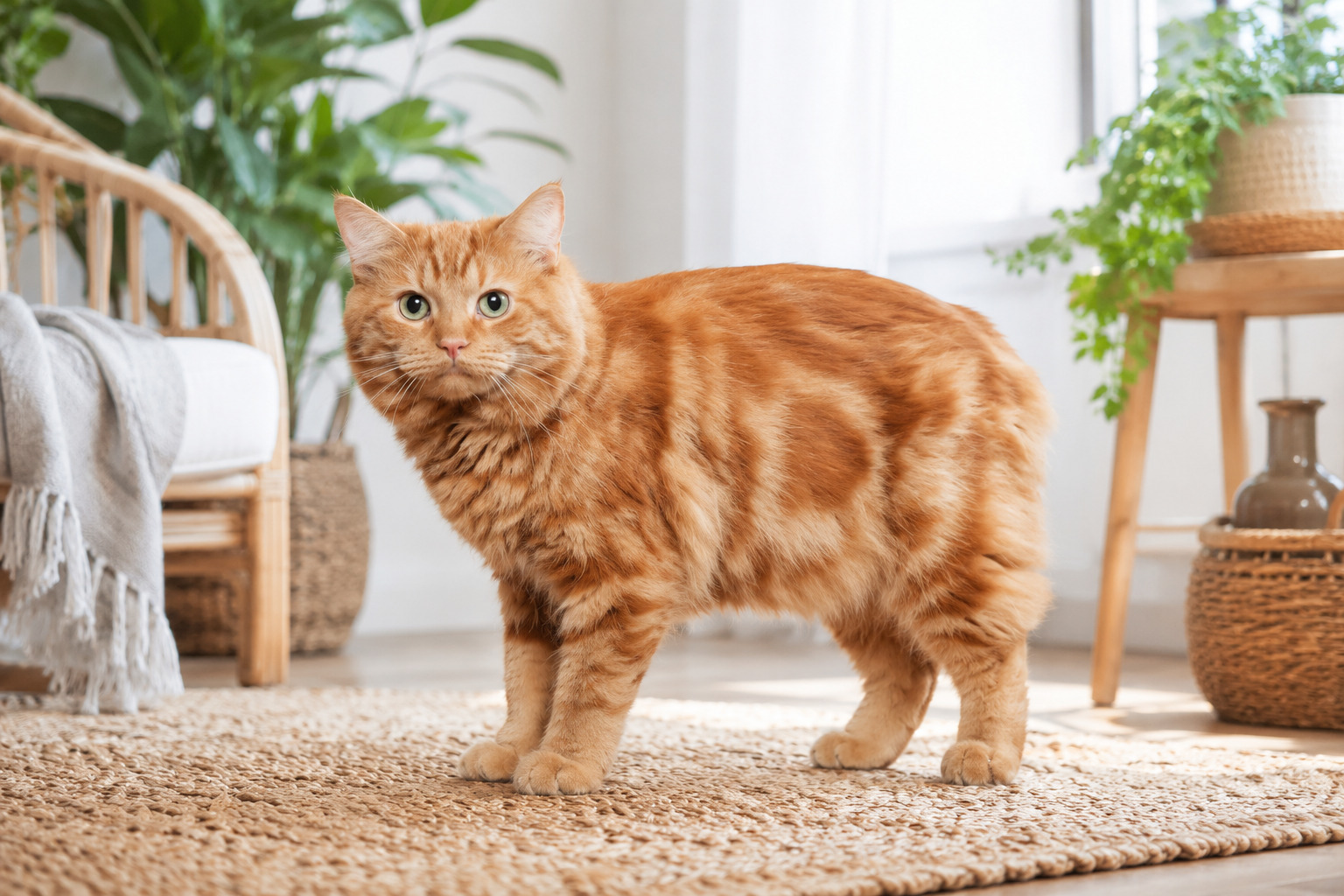
A Cymric feels best where there is a calm lifestyle, weight control, good mobility, and timely check-ups
Coat care
The Cymric's thick double coat requires regular attention. It should be brushed 2–3 times a week, and more often during seasonal shedding. This helps prevent matting, reduces the amount of hair in the home, and maintains good undercoat condition.
For such cats, it is especially important not to wait until the coat starts to mat. Regular brushing works better than rare "deep cleaning" procedures. The condition of the coat also reflects the cat's overall health well, so coat care should be combined with quality nutrition and monitoring of well-being.


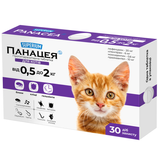
Superium Panacea — antiparasitic spot-on drops for cats 0.5–4 kg
Buy
HOME FOOD Beauty — set: shampoo "Perfect Care", conditioner "Silky Touch" and cosmetic bag
Buy
Steam massage brush 3 in 1 — brush for grooming dogs and cats "Avocado"
Buy
Trixie Luxe — nail clipper for pets, large, 16 cm
Buy
Nutrition
The source correctly emphasizes that a Cymric needs complete nutrition with sufficient protein, taurine, fatty acids, vitamins, and minerals. A cat's nutritional needs change depending on age, activity level, and health status: kittens need a more energy-dense diet, adult cats need a balance between caloric content and weight control, and senior cats need easier-to-digest formulas with joint support.
For a Cymric, it is especially important not to overfeed, as excess body weight creates additional stress on the spine and hind limbs. That is why it is better to focus not only on the cat's appetite, but also on the manufacturer's recommendations and the veterinarian's advice. Access to clean water should be constant, especially if dry food is the basis of the diet.
Well-planned nutrition for this breed works not only for coat and activity, but also for long-term comfort of the musculoskeletal system. This is exactly the case where diet becomes part of prevention, not just a daily habit.

HOME FOOD Fresh Chicken — dry food for kittens 1–12 months, 10 kg
Buy
HOME FOOD For sterilised/neutered — dry food for sterilized adult cats, rabbit and cranberry, 1.6 kg
Buy
HOME FOOD — salmon oil for skin health and coat shine for dogs and cats, 100 ml
Buy
HOME FOOD — drinking water for cats for the prevention of urinary tract disease, 1 l
Buy
Who the Cymric is suitable for
The Cymric is well suited for people who value calm, devoted, and family-oriented cats. It will be appropriate in an apartment or house if the home has a soft, stable rhythm, the possibility of arranging elevated zones, and a willingness to pay attention not only to coat beauty, but also to health prevention.
The breed will especially appeal to those looking for a pet that is neither hyperactive nor indifferent. The Cymric likes to be nearby, observe, play, and maintain home contact while maintaining its own dignity and calm.
- The Cymric is suitable for families and people who love calm, devoted, and non-aggressive cats.
- The breed feels good in a stable home environment with access to height and play.
- It reveals itself best next to an owner who is ready to combine love for the breed with careful monitoring of its health.
Conclusion
The Cymric is not just a cat without a tail. It is a breed in which a very distinctive appearance is combined with a soft temperament, family devotion, and high intelligence. It is well-suited for those who want to see beside them not a decorative pet, but a true household companion with a tangible presence in the family's life.
At the same time, the Cymric requires attention to health, as the tailless anatomy can be not only beautiful but also medically significant. If you combine proper nutrition, coat care, preventive check-ups, and a calm lifestyle, this breed is able to remain a very tender, beautiful, and devoted friend for many years.