📌 HOME FOOD Blog: tips on care, health, and nutrition for cats and dogs. 🩺 Up-to-date articles for caring pet owners ❤️
Hypoallergenic cats: top breeds for people with allergies, how Fel d 1 works, and whether special food can really affect allergic reactions in humans

Cat allergy is not a reason to give up the dream of a pet forever. Modern research and breeders' experience show that there are breeds that trigger allergic reactions much less often in people with increased sensitivity.
They are often called hypoallergenic not because they never provoke allergy at all, but because they may produce fewer allergens or suit some people better due to the features of their coat, skin, or behavior.
This article collects the top cat breeds most often recommended for people with allergies and explains what exactly causes the reaction, how to confirm sensitivity to Fel d 1, and what can realistically be expected from so-called hypoallergenic solutions.
Physiological aspects of cat allergy in humans
Cat allergy is a reaction of the human immune system to certain proteins that the body mistakenly perceives as a threat. The most important of them is Fel d 1, a microscopic protein produced by a cat's sebaceous and salivary glands.
- When a cat licks itself, Fel d 1 gets onto the fur and skin and later into the air, household dust, furniture, and clothing.
- Because of its small size, this protein is easily carried through the air and can remain in a room for a long time.
- Typical symptoms in humans include sneezing, a runny nose, itching in the nose or eyes, watery eyes, coughing, and sometimes difficulty breathing.
It is important to understand that allergy is usually caused not by the fur itself but by the protein found on it. That is why even hairless cats are not completely safe for all allergy sufferers.
Which breeds are most often considered relatively hypoallergenic
No breed is fully hypoallergenic in the strict scientific sense. At the same time, some cats are more often mentioned as being more comfortable for people with allergies because of lower Fel d 1 levels, a different coat structure, or less spread of skin flakes in the environment.
1. Siberian cat
It is the breed most often mentioned in studies as having some bloodlines where the Fel d 1 level may be lower than average. At the same time, individual differences between animals remain large.
2. Balinese
It is widely known among breeders as potentially less allergenic, although there are still few large controlled studies on the breed.
3. Javanese
It is close to the Balinese in type and is often mentioned in lists of relatively hypoallergenic breeds because of coat characteristics and general observation-based practice.
4. Russian Blue
It is popular among people with allergies. Practical observations suggest that some of these cats may be more comfortable for allergy sufferers, although the evidence base is limited.
5. Devon Rex
Its special short coat and different shedding pattern may reduce the spread of allergens in the environment, although Fel d 1 itself does not disappear.
6. Cornish Rex
The logic is similar to the Devon Rex: not a complete absence of the allergen, but potentially less of it spreading because of a different coat structure.
7. Sphynx
It is often mistakenly perceived as completely safe for allergy sufferers because it has no coat. In reality, it still has Fel d 1 because the protein is produced not by hairs but by glands.
8. Bengal
It is often mentioned in popular reviews as a breed with less pronounced spread of allergens, but serious scientific comparisons are still insufficient.
9. Oriental Shorthair
It is considered more suitable for some people with allergies because of its short coat and lower shedding, although direct large studies are lacking.
10. Siamese
It is also regularly mentioned in the context of lower allergenicity, but the real reaction always depends on the specific cat and the specific person.
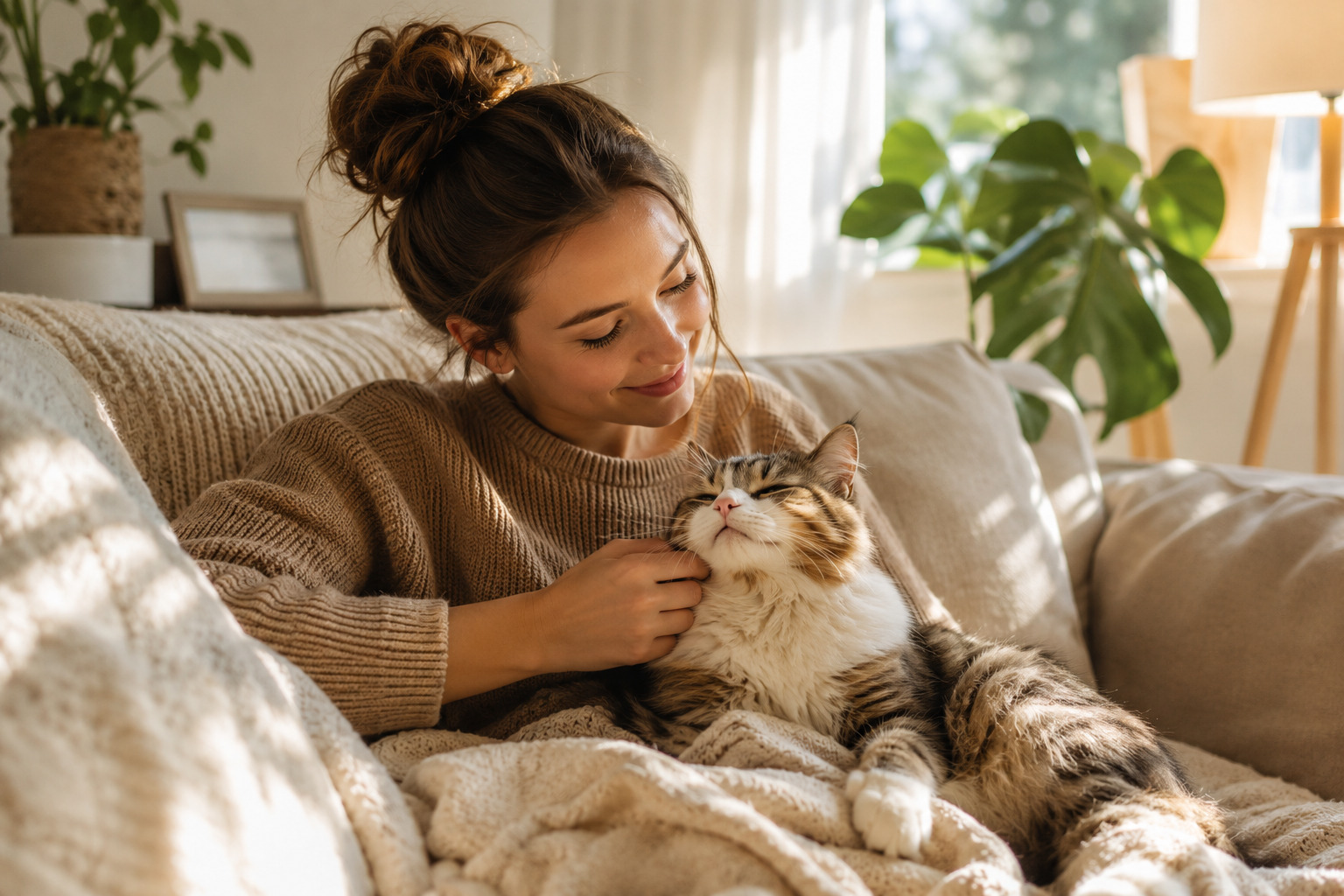

A hypoallergenic cat is not a guarantee of a complete absence of symptoms, but rather a chance to find a breed and a specific animal with which living together will be much more comfortable
How to understand that the reaction is caused specifically by Fel d 1
To choose the right strategy for living with a cat, it is important not to guess but to find out exactly which allergen the body reacts to.
Analyze symptoms
Pay attention to when sneezing, itching, or coughing occurs: after direct contact with the cat, in the room where it lives, or even after contact with clothing and furniture.
See an allergist
A doctor will help distinguish cat allergy from reactions to dust, mites, or mold, which often masquerade as “cat” allergy.
Take skin prick tests
This is a basic tool that shows sensitization to cat allergens, but it does not always clarify which protein is the key trigger.
Confirm specific IgE to Fel d 1
The most accurate approach is molecular diagnostics, which makes it possible to identify antibodies directly to Fel d 1 and understand whether it is the main cause of the reaction.
- In most people, cat allergy is caused specifically by Fel d 1 rather than the fur itself.
- Accurate diagnostics make it possible to realistically assess the chances of comfortable life with a cat.
- Even with an allergy, the final reaction is often determined by the specific animal rather than just the breed name.
Is it true that hypoallergenic cat food reduces allergies in humans
This question often causes confusion. In veterinary nutrition, the term “hypoallergenic food” usually means a diet suitable for the cat itself in cases of food sensitivity, but it does not necessarily directly reduce allergic reactions in humans.
- Fel d 1 is produced by the salivary and sebaceous glands, not by the food itself.
- Nutrition can influence indirectly by improving the condition of the skin and coat and reducing inflammation and flaking.
- This may slightly reduce the spread of the allergen in the environment, but it does not make the cat completely safe for all allergy sufferers.
The best results come from a comprehensive approach: accurate diagnostics, selection of a specific animal, ventilation, cleaning, control of contact with the allergen, and, when needed, a thoughtful diet for the cat itself.

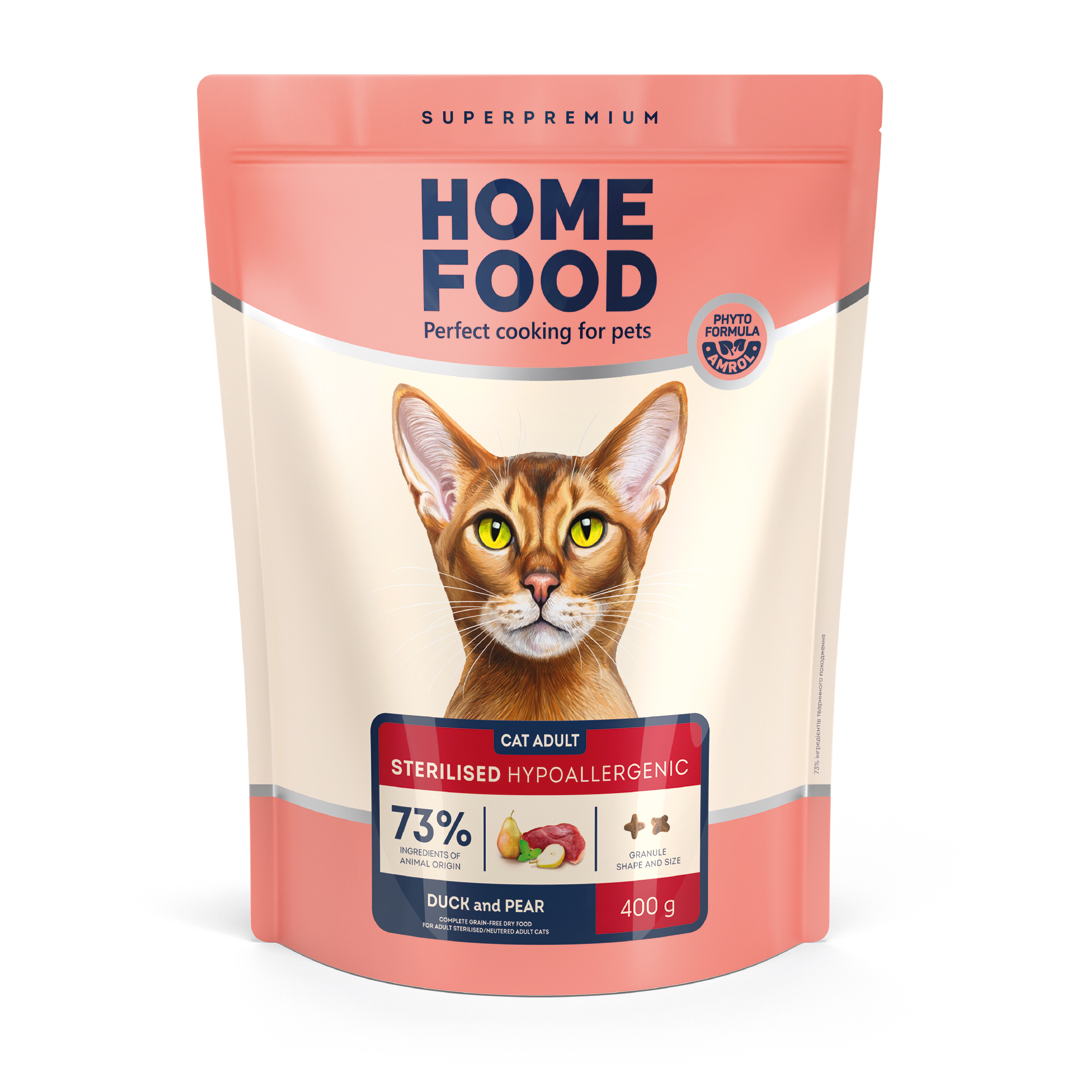
Grain-free hypoallergenic HOME FOOD for sterilized/neutered cats «Duck and Pear», 400 g
Buy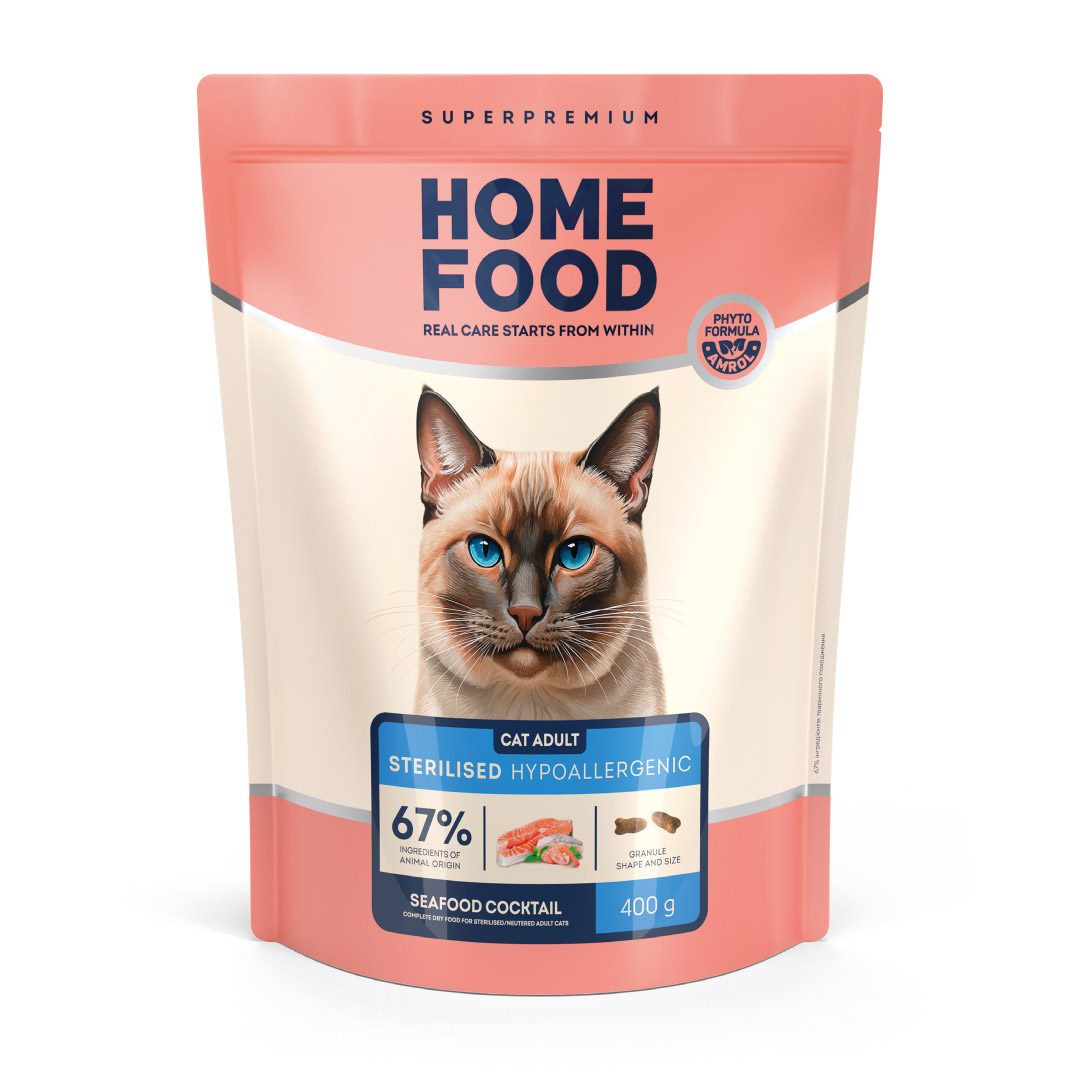
Hypoallergenic dry HOME FOOD for sterilized/neutered cats «Sea Cocktail», 400 g
Buy
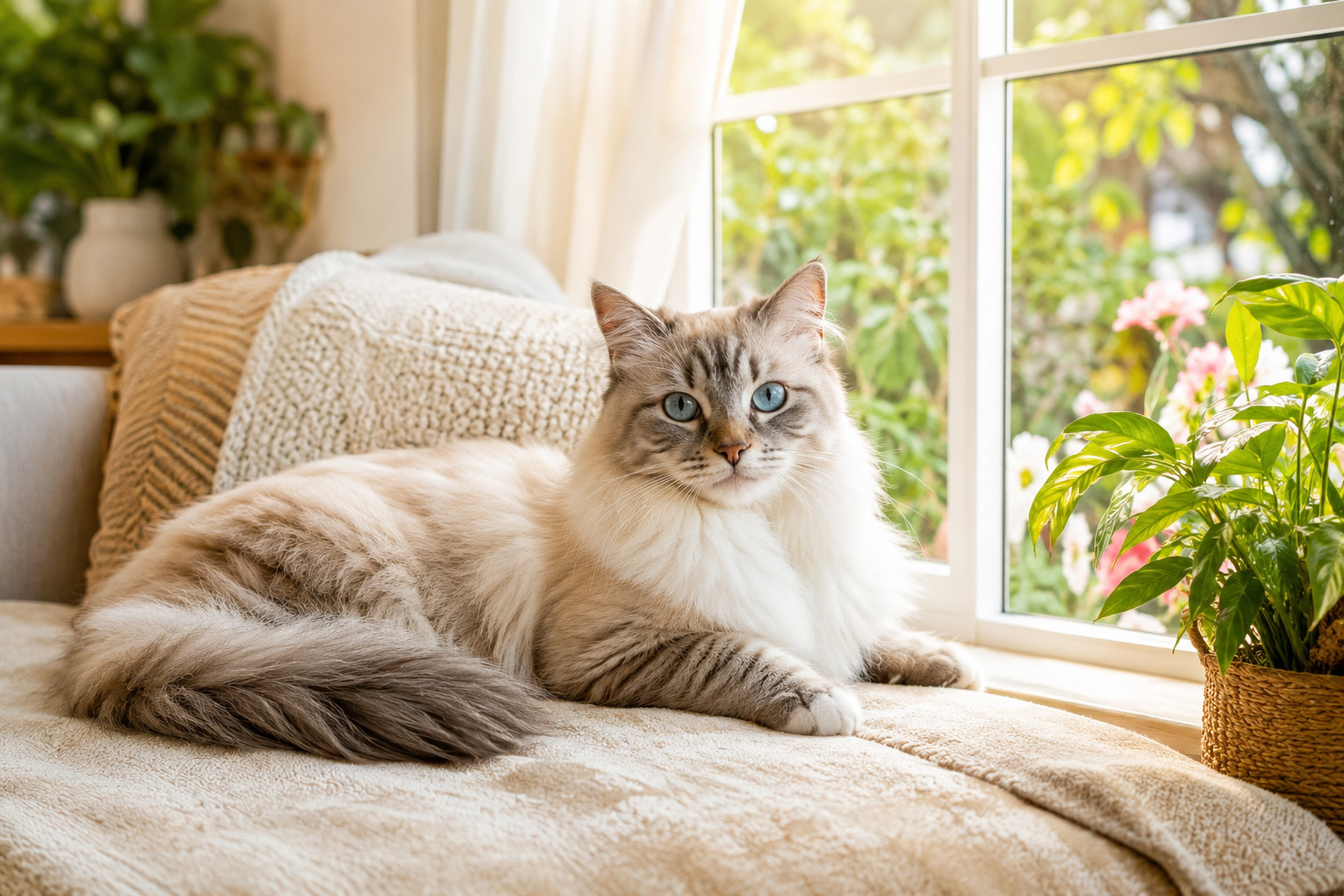
The safest solution for a person with allergies is not to look for a mythical completely safe breed, but to combine accurate diagnostics, responsible animal selection, and well-organized daily living
Conclusion
Hypoallergenic cats exist only in a conditional sense: they do not guarantee a complete absence of reaction, but they can become a real compromise for people with moderate sensitivity to cat allergens. The most important thing is to understand that the decisive role is often played not so much by the breed as by the specific animal, the Fel d 1 level, conditions in the home, and the health status of the person.
When the choice of a pet is based not only on emotions but also on diagnostics, realistic expectations, and a thoughtful household setup, the chances of comfortable coexistence become much higher.