📌 HOME FOOD Blog: advice on pet care, health and nutrition for cats and dogs. 🩺 Useful articles for caring pet parents ❤️
How to calculate the daily amount of dry food for a cat: RER and MER formulas, calculation examples, portion measuring methods and diet selection based on the cat’s condition

A properly calculated daily amount of dry food is the basis of a cat’s healthy weight, activity and good well-being. Package recommendations are useful, but they do not account for all individual details: age, neutering or spaying, activity, metabolism, health status and actual body condition.
If the portion is too large, the cat gradually gains excess weight. If it is too small, the cat may lack energy and nutrients. So the best approach is not to measure by “handfuls,” but to calculate based on food calories and the daily needs of the individual animal.
How dietitians calculate the amount
Veterinary nutrition is based on several parameters: body weight, age, physiological state, activity, metabolism and the energy value of the specific food. The calculation consists of three steps.
- RER — baseline energy requirement at rest.
- MER — daily requirement adjusted for age, activity, neutering, pregnancy or lactation.
- Food portion — the number of grams per day based on the calorie density of the specific diet.
RER formula
RER (Resting Energy Requirement) — the amount of energy a cat’s body needs at rest.
International formula: RER = 70 × (body weight in kg)0,75
Simplified formula for cats 2–8 kg: RER = 30 × weight (kg) + 70
For example, for a 4 kg cat: 30 × 4 + 70 = 190 kcal/day. This is not the final portion yet, but a baseline point for further calculation.
MER coefficients
MER (Maintenance Energy Requirement) accounts for the cat’s actual condition. To calculate it, RER is multiplied by the appropriate coefficient.
| Cat condition | Coefficient |
|---|---|
| Adult intact cat | 1.4–1.6 × RER |
| Adult neutered cat | 1.1–1.2 × RER |
| Low-activity or overweight cat | 0.8–1.0 × RER |
| Active cat | 1.4–1.6 × RER |
| Pregnant cat | 1.6–2.0 × RER |
| Lactation | 2–6 × RER |
| Kitten 2–4 months | 2.5–3 × RER |
| Kitten 4–8 months | 2 × RER |
| Kitten 8–12 months | 1.5–1.8 × RER |
Example: a 4 kg neutered cat. RER = 190 kcal. MER = 190 × 1.1 ≈ 210 kcal/day.
How to convert calories into grams of food
Food packaging always lists energy value, for example 380 kcal / 100 g. First, calculate the calories in 1 gram: 380 ÷ 100 = 3.8 kcal/g. Then divide the daily requirement by the calorie content of 1 gram.
Portion (g/day) = MER ÷ calories in 1 g of food
For example: 210 ÷ 3.8 = 55 g of dry food per day
This is the individual daily amount. It can be divided into 2–5 meals depending on the cat’s age, routine and eating habits.
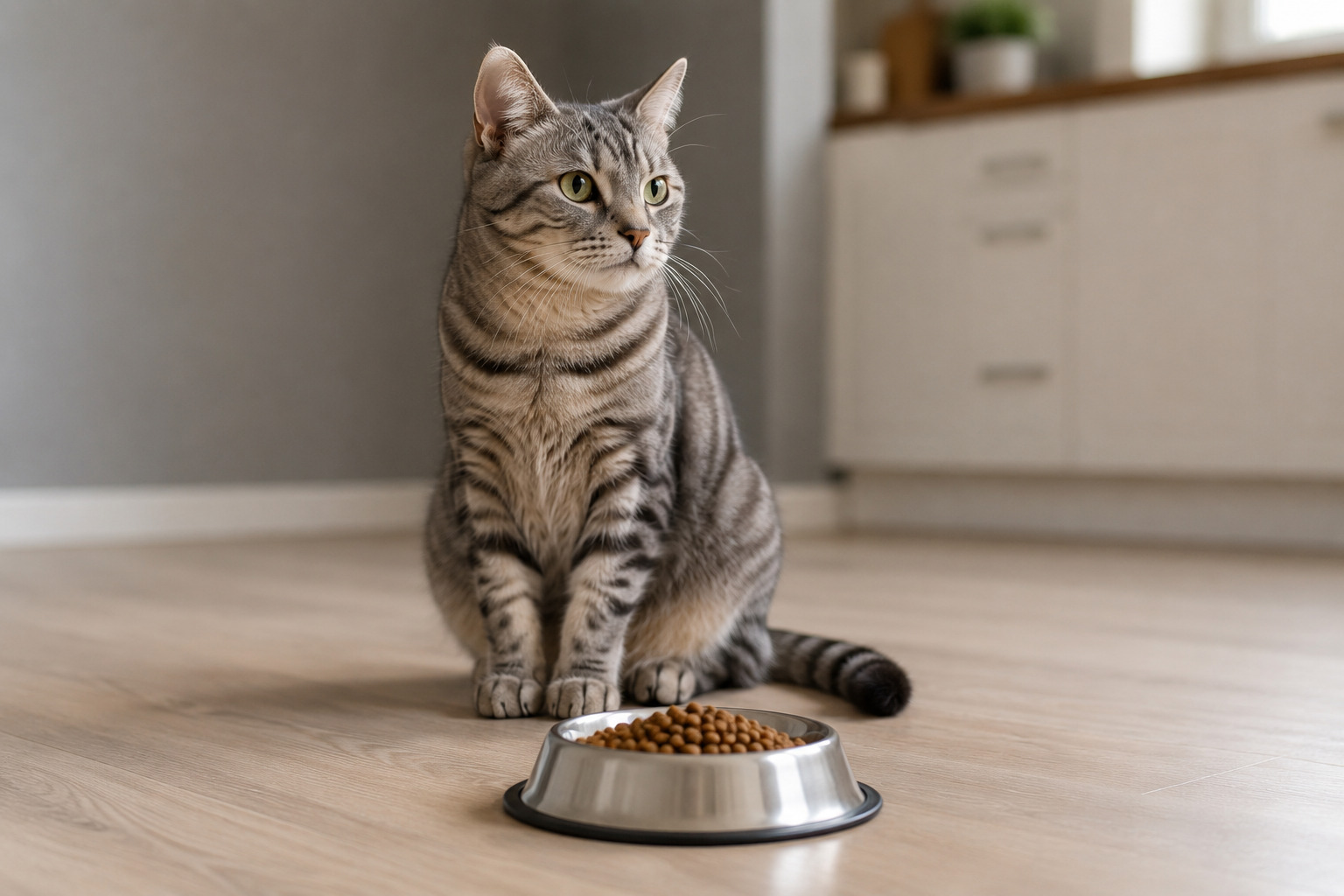

If the cat is overweight, calculate the amount based on the target healthy body weight, not the actual weight
General feeding rules
- It is better to calculate based on ideal weight, especially if the cat has excess body mass.
- For neutered cats, the portion is usually lower because metabolism after neutering may decrease by 20–30%.
- Food should meet AAFCO or FEDIAF standards to provide protein, taurine, fatty acids, vitamins and minerals.
- The amount should be reviewed every 1–3 months, taking into account weight, body condition, activity and general health.
- Kittens are fed more often; adult cats usually do well with 2 main meals or a split feeding schedule.
How to measure the portion
Even an accurate calculation will not help if the portion is poured very approximately every day. Choose a method that is convenient for you, but check its accuracy from time to time.
- Kitchen scales — the most accurate method, especially for cats after neutering, during weight loss or weight control.
- Measuring spoon scale — a convenient compromise for daily feeding. It is worth checking once how many grams of your specific food fit into the measure.
- By eye — an option for experienced owners if the cat has a stable weight, but it is still better to check it with scales sometimes.
- Free access to food suits only some cats with good appetite self-regulation. Most cats after neutering tend to eat more than they need.
Regardless of the method, focus not only on the number of grams, but also on the result: the cat’s weight, body condition score (BCS), activity, appetite and coat condition.
Why physiological state matters
Super-premium and holistic foods usually have stable calorie content, clear composition and product lines for different life stages. This simplifies portion calculation and helps avoid overloading the cat’s body.
- Kittens and pregnant cats need more protein, energy, DHA and minerals for growth and development of the offspring.
- Neutered cats need a diet with controlled calories, fiber for satiety and balanced minerals.
- Active cats use more energy, so they may need a more nutrient-dense diet.
- Senior cats often need easily digestible protein, joint support, antioxidants and moderate calorie content.
- Overweight cats lose weight better on diets with lower calorie density and a higher share of fiber.
The right food supports the heart, coat, kidneys, mobility, stable mood and a long active life. A cat cannot explain its needs, but the owner can make a thoughtful choice for it.

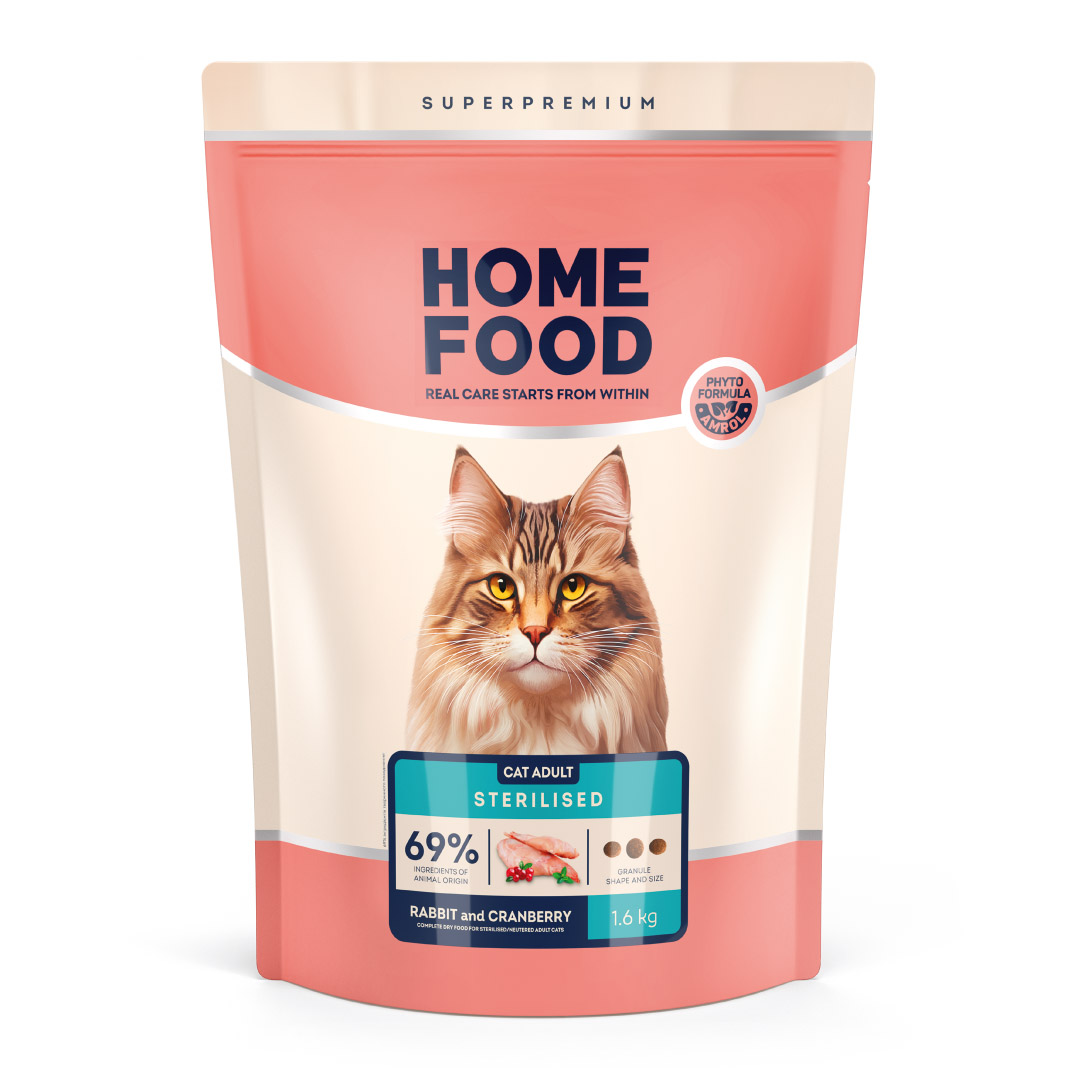
HOME FOOD dry food for sterilized/neutered adult cats Rabbit and cranberry, 1.6 kg
Buy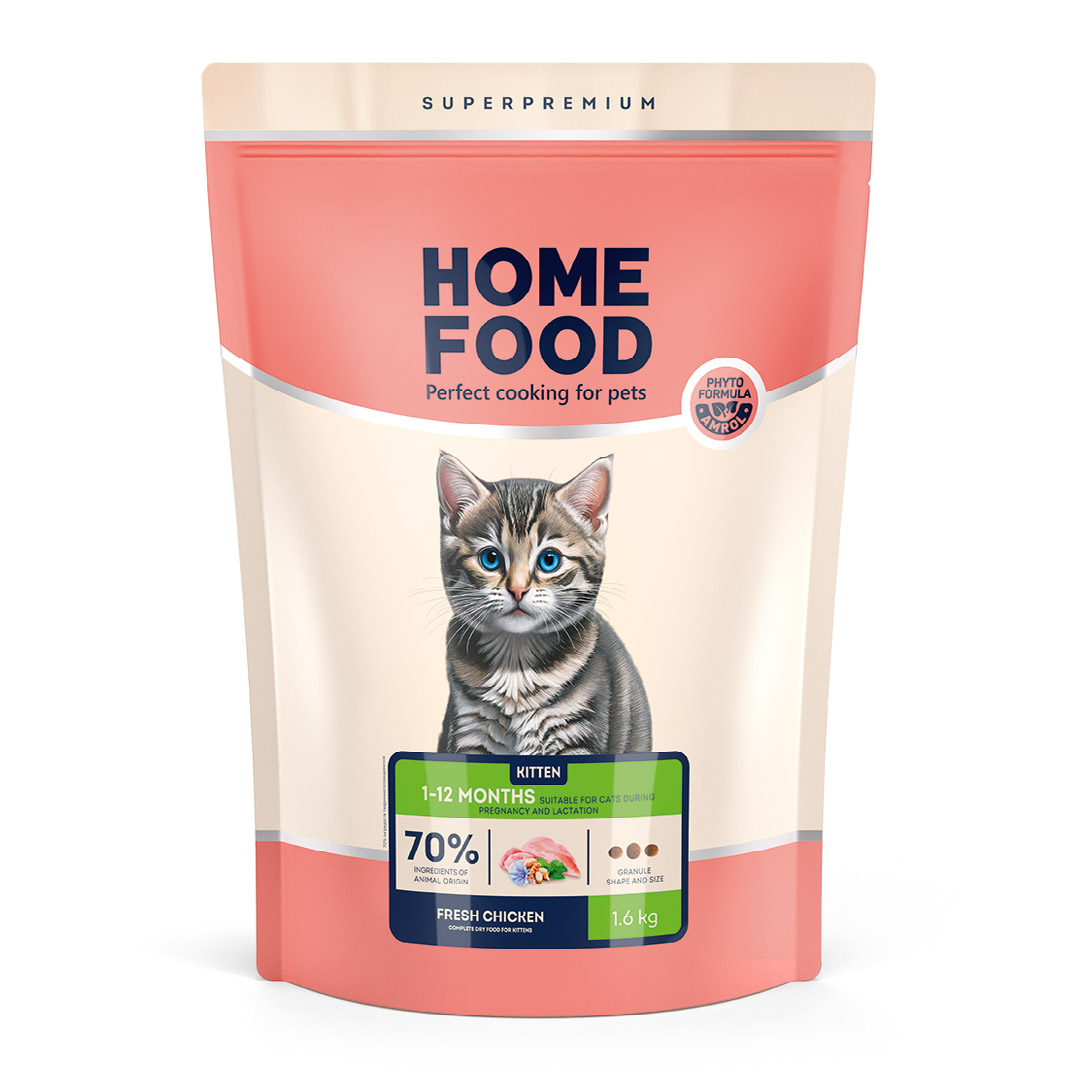
HOME FOOD dry food for kittens Fresh Chicken For kittens 1-12 months, 1.6 kg
Buy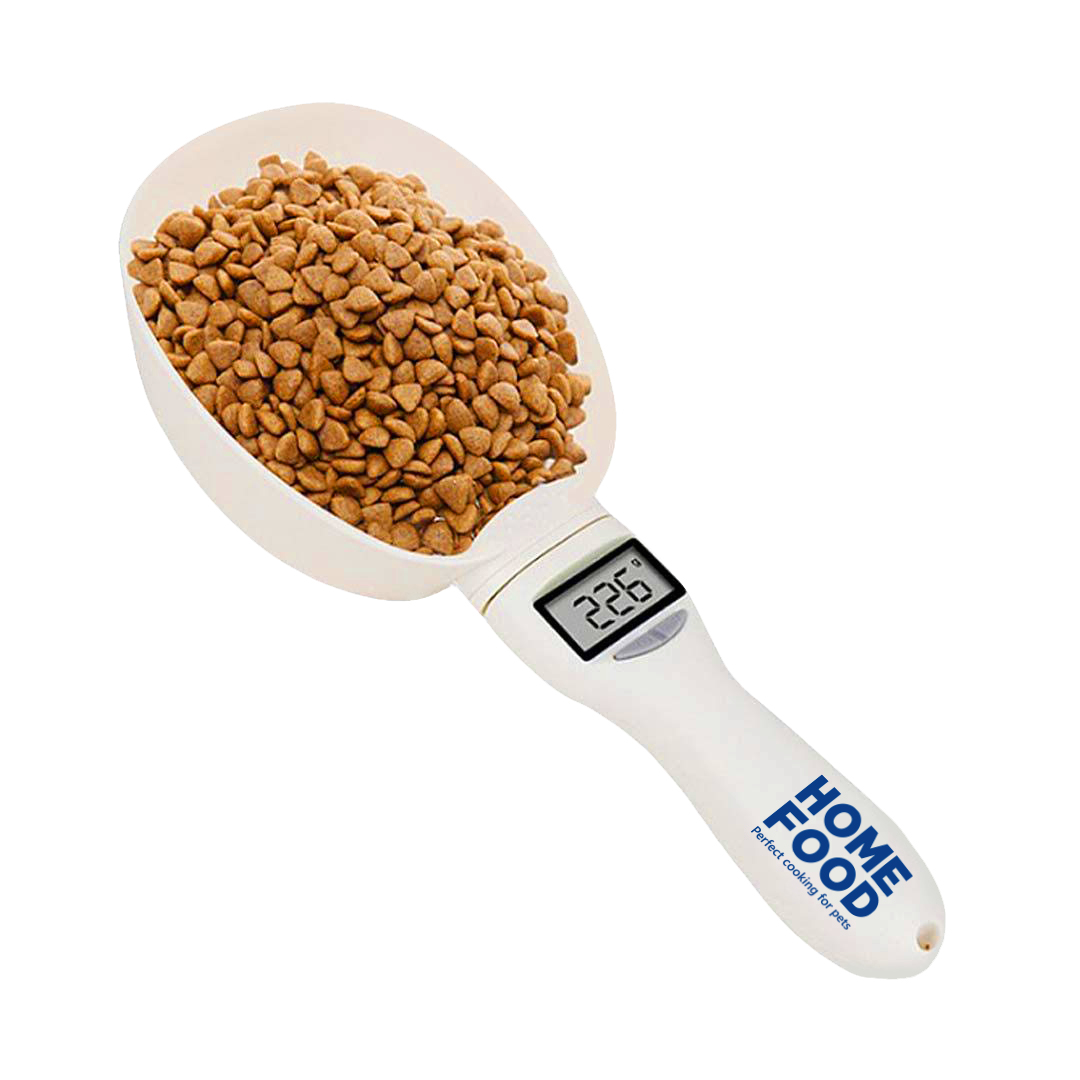
Electronic measuring spoon for food dosing
Buy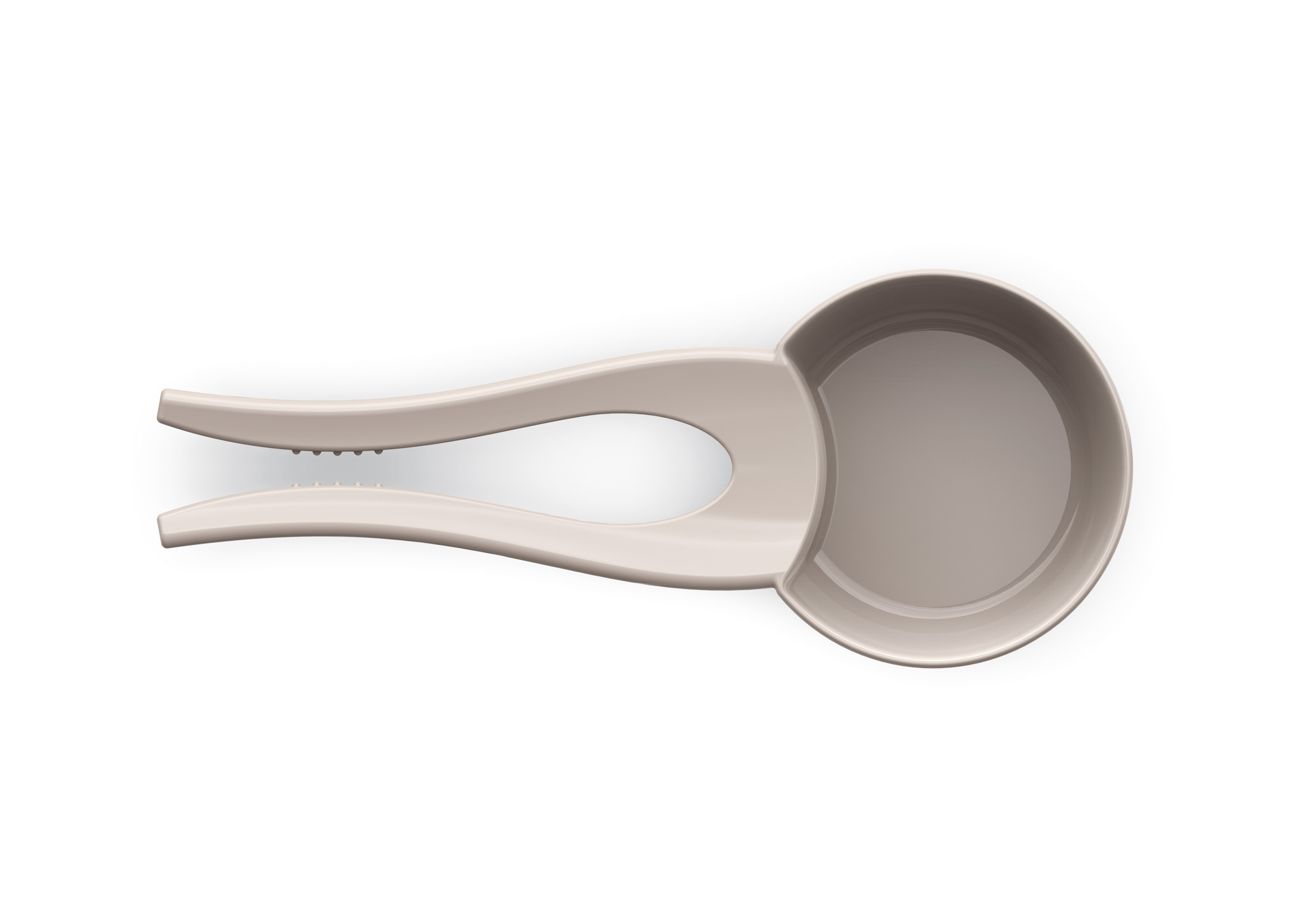
Georplast Clip-Croq — food scoop with a bag clip, 25.5x11.5x5 cm
Buy
Conclusion
The daily food amount is not a fixed number forever, but a working guideline. Start with RER and MER calculations, convert calories into grams, measure the portion conveniently and monitor the result regularly. If weight, appetite or activity changes, the amount should be adjusted.
The best portion is the one that helps the cat maintain a healthy body condition, good activity, a shiny coat and stable well-being.