Dogs can truly behave very differently: a gentle and obedient pet at home may suddenly change during a walk as soon as it sees other dogs. Aggression toward other dogs may be linked to early experience, a lack of proper socialization, and an inability to read other dogs’ signals.
For the owner, the key is not simply to stop the unwanted reaction in the moment, but to understand why it appears and build a correction plan that gradually teaches the dog to respond more calmly to triggers, rather than only physically restraining it.
In this article, we will look at where aggression toward other dogs can come from, how to correct behavior without unnecessarily escalating conflict, and what safety measures should be introduced if the reaction has already become a serious problem.
Why a dog shows aggression toward other dogs
One reason for this behavior may indeed lie in early puppyhood. Puppies that were isolated from the litter too early or had little experience communicating with other dogs sometimes grow up with difficulties in canine communication.
| Possible cause | What happens | How it appears |
|---|---|---|
| Early separation from the litter | The dog gets less natural experience interacting with other puppies | Insecurity, excessive reactivity, poor understanding of other dogs’ signals |
| Insufficient socialization | The pet sees other dogs too rarely or only in tense situations | Barking, baring teeth, attempts to lunge, or strong arousal even from a distance |
| Defensive reaction | The dog does not understand another dog’s behavior or perceives it as a threat | Tense posture, growling, lunging forward, avoidance followed by a sudden outburst |
| Accumulated stress | Arousal, fatigue, fear, or frustration reduce self-control | The reaction becomes stronger on certain days, on noisy routes, or after too many impressions |
| Hormonal and sex-related factors | In some dogs, especially males, the overall level of conflict may increase | More rivalry, a harsher reaction to certain dogs |
After assessing the causes, it is useful to keep several basic principles in mind:
- A dog may correctly recognize its own species but still lack enough experience in safe communication.
- Aggression does not always mean «dominance»: fear, insecurity, or a defensive reaction are often behind it.
- The more emotionally aroused the dog is, the harder it is for it to respond to commands and treats.


Waterproof dog collar WAUDOG Waterproof with QR passport, size XXL
Buy
WAUDOG LED — dog collar with lighting, 45 cm
Buy
Bone-shaped ID tag for dogs and cats WAUDOG Smart ID with QR passport
Buy
Belt bag WAUDOG Family «Colors of freedom»
Buy


The start of correction is always the same: work not at the peak of aggression, but at a distance where the dog can still notice you, hear commands, and take rewards
How to correct a dog’s behavior
Even if the dog’s character is already formed, behavior can often be improved. The owner’s main task is to teach the dog a calmer reaction to other dogs and not reinforce aggression through accidental mistakes.
Reward calmness and obedience
When the dog notices another dog but remains under control, follows a command, or simply does not explode into a reaction, that is the right moment to praise and give treats. This reinforces the correct state, not the outburst of aggression itself.
Work below the arousal threshold
If the dog is already barking, lunging forward, and no longer hearing you, training at that moment almost does not work. It is more useful to increase the distance, regain control, and only then ask for simple commands.
Do not unintentionally reward aggression
Sometimes, in an attempt to calm the dog, the owner starts actively petting, playing, or giving treats after the lunge and barking. In that case, the animal may associate the outburst with receiving a pleasant bonus.
Be consistent
Correction does not work in one or two walks. Repeated short sessions, consistent signals from the owner, and clear rules are much more helpful than emotional outbursts or an attempt to stop everything «once and for all».
- At the beginning, it is important not to bring the dog too close to the trigger too quickly.
- Treats work only when the dog can still process information.
- If the reaction is very strong and there is no progress, it is better to involve a dog behavior specialist.

Relax Pro HOME FOOD Expert — dietary supplement CBD oil 2%, 10 ml
Buy
Harmony Pro HOME FOOD Expert — anti-stress feed supplement, 20 g
Buy
Calming tablets IZIHELS for medium-breed dogs, 20 tablets
Buy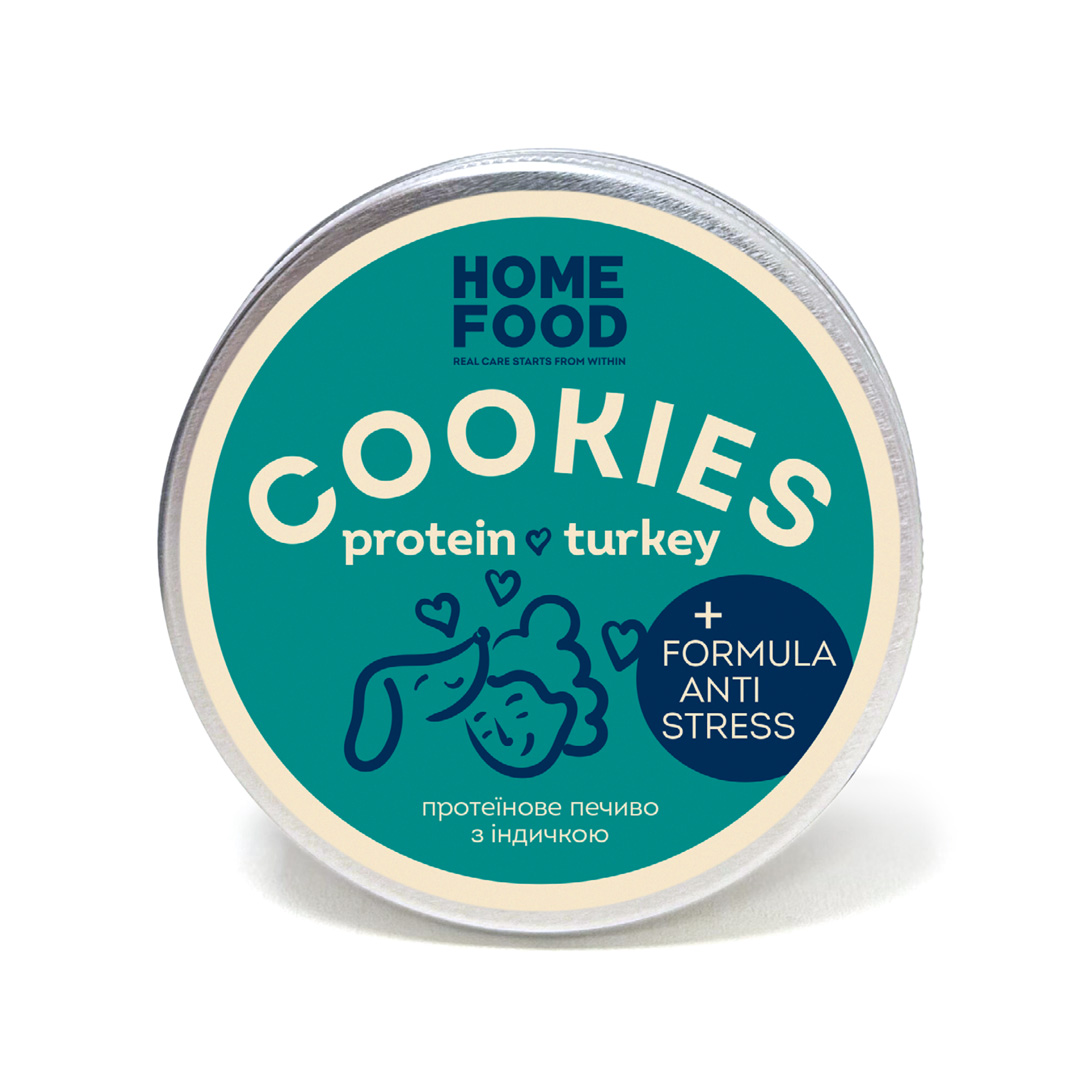
Protein biscuits with turkey and anti-stress formula for dogs HOME FOOD, 80 g
Buy

When a dog already poses a real danger to others, the priority is not to «re-educate at any cost», but to make walks predictable, controlled, and safe for everyone
What to do if your dog is truly dangerous to others
In more difficult cases, the work begins with environment management. Until the behavior is corrected, you cannot rely only on luck or on the hope that «today it will be fine».
Plan your route
It is better to temporarily avoid places where there are many dogs or where your dog is almost guaranteed to lose control. This is not running away from the problem, but reducing the number of failed repetitions of unwanted behavior.
Do not let the dog off leash without control
A leash, reliable gear, and other safety measures are needed until the reaction becomes much more stable. This is especially important if the dog has already tried to attack or strongly lunged toward other animals.
Recall the dog in advance
If the dog is off leash and you notice another dog before it does, call it to you before the first signs of an outburst, ask for a simple command, and immediately reinforce the correct response.
Discuss medical options only with a veterinarian
In some cases, owners consider neutering or medication support, but this is not a universal solution and not a substitute for behavior work. Such steps should be taken only after consulting a veterinarian.
- Do not deliberately bring an aggressive dog close to other dogs «to get used to them» if it is already losing control.
- Every uncontrolled fight or outburst reinforces the unwanted scenario.
- Safe management is often the first stage of real correction, not a sign of defeat.
When contact with other dogs can be useful
Not all situations are equally difficult. If the aggression is moderate and the dog can remain manageable and return to calm, gradually expanding social experience can be useful. But this should not be done chaotically: it should be controlled and involve stable dog partners that do not provoke conflict.
Sometimes a dog really does need more correct social experience, not complete isolation from other dogs. However, the principle remains the same: first control, then distance, then controlled approach, not the other way around.

HOME FOOD dog treats Chicken meat sticks, 80 g
Buy
HOME FOOD dog treats Turkey and pumpkin meat sticks, 80 g
Buy
HOME FOOD dog treats Rabbit lungs, 80 g
Buy
Protein biscuits with turkey for dogs HOME FOOD, 80 g
Buy
Conclusion
Aggression toward other dogs does not always mean a «bad character». It is often linked to early experience, a lack of communication skills, fear, or a defensive reaction. That is why systematic and predictable correction works better than emotional pressure.
Consistency, distance control, proper rewards, safe gear, and the owner’s patience can bring good results even when the problem has existed for a long time. And if the reaction is strong and dangerous, there is no need to feel ashamed about seeking help from a specialist: it speeds up progress and makes life more comfortable both for you and for your dog.