📌 HOME FOOD Blog: Diagnosis and Treatment of Demodicosis in Cats
Diagnosis and Treatment of Demodicosis in Cats
Unlike dogs, demodicosis in cats occurs much less frequently. This is due to several features of the feline body:
- cats have stronger local skin immune protection,
- the skin microbiome of cats is less favorable for mass reproduction of Demodex mites,
- feline sebaceous glands produce a different secretion composition, which hinders active parasite development.
Demodicosis in cats is caused by mites of the species Demodex cati and less commonly — Demodex gatoi. Both live in the skin layer or in hair follicles and can cause itching, hair loss, and dermatitis, but even infected cats often remain asymptomatic if their immunity functions well.
That is why other parasitic skin diseases are much more common in veterinary practice, such as:
- Sarcoptic mange — very itchy scabies mite Sarcoptes scabiei,
- Notoedric mange — severe form of mange in cats caused by Notoedres cati,
- Otodectosis — ear mite Otodectes cynotis, one of the most common parasites in cats.
These diseases are far more relevant for cats because:
- they are more easily transmitted from animal to animal,
- cause severe itching and noticeable symptoms that quickly worsen quality of life,
- occur more frequently in domestic cats, especially those in contact with other animals,
- can progress quickly and cause complications without treatment.
In this blog, we will not cover the rare demodicosis in cats in detail. Instead, we will focus on other, more relevant feline skin diseases caused by microscopic mites, namely — sarcoptic mange, notoedric mange, and otodectosis. These are the diseases most commonly found in domestic cats, cause noticeable symptoms, and require timely diagnosis and treatment.
How cats become infected with microscopic mites
Microscopic mites that cause skin diseases in cats (sarcoptes, notoedres, otodectes) do not appear “out of nowhere.” The main routes of infection are:
1. Direct contact with an infected animal
- The most common transmission route.
- Mites migrate across the skin or fur and transfer to a healthy animal during licking, playing, touching, or sleeping together.
- For example, Sarcoptes scabiei and Notoedres cati are very mobile and transmit quickly upon contact.
2. Contact with contaminated objects
- Mites can temporarily remain on bedding, pillows, beds, bowls, toys.
- Although they live outside the cat’s body for a short time (usually a few days), this is enough to infect another cat, especially if items are not disinfected.
3. Maternal transmission to kittens
- If the mother is infected, kittens can become infected during nursing or close contact with the mother’s fur.
- This route is especially important for notoedric mange and sarcoptic mange, as kittens have weak immunity and are very vulnerable.
4. Associated contact with other animals
- Cats with access to yards, streets, or contact with other cats and even dogs are at risk of infection.
- This especially applies to otodectosis, which is highly contagious.
5. Poor housing and hygiene conditions
- Increased risk of infection in cats living in crowded conditions (shelters, street groups) or in areas and beds that are not treated.
- Dense contact and lack of regular hygiene contribute to mass spread of mites.
Microscopic mites are highly contagious, and infection occurs even without obvious signs in the carrier animal.
Therefore, if mites are suspected, it is important to:
- isolate the infected cat,
- treat the area and objects,
- examine all contact animals.
Main clinical manifestations of infection with microscopic mites in cats
Microscopic ectoparasites of cats (Sarcoptes scabiei, Notoedres cati, Otodectes cynotis) cause specific pathological skin changes and behavioral reactions. Symptom detection is based on understanding the pathogenesis of infection.
1. Intense itching
- Mechanism: allergic and immune reaction to mite saliva and enzymes that disrupt epidermal integrity.
- Manifestations: cats often scratch, shake their heads, bite affected areas.
- Consequences: secondary skin injuries, excoriations, and bloody crusts.
2. Alopecia (local or generalized)
- Pathogenesis: damage to hair follicles and skin irritation due to mite attachment.
- Localization: face, ears, neck, tail, limbs.
- Scientifically: affected follicles may temporarily lose the ability to grow hair due to inflammation.
3. Hyperkeratosis and crust formation
- Mechanism: chronic epidermal irritation → enhanced keratinocyte proliferation → thick horny layer.
- Visually: dry or yellowish-brown scaly crusts that easily crumble.
- Especially pronounced in notoedric mange and sarcoptic mange.
4. Pathological changes in the ear canal (in otodectosis)
- The microscopic mite Otodectes cynotis localizes in the external auditory canal, causing inflammation (otitis), excessive serous or waxy secretion.
- Symptoms: frequent head shaking, ear scratching, redness of the ear canal epidermis.
5. Dermatitis and secondary infection
- Prolonged parasite contact with skin provokes local inflammation, erythema, swelling, and oozing.
- Bacterial flora often joins, intensifying clinical manifestations.

Who gets sick more often and can people get infected?
Microscopic skin mites in cats are very small and unnoticeable, but they target certain “weak spots” in animals. Understanding who is at risk helps owners detect symptoms in time and prevent complications.
Risk groups among cats
1. Kittens and young cats
- The immune system is not yet fully formed.
- They are more susceptible to sarcoptic mange and notoedric mange.
2. Weakened or sick adult cats
- In chronic diseases, infections, stress, or after prolonged steroid treatment, cat immunity decreases.
- This facilitates mite reproduction and symptom development.
3. Cats with outdoor access or in group settings
- Contact with other cats or animals increases infection risk.
- This especially applies to otodectosis, which is highly contagious.
4. Cats with problematic skin or allergies
- Damaged skin creates a favorable environment for parasites.
Can people get infected from cats?
- Sarcoptes scabiei and Notoedres cati can sometimes temporarily affect humans, causing itching or rash.
- Important: these mites are not adapted for long-term life on humans, so infection is rare and usually self-limiting after contact with the cat is removed.
- Otodectes cynotis (ear mite) does not infect humans — it parasitizes exclusively in the ears of cats (rarely dogs).
Diagnosis of microscopic mites in cats
Treatment should only begin after diagnosis confirmation in a veterinary clinic using microscopy!!!!
Diagnosis of microscopic mites in cats is quite simple and accurate, but important due to symptom similarity with other skin diseases, such as:
- allergic reactions,
- flea infestation,
- atopic dermatitis,
- fungal (mycoses) and bacterial infections.
Method:
- The veterinarian takes a skin scraping or ear canal discharge.
- The material is examined under a microscope to detect mites or their eggs.
Advantage: accurate parasite identification allows selection of effective treatment and avoidance of unnecessary medications.
Treatment of microscopic mites in cats: from history to present
Historical overview
Previously, treatment of cats for microscopic mites was quite harsh and toxic.
- They used mixtures with benzyl benzoate, sulfur, various toxic compounds that literally “poisoned” both mites and the animal simultaneously.
- Such methods often caused skin damage, burns, intoxications, and stress in cats.
Evolution of antiparasitic agents
Modern veterinary medicine offers effective and safe treatment methods that minimize risk to the animal:
1. Spot-on drops
- The active substance penetrates the skin and sebaceous glands, systemically affecting mites.
- Applied once every 4–6 weeks until complete parasite elimination.
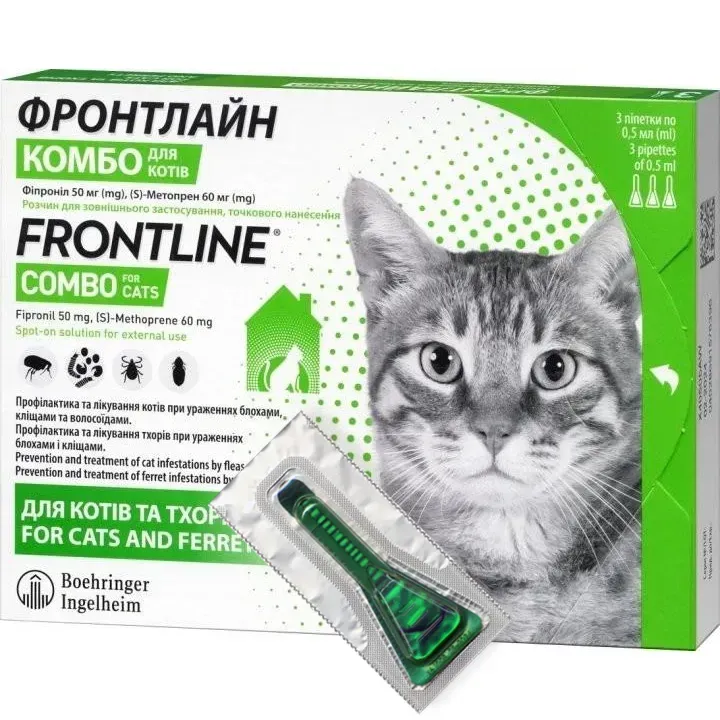
Frontline Combo Cat — spot-on drops against fleas and ticks for cats (0.5 ml × 1 pipette)
Buy
Advocate — spot-on parasitic drops against external and internal parasites for cats and ferrets up to 4 kg (1 pipette)
Buy
Zoetis Stronghold — spot-on parasitic drops Stronghold for puppies and kittens up to 2.5 kg, 1 pipette
Buy
2. Systemic tablets
- Prescribed by a veterinarian.
- Act throughout the body, providing effective mite destruction for 4 weeks.

Credelio — antiparasitic tablet for cats
Buy
Vitomax Okero — antiparasitic tablet for cats 0.5–2.5 kg with salmon flavor
Buy
3. External care products
- Mild shampoos, conditioners, moisturizing skin products do not interfere with treatment and help restore the epidermis after irritation.

Shampoo “Perfect Care” for Dogs and Cats Total Care HOME FOOD Beauty, 200 ml
Buy
Conditioner “Silky Touch” for Dogs and Cats Silky Touch HOME FOOD Beauty, 200 ml
Buy
Body support during treatment
Treatment effectiveness significantly increases with simultaneous immunity strengthening and detoxification support:
• Immunity boosting:
- Liver Pro, ImmunoBiotic — support the liver, enhance the body’s protective forces.

Probiotic and Enzymes for Gut Microbiota Restoration ImmunoBiotic Pro HOME FOOD Expert, 20 g
BuyProbiotic and Enzymes for Gut Microbiota Restoration ImmunoBiotic Pro HOME FOOD Expert, 20 g
Buy
• Detoxification:
- Detox Pro helps eliminate toxins formed during mite death

Enterosorbent for Body Detoxification Detox Pro HOME FOOD Expert, 30 ml
Buy
• Calming agents:
- Based on cannabidiol — reduce stress and itching

Dietary Supplement CBD oil 2% to Reduce Anxiety and Pain Relax Pro HOME FOOD Expert, 10 ml
Buy
• Skin and coat support:
- Omega-3 from salmon oil helps reduce inflammation, improves skin elasticity and coat shine

Salmon Oil for Skin Health and Coat Shine in Dogs and Cats, 100 ml
Buy
Microscopic mites in cats — a controllable problem
Modern veterinary practice proves that microscopic mites are not a terrible disease if the correct approach is followed.
- Mandatory: diagnosis and treatment prescription must be performed by a veterinarian.
- With properly selected comprehensive treatment — drops or tablets, skin care, immunity and detoxification support — clinical signs disappear in about 4–6 weeks.
- Timely therapy and proper feeding guarantee complete recovery of the cat, restoration of coat and skin, and reduce the risk of secondary infections.

Dry Food HOME FOOD Healthy Skin and Shiny Coat for Adult Cats Turkey and Salmon Healthy skin and shiny coat, 1.6 kg
Buy