📌 HOME FOOD Blog: Puppy Care and Features of Proper Nutrition
Puppy Care and Features of Proper Nutrition
So, a puppy has appeared in your home. A little fluffy miracle that needs love, care, and a proper care system. Its breed, size, or gender are not as important as one main rule—love, cuddle, and give maximum attention. The second, equally important rule is to provide proper, balanced nutrition, which will lay the foundation for health for many years.
Why is Proper Nutrition Critical for a Puppy?
During the first 6–9 months of life, a puppy spends up to 50% of its energy on play and movement, and the rest on forming its skeleton, organs, and body systems. This is a period of intensive growth when even a minor nutrient deficiency can have long-term consequences—from growth delays to issues with joint and heart development.
Feeding Standards: Precision is Key to Health
From the moment of weaning from its mother, a puppy needs a strictly regulated diet. Scientists have established that a puppy’s daily protein requirement is 2–2.5 times higher than that of an adult dog, averaging 9 g of protein per 1 kg of body weight.
Key Macronutrients:
- Proteins: Must be highly digestible (at least 80–85%) with a complete amino acid profile. Essential amino acids like lysine, arginine, and methionine are particularly important. The best sources are lamb, turkey, salmon, and trout.
- Fats: A source of energy and fat-soluble vitamins (A, D3, K, E). Omega-3 and Omega-6 are vital for the development of the nervous system, vision, skin, and coat. Deep-sea fish fats, such as salmon, anchovy, and mackerel, are especially beneficial.
- Carbohydrates: Support glycogen balance, intestinal motility, and microbiota. The daily requirement is 15 g of carbohydrates, of which 1.5 g should be fiber per 1 kg of body weight.
💡Interesting: Puppies with light coats or a genetic predisposition to allergies better assimilate rice and oats as sources of complex carbohydrates.
Micronutrients: Small Doses, Big Impact
Puppies need more calcium, phosphorus, and vitamin D3 than adult dogs to form a healthy musculoskeletal system. However, an excess of calcium is particularly dangerous for large breeds.
- Calcium: Best absorbed in chelated form (e.g., from crustacean meal or calcium citrate).
- Phosphorus: Should be balanced with calcium in an ideal ratio of 1.2:1.
- Glucosamine, chondroitin, marine collagen: Essential for preventing dysplasia and supporting joint formation.
Supporting Digestive and Immune Systems
About 70% of a dog’s immune cells are located in the intestines. Therefore, gut health is lifelong immunity.
A puppy’s diet should include:
- Fructooligosaccharides (FOS): Nutrition for beneficial microflora.
- Psyllium and beta-glucans: Promote normal intestinal function.
- Saccharomyces boulardii: A probiotic with proven effectiveness in protecting the mucous membrane.
Plant Extracts—Not Just a Trend, But Science:
- Chicory: Normalizes blood sugar.
- Fennel, chamomile, Yucca schidigera: Prevent bloating and colic.
- Turmeric, echinacea, rosemary: Stimulate immune responses.

Diet: Commercial or Homemade?
Diet: Commercial or Homemade?
Homemade food may seem appealing, but only if the diet is precisely balanced—considering the amino acid profile, vitamin-mineral complex, and food processing techniques.
⚠️ Excess fiber, improper vitamin combinations (e.g., iron inhibits zinc absorption), or a lack of fatty acids are all risks of “natural” feeding without proper adjustments.
Therefore, the optimal choice is a balanced commercial food from a reliable manufacturer.
For example:

For small breeds with sensitive skin: Homefood Lamb and Rice For puppies 1–12 months.
Buy
For medium and large breeds: Homefood Trout and Rice Hypoallergenic For puppies 1–12 months.
BuyConclusion
A puppy is not only a joy but also a responsibility. Its health is shaped daily—through proper nutrition, exercise, care, and love. Therefore, don’t skimp on attention or food quality. Everything we invest in a puppy’s early life will pay off manifold in its adult years—in its activity, longevity, and boundless gratitude.
Recommended Products for Your Little One:
During teething (from 3 to 6–9 months), we recommend giving “chew treats” made from dried meat and cartilage products to stimulate the loss of baby teeth and the growth of permanent ones:

Treats for Dogs Beef Lung, 80 g
Buy
Treats for Dogs Beef Tripe, 80 g
Buy
Treats for Dogs Spinal Tendon, 80 g
Buy
Treats for Dogs Beef Aorta, 80 g
BuyRemember that treats should make up no more than 10–15% of the total diet.
If the puppy consumes enough food, grows, develops, and gains weight according to its breed, with shiny, richly pigmented fur, clean skin without lesions, and no thickened joints, there is no need for additional feeding or vitamin-mineral supplements.
If the puppy lags in growth, has developmental delays, fails to gain weight, or if its musculoskeletal system is not developing properly, or if pet parents feed homemade food, attention should be given to additional supplements:

Salmon Oil, Krill Oil
Buy
Phytomin for Dogs Omega Balance Oil Omega-3, -6, -9, 100 ml
Buy
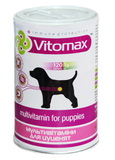
Multivitamin Vitomax for Puppies of All Breeds (120 tablets)
Buy
Vitamins 8in1 Excel «Glucosamine + MSM» for Joints
BuyDon’t forget to administer anthelmintic/antiprotozoal medications to puppies in a timely manner, especially before vaccinations and during the first year of life.
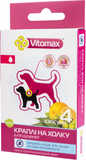
A little rascal that has received all vaccinations and started going for walks should be treated for fleas and ticks as regularly as an adult dog. Treatment products should be chosen based on age.
- Drops on the withers
- Collars
- Tablets for external parasites (fleas, ticks) and combined treatments
- Sprays
From an early age, train the puppy to eat and drink from its own bowls: