📌 HOME FOOD Blog: What’s Better for Your Dog – Raw/Natural Food or Commercial Kibble?
What’s Better for Your Dog – Raw/Natural Food or Commercial Kibble?
Caring about the health and longevity of your pet, every responsible owner sooner or later faces the main question: what’s the best way to feed a dog – homemade natural food or commercial kibble? The modern world offers countless options: from carefully balanced commercial diets to home-cooked meals made with love. Both approaches have their advantages, specific features and requirements — choosing between them can be a real challenge. In this blog post we’ll explore what lies behind each method, what to pay attention to, and how to choose the diet that will be both healthy and convenient for your dog.
Dog nutrition is conventionally divided into three main types: natural/home-cooked, commercial food, and mixed feeding. Each has its own philosophy and history — it’s important to understand what these names really mean.
Natural feeding is when the owner creates the menu themselves from meat, vegetables, grains and additional ingredients. For many centuries this was the only possible way: dogs ate what people gave them or what they could find themselves. It is the most “natural” option, but it requires deep knowledge of nutrient balance, vitamins and minerals.
With the development of science and urbanisation, the need arose for more convenient and consistently balanced nutrition. That’s how the first commercial dog foods appeared at the end of the 19th – beginning of the 20th century. At first they were pressed dry “biscuits” created as an affordable and nutritious alternative to table scraps. Later, when scientists better understood animal needs, complete and balanced foods were developed — those that contain everything necessary in a single serving.
Dry kibble became popular due to ease of storage, cost-effectiveness and precise nutrient balance. Wet foods, which appeared a little later, were designed for picky eaters and dogs that need extra hydration and softer texture.
Today, commercial pet food is the result of enormous work by veterinary nutritionists, technologists and researchers. Manufacturers ensure that every piece is not only tasty but also healthy, safe and tailored to the age, size and special needs of the animal.
But despite all the technological progress, one thing remains unchanged: the owner’s love, which is expressed in the desire to give their pet the very best. That’s why it’s so important to understand how different feeding systems came about and how they can benefit your particular dog.
Why have dry kibbles become so popular and what is their real strength?
Dry foods have long occupied a key place in the diet of pets — and for good reason. They are convenient, have a long shelf life, are easy to portion and guarantee consistent quality in every serving. Most importantly, the range allows you to choose food for any dog: from a tiny puppy to a respected senior.
Advantages of dry foods in different classes
Economy class
The most affordable option, designed primarily to provide basic energy. Often contains simple protein sources and grains, with simpler formulas. Not the best choice for long-term feeding, but exists as a budget solution.
Premium class
More balanced and higher quality. Contains better protein sources, fewer by-products and added vitamins. Well suited for the daily diet of healthy dogs without special needs.

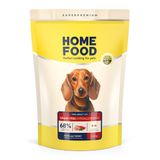
HOME FOOD Dry Dog Food for Active Adult Medium Breed Dogs “Beef” Active Balanced Formula, 10 kg
Buy
HOME FOOD Dry Dog Food for Active Adult Large Breed Dogs “Beef” Active Balanced Formula, 10 kg
Buy
HOME FOOD Dry Dog Food for Adult Medium Breed Dogs “Meat Assortment” Nutritive Balanced Formula, 10 kg
Buy
HOME FOOD Dry Dog Food for Adult Large Breed Dogs “Meat Assortment” Nutritive Balanced Formula, 10 kg
Buy
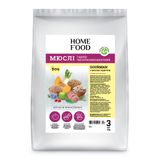
HOME FOOD Dog Food Mix, 10 kg
Buy
Super-premium and holistic foods are the golden mean between science and nature. It is the highest-quality foods that provide complete, balanced and scientifically justified nutrition, fully covering the needs of:
- puppies — growth, brain development, immune system formation;
- adult dogs — stable energy, high-quality proteins and correct nutrient ratios of nutrients;
- seniors — easily digestible formulas, joint, heart and overall tone support.
Such foods use pure meat or fish as the main protein source, premium fats, beneficial omega fatty acids, antioxidants, prebiotics and complex mineral formulas. They are developed with the participation of veterinary nutritionists, so every single kibble is a mini-combination of everything your pet’s body needs.
That’s why super-premium foods can be the sole source of nutrition without needing extra vitamins or supplements (unless the dog has specific medical conditions).
What if a dog needs a special diet?
This brings us to therapeutic/veterinary diets — specialized formulas developed for dogs with certain health issues or special needs. Unlike regular foods, they are created for specific purposes:
- support of kidney or liver function;
- weight control and obesity management;
- help with allergies and food intolerances;
- support of sensitive digestion;
- diets for heart, endocrine or joint diseases.
These foods are prescribed by a veterinarian because their composition has a therapeutic and preventive effect. They don’t just feed — they help the body recover and live comfortably.
Dry kibble is no longer just a convenient feeding method. It is a whole science of canine health, and the quality of the chosen diet determines how full and happy your pet’s life will be.

Is “natural” food always healthy?
Despite the popularity of commercial foods, many owners still want to feed their dog the way “nature intended” — with home-cooked food made with their own hands. There’s nothing wrong with that: a natural diet can be an excellent option if planned down to the smallest detail. But that’s exactly where the difficulty lies — in the details.
Home-cooked food can vary widely — from the classic “porridge with meat” to meticulously balanced menus. However, it’s crucial to understand: natural food for dogs ≠ human food. Many products we eat every day can be harmful or even toxic to dogs.
What to pay attention to when preparing natural food for a dog?
1. Correct proportions
For a balanced diet you need approximately:
- 50–60% meat (beef, turkey, chicken, rabbit; raw or cooked depending on the chosen system);
- 20–30% vegetables (carrot, zucchini, pumpkin, broccoli);
- 10–20% grains or alternative carbohydrate sources (buckwheat, rice, sometimes sweet potato);
- fats, including animal fat or fish oil;
- vitamin-mineral supplements — without them the diet is almost always deficient.
Typical mistakes in natural feeding
- Monotony — constant chicken or one type of grain won’t provide everything needed.
- Too many carbs — “porridge with a spoonful of meat” harms health and leads to obesity and protein deficiency.
- Lack of supplements — without calcium, phosphorus, vitamin D and B-group vitamins there will be problems with bones, coat and immunity.
- Feeding from the table — salt, spices, fried food, onion, chocolate, grapes and many other products are toxic or too heavy.
- Improper bone cooking — cooked bones become brittle and can injure the gastrointestinal tract.
Types of natural feeding
- Classic cooked natural food — meat, vegetables, grains + supplements.
- BARF (Biologically Appropriate Raw Food) — raw meat, bones, offal, vegetables; requires perfect hygiene and precise balance.
- Cooked BARF — adapted version with partial heat treatment.
A natural diet can be truly beneficial — if it is carefully planned.
Can you combine both systems? Mixed feeding as the art of balance
Many owners look for the “golden mean” between the convenience of commercial food and the naturalness of home cooking. This is how mixed feeding was born: dry and/or wet commercial food combined with natural ingredients. At first glance it seems the perfect compromise — and for many dogs it really works. But for it to be beneficial rather than chaotic, you need to know the rules.
Advantages of mixed feeding
- Flexibility and variety
Different textures, smells and tastes can improve appetite, especially in picky dogs. - Convenience for the owner
Dry food provides balance and nutrition, wet food adds moisture and flavour, and natural ingredients bring freshness. - Control over composition
You can enrich the menu with vegetables, lean meat or useful additives without giving up ready-made balanced formulas.
What to pay attention to in mixed feeding?
1. Do not mix everything in one bowl — give commercial and natural food at different meals because digestion speeds differ.
2. Balance is everything — commercial food is already complete; adding too much meat or grains can upset the balance. Natural food should not exceed 20–30% of daily calories unless adjusted with a veterinary nutritionist.
3. Watch calories — dry kibble + meat can easily lead to overfeeding.
4. Quality over quantity — use super-premium base foods.
5. No daily experiments — the dog’s gut needs stability.
What can be safely added to commercial food?
- cooked or raw meat (according to your chosen system);
- safe vegetables: zucchini, carrot, pumpkin;
- a little vegetable oil or fish oil;
- low-fat cottage cheese or egg (not every day).
Mixed feeding can be an excellent choice — when done thoughtfully and consistently.
Which type of feeding is the right one?
After all the comparisons, the main question remains: which diet should you choose?
The answer is simple — the one that suits your particular dog.
No single feeding method is universally “right” or “wrong”. Dry and wet commercial foods, natural home-cooked meals or a mixed approach — each can be excellent if all the rules are followed.
What to consider when choosing a diet?
1. Health status – age, weight, activity level and existing conditions all matter.
2. Veterinarian’s recommendations – they see what the owner might miss.
3. Balance is key – if you cook yourself, the diet must be precisely balanced; this usually requires a nutritionist and quality supplements.
4. Observe the dog’s response
The best indicator is the dog itself: body condition, coat quality, energy, stool, appetite.
Conclusion
The right type of feeding is the one that provides health, energy, a beautiful appearance and comfortable digestion for your pet. Some dogs thrive on super-premium commercial foods. Others do best on meticulously balanced natural diets. Many feel great on a sensible mixed system.
The most important thing is to approach nutrition consciously, responsibly and with love — listening to the advice of professionals and carefully watching your four-legged friend.
Because the best diet is the one that makes your dog healthy, happy and full of life.