📌 HOME FOOD Blog: Care for Long-Haired Dog Breeds
Care for Long-Haired Dog Breeds
Long, silky, and lush fur is one of the main adornments of many dog breeds. It captivates with its aesthetics, highlights breed characteristics, and inspires awe at first glance. However, such beauty demands daily care, knowledge, and consistent attention. Owners of long-haired dogs are well aware that behind this elegance lie considerable efforts: regular brushing, washing, monitoring the condition of the skin and fur, and timely detection of potential issues.
In this blog, we will thoroughly explore how to properly care for long-haired breeds, what tools you’ll need, which mistakes to avoid, and how to turn grooming into a pleasant ritual for both you and your beloved pet. Whether you have a Yorkshire Terrier, Shih Tzu, Collie, or Afghan Hound, these tips will help keep your dog’s fur healthy, shiny, and free of tangles.
Classification of Long-Haired Dog Breeds According to FCI Standards
Long-haired dogs are found among a wide variety of breeds—from tiny decorative companions to majestic herding dogs and graceful hounds. To better navigate the specifics of caring for each breed, it’s worth knowing which group they belong to according to the international FCI (Fédération Cynologique Internationale) classification. This not only helps understand their behavior and needs but also allows you to assess the type of fur typical for a given breed. Below is an overview of the main long-haired representatives from different FCI groups.
Group 1 – Herding and Livestock Guarding Dogs
- Rough Collie – a classic example of a long-haired herding breed
- Belgian Shepherd – varieties Groenendael and Tervuren have long fur
Group 4 – Dachshunds
All varieties of long-haired dachshunds
Group 5 – Spitz and Primitive Breeds
Among this group, there are many breeds with abundant, long fur:
- Samoyed, Alaskan Malamute, Siberian Husky, Finnish Spitz, Pomeranian, Japanese Spitz, Chow Chow, and others
Group 7 – Pointers and Setter Breeds
- German Longhaired Pointer – has thick, long fur requiring regular brushing
Group 8 – Retrievers, Spaniels, and Water Dogs
- Curly Coated Retriever – distinguished by its dense, wavy fur
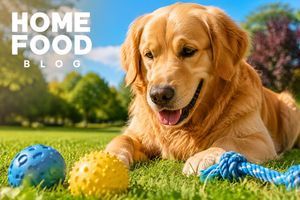
- Golden Retriever, Toller – have elongated fur with a thick undercoat
Group 9 – Toy and Companion Dogs
This is the true kingdom of long-haired decorative breeds:
- Shih Tzu, Maltese, Lhasa Apso, Havanese, Coton de Tulear, Bolognese, Cavalier King Charles Spaniel, Poodle (all sizes), Long-haired Chihuahua, Russian Toy with long fur
Group 10 – Sighthounds
Subgroup 1 – Long-haired or with Fringes
- Afghan Hound, Borzoi (Russian Hound), Saluki – elegant representatives with refined long fur or characteristic embellishments
Types of Fur in Long-Haired Dogs
Before moving on to practical care tips, it’s important to understand what is considered long fur and the types of fur found in long-haired breeds. This will help you select the right grooming tools, determine the frequency of brushing and washing, and assess the need for regular trimming.
At What Length Is Fur Considered Long?
According to scientific research by cynologists, groomers, and veterinary dermatologists, a dog is considered long-haired if the fur length on its body exceeds 5 cm. In such breeds, the fur often grows in multiple directions, forming "skirts," "trails," or "feathers" on the legs and ears, and requires more intensive care than short or medium-length fur.
Main Types of Fur in Long-Haired Breeds
Long-haired dogs can have different structures and characteristics of their coat. Here are the main types:
1. Straight (Smooth) Fur
Example: Collie, Shih Tzu, Spaniels
- Has a silky, soft, or dense texture
- Prone to matting, especially behind the ears, on the belly, and under the armpits
- Requires regular brushing and frequent washing
2. Curly or Wavy Fur
Example: Poodle, Bichon Frise, Portuguese Water Dog
- Consists of tight curls
Does not shed heavily but grows continuously - Requires regular professional grooming and home brushing
- Can be trimmed in various styles
3. Hair-Like Type
Example: Maltese, Yorkshire Terrier, Havanese, Shih Tzu
- Structure resembles human hair: smooth, long, with little to no undercoat
- Virtually does not shed but tangles easily
- Requires constant brushing and periodic trimming
- Often uses conditioners and oils for care
Shedding and Non-Shedding Long-Haired Dogs
- Shedding Breeds: Collie, Samoyed, Golden Retriever They have an undercoat that renews seasonally. During shedding, brushing should be done daily.
- Non-Shedding Breeds: Poodle, Maltese, Yorkshire Terrier Their fur grows without shedding cycles, reducing allergenicity but requiring regular trimming.
By Color
Fur color can also influence care. For example:
- Light Fur (white, cream, silver): gets dirty quickly, requires more frequent washing
- Dark Fur (black, chocolate): may fade in the sun, losing shine, requires conditioning
- Multi-Colored Fur (parti, merle): requires careful care to preserve pattern clarity
To Trim or to Brush?
| Fur Type | Trimmed? | Requires Brushing |
|---|---|---|
| Straight | No (only hygiene) | Yes, regularly |
| Curly | Yes, regularly | Yes, several times a week |
| Hair-like | Yes (every 4–6 weeks) | Yes, daily or every other day |
| With Undercoat | Only hygienic (belly, paws) | Yes, especially during shedding |
Important: Trimming down to the skin (with a clipper without a guard) is not recommended for breeds with undercoats, as it disrupts thermoregulation and may lead to improper fur regrowth.
Bathing Long-Haired Dogs: A Beauty and Care Ritual
Caring for a long-haired dog is not just a hygienic necessity but also an opportunity to strengthen the bond between owner and pet. One of the most important procedures is bathing, which, when done correctly, not only cleans the fur and skin but also promotes the health of the coat and prevents matting.
However, before turning on the tap, it’s important to know a few key nuances that distinguish long-haired dogs from others.
Brushing: Before or After Bathing?
Brushing: before or after bathing? The timing for brushing depends on the type of your dog’s fur:
Breeds with Undercoats (e.g., Collie, Samoyed, Retrievers) – require mandatory brushing before bathing.
In such cases, it’s advisable to perform trimming (removing dead undercoat manually or with special combs) or express shedding to avoid matting when wet.
Breeds with Hair-Like or Curly Texture (Yorkshire Terrier, Maltese, Poodle, Bichon) – are brushed after bathing, during drying.
Wet fur in these breeds brushes more easily and is less damaged when using the right products.

Shampoos: Which to Choose for Long-Haired Dogs?
Shampoos for long-haired dogs have a special formula that accounts for:
- length and texture of the fur,
- tendency to mat,
- propensity for dry ends.
They typically contain softening ingredients (oils, keratin, silk proteins) that don’t overdry the fur, gently cleanse it, and make brushing easier.
Not Suitable: Shampoos for short-haired breeds – they can make the fur heavy, brittle, or oily.
To keep the fur soft, shiny, and easy to brush, consider using:
- Conditioners and balms – applied after shampoo, they form a protective layer and nourish the ends
- Foams for easy brushing – applied to wet fur before drying
- Detangling sprays – help painlessly separate mats, suitable for daily use
- Heat-protectant products, oils – recommended for drying with hot air
Important: Use a furminator on dry, clean fur, no more than 1–2 times a month.
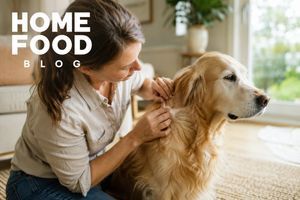
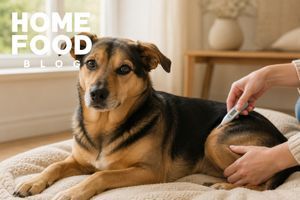
A well-chosen comb is not just a tool but a bridge between daily care and the health of the fur. The main rule: always brush the fur in the direction of its growth, starting from the ends and working toward the roots—with gentleness, patience, and respect for the dog’s skin. Most importantly, always end grooming with affection, praise, and a favorite treat. This will build trust and make future sessions enjoyable for both you and your furry friend.

Shampoo "Perfect Care" for Dogs and Cats Total Care HOME FOOD Beauty, 200 ml
Buy
Conditioner "Silky Touch" for Dogs and Cats Silky Touch HOME FOOD Beauty, 200 ml
Buy
Drying: Hairdryer or Booster?
Proper drying is an important final step in bathing.
Hairdryer – suitable for dogs with less undercoat or small breeds.
Booster (high-performance drying device) – effective for breeds with thick, double coats (Samoyed, Chow Chow, Husky). It not only dries but also removes remaining undercoat.
Water Temperature During Bathing: +36–38°C – comfortable for most breeds, non-irritating to the skin, and stress-free.
Air Temperature During Drying: no hotter than +40°C.
Airflow Speed: medium or high, but from a safe distance (15–30 cm) to avoid overdrying or burns.
Brushing: Tools That Work Wonders
After bathing, brushing becomes a key step that helps not only shape the fur’s neat appearance but also prevent matting, ensure skin ventilation, and stimulate circulation. To do this, it’s important to choose the right tools depending on the fur type and undercoat:
- Combs with Metal Teeth – ideal for carefully separating strands, areas behind the ears, on the belly, or legs. Choose combs with tooth length matching the fur’s thickness.
- Brushes with Natural Bristles or Silicone – for finishing brushing, they add shine to the fur and improve skin microcirculation.
Slicker Brushes – effective for thick fur with undercoat (e.g., Spaniels, Collies, Retrievers). They gently remove excess fur and small mats. - Grooming Rakes and Blades – suitable for dogs with long, thick fur, especially during heavy shedding periods.
- Furminators – specialized tools for removing undercoat without damaging the topcoat. They reduce shedding by up to 90% and are suitable for breeds with thick undercoats (Samoyed, Husky, Border Collie, etc.).
Important: Use a furminator on dry, clean fur, no more than 1–2 times a month.

Flamingo - Comb for Detangling Long Fur for Dogs 18 x 6 cm
Buy
Trixie - Universal Mat Remover with Wide Teeth and Plastic Handle 7 x 18 cm
Buy
Flamingo - Deshedding Tool for Brushing Dog Fur S
Buy
Large Comb-Trimmer for Dogs and Cats
Buy
What and How to Feed Long-Haired Dog Breeds?
The health of a dog’s fur is not just the result of external care. It begins from within, with proper, balanced nutrition. For long-haired dogs, diet plays a special role, as the composition of their food directly affects the shine, elasticity, density of the fur, and the skin’s ability to retain moisture.
Features of the Diet for Long-Haired Breeds
The nutrition of a long-haired dog should adhere to the following principles:
- Completeness – sufficient high-quality protein (meat, fish, eggs)
- Hydration from within – important not only to drink water but also to retain moisture in cells
- Anti-inflammatory effects – to maintain healthy skin and prevent flaking or itching
- Antioxidants – to protect against environmental damage (sun, dust, moisture)

Dry Food for Healthy Skin and Shiny Fur for Adult Small Breed Dogs Turkey and Salmon Healthy Skin and Shiny Coat, 1.6 kg
Buy
Dry Food for Healthy Skin and Shiny Fur for Adult Medium Breed Dogs Turkey and Salmon Healthy Skin and Shiny Coat, 1.6 kg
Buy
Beneficial Supplements in the Diet of Long-Haired Dogs
Betaine
A natural substance that:
- Retains moisture in the skin and fur
- Improves the structure of the hair shaft
- Reduces fur brittleness
Betaine is found in super-premium foods and vitamin-mineral supplements
Omega-3 and Omega-6 Fatty Acids
Found in fish oil, flaxseed oil.
Their benefits:
- Reduce fur loss
- Enhance elasticity and shine
- Relieve itching and inflammation
Biotin, Zinc, B Vitamins
- Promote fur growth
- Restore skin after irritation
- Support the epidermal barrier function

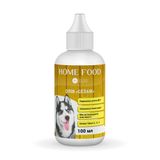
Phytomin for Dogs Salmon Oil for Skin Health and Shiny Fur, 100 ml
Buy
Phytomin for Dogs "Omega Balance" Oil Balance Omega-3, -6, -9, 100 ml
Buy
Phytomin for Dogs Krill Oil for Post-Shedding Recovery, 100 ml
Buy
Symbiotic for Digestive and Immune Support HePawSyn HOME FOOD Expert, 250 g
Buy
Specialized Water with Succinic Acid: Worth It?
Recent research in nutrigenomics has proven the benefits of succinic acid (succinates) as a natural stimulator of cellular metabolism. Adding succinic acid solutions to drinking water:
- Promotes detoxification of the body
- Enhances absorption of micronutrients from food
- Improves the condition of fur and skin at the cellular level
- Has a mild toning effect
Such water can be given in courses of 2–3 weeks, especially during shedding, stress, shows, or seasonal changes.

Drinking Water for Dogs to Strengthen the Immune System, 1 L
Buy
Healthy Fur Reflects Overall Canine Well-Being
No shampoo, comb, or supplement will provide long-term results if the dog’s body isn’t functioning harmoniously. The quality of fur is one of the first indicators of overall health, and if it becomes dull, falls out, or becomes excessively oily, it may signal internal issues.
Regular Veterinary Checkups (at least 1–2 times a year) help detect in a timely manner:
- Hormonal imbalances (hypothyroidism, Cushing’s syndrome)
- Dermatological conditions
- Parasites or fungal infections
- Allergic reactions manifesting through skin and fur
The hormonal system plays a special role: even minor disruptions (e.g., after spaying or during puberty) can affect fur growth, structure, and shine. In such cases, a veterinarian may recommend tailored nutrition or supportive supplements.
However, perhaps the most subtle and important factor is the emotional state of the dog. Stress, loneliness, or lack of contact with the owner directly affects appearance: the fur becomes dull and limp, and areas of self-chewing or excessive shedding may appear.
Love, care, play, a calm environment, and warm contact with "pet-parents" are what literally "nourish" the animal from within. In cases of prolonged stress, veterinarians may recommend mild calming supplements based on L-tryptophan, valerian, magnesium, CBD, or adaptogens, which support the nervous system without sedative effects.

Dietary Supplement CBD Oil 2% for Reducing Anxiety and Pain Relax Pro HOME FOOD Expert, 10 ml
Buy
Caring for long fur is more than just cosmetics. It’s a comprehensive story of love, health, respect for a dog’s nature, and a sincere desire to see them happy, well-groomed, and confident by your side.