📌 HOME FOOD Blog: Nematodes in Cats: Causes, Prevention, and Treatment
Nematodes in Cats: Causes, Prevention, and Treatment
Cats, even those that live exclusively indoors, are not immune to parasites, among which nematodes (roundworms) occupy one of the leading positions. These parasites, invisible to the naked eye, can cause serious harm to an animal’s health: disrupt digestion, cause weakness, loss of appetite, and in severe cases — even pose a threat to life. In the wild, roundworms spread through contact with contaminated soil, rodents, or other animals, while in domestic conditions the risk of infection remains through food, water, or contact with the external environment.
In this blog, we will examine the causes of nematode infection, methods of prevention, and modern treatment approaches to help cat owners maintain the health and well-being of their pets without unnecessary stress for the animal.
In this blog, we will examine the causes of nematode infection, methods of prevention, and modern treatment approaches to help cat owners maintain their pets’ health and well-being without unnecessary stress for the animal.
- According to a large meta-analysis combining data from over 2 million cats across 51 countries, the average global prevalence of Toxocara cati infection (one of the most common feline nematodes) is approximately 17.0%.
- This figure varies significantly across regions: highest in Africa (43.3%), lowest in South America (12.6%).
- In Europe — according to numerous studies — the infection rate roughly corresponds to the global average (around 15–20%).
- Important: the type of living environment plays a major role — stray or free-roaming cats have significantly higher infection rates (in various studies 25–30% and higher) compared to indoor cats that are regularly dewormed.
Transmission of nematodes from cats to humans
- Toxocara cati is the most common roundworm in cats. Humans can become infected through contact with contaminated soil, sand, or cat feces containing parasite eggs.
- In humans, this can cause toxocariasis — a condition in which larvae migrate through organs (liver, lungs, eyes) and cause inflammation, sometimes serious complications, especially in children.
- The primary route of infection is fecal-oral — through unwashed hands, dirty vegetables or fruits, sandboxes.
Transmission from humans to cats
- Humans are not typical sources of nematodes for cats.
- Cats usually become infected through intermediate hosts (rodents, birds, insects) or contact with soil/sandboxes, not through humans.
- However, contact with nematode eggs on hands or objects can lead to reinfection of the cat if it licks those areas.
Which cats are at high risk of nematode infection?
Although any cat can become infected with roundworms, certain categories of animals are especially vulnerable. Understanding these groups helps owners plan effective prevention:
1. Kittens
- Most often infected through mother’s milk or contact with the mother’s contaminated fur.
- Their immunity is not yet formed, so the severity of infestation can be significant, and the risk of complications is high.
2. Stray and free-roaming cats
- Constant contact with soil, sandboxes, other animals, and intermediate hosts (rodents, birds, insects) significantly increases the likelihood of infection.
- These cats are often the main source of nematode spread in the population.
3. Hunting cats
- Regardless of whether the cat lives indoors, hunting mice, rats, birds, or insects can lead to parasite transmission through intermediate hosts.
4. Cats with weakened immunity
- Elderly or sick cats, as well as those undergoing treatment for other diseases, become infected more easily and tolerate infestation more severely.
5. Cats with insufficient prevention
- Cats that are not regularly dewormed or live in homes with poor hygiene (dirty litter boxes, soil, sand) have an increased risk.

How nematodes are detected in cats
Detection of nematodes is a key step for proper treatment and prevention. There are several methods, ranging from simple visual inspection to modern laboratory techniques.
1. Visual stool examination
- The simplest method is checking feces for the presence of eggs or adult parasites.
- Nematode eggs often appear as small oval or round structures, sometimes visible only under a microscope.
- Adult roundworms sometimes pass with feces or through vomiting in kittens.
If suspicious particles are found, do not panic — preserve the sample and show it to the veterinarian for accurate analysis.
2. Laboratory diagnostics
Modern veterinary medicine offers several accurate methods:
| Method | What it does | Advantages |
|---|---|---|
| Parasep test / fecal flotation test | Detects nematode eggs in fecal matter | Fast, inexpensive, available in most clinics |
| ELISA (immunological method) | Detects antibodies or parasite antigens in blood or feces | Allows diagnosis even in early infestation when eggs have not yet appeared |
| PCR (polymerase chain reaction) | Detects parasite DNA | Most accurate modern method; identifies nematode species even at low infection levels |
3. Combined approach
- Veterinarians often combine visual assessment with laboratory methods for the most reliable picture.
- For kittens and cats at high risk (stray, hunters, breeding animals), regular fecal checks help start treatment on time.
Most common active ingredients and combination products against nematodes in cats
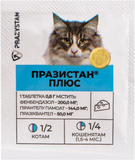
- Pyrantel pamoate — one of the most common anthelmintics for cats; effective against roundworms (nematodes) and hookworms. Frequently prescribed for kittens and adult cats.
- Fenbendazole — a benzimidazole anthelmintic with broad-spectrum action: against nematodes, some cestodes, and sometimes protozoa. Well suited for mixed infestations or suspicion of multiple parasites.
- Praziquantel — effective against tapeworms (cestodes). Often combined with other anthelmintics for broad-spectrum coverage.

NexGard Combo — spot-on antiparasitic drops against fleas, ticks, and worms for cats (up to 2.5 kg), 1 applicator
Buy
Milprazon KRKA — anthelmintic tablets for cats weighing more than 2 kg, 16 mg/40 mg, 1 tab
Buy
Advocate — spot-on antiparasitic drops against external and internal parasites for cats and ferrets up to 4 kg (1 pipette)
Buy
Superium Milbest — anthelmintic tablets for cats (0.5–2 kg)
Buy
Drontal — tablet for treatment and prevention of helminthiasis in cats, 1 pc
Buy
Stronghold PLUS Zoetis — antiparasitic drops for cats up to 2.5 kg, 1 pipette
Buy
Vitomax Okero — antiparasitic tablet for cats 0.5–2.5 kg with salmon flavor
Buy
AnimAll VetLine DeWorm — anthelmintic preparation AnimAll for puppies and kittens (suspension)
Buy
Combination formulas (broad-spectrum action)
Veterinary products usually combine several active ingredients to cover different types of parasites simultaneously:
- For example, the combination “pyrantel + praziquantel” is often used for prevention and treatment — covers roundworms, cestodes, hookworms.
- Combinations “fenbendazole + praziquantel” or “fenbendazole + pyrantel + praziquantel” are used as broad-spectrum products, convenient when there is no exact diagnosis or risk of mixed infestation.
How the drug is chosen: what veterinarians pay attention to
When selecting an anthelmintic, several important factors are considered:
- Parasite type (nematode, cestode, mixed infestation) — crucial for selecting the appropriate active ingredient or combination.
- Age and weight of the cat (kitten, adult, senior) — some drugs have minimum age or weight requirements for safe use.
- Form of release and ease of administration — tablets, suspensions, combination products; for cats reluctant to swallow tablets, another form may be more suitable.
- Frequency of prevention — many combination products are recommended in courses, and for cats with outdoor access — regularly, according to a preventive schedule (e.g., once every 3–6 months depending on risk).
Why combinations are more popular: scientific and practical perspective
- Since cats often have mixed infestations (multiple parasite species at once), combination products (e.g., “pyrantel + praziquantel” or “fenbendazole + praziquantel”) provide the greatest assurance of eliminating both nematodes and cestodes.
- Modern products are generally well tolerated by most cats when dosed correctly — reducing the risk of side effects.
- Using broad-spectrum products is also convenient for prevention if the animal has outdoor access or is in a high parasitic risk area.
But — only as prescribed by a veterinarian
Even if a product has a broad spectrum, a fecal analysis (fecal test, Parasep method, or ELISA diagnostics) must be performed before use to determine the parasite species — this helps choose the most appropriate remedy. It is also important to consider age, weight, health status, pregnancy, or lactation to avoid unnecessary risks.
Prevention of nematodes in cats: age and frequency
Prevention of nematodes is important even for indoor cats, as parasite eggs can enter the home through humans, other animals, or food. The frequency of deworming depends on the cat’s age, lifestyle, and contact with the external environment.
| Cat category | Age at start of prevention | Frequency per year | Additional recommendations |
|---|---|---|---|
| Kittens (indoor) | 2–3 weeks (first course after veterinary consultation) | every 2–3 weeks until 12 weeks, then monthly until 6 months | Regularly monitor feces; first courses with mild suspensions or pastes. |
| Indoor cats, no outdoor access, no other animals | 6–8 weeks | 2 times per year | Important to maintain litter box hygiene, avoid contact with contaminated objects. |
| Indoor cats in contact with other animals | 6–8 weeks | 3–4 times per year | Additionally monitor coat condition and behavior; prompt deworming if infestation is suspected. |
| Outdoor cats or those always outdoors | 6–8 weeks | 4–6 times per year | Regular fecal examinations; increased attention to nutrition and hygiene; can combine with flea and other parasite prevention. |
| Breeding cats and kittens for reproduction | 2–3 weeks (kittens), adults — before mating | Kittens — every 2–3 weeks until 12 weeks, then monthly until 6 months; adults — before mating and after birth | Mandatory deworming of the entire breeding stock; monitor health of mother and kittens; use only products safe for pregnant and lactating animals. |
Additional tips for pet owners:
- Always consult a veterinarian before the first deworming of kittens, especially when using combination products.
- During prevention, strictly follow the dosage according to the cat’s weight.
- For cats with outdoor access, it is recommended to combine deworming with flea and other external parasite prevention.
- Keeping a deworming calendar helps avoid missing any course.