📌 HOME FOOD Blog: Features of British Cats: What Responsible Owners Need to Know
Features of British Cats: What Responsible Owners Need to Know
British cats are not just a beautiful breed. They are the embodiment of calm, dignity, and warmth wrapped in a dense plush coat. Their round faces, large eyes, and charming “teddy bear” gait captivate at first sight. But behind their outward tranquility lies a deep individuality that demands respect, attention, and proper care.
These cats are like true British lords: reserved, self-sufficient, but incredibly loyal when they feel safe. If you dream of such a fluffy companion, it’s worth learning in advance what makes the British breed unique and how to provide it with the best conditions for a long, happy life.
In this blog, we’ll talk about their character, care, nutrition, and health features — professionally, with love and care.
History of the Breed and Felinological Status
Scientific and Felinological Perspective on the History of British Cats
The British Shorthair breed has ancient roots dating back to around the 19th century. It is believed that these cats descend from local shorthair cats of Great Britain, originally living in rural and urban areas. Their gene pool was strengthened through crossbreeding with European breeds, particularly Persian cats, which gave the British their signature thick coat and rounded body shapes.
Scientific studies of cat genetics confirm that the British Shorthair has a unique genotype that sets it apart from other breeds and makes it one of the most stable in felinological terms (Lipinski et al., 2008, Genetic variation in cats).
Breed Registration in International Felinological Organizations
The British Shorthair is recognized and registered by leading global organizations:
- Fédération Internationale Féline (FIFe) — The international federation that sets breed standards;
- The International Cat Association (TICA) — One of the largest organizations in the USA and worldwide, confirming the breed and its standards;
- Cat Fanciers’ Association (CFA) — The leading U.S. organization involved in breeding and promoting British cats;
- World Cat Federation (WCF) — An international federation that also includes the British Shorthair in its standards.
Differences Between British and Scottish Cats
British cats are often confused with Scottish ones due to their similar appearance, but these are distinct breeds with unique traits.
- British Shorthair — Has a massive, stocky build, round head, large round eyes, and very dense, plush fur. Their temperament is typically calm, reserved, yet friendly.
- Scottish (Scottish Fold and Scottish Straight) — Known primarily for their distinctive folded ears (in Scottish Fold). Their body is lighter, and the head is rounder and less stocky than in British cats. Their character is more playful and somewhat impulsive.
It’s important to remember that despite their external similarities, these are two genetically and behaviorally different breeds, and care should account for their specific traits.
Health Features of British Cats: What Responsible Owners Should Know
British cats are not just about beauty and character — they also have certain health traits that are important to understand to ensure a long and happy life. In this section, we’ll cover the most critical aspects related to genetics, body structure, and potential diseases of this breed.
1. Breeding and Genetics: Can British Cats Be Crossed with Scottish Ones? What Are Folded Ears in British Cats?
Owners sometimes ask whether it’s possible to cross British cats with Scottish Folds, especially due to the popularity of the latter’s folded ears. However, experts strongly advise against such crosses. The main reason is the gene responsible for folded ears in Scottish Folds — it is autosomal dominant but can simultaneously cause serious cartilage disorders, namely osteochondrodysplasia (Miller et al., 2013, Journal of Feline Medicine and Surgery).
Folded ears in British cats are a fairly rare phenomenon, occasionally seen in some individuals due to mutations or past crossbreeding with Scottish cats. However, this is not a standard breed trait and may be associated with cartilage diseases and pain. Therefore, responsible breeders avoid such crosses to prevent risks to the animal.
2. Skeletal, Jaw, Teeth, and Cartilage Structure: Genetic Risks and Prevention
British cats have a strong bone structure, wide jaws, and sturdy teeth, making their appearance recognizable and appealing. However, some individuals may have genetically determined anomalies in tooth and bite development, such as imperfect tooth alignment or excessive plaque buildup (Paoloni-Giacobino et al., 2015).
It’s crucial to regularly monitor the condition of teeth and gums and consult a veterinary dentist at the first signs of dental issues. Certain cartilage defects may also be hereditary, especially in accidental crosses with breeds prone to chondrodysplasia (Scottish Fold).
Regular preventive check-ups and balanced nutrition are key to maintaining the health of the skeleton and teeth in British cats.
3. Heart Issues: Are They Genetic or Acquired?
One common issue in British cats can be cardiac conditions, particularly hypertrophic cardiomyopathy (HCM). This type of heart pathology has both a genetic basis and can develop under environmental influences (Meurs et al., 2007, Journal of Veterinary Internal Medicine).
British cat owners are advised to undergo regular cardiac screenings (heart echocardiograms) at veterinary clinics, especially for older cats. Early detection helps manage the condition and prevent complications.
4. Polycystic Kidney Disease (PKD): Myth or Reality for British Cats?
Polycystic kidney disease (PKD) is a genetic condition well-known in Persian cats and some of their mixes. As for the British Shorthair breed, there is currently no convincing evidence that PKD is common or genetically fixed in them (Davidson et al., 2013, Veterinary Pathology).
However, due to the genetic proximity of British cats to Persian breeds, breeders recommend regular kidney ultrasounds and genetic screening in breeding animals to rule out potential risks.
5. Eyes — The Mirror of a British Cat’s Soul
The eyes of British cats are large, round, expressive, often in rich colors from bright orange to golden. They not only draw attention but can also indicate the animal’s health. It’s important to regularly check the eyes for tear discharge, redness, or cloudiness, as British cats are prone to mild allergic reactions and inflammation.
Clean the eyes gently using special moist wipes or cat lotions to avoid damaging delicate skin and mucous membranes.
Nutrition Features of British Cats: What Food to Choose for a Plush Aristocrat?
British cats have a unique anatomical structure — a massive head, wide jaw, and short muzzle — which not only shapes their “teddy bear” profile but also imposes specific requirements on the shape and texture of food. Therefore, proper nutrition is not just about taste but the foundation of health and longevity.
Food Shape and Texture: Larger, Denser, More Convenient
Due to their short and wide jaw, British cats need specialized extruded food designed specifically for this breed. Such food features:
- larger granules that encourage proper chewing (preventing swallowing whole pieces);
- a convex-convex shape that comfortably fits the teeth and jaws;
- a moderately dense texture that promotes mechanical cleaning of dental plaque.
This helps reduce the risks of periodontal disease and bite issues to-which British cats are prone.

Dry Food HOME FOOD for Adult Cats of British and Scottish Breeds Turkey & Duck For British and Scottish Breeds. Suitable for Large Breeds, 1.6 kg
Buy

Functional Feed Ingredients for Bone, Cartilage, and Heart Health
Due to their sturdy build, British cats experience increased stress on joints and cartilage. That’s why their diet should ideally include:
- glucosamine and chondroitin — natural chondroprotectors that support joint health and mobility;
- L-carnitine — helps regulate weight and maintain muscle mass without overloading the heart;
- taurine — an essential amino acid for supporting heart muscle, vision, and the nervous system (especially important for British cats prone to hypertrophic cardiomyopathy).
Omega-3 — A Must-Have for Heart, Blood Vessels, Skin, and Coat
Omega-3 fatty acids play a special role in a British cat’s diet — they’re needed not only for a shiny coat but also for:
- supporting cardiovascular health;
- preventing joint inflammation;
- strengthening immunity and cognitive function.
The best way to supplement the diet is with high-quality omega-3 sources, such as:
- salmon oil — the best source of EPA and DHA;
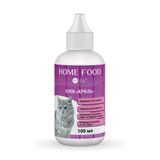
- krill oil — high in astaxanthin, a natural antioxidant;
- flaxseed oil — a plant-based alternative for animals sensitive to fish products.

Salmon Oil for Skin Health and Coat Shine for Dogs and Cats, 100 ml
Buy
Phytomin for Cats HOME FOOD Krill Oil for Recovery After Shedding, 100 ml
Buy
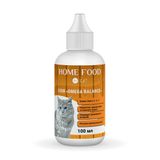
Phytomin for Cats HOME FOOD Omega Balance Oil Omega-3, -6, -9 Balance, 100 ml
Buy
Add them in moderation, as recommended by a veterinary dietitian, in the form of separate supplements.
Properly selected nutrition is not just comfort — it’s an investment in your British cat’s long, active, and healthy life.
Treats for a British Cat: Pleasure That Supports Health
British cats are true aesthetes. They love treats, but they also have delicate jaws and a tendency to gain weight, so treat choices should be thoughtful and functional.
Unlike universal treats for all breeds, British cats do best with moderately dense treats that are not only tasty but also beneficial for joints, teeth, and cartilage.
Functional Treats — Beneficial for Joints and Teeth
The ideal treats for British cats contain natural sources of chondroprotectors, particularly:
- collagen — supports tissue elasticity and skin and joint health;
- glucosamine and chondroitin — help reduce joint wear, especially in heavier or older animals.
These substances can be found in treats such as:
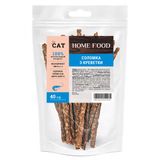
- dried strips / braids / bars of cod or salmon — light, natural, rich in protein and omega-3;
- dried beef tendons — contain natural collagen, excellent for chewing;
- dried lungs — easy to chew, tender texture, don’t burden the stomach;
- seafood sticks (salmon, shrimp) — a great source of proteins, healthy fats, and natural minerals.

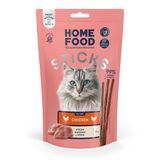
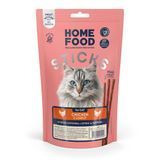
Treats for Cats HOME FOOD Salmon Sticks, 40 g
BuyTreats for Cats HOME FOOD Salmon Sticks, 40 g
Buy
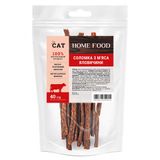
Treats for Cats HOME FOOD Beef Lungs, 40 g
Buy
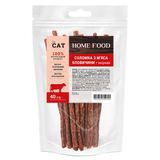
Treats for Cats HOME FOOD Turkey Meat + Pumpkin Sticks, 40 g
Buy
Moderation Is Key to Benefits
Even the healthiest treats should be a supplement, not the main part of the diet. Ideally, treats should make up no more than 10–15% of daily calorie intake. And always under the owner’s supervision: this ensures safety, especially for treats with firmer textures (tendons).
Calm, Stability, and a Touch of Tenderness: Psychological Health of British Cats
British cats are true aristocrats not only in appearance but also in behavior. Their temperament is usually reserved, balanced, with moderate activity, making them excellent companions for those who value peace and harmony at home. However, their nervous system is highly sensitive to changes in environment, routine, or family emotional climate.
Features of the British Cats’ Nervous System
From an ethological perspective, British cats belong to a stable phlegmatic type, but precisely because of this, sudden changes, intrusive attention, moving, or new animals can be powerful stress triggers. Stress in British cats often manifests subtly, through:
- loss of appetite;
- excessive sleep;
- avoiding contact;
- or, conversely, sudden bursts of irritability.
It’s worth remembering that prolonged stress negatively affects immunity, the cardiovascular system, and even coat quality.
Stress Prevention: Natural Support for the Nervous System
To help a British cat maintain inner balance, especially during periods of change or social stress (moving, new people, other animals), veterinarians and behaviorists recommend natural functional supplements, including:
5-HTP (5-Hydroxytryptophan)
- an amino acid that is a precursor to serotonin — the “calm” neurotransmitter and emotional balance regulator.
- helps reduce anxiety, improve appetite, and sleep.
Cannabidiol (CBD)
- a natural hemp component with no psychoactive effect, acting on the endocannabinoid system.
- has calming, anti-inflammatory, and analgesic effects, suitable for cats in chronic stress, post-injury, during recovery, or environmental changes.

Dietary Supplement CBD Oil 2% for Reducing Anxiety and Pain Relax Pro HOME FOOD Expert, 10 ml
Buy
Adaptogen for Supporting Nervous, Endocrine, and Immune Systems Harmony Pro HOME FOOD Expert, 20 g
Buy
Care Is the Best Anti-Stress
The psychological well-being of a British cat starts with simple things: a quiet cozy corner, a predictable routine, gentle communication without pressure, and, of course, a caring heart nearby. Natural nervous system support is just a helpful bridge to the inner balance these silent, proud, yet so tender creatures need so much.