📌 HOME FOOD Blog: What Can You Feed a Cat from Home-Cooked Food?
What Can You Feed a Cat from Home-Cooked Food?
The question of feeding cats “home-cooked food” remains relevant for responsible owners. Undoubtedly, rational nutrition is a key factor for the health, energy, and longevity of a pet. It is important to understand that regular food from the human table is rarely balanced and, moreover, may contain ingredients dangerous for cats. Since cats are obligate carnivores, their diet must be built around high-quality animal protein.
In ideal conditions, complete commercial feeds are the most recommended option, as they are professionally balanced according to feline needs. However, in difficult life circumstances when access to quality specialized nutrition is limited, there may be an urgent need to switch the animal to a natural diet.

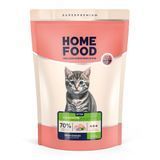
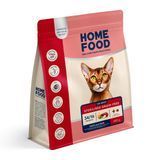
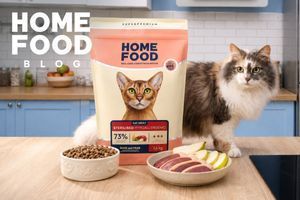
Dry food HOME FOOD for neutered/spayed adult cats with sensitive digestion Lamb and Salmon With sensitive digestion. For sterilised/neutered, 1.6 kg
Buy
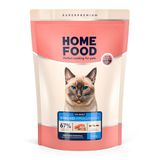
Hypoallergenic dry food HOME FOOD for neutered/spayed adult cats Seafood Cocktail Hypoallergenic For sterilised/neutered, 1.6 kg
Buy
Complete canned food HOME FOOD for adult cats with beef and salmon in jelly, 85 g
Buy
Treat for cats HOME FOOD Turkey meat straw + cranberry, 40 g
Buy
Keep in mind that natural feeding requires careful planning and mandatory addition of special vitamin-mineral complexes, since it is almost impossible to independently create a complete and balanced diet.

Probiotic and enzymes for restoring intestinal microbiota ImmunoBiotic Pro HOME FOOD Expert, 20 g
Buy
Enterosorbent for body detoxification Detox Pro HOME FOOD Expert, 30 ml
Buy
Vitamins Provet Profiline for cats Taurine Complex
Buy
Vitamins with biotin for skin and coat health in small-breed dogs and cats Dolfos Dolvit Beta Karoten & Biotyna Forte mini, 90 tablets
Buy

What can you feed a cat besides commercial food?
If the owner is forced to feed the cat natural food, strict veterinary recommendations must be followed.
- The basis of the diet is sources of animal protein: lean beef, chicken, turkey, and rabbit. These products must be thermally processed (boiled, steamed, or stewed) to avoid bacterial and parasitic contamination. Offal such as chicken hearts, stomachs, and beef liver can be used as treats, but liver should be given in limited amounts (no more than 1–2 times per week).
- Carbohydrates are not the main energy source for cats, but they should be present in the diet and constitute a minimal part (no more than 10–15%). It is acceptable to add a small amount of well-cooked cereals: rice, buckwheat, or oatmeal.
- Vegetables — boiled or stewed zucchini, carrots, pumpkin — are added to provide fiber and vitamins. Ripe tomatoes can be given in small amounts, but green parts of the plant are toxic and must be excluded.
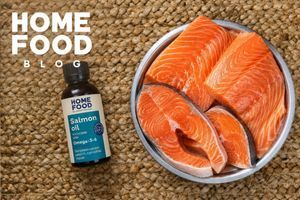
- Adding a small amount of oils (e.g., salmon oil) is necessary to cover the deficiency of essential fatty acids.

Salmon oil for healthy skin and shiny coat in dogs and cats, 100 ml
Buy
Phytomin for cats HOME FOOD “Krill” oil for recovery after shedding, 100 ml
Buy
It is critically important to change the diet gradually. To avoid digestive upset, new foods should be introduced slowly, mixing them with the usual food and increasing the proportion of natural food over 7–10 days.
Foods strictly prohibited for cats
Special attention should be paid to products that are categorically forbidden for cats due to their toxicity.
These include: chocolate, coffee, and tea (contain theobromine), grapes and raisins (cause kidney failure), as well as onions and garlic (cause anemia). Raw fish is strictly prohibited (due to thiaminase and parasite risk), bones, raw potatoes (due to solanine), and any food from the human table: spicy, salty, smoked, fatty, as well as semi-finished products, sweets, and baked goods. Cat food should always be at room temperature and prepared without spices, salt, or other seasonings.
Animals with chronic diseases
It is also necessary to remember that if an animal has chronic diseases, especially of the gastrointestinal tract or kidneys, switching to natural feeding without strict veterinary supervision is extremely dangerous. Such cats, as well as breeds with a genetic predisposition to sensitive digestion, require specialized therapeutic feeds.
In general, experts agree that human food is only a conditional substitute, as it does not guarantee long-term health due to the imbalance of micro- and macroelements essential for cats.