
Feline calicivirus infection is one of the most common viral infections in cats. This disease occurs worldwide and can affect cats of any age.
The virus spreads most often in places where many animals are kept together. For example, in shelters, catteries, cat boarding facilities, or veterinary hospitals. In these conditions, the infection passes easily from a sick animal to a healthy one through close contact, shared bowls, litter trays, toys, or the hands of people caring for cats.
The first signs of calicivirus infection are most often lethargy, decreased appetite or refusal to eat, fever, sneezing, and discharge from the nose and eyes.
In many cats with a severe form, painful ulcers appear in the mouth, so they may refuse even their favorite treats.
If you notice one or more of these symptoms, do not wait for them to go away on their own. The sooner the cat is examined by a veterinarian, the sooner a diagnosis can be made and treatment can begin.
How can you recognize feline calicivirus infection in time? Which symptoms should not be ignored, and what can you do to help your pet?
What is feline calicivirus infection in cats
Feline calicivirus infection is a highly contagious disease caused by a virus (FCV) that mainly affects the upper respiratory tract and mouth of cats. It spreads easily from a sick animal to a healthy one during contact, and also through bowls, litter trays, toys, carriers, or human hands after caring for an infected cat.
A special feature of this infection is that some cats may remain carriers for some time after recovery and continue spreading it, even when they already feel well.
The virus “likes” to live and does well in places with large numbers of cats when proper hygiene is lacking.
In places where animals are kept together, the infection often spreads like a “conveyor belt” — the virus continuously passes from one cat to another through constant contact and shared care items, without enough time to disappear from the environment.
A kitten vaccinated on time and born to a healthy mother has a minimal risk of infection.
Symptoms of feline calicivirus infection
Let’s look at the main symptoms of feline calicivirus infection. Kittens are affected most often, especially between 2 and 6 months of age, as well as adult cats with weaker immunity or those living in group settings. The infection is much more common in these categories of animals, so it is important to watch carefully for the first changes in their condition.
First of all, pay attention if the cat becomes less active, sleeps more, or looks “not like usual.” Warning signs include refusal to eat or a noticeable decrease in appetite, even for favorite treats.
You should also be alert if sneezing, discharge from the nose or eyes, tearing, or drooling appear.
Many cats develop bad breath or mouth pain — because of this, they may chew carefully, approach the bowl often, but barely eat.
Feline calicivirus infection can look different in different cats: some have mild symptoms, while others have more pronounced signs. Still, there are symptoms that most often help raise suspicion of the disease.
Pay attention to the following symptoms:
- body temperature above 40.5 °C
- sneezing
- coughing
- tearing and eye discharge
- nasal discharge
- ulcers or painful sores in the mouth, on the lips, and sometimes on the nose
- refusal to eat or pain while eating
- depressed state, lethargy
- worsening coat condition (it becomes dull and unkempt)
- drooling
- in some cases — intestinal involvement, which may appear as diarrhea
How dangerous is it
Feline calicivirus infection may occur in either a mild or severe form. With a mild course, symptoms are usually moderate — runny nose, sneezing, tearing, and decreased appetite, and with timely treatment the animal gradually recovers. A severe form causes pronounced fever, serious mouth lesions, complete refusal to eat, and overall depression.
Without treatment, the disease may last about 1–3 weeks, but the cat’s condition often worsens because of dehydration and complications, so waiting for it to “pass on its own” is dangerous.
Complications may include dehydration caused by refusal of food and water, secondary bacterial infections, lung involvement (pneumonia), and a prolonged carrier state, when the cat may continue shedding the virus for a long time after recovery.
Special attention should be paid to kittens, because feline calicivirus infection poses the greatest risk to them.
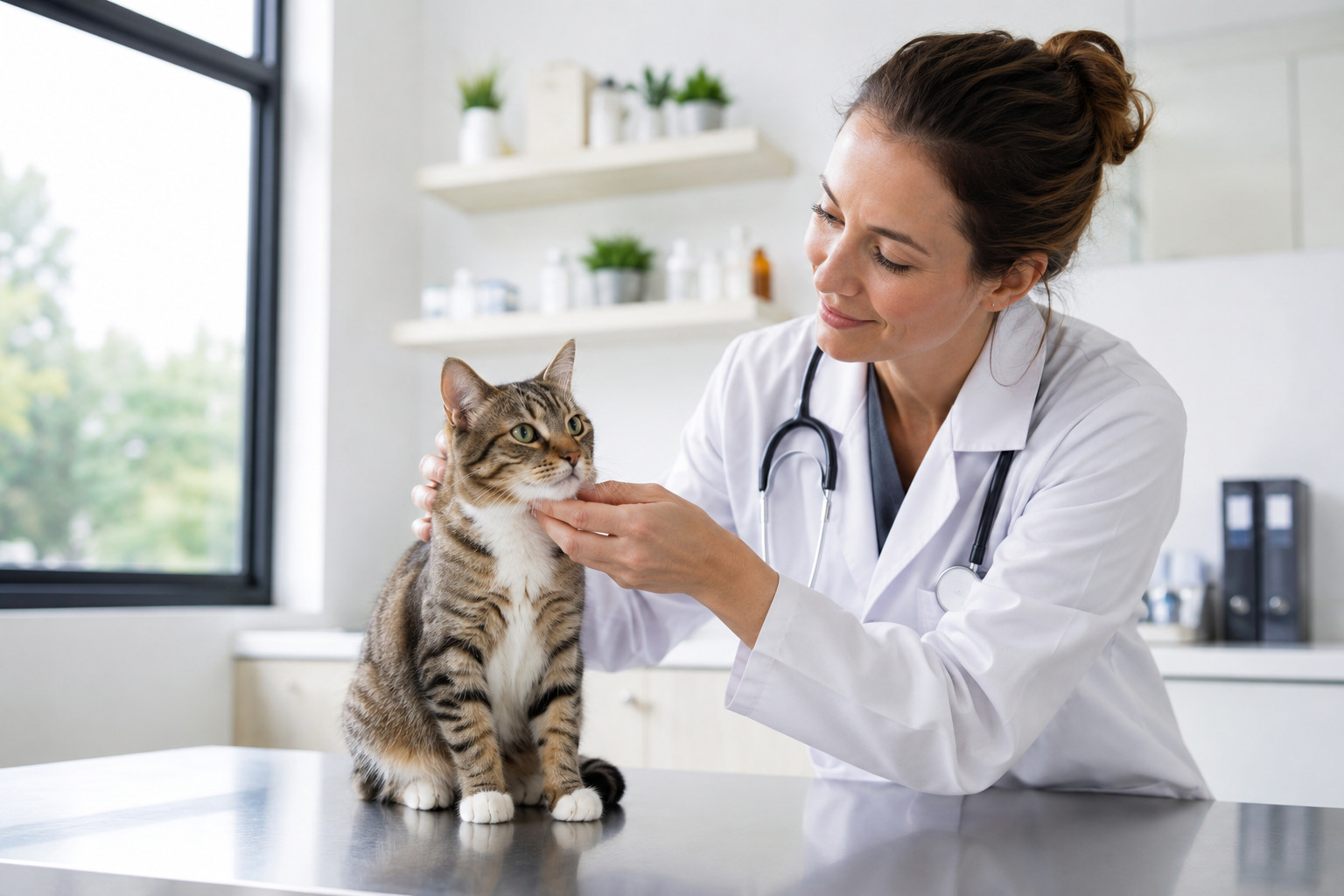

In young kittens, the immune system is not yet fully developed, so the body has a much harder time fighting the infection. Even with similar symptoms, the disease in kittens may progress much faster and more severely than in adult cats, and complications develop more often and earlier.
How feline calicivirus spreads
Feline calicivirus spreads very easily, especially where animals are in contact with one another.
On average, in shelters and catteries where many cats live together and new animals are regularly admitted, signs of infection or positive tests may be found in about 15–40% of cats, and even more often during outbreaks. Studies show that in such conditions the virus spreads quickly: within the first week in a shelter, up to every second cat may become infected if strict isolation and control are not in place.
In indoor cats that do not go outside and do not contact other animals, the risk of infection is much lower and is usually limited to cases where the virus is brought in by a person or a new animal.
At the same time, even vaccinated cats can sometimes become infected — these are isolated registered cases worldwide, but in such situations the disease usually passes much more mildly and with less pronounced symptoms.
Outdoor unvaccinated cats have the highest risk — they are constantly in contact with other animals, so upper respiratory infections, including calicivirus, are very common in them and may make up a significant share of all respiratory diseases.
Main sources of calicivirus infection:
- Saliva (bowls, food, toys) — saliva is the main source of the virus. On the surfaces of bowls or toys, it may remain viable for about several days to 1 week if there is no disinfection.
- Discharge from the nose and eyes — can get onto beds, hands, and clothing. On fabrics, the virus may persist for up to 1–2 weeks.
- Surfaces (plastic, metal, floor) — in favorable conditions, the virus survives for about 1–4 weeks, especially in a cool and humid environment.
- Litter trays and litter — through contact with secretions, infection is possible even from a small amount of material; the virus may persist for days – weeks if the tray is not disinfected.
- Human hands, clothing, and shoes — the virus does not multiply there, but it can be “carried” mechanically and remain viable for hours–days, long enough to infect another cat.
- Carriers and cages — one of the most common transmission factors in clinics and shelters, where the virus may persist for several weeks without thorough cleaning.
Diagnosis
When the first symptoms appear in a cat, it is important not to try to guess the cause on your own — veterinary diagnostics are the most accurate way to understand whether this is feline calicivirus infection.
In this situation, the best approach is a simple algorithm: at the first symptoms, contact a veterinarian as soon as possible; after a general examination, comprehensive laboratory diagnostics are usually performed to identify the disease accurately.
Complete blood count and blood chemistry
This shows the degree of inflammation, immune status, and the level of internal organ involvement.
A specific test to detect the virus in the body
This may be either a rapid test or laboratory PCR / ELISA diagnostics.
Feline immunodeficiency virus, feline leukemia virus, herpesvirus, chlamydiosis, and feline coronavirus can often look similar. That is why you should not try to diagnose the condition yourself: different infections may look very much alike, and only a veterinarian can make the correct diagnosis. This is why laboratory testing is the “gold standard” for determining the cause of the disease.

Visible external symptoms of the disease (ulcers, sneezing, drooling, etc.) do not always point specifically to a diagnosis of “feline calicivirus infection.”
Treatment of feline calicivirus infection in cats
Feline calicivirus infection is not an incurable disease, and if a veterinarian is consulted in time and treatment begins at the first symptoms, the prognosis for the animal is much more favorable.
At present, there are no direct-acting antiviral drugs that directly stop the virus from multiplying. However, the treatment algorithm includes:
Conditionally specific therapy
Therapy that affects the immune response and is key:
- hyperimmune sera
- interferons
- interleukins
Symptomatic therapy
Therapy that helps the cat get through the disease and avoid complications:
- fever-reducing and anti-inflammatory medications (as prescribed by a veterinarian)
- fluid therapy (IV drips for dehydration)
- pain relief (especially for mouth ulcers)
- eye and nose care (drops, rinsing)
- nutritional support (appetite stimulation, soft or high-calorie food)
- antibiotics — only for secondary bacterial infection
- oral hygiene
A veterinarian plays an important role in treating feline calicivirus infection, because they assess the animal’s condition, determine disease severity, and choose the necessary therapy. In more severe cases, inpatient treatment may be needed, where the cat receives constant monitoring, IV fluids, pain relief, and support for vital functions. Care conditions are just as important: warmth, peace, a clean and soft place to rest, easily accessible water, and soft food help the animal recover faster. Care and proper support together with treatment significantly increase the chances of a faster recovery.
Nutrition during feline calicivirus infection
Refusal to eat is often connected not only with mouth ulcers, but also with the overall condition — fever, dehydration, and intoxication. In a veterinary clinic, the doctor helps reduce these causes as quickly as possible so the cat can eat again.
Proper nutrition at home is also very important. Sometimes assisted feeding may even be needed if the animal does not eat at all. During this period, food should be soft, aromatic, and easy to digest.
Wet foods are best, especially pâtés that do not require chewing. It is preferable to choose dietary proteins (chicken, rabbit, veal, fish) and a calorie content of at least 85 kcal/100 g. Food should be offered warm, in small portions, 4–5 times a day.
If the cat has difficulty swallowing or completely refuses food, the veterinarian will show how to feed safely with assistance. Meat toppings can also be used as natural appetite boosters.
The right approach to feeding during this period is not just care, but an important part of treatment that directly affects the cat’s chances of a faster recovery.



Is feline calicivirus contagious to other cats
Feline calicivirus infection is highly contagious. According to international veterinary practice, in group housing conditions (shelters, catteries, hospitals), the virus can spread quickly and affect a significant number of animals, especially when isolation and proper disinfection are lacking. That is why even one infected cat can become the source of an outbreak in a group of animals.
A sick cat must be completely isolated from other animals — no shared rooms, bowls, litter trays, toys, or any direct or indirect contact. Isolation is usually recommended for the entire period of clinical symptoms plus at least another 2–3 weeks after recovery.
Feline calicivirus is stable in the environment, so ordinary washing is not enough — regular disinfection of surfaces and care items is needed. Effective options include:
- sodium hypochlorite solutions (chlorine-based products, “bleach”)
- hydrogen peroxide (activated or stabilized forms)
- products based on strong quaternary ammonium compounds combined with other components
- iodine-containing antiseptics (at the appropriate concentration)
- broad-spectrum veterinary disinfectants effective against noroviruses/caliciviruses
Bowls, litter trays, beds, floors, carriers, and all surfaces the animal has contacted should be cleaned daily.
Prevention
Vaccination is the main and most effective way to protect against feline calicivirus infection. According to international veterinary data, vaccination against calicivirus does not provide 100% protection against infection, but it greatly reduces the risk of disease and especially the risk of severe disease. The first vaccination is usually given to kittens at about 8–9 weeks of age, followed by revaccination according to schedule. After that, annual or regular booster vaccination is recommended to maintain protection.
Regular cleaning and disinfection of bowls, litter trays, beds, and care items significantly reduce the risk of infection. It is important to keep the cat’s living area clean, especially if there are several animals in the home.
Contact with stray or unknown animals should be limited, and cats should not share care items. In group housing, quarantine for new animals is important to prevent the infection from being introduced.
Frequently asked questions about feline calicivirus infection (FAQ)
How long does feline calicivirus infection last?
On average, feline calicivirus infection lasts from 1 to 3 weeks, depending on the severity of the condition and how quickly treatment begins.
Can feline calicivirus infection be treated at home?
Mild cases can sometimes be managed at home under veterinary supervision, but self-treatment without a doctor’s examination is dangerous because the condition can worsen quickly.
Feline calicivirus infection is unpleasant, but it is a manageable disease that can be successfully handled in most cases if a veterinarian is consulted in time.
The most important thing for the owner is to notice the first symptoms, provide proper care, and not postpone treatment “until later.” Care, calm conditions, and professional help significantly increase the cat’s chances of a quick and complete recovery, while prevention helps reduce future risks.