Many houseplants that we are used to considering decorative and safe can actually be unsuitable or even dangerous for cats. The problem is not only that an animal may eat the leaves. Sometimes contact with sap or pollen is enough to cause unpleasant symptoms.
Cats interact with plants in different ways. Some simply play with them, some regularly chew the leaves, while others use plants to stimulate digestion and help get rid of swallowed hair. It is also often a behavioral issue caused by boredom or a lack of stimulation at home. That is why checking plants before bringing them into the apartment is a basic safety measure for your pet.
In this article, we will explain why cats are drawn to houseplants, which flowers pose the greatest risk, what symptoms may appear after contact, and what an owner should do if a cat has chewed a dangerous plant.
Why do cats eat or chew houseplants?
There are usually several reasons, and they are not always related to health problems. Some cats do it out of curiosity. A plant moves, has a scent, and sometimes rustles, making it an interesting object for a cat to investigate.
Another common reason is the need for plant fiber. Some cats instinctively seek out grass or plants with a similar texture to stimulate digestion or help move swallowed hair through the stomach.
There is also a more everyday reason: insufficient activity. When a cat is bored, it starts interacting with whatever is nearby. Plant pots are almost always within reach.
- Curiosity makes a plant an appealing object for play and exploration.
- A need for grass or fiber may encourage a cat to chew leaves to stimulate digestion.
- Boredom and lack of stimulation often lead a cat to interact actively with plant pots.
Why are toxic plants dangerous for cats?
The effects depend on the plant itself and on how the contact occurred. The mechanism, however, is usually the same – irritation or the action of toxic substances on the body. Most often, the first signs involve the digestive system: vomiting, drooling, or refusal to eat. Sometimes this is a short-lived reaction, but it can also be the first sign of more serious poisoning.
Some plants cause only local effects and irritate the mucous membranes. Others can have systemic effects and may affect internal organs, including the liver or cardiovascular system.
Another important factor is exposure to pollen and sap. A cat may not eat the plant directly but can still react after grooming its fur following contact.
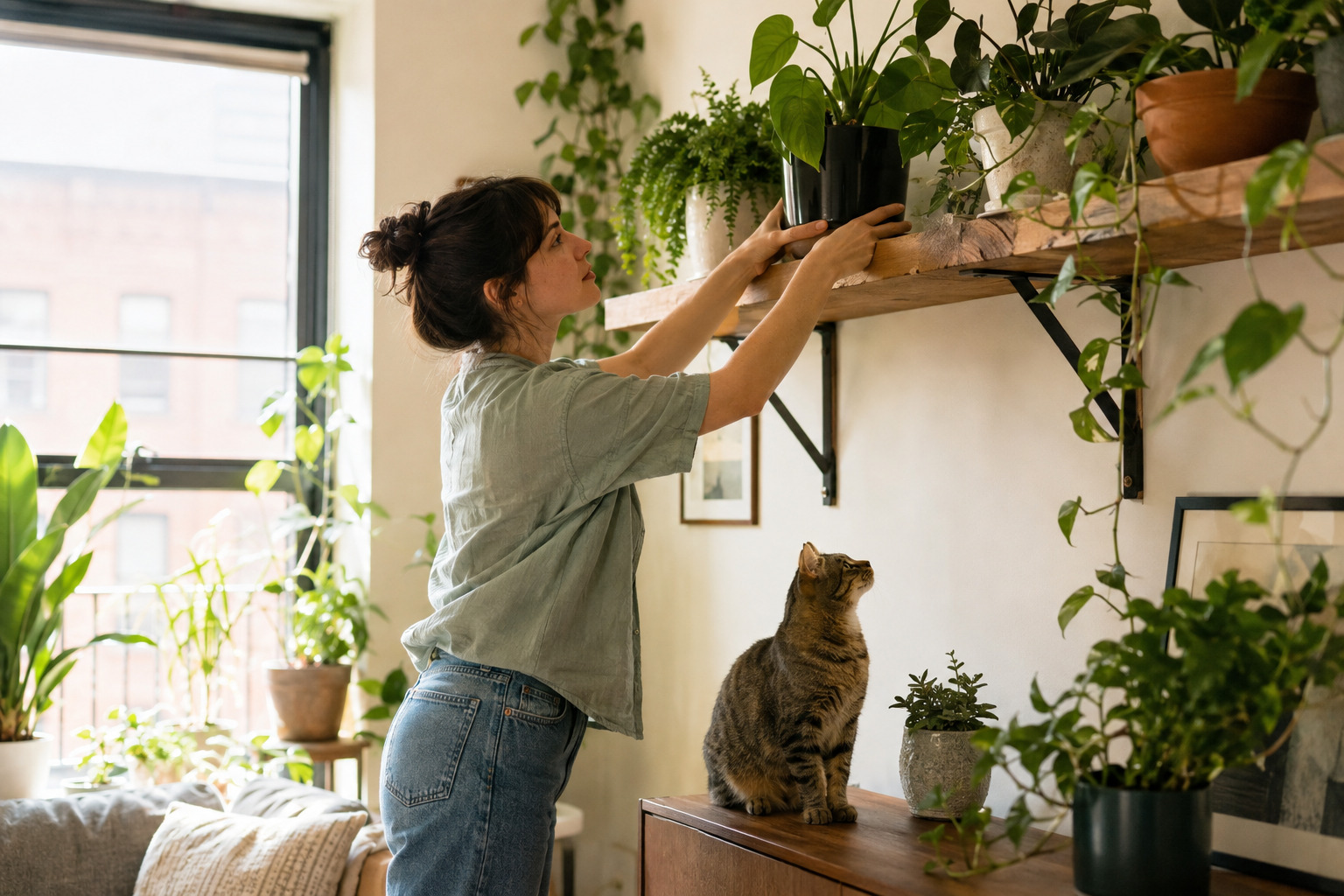

Even if a cat does not eat the plant, pollen, sap, or water from a vase that held flowers can still be dangerous
Which flowers most commonly pose a threat to cats?
In everyday life, the most problematic plants are often not exotic species but common houseplants and bouquets kept in a vase or on a windowsill. Let us look at the most common examples.
| Plant | Main risk | Possible effects after contact |
|---|---|---|
| Lilies | Among the most toxic plants for cats; even pollen and water from a vase can be dangerous | Rapid kidney damage even after minimal contact |
| Daffodils and tulips | Toxic substances are concentrated mainly in the bulbs, but other parts may also be dangerous | Vomiting, weakness, digestive upset |
| Azalea and rhododendron | Contain compounds that affect heart function | Poisoning even after a small amount |
| Oleander | Belongs to the group of highly toxic plants | Dangerous effects on the heart even after minimal ingestion |
| Chrysanthemums | Often brought into the home as part of cut-flower bouquets | Stomach irritation, drooling, general weakness |
| Hyacinths and irises | The bulbs, leaves, or rhizomes are often the most dangerous parts | Gastrointestinal irritation and digestive upset |
| Kalanchoe | May affect heart rhythm | Vomiting, weakness, general deterioration |
Which houseplants are best avoided in a home with a cat?
In addition to specific flowers, there is a whole group of popular houseplants that are best either not kept in a home with a cat or placed completely out of reach.
The problem is that some of them look completely harmless: green leaves, a familiar decorative appearance, and wide availability in stores. Yet this neutral appearance can hide an irritating or toxic effect. The following plants most commonly cause problems in the home:
- peace lily;
- dieffenbachia;
- monstera;
- philodendron;
- scindapsus.
Most of them share a common mechanism of action – calcium oxalates. When the leaves are chewed or damaged, these crystals irritate the mucous membranes of the mouth and throat. A cat may begin drooling heavily, refuse food, or paw at its face.
Which parts of plants can be toxic to cats?
An important point that is often underestimated is that toxicity is not always distributed evenly throughout the whole plant. Different species may have different dangerous parts:
- leaves;
- flowers;
- stems;
- bulbs, especially in spring-flowering plants;
- pollen;
- sap;
- even water in a vase that held cut flowers.
Sometimes a cat does not even eat the plant. It may be enough to sniff it, brush against it with a paw, and then lick its fur.
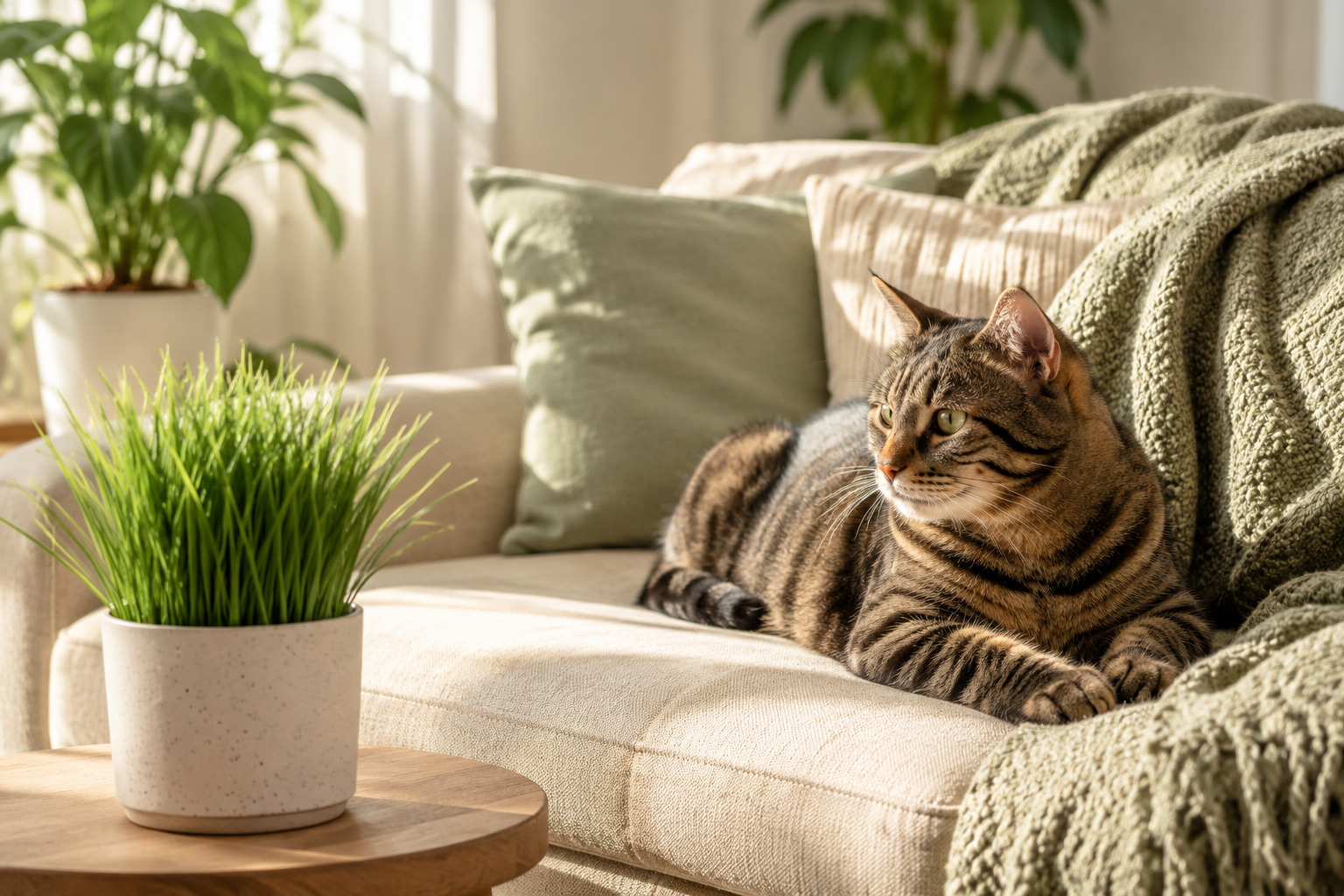
For safety, it is important to consider not only the plant itself but also which parts of it are accessible to the cat at home
Main symptoms of plant poisoning in cats
Symptoms can vary, but several typical signs appear most often. In mild cases, the reaction may look like irritation: drooling, discomfort in the mouth, mild vomiting, or refusal to eat. Sometimes the cat simply becomes quieter or avoids activity.
If the reaction is more severe, repeated vomiting, diarrhea, marked weakness, or disorientation may occur. In serious cases, there may be impaired coordination or changes in breathing. It is important to remember that symptoms do not always appear immediately. Several hours may pass before it becomes clear that something is wrong.
- drooling, discomfort in the mouth, mild vomiting, or refusal to eat;
- repeated vomiting, diarrhea, marked weakness;
- disorientation, impaired coordination, or changes in breathing in severe cases.
What should you do if your cat chews or eats a dangerous plant?
Remove access to the plant
In situations like this, the main thing is not to try to assess the level of danger on your own. The first step is to remove access to the plant.
Check your cat
Next, check the animal for drooling, changes in behavior, or vomiting.
Contact a veterinarian
If you suspect a toxic plant, it is best to contact a veterinarian right away and describe the situation: which plant the cat may have eaten and what symptoms are already present.
Do not delay seeking help
In some cases, help is needed quickly even if the symptoms are still mild; it depends on the type of plant.
What should you not do if plant poisoning is suspected?
There are several common mistakes that can make an animal's condition worse. Do not try to induce vomiting without a veterinarian's advice. You should also avoid giving sorbents, medications, or home remedies without knowing what caused the poisoning.
- do not try to induce vomiting without a veterinarian's advice;
- do not give sorbents, medications, or home remedies at random;
- do not wait for the symptoms to go away on their own.
Another mistake is waiting for the symptoms to pass on their own. With some plants, this can be critical. It is also important to remember that even if the cat's condition improves, it does not always mean the danger has completely passed.
Conclusion
Plants that are dangerous for cats are neither rare nor exceptional. They are often part of an ordinary interior or bouquets placed in a vase on the table. The best strategy is simple: check plants before bringing them into the home and restrict your cat's access to any plants whose safety is uncertain.
In most cases, the problem can be prevented. But if contact has already occurred, it is important to act quickly and not delay consulting a veterinarian.