📌 HOME FOOD Blog: tips on care, health and nutrition for cats and dogs. 🩺 Relevant articles for caring pet owners ❤️
Temperature in cats: norm, how to measure correctly, when to contact a veterinarian and how to support your pet

Body temperature in cats is one of the most important indicators of their health, which often goes unnoticed until the pet is already feeling unwell.
Cats masterfully conceal discomfort, so even significant changes in well-being can look like mild fatigue or “not the right mood”.
That is why paying attention to temperature is a sign of genuine care, not unnecessary anxiety. In this article, we will figure out what temperature is normal, how to measure it correctly, what symptoms should be a cause for concern and what the owner should do in various situations.
Normal temperature in cats
Below are the approximate normal body temperature values in cats depending on age and physiological condition.
| Category | Normal temperature | Feature | What to pay attention to | Owner’s action |
|---|---|---|---|---|
| Newborn kittens 0–2 weeks | 35.5–37.2 °C | Thermoregulation is not yet formed | They get hypothermic quickly | Warmth, dryness, condition monitoring |
| Kittens up to 4 weeks | 37.8–39.2 °C | Gradual formation of thermoregulation | Fluctuations are possible | Assess temperature together with behavior |
| Kittens up to 6 months | 38.0–39.2 °C | The young body is active and responds quickly | Lethargy or refusal to eat matters more than a single number | Observe and consult a vet if symptoms appear |
| Adult cats | 37.8–39.2 °C | The main reference point for a healthy condition | Above 39.3–39.5 °C or below 37.5 °C requires attention | Repeat the measurement and assess the general condition |
| Pregnant cats | 37.8–39.2 °C | Slight physiological fluctuations are possible | Appetite, activity, discharge, and behaviour are important | При сумнівах консультуватися з ветеринаром — means "When in doubt, consult a veterinarian" When in doubt, consult a veterinarian |
| Senior cats | 37.8–39.2 °C | The norm is similar to an adult | Old age can mask chronic diseases | Routine check-ups 1–2 times a year |
- the general guideline for most healthy cats is approximately 38.0–39.2 °C;
- temperature is part of the overall picture, not the only criterion;
- behaviour, appetite, breathing, mucous membranes and activity level are no less important.
When temperature changes due to illness
An increase or decrease in body temperature is not a diagnosis, but an important signal that the cat’s body is fighting or, on the contrary, becoming exhausted.
When temperature rises
Підвищення температури зазвичай означає, що організм активував імунну відповідь. Найчастіші причини: вірусні та бактеріальні інфекції, запальні процеси, післяопераційні ускладнення, реакція на вакцинацію, інтоксикації або онкологічні процеси. An elevated temperature usually means that the body has activated an immune response. The most common causes are: viral and bacterial infections, inflammatory processes, post-operative complications, reactions to vaccination, intoxication, or oncological processes.
Signs: lethargy, refusal to eat, hot ears and paws, rapid breathing, trembling, seeking warmth, dehydration. A temperature above 39.3–39.5 °C is a reason to consult a veterinarian, especially if it persists for more than a day.
When the temperature drops
A drop in temperature is often more dangerous than a rise. Causes may include shock, severe intoxication, internal bleeding, serious viral diseases, kidney or liver failure, hypothermia, and complications during or after childbirth.
Signs: severe weakness, cold ears, paws or abdomen, pale or bluish mucous membranes, slowed breathing, disorientation. A temperature below 37.5 °C is an emergency.


Meloxivet suspension, 10 ml
Buy
Trixie mat for animals cooling nylon, 40х30 cm
Buy
Branded blanket with embroidery, 140х200 cm
Buy
Treats for cats HOME FOOD Meat straw with salmon, 40 g
Buy
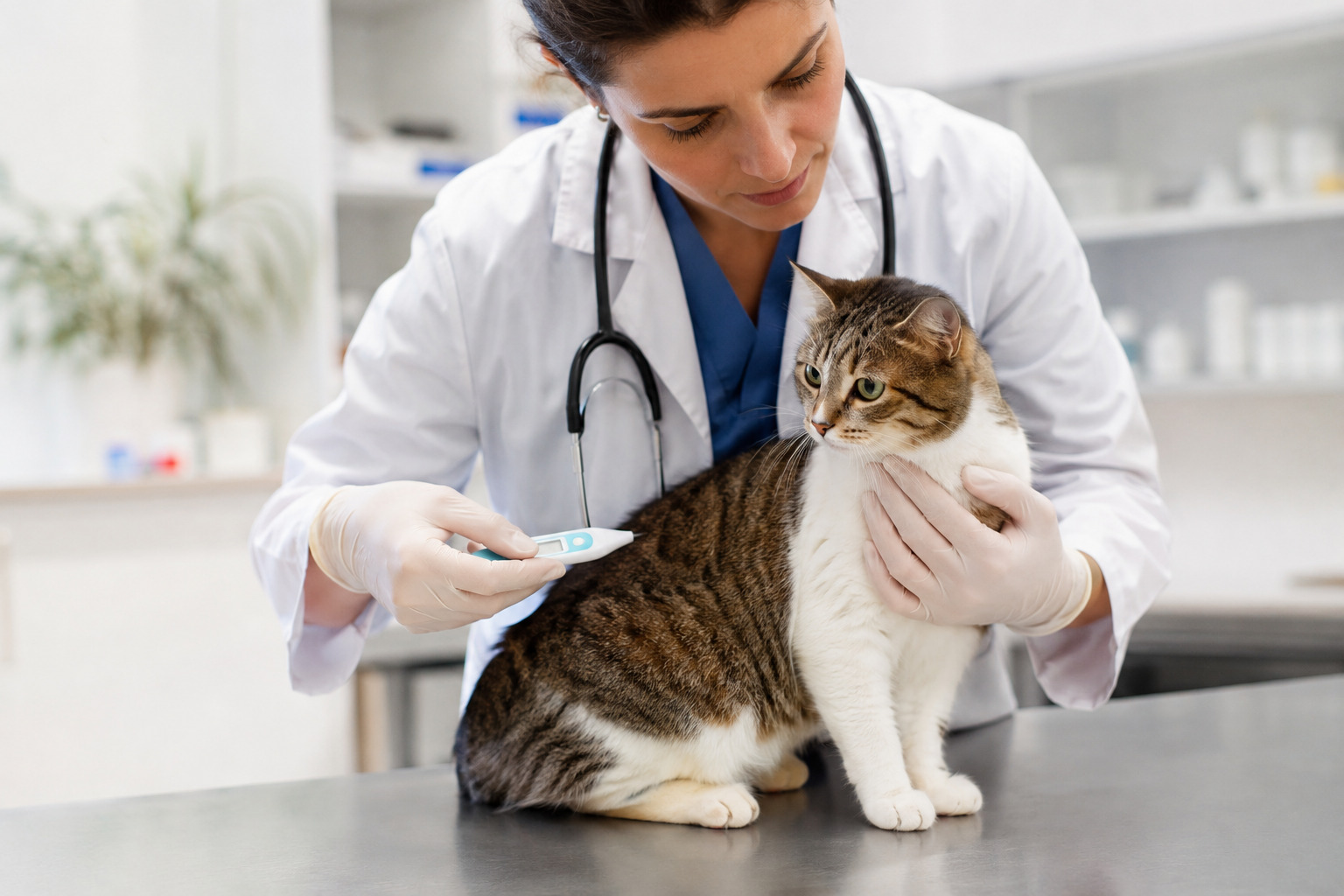

Temperature is the language in which a cat’s body speaks to us
How to properly take a cat’s temperature at home
The only reliable method is rectal measurement. Measuring in the ear, on the nose, paws, or using a contactless thermometer does not provide reliable results, and using a mercury thermometer in veterinary practice is dangerous.
Prepare everything you need
You will need a digital thermometer, petroleum jelly or a neutral lubricant, a towel if necessary, and the calm assistance of a second person.
Restrain the cat without sudden movements
It is best to act as a pair: one person gently holds the cat while the other takes the temperature. Do not squeeze the animal or turn the procedure into a struggle.
Carefully insert the thermometer
Lubricate the tip of the thermometer and insert it into the rectum 1–1.5 cm. Wait for the signal or 1–2 minutes if the thermometer requires more time.
Evaluate the result and the cat’s condition
Carefully remove the thermometer, disinfect it, and assess the temperature together with the cat’s behaviour. If the cat is lethargic, not eating, hiding, or acting unusually — it is best not to delay a consultation.
- do not give human fever-reducing medications — they can be deadly dangerous for cats;
- ветеринарні протизапальні засоби, зокрема Мелоксивет, застосовують лише після погодження з ветеринарним лікарем;
- if the temperature is accompanied by lethargy, loss of appetite, vomiting, or shortness of breath, do not wait «until tomorrow».
Prevention of illness and temperature fluctuations
Fluctuations in body temperature in cats rarely occur out of nowhere. Most often, they are the result of stress, inflammation, infections, or physical exhaustion. That is why prevention is the gentlest way to support stable well-being.
A stable and comfortable environment
Уникайте перегріву влітку, не допускайте переохолодження взимку, стежте за протягами, холодною підлогою та задухою. Для спеки може допомогти cooling mat, а для холодного періоду — теплий blanket.
Balanced nutrition according to age
Кошенята, дорослі та літні коти мають різні потреби. Для малюків важливий корм для росту, наприклад kitten diet, а для дорослих можна підбирати корм за віком, станом і способом життя.
Stress management
Переїзди, ремонт, нові тварини й гучні звуки навантажують нервову систему. У такі періоди можна обговорити з ветеринаром Relax Pro або Harmony Pro.
Support of microflora
Здоровий кишечник — це сильніший імунітет. Пробіотичні комплекси, такі як ImmunoBiotic Pro або HePawSyn, можуть бути корисними в періоди відновлення та профілактики запалень.
Timely deworming
Helminths are a common hidden cause of intoxication, exhaustion, and temperature fluctuations. It is better to select a prevention schedule together with a veterinarian, especially for kittens and cats that go outdoors.
Vaccination and routine check-ups
Annual comprehensive vaccination, preventive examinations 1–2 times a year, blood and urine tests, and ultrasound help detect hidden inflammation before a high temperature develops.
Sterilization or responsible breeding
Planned sterilization reduces the risk of hormonal disorders, uterine inflammation, and systemic complications. If a cat is involved in breeding, rest periods, veterinary supervision, and prevention of physical exhaustion are necessary.

Dry food HOME FOOD for kittens Fresh Chicken For kittens, 1.6 kg
Buy
Degustation box HOME FOOD for adult cats
Buy
Dietary supplement CBD oil 2% Relax Pro HOME FOOD Expert, 10 ml
Buy
Anti-stress feed supplement Harmony Pro HOME FOOD Expert, 20 g
Buy
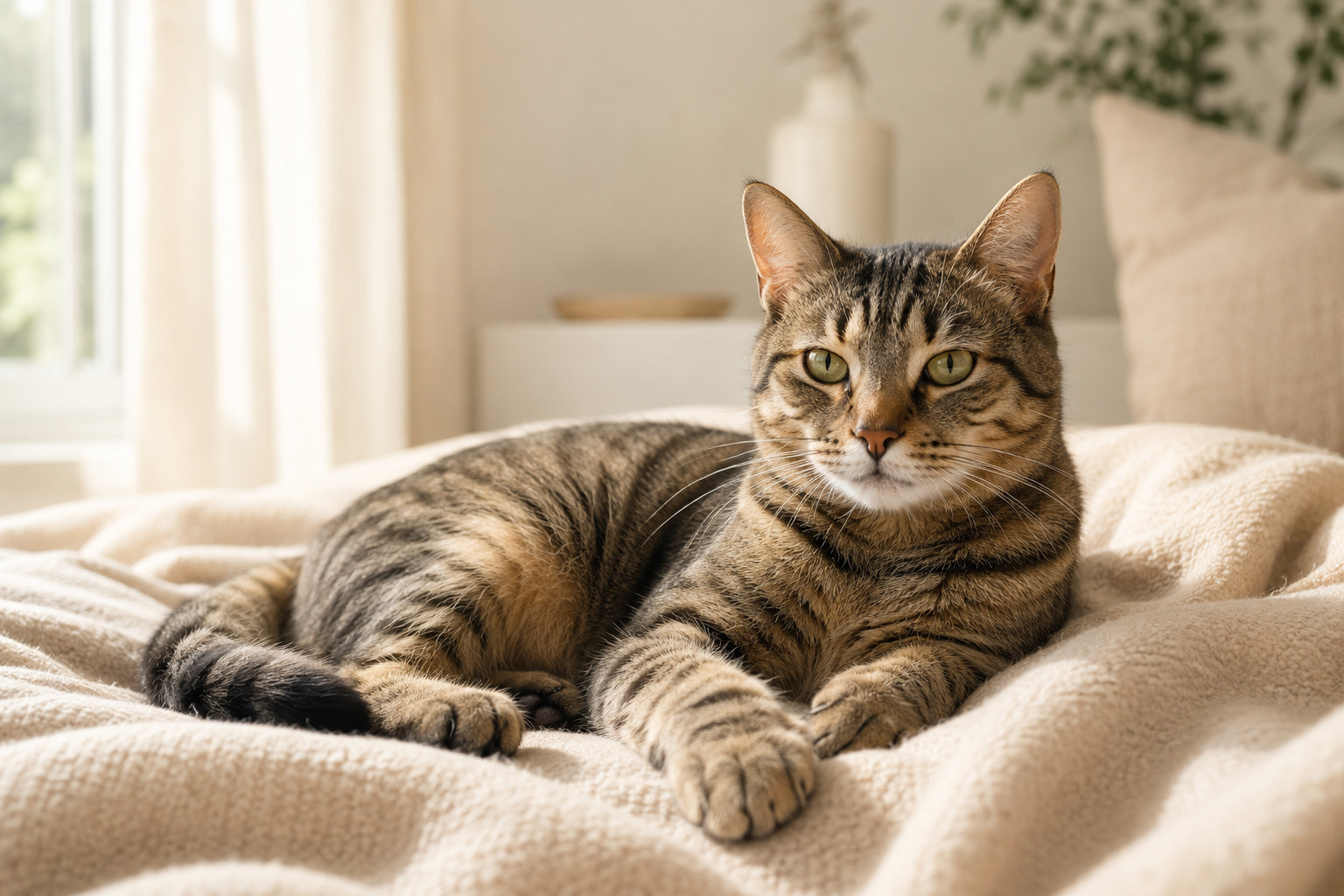
Stable temperature is a reflection of a balanced life, immunity and care
Additional preventive support
- regularly monitor appetite, water intake, activity and litter box condition;
- do not overheat the cat and do not try to cool it down sharply with ice water;
- do not warm the cat aggressively in case of hypothermia — gentle warming and veterinary assistance are needed;
- for antiparasitic prevention, use only products suitable for the cat’s age and weight.

Feed additive probiotic and enzymes ImmunoBiotic Pro HOME FOOD Expert, 20 g
Buy
Symbiotic for digestive and immune support HePawSyn HOME FOOD Expert, 250 g
Buy
Drontal Elanco — a tablet for the treatment and prevention of helminthiasis in cats, 1 pc
Buy
Zoetis Stronghold — antiparasitic drops for puppies and kittens up to 2.5 kg, 1 pipette
Buy
Conclusion
A stable temperature in a cat is a reflection of a balanced life, a healthy immune system, and attentive care. Prevention does not require heroic efforts — only attentiveness, consistency, and love.
If a cat’s temperature is above 39.3–39.5 °C, below 37.5 °C, or is accompanied by lethargy, loss of appetite, shortness of breath, vomiting, or disorientation, do not attempt self-treatment. In such situations, the best decision is to consult a veterinarian.