📌 HOME FOOD Blog: How to Give a Dog a Deworming Tablet
How to Give a Dog a Deworming Tablet
Giving a dog a deworming tablet may seem like a simple task, but in practice even experienced owners often face difficulties. Proper administration of the drug is important not only for treatment effectiveness but also for the dog's safety: some tablets contain powerful active substances that can irritate mucous membranes if taken incorrectly.
Modern veterinary dewormers are developed taking into account age, weight, health condition and parasite type, so it is important to follow the instructions and calculate the exact dose. In this blog we will look at different methods of safely and effectively giving deworming tablets, tips on preparing the dog, as well as ways to reduce stress during the procedure.
Method 1: Classic Tablet Insertion into the Mouth
One of the most effective and common ways to give a tablet to a dog is to carefully place it directly into the mouth. Although it requires some skill and caution, this method allows precise dose control and guarantees that the drug reaches the stomach.
How to do it correctly:- Prepare in advance. Make sure you have the tablet of the required dose, some treats for encouragement and clean hands nearby.
- Calm the dog. Sit with it in a comfortable position, perhaps on your lap or on a flat surface. Speak in a calm, gentle tone to reduce stress.
- Open the mouth. Gently lift the upper lip with one hand while supporting the dog's head with the other.
- Place the tablet deep. Hold it between your thumb and index finger, placing it as far back as possible on the root of the tongue so the dog is forced to swallow it.
- Stimulate swallowing. Gently close the mouth and massage the throat. A light push under the nose or a small touch to the chin can help stimulate the swallowing reflex.
- Reward. After successful swallowing, immediately praise the dog and give a treat — this forms a positive association with the procedure.

Protein Cookies with Turkey and Anti-Stress Formula for Dogs HOME FOOD, 80 g
Buy
Treats for Dogs HOME FOOD Rabbit Lungs, 80 g
Buy
Treats for Dogs HOME FOOD Meat Spiral, 40 g
Buy
Treats for Dogs HOME FOOD Salmon Straw, 80 g
Buy
Using a Pill Gun:

Pill Gun for Administering Medications to Animals
Buy
For dogs that are very nervous or resistant, you can use a special pill gun. This tool allows you to quickly and safely deliver the tablet into the dog's mouth, reduces the risk of bites and injuries.
- The pill gun should be loaded with the tablet, carefully brought to the dog's mouth and the tablet inserted towards the root of the tongue.
- After insertion, close the mouth, massage the throat and praise the dog.
- This is an ideal option for large or particularly nervous dogs, as well as for owners who are not confident in their classic insertion skills.
The pill gun makes the classic method safer and less stressful for both the dog and the owner.
Important tips:
- Act slowly and calmly so as not to frighten the dog.
- If the dog is large or very active, you can ask an assistant to hold it carefully to avoid injury.
- Do not use force or shouting — this only increases stress.
This classic method is the most accurate and safe if all steps are followed. Over time, the dog may even perceive the process as part of play or interaction with the owner if reinforced with praise and treats.
Method 2: Flavored Tablets — Safe Solution for Picky Dogs

Elanco Drontal — Anthelmintic Tablet Drontal for Treatment and Prevention of Helminthiasis in Dogs
Buy
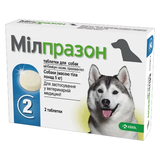
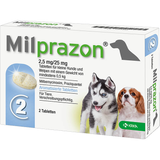
KRKA Milprazon — Anthelmintic Tablet Milprazon for Dogs Weighing up to 5 kg
Buy
Not all dogs easily agree to swallow medication, especially if it is a potent dewormer. Modern veterinary medicine offers an effective solution — flavored tablets that contain safe appetizing flavorings. Such additives stimulate the dog's interest in the tablet but do not change the action of the active substance and are completely safe for health.
How this method works:
- Flavorings in tablets are usually made from natural components. They do not contain chemical flavor enhancers and essences, so they do not irritate the stomach and do not cause allergies in most dogs.
- Flavored tablets help make the medication process calmer and less stressful, as the dog often takes the tablet from the owner's hand or from the bowl itself.
How to apply:
- Choose a flavored tablet recommended by the veterinarian for the specific age and weight of the dog.
- Show the tablet to the dog, let it sniff to arouse interest.
- If the dog is ready, give the tablet directly from the hand or hide it in a small amount of favorite treats.
- After successful intake, be sure to praise and reward with a treat — this reinforces the positive association.
Advantages:
- Reduces stress for the dog and owner.
- Allows avoiding the risk of injury during forced administration.
- Safe for health, as flavorings are of natural origin and do not alter the pharmacological action of the tablet.
Flavored tablets are an ideal choice for picky or young dogs, as well as for those who have previously experienced stress during medication intake.
Method 3: Hiding the Tablet in Something Tasty
For dogs that are reluctant to take medication, an effective method is to hide the tablet inside soft food — minced meat, pâté or a small piece of meat. The tablet becomes invisible to the dog and is quickly swallowed along with the food.
How to do it correctly:
- Take a small portion of favorite soft food.
- Place the tablet inside so that it is completely hidden.
- Give it to the dog and watch to make sure the entire portion is swallowed.
- After successful intake, praise and reward with a treat to form a positive association.
This method minimizes stress and eliminates the risk of injury during forced tablet administration.
Another option is to coat the tablet with aromatic meat topping. Such topping is made from natural meat hydrolyzate, contains no chemical flavor enhancers and is completely safe for the dog.

Meat Topping for Dogs HOME FOOD, 100 g
Buy
How to apply:
- Place the tablet on a small plate or piece of soft food.
- Drizzle it with meat topping so that the smell and taste attract the dog.
- Give it to the dog and watch to make sure the tablet is completely eaten.
- After intake, praise the dog to form a positive association

Protein Cookies with Turkey and Pumpkin for Dogs to Support Immunity and Healthy Digestion HOME FOOD, 80 g
Buy
Treats for Dogs HOME FOOD Beef Aorta, 80 g
Buy
Treats for Dogs HOME FOOD Beef Trachea, 80 g
Buy
Treats for Dogs HOME FOOD Poultry Meat Straw + Carrot, 80 g
Buy
Advantages:
- The method is suitable for picky dogs that try to chew or spit out tablets.
- Using natural topping makes the process safe and pleasant for the animal.
- Can be combined with the previous method (hiding in minced meat) for maximum effect.
Both approaches allow giving tablets without stress and conflicts.
Method 4: Dissolving the Tablet in Water
Some deworming tablets can be safely dissolved in a small amount of water and given to the dog using a syringe without a needle. This method is especially useful for small puppies or dogs that categorically refuse to swallow solid medication.
How to apply:
- Make sure the tablet is suitable for dissolution — not all preparations can be dissolved, especially bitter, physically insoluble or those that lose effectiveness in water.
- Dissolve the tablet in a small amount of warm water or broth.
- Using a syringe without a needle, carefully introduce the solution into the side of the dog's mouth to stimulate the swallowing reflex.
- After the procedure, praise the dog and give some water.
This method is quick and safe if the instructions are followed, but it is always important to check the compatibility of the specific preparation with water dissolution.

What to Do When No Method Works?
Sometimes even the gentlest and tastiest methods do not work, and the dog categorically refuses to take the tablet. In such cases, alternative approaches can be used:
- Suspensions and pastes — they can be administered directly into the mouth or using a syringe included in the package
Recommended Products

AnimAll VetLine DeWorm — Anthelmintic Preparation AnimAll for Dogs and Puppies
Buy
Elanco Procox — Anthelmintic Suspension Procox for Dogs, 7.5 ml
Buy - Spot-on drops — applied to the skin and absorbed systemically, allowing avoidance of forced tablet intake.
Recommended Products

Elanco Advocate — Spot-on Parasitic Drops Advocate from External and Internal Parasites for Dogs Weighing 10–25 kg, 1 Pipette
Buy
KRKA Selafort — Spot-on Parasitic Drops Selafort from Fleas, Ticks and Helminths for Dogs Weighing 2.6–5 kg, 1 Pipette
Buy - AntiWorm Oil based on pumpkin seed oil — especially useful for pregnant and lactating dogs, safe and effective for helminth prevention with long-term use.
Recommended Products

Phytomin for Dogs HOME FOOD Oil "AntiWorm" Antiparasitic Agent, 100 ml
Buy - Natural Calming Supplements (CBD, 5-HTP) 5–7 days before anthelmintic treatment — help reduce stress during the procedure and facilitate medication intake.
Recommended Products

Dietary Supplement CBD Oil 2% to Reduce Anxiety and Pain Relax Pro HOME FOOD Expert, 10 ml
Buy
Adaptogen for Support of Nervous, Endocrine and Immune Systems Harmony Pro HOME FOOD Expert, 20 g
Buy
These methods allow effective control of helminths even in picky or stressed dogs.
Do Modern Anthelmintics Work When Taken with Food and When Is a Repeat Course Needed?
Many owners worry whether deworming tablets are effective if given with food. Modern anthelmintics are developed to work even when taken with food — food does not reduce the absorption of the active substance and does not affect its effectiveness. Some preparations are even recommended to be given during or after meals to reduce stomach irritation.
Regarding repeat intake, it depends on the preparation type and helminth type:
- Most modern drugs effectively destroy adult helminths, but eggs and larvae may remain.
- Therefore, veterinarians often recommend repeat treatment after 10-14 days, especially for puppies, dogs at high risk of infection or after contact with other animals.
- Following the treatment schedule helps prevent reinfection and development of parasite resistance to the drug.
Are Sorbents Needed After Anthelmintic Treatment and When to Give Them?
After taking an anthelmintic, some owners wonder whether to give the dog sorbents for the stomach and intestines. Sorbents help reduce potential gastrointestinal discomfort and accelerate the elimination of toxins formed after helminth death.

Enterosorbent for Body Detoxification Detox Pro HOME FOOD Expert, 30 ml
Buy
When it is advisable to give sorbents:
- In dogs with sensitive stomachs or prone to digestive disorders.
- After massive parasite elimination, when mild poisoning from helminth breakdown products may occur.
- If the veterinarian noticed signs of nausea, diarrhea or increased flatulence after treatment.
Application features:
- Sorbents should be given 1-2 hours after taking the anthelmintic to avoid reducing absorption of the main drug.
- For healthy dogs with normal digestive systems, sorbents are not mandatory but can serve as an additional measure to prevent discomfort.
Deworming is key to a dog's health. Modern preparations and administration methods allow effective parasite elimination with minimal stress for the animal. It is important to consider age, health condition and individual characteristics of the dog, follow dosage and repeat course schedule. A gentle approach combined with care and attention makes treatment safe, comfortable and a manifestation of love for your pet.