


📌 HOME FOOD Blog: How and What to Feed a Puppy Correctly?
How and What to Feed a Puppy Correctly?
Raising a puppy is not only about play and affection, but also about carefully forming the foundations of its health through nutrition. The first months of life determine how the skeleton, muscle mass, immune system, and digestion of your pet will develop. A proper diet provides the puppy with all the necessary nutrients: proteins, fats, carbohydrates, vitamins, and minerals, and also supports normal growth and energy.
In this article, we will look at how to choose the right food, feeding frequency, and portion sizes for a puppy at different stages of development, so that you can confidently support its health and harmonious growth.
What age is considered puppyhood?
A puppy is a dog at an early stage of development, when the body is actively growing and forming. Veterinary and zoological classification divides this period into several stages:
1. Neonatal period (0–2 weeks)
- Puppies are completely dependent on their mother.
- The first feedings are exclusively milk, with active development of the nervous system and sensory organs.
2. Socialization period (2–12 weeks)
- They begin to get to know the world around them.
- Gradual transition from mother's milk to solid food (supplementary feeding).
- A critical stage in the formation of immunity and behavioral skills.
3. Growth period (3–6 months)
- Accelerated formation of the skeleton, muscles, and internal organs.
- The diet should be as balanced as possible, with an increased content of protein and energy.
4. Adolescent period (6–12 months, depending on the breed)
- Slow growth and formation of final body proportions.
- The need for energy and protein remains high, but the proportion of calcium and phosphorus begins to be regulated to avoid bone problems.
The puppy period is considered to be from birth to approximately 12 months, but the exact boundaries depend on the breed. In small breeds, development ends faster — already around 9–10 months, while large and giant breeds grow and form up to 16–20 months.
Transition to independent feeding: how and when to start
The gradual transition of the puppy to independent feeding begins at about 3–4 weeks of life, when the puppy can already start chewing and swallowing solid food. The main task of this stage is to teach the digestive system to work with new products without creating stress for the stomach.
Feeding options
1. Homemade food
- Boiled lean meat or fish, chopped or pureed.
- A small amount of vegetables and well-cooked cereals (rice, buckwheat).
- Adding oils, calcium, and vitamins only after consultation with a veterinarian.
- Disadvantage: it is more difficult to balance the diet for all micro- and macroelements.
2. Commercial foods
- Special dry or wet foods for puppies (start with wet foods), balanced in proteins, fats, vitamins, and minerals.
- Advantage: convenient, dosed, formulas adapted to the needs of a growing body.
Advice for the owner
- The transition is made gradually — mix mother's milk or adapted formula with solid food, increasing the proportion of solid food over 1–2 weeks.
- Monitor stool and appetite to ensure digestion is adapting.
Proper transition from milk to solid food
The puppy's transition from milk to solid food is one of the key stages of its development, which requires gradualness and attention.
Step-by-step transition scheme
1. Starting with canned food
- From 3–4 weeks, puppies are introduced to soft canned puppy foods.
- The canned food is mashed or chopped so that the puppy can easily swallow and chew it.
- This helps the digestive system get used to the new texture and taste.
2. Gradual transition to dry food
- From 1–1.5 months, dry food designed specifically for puppies is introduced.
- At first, it is soaked in warm water or broth to form a soft porridge.
- This makes chewing easier, protects the teeth and stomach, and helps avoid stress when changing the diet.
3. Complete transition to dry food
- Over 2–3 weeks, the amount of liquid is gradually reduced, bringing the food to a dry consistency.
- At this stage, the puppy gets used to solid food, develops the chewing apparatus, and absorbs all the nutrients of the dry food.
Key points
- The transition should be gradual to avoid digestive disorders.
- It is important to monitor appetite and stool, adjusting the consistency of the food if necessary.
- Use high-quality puppy food, as it is balanced in proteins, fats, vitamins, and minerals for growth.
Feeding a puppy with dry food: a step-by-step scheme
The period of 2–12 months is the active growth and development of the puppy, and the correct feeding frequency, as well as the type of food, play a key role in the formation of health, skeleton, and immune system.
2–4 months
- Feeding frequency: 4–5 times a day.
- The puppy is still small, the digestive system is actively growing, so portions are small but frequent.
- Use food for puppies of the appropriate age: high level of protein and energy.
4–6 months
- Feeding frequency: 3–4 times a day.
- The diet is gradually adapted to larger portions, but frequent feeding is still maintained to support energy.
- For large breeds, the food contains additional chondroprotectors and calcium regulation to support proper joint development.
6–8 months
- Feeding frequency: 2–3 times a day.
- The puppy is already chewing more actively, the digestive system is more formed.
- For small breeds, the food may contain increased caloric content per unit of mass; for large breeds — controlled energy value and joint support.
8–12 months
- Feeding frequency: 2 times a day.
- The transition to adult-type food begins closer to 12 months (for small breeds — earlier, for large breeds — up to 15–18 months).
- Food for large breeds continues to contain chondroprotectors, glucosamine, and chondroitin, as well as a controlled amount of calcium for proper bone formation.
Key points
- Portions are calculated according to the puppy's weight and activity, following the manufacturer's recommendations.
- Food for small and large breeds differs not only in granule size but also in composition: large breeds need support for the musculoskeletal system, small breeds need high caloric content and dental support.
- Regular feeding with the correct frequency helps prevent overeating and digestive problems.
Is it necessary to give milk to a puppy?
Milk is often associated with puppy nutrition, but its role in the diet after weaning should be understood from a scientific point of view.
Period before weaning
- In the first 3–4 weeks of life, puppies feed on mother's milk, which provides them with proteins, fats, immune factors, and lactose.
- Mother's milk is optimally balanced for the development of the digestive system, growth, and immunity formation.
After weaning
- After switching to solid food, the need for milk decreases significantly.
- Most puppies do not tolerate cow's milk because their body does not produce enough of the enzyme lactase needed to break down lactose.
Possible consequences of milk intolerance
- Diarrhea and bloating.
- Painful spasms and discomfort.
- Electrolyte imbalance with prolonged use.
Conclusion:
- Mother's milk before weaning is necessary for healthy development.
- Cow's milk after weaning is not mandatory and is often harmful.
- If the owner wants to give dairy products, special adapted formulas for puppies that do not contain excess lactose and are balanced in nutrients should be chosen.
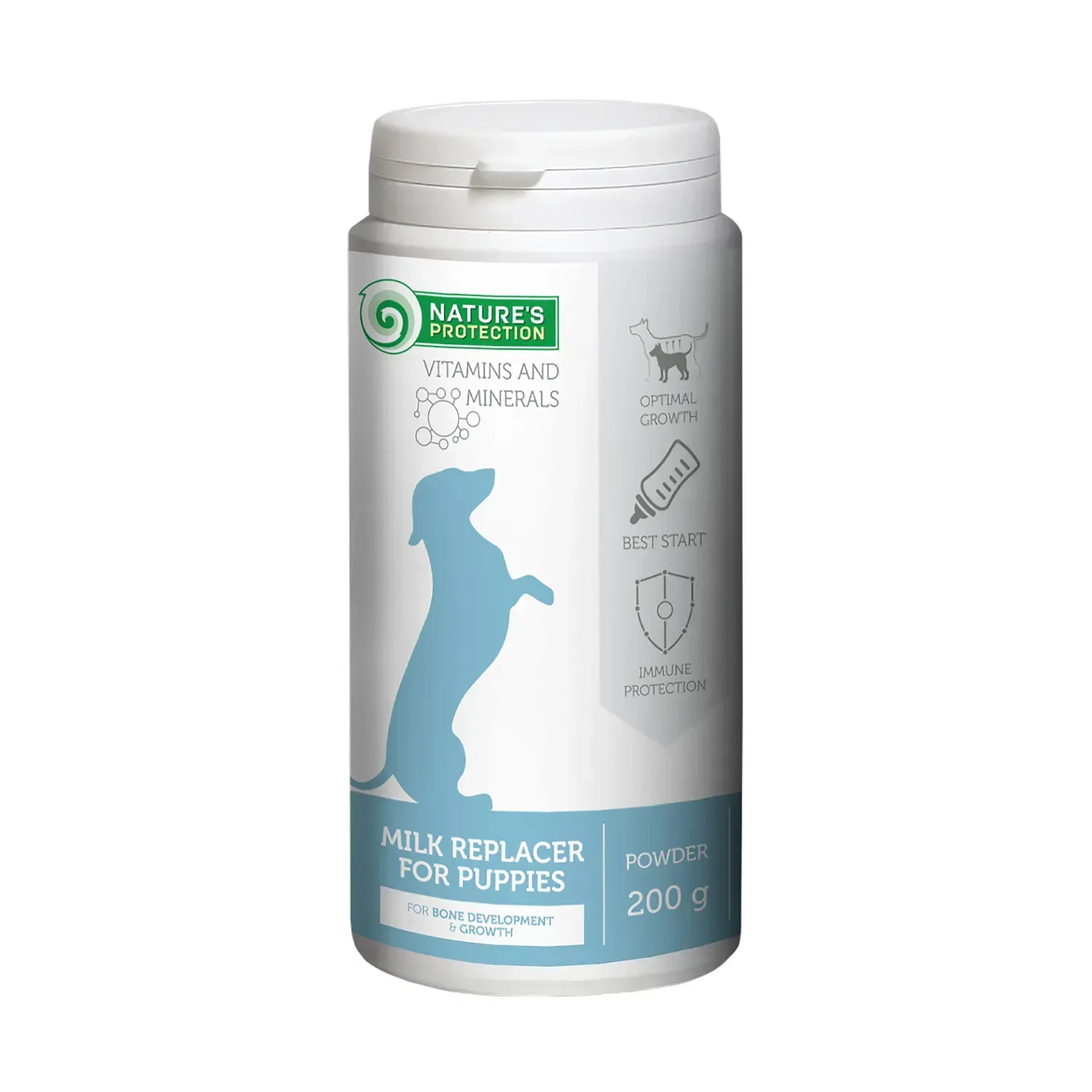
Milk replacer for puppies Nature's Protection Puppy-milk, 200 g
Buy
Is it possible to switch a puppy from one brand of food to another?
Switching a puppy from one food to another is possible and often necessary, for example, in case of gastrointestinal disorders, weight deficiency, or when switching to a higher-quality product. However, this should be done gradually and carefully to avoid gastrointestinal disorders.
How to properly make the transition
1. Gradualness
- The new food is introduced in stages over 7–10 days.
- At the first stage, add 10–20% of the new food to the old one, gradually increasing the proportion to 100%.
2. Monitoring the puppy's condition
- Monitor appetite, stool, and activity.
- Light bloating or soft stool at the beginning of the transition is a normal reaction, but severe diarrhea or vomiting requires adjustment.
What to add to the food in case of gastrointestinal disorder
- Enzymes: help digest proteins, fats, and carbohydrates.
- Probiotics: support normal intestinal microflora and prevent dysbacteriosis.
- Additives with a sorbent (for example, humic acids): can reduce intoxication and absorb excess toxins.

Enterosorbent for body detoxification Detox Pro HOME FOOD Expert, 30 ml
Buy
Probiotic and enzymes for restoring intestinal microbiota ImmunoBiotic Pro HOME FOOD Expert, 20 g
Buy
Advice for owners
- Start the transition during a calm period, without stress or active physical exertion.
- Do not change the food abruptly, especially in small-breed puppies and sensitive animals.
- In case of prolonged or serious disorders, consult a veterinarian for the selection of therapeutic food and digestive support.
How to evaluate feeding quality by the puppy's condition
The owner can quickly understand how well the diet meets the puppy's needs by observing external signs and the animal's behavior.
1. Appetite and behavior
- A healthy puppy is active, curious, and interested in food.
- Lack of appetite or sudden changes in behavior may indicate insufficient or unbalanced feeding.
2. Growth and weight
- Regular weighing helps control growth dynamics.
- Excessive or slowed weight gain may indicate insufficient nutrition or excess calories.
- For large-breed puppies, it is important to ensure that growth is smooth, without sudden jumps that can damage the joints.
3. Coat and skin condition
- Shiny, elastic coat and clean skin are signs of a balanced diet with sufficient vitamins and fats.
- Brittleness, dryness, dandruff, or hair loss are signals of a lack of protein, fats, or microelements.
4. Stool and digestion
- Optimal condition: formed, homogeneous, without mucus or blood.
- Soft or liquid stool, frequent gas, bloating — a sign of poorly digestible food or excess of certain components.
5. Energy and immunity
- An active puppy, rare colds, and quick recovery after games are indicators of adequate nutrition.
- Frequent illnesses or weakness may indicate insufficient immune system support through the diet.
What food to choose for a puppy: economy, premium, or super-premium
The choice of food for a puppy directly affects its growth, development, and health. The market offers different categories of food, and each differs in the quality of ingredients, balance of nutrients, and digestibility.
1. Economy class
- Consists mainly of grain fillers, plant proteins, and low-quality meat or animal by-products.
- Advantages: low cost, availability.
- Disadvantages:
- Less balanced composition, often lacks complete proteins and fats needed for growth.
- Possible additives of artificial colors and preservatives.
- Low digestibility, which can overload the puppy's digestive system.
2. Premium class
- Includes quality meat, fish, or eggs, a balanced amount of grains, and vitamin-mineral supplements.
- Advantages:
- The diet is as close as possible to the puppy's needs.
- Better digestibility of proteins and fats.
- Contains basic microelements for bone growth, immunity development, and coat health.
- Disadvantages: more expensive than economy class, but justified by the effect on health.
3. Super-premium
- Uses high-quality protein sources (meat, fish, turkey, lamb), complex vitamins and antioxidants, limited grains or grain-free formulas.
- Advantages:
- Optimal ratio of proteins, fats, and carbohydrates for growth and energy.
- Support for joints, immunity, digestion, and coat health.
- Contains chondroprotectors, prebiotics, and omega fatty acids.
- Disadvantages: high price, requires careful selection for breed and age.
Conclusion
- For all breeds, and especially for puppies with sensitive digestion, it is better to choose premium or super-premium food.
- For a budget option, economy class can be used, but only temporarily, preferably with additional supplements and under veterinary control, to ensure sufficient protein and microelements.
- High-quality food ensures healthy growth, energy, and disease prevention, which is especially important during the puppy's active development period.
A puppy is not just a little dog — it is a living ball of joy and responsibility that needs tenderness, attention, and proper care. Nutrition is one of the most important aspects of its development: a balanced diet determines the health, growth, energy, and even the character of your pet.
Remember: every puppy is individual, and your care for it — from choosing food to regular monitoring of its condition — forms the foundation of its happy and healthy life. May your little friend grow strong, active, and joyful, and may your love and attentiveness become its best support.


