📌 HOME FOOD Blog: tips on care, health, and nutrition for cats and dogs. 🩺 Up-to-date articles for caring pet owners ❤️
How to brush a cat properly: when to start, which tools to choose, and how to care for the coat before and after bathing

Regular brushing is not only about keeping a cat looking neat, but also an important part of its health and comfort.
During grooming, dead hair is removed, blood circulation in the skin improves, natural oils are distributed more evenly, and the amount of hair a cat swallows while licking itself is significantly reduced.
Excess swallowed hair is one of the main reasons trichobezoars (hairballs) form in the gastrointestinal tract. Many owners underestimate the importance of proper brushing technique or believe cats can manage grooming entirely on their own. In reality, the wrong tool or rough movements can lead to skin irritation, hair breakage, and stress for the animal. In this article, we will look at how to brush a cat properly depending on coat type, which tools to choose, and how to turn the procedure into a calm and safe grooming routine.
At What Age Should You Get a Cat Used to Brushing?
A cat should be introduced to brushing as early as possible, ideally from kittenhood. The most favorable period is considered to be between 4 and 8 weeks of age, when the kitten is still in an active socialization phase and easily accepts new touches and routines as part of normal care.
During this period, contact with a person builds a kitten’s basic sense of safety, and short, gentle brushing sessions help create a positive association with the procedure for life.
If the kitten is still very small
Up to 4 weeks of age, kittens are not brushed in the usual sense. At this stage, light hand strokes, brief contact with a soft brush without pressure, and simple familiarization with the object — letting the kitten sniff the brush — are enough.
These actions imitate the mother’s grooming and prepare the kitten for future grooming sessions.
The best start for kittens
At 4–8 weeks, you can begin using a soft brush or rubber grooming glove, keep sessions to 1–2 minutes, brush only the back and sides, and always end the procedure with affection or play.
The main rule is to be gentle and consistent.
What if the cat is already an adult?
Even if a cat is already grown and has never been accustomed to brushing, it is still possible at any age. However, the process will require more time and patience: start with hand strokes, gradually introduce the brush, do not try to brush the entire cat in one go, avoid force or restraint, and finish the procedure with a treat.
Signs of proper and gentle brushing usually include the following changes:
- Cats introduced to brushing from an early age cope better with seasonal shedding.
- They develop fewer mats and hairballs.
- They react more calmly to other care procedures.
The earlier a cat becomes familiar with brushing, the easier and more pleasant the procedure becomes in the future. It is ideal to start in kittenhood, but even an adult cat can learn to tolerate grooming calmly — the key is to act gradually, without stress or force.
Tools for Brushing Cats: What to Choose and Why
The right brushing tool is the key to effective and safe coat care. Using unsuitable brushes or combs can lead to hair breakage, skin irritation, and a negative attitude toward the procedure. The choice of tool should always be based on coat type, the presence of undercoat, and the individual sensitivity of the animal.
Soft brush (foam or natural bristle)
Best for: kittens; short-haired cats without a dense undercoat; cats just getting used to brushing.
Advantages: does not injure the skin; provides a light massage; suitable for daily use. This is the ideal tool for the first stage of grooming training.
Rubber brush or grooming glove
Best for: short-haired breeds; cats sensitive to metal tools.
Advantages: collects loose hair well; does not pull out live hair; is often perceived by cats as petting.
Metal comb with rounded teeth
Best for: semi-long-haired and long-haired cats; cats with undercoat.
Advantages: reaches through the coat to the skin; helps detect mats; suitable for regular care. It is recommended to choose combs with double tooth spacing — both wide and dense.
Slicker brush
Best for: long-haired cats (Maine Coons, Persians, Norwegian Forest cats); periods of active shedding.
Advantages: effectively removes undercoat; helps prevent mats. Important: use carefully, without strong pressure, and not every day.
Furminator (undercoat removal tool)
Best for: cats with a thick undercoat; seasonal shedding.
Advantages: significantly reduces the amount of hair in the home; lowers the risk of hairball formation. Use no more than once every 7–14 days and only on healthy skin. Not suitable for cats without an undercoat.
Tools to avoid
Stiff human combs; tools with sharp or unrounded teeth; clippers or scissors without a real need and proper experience.
- The cat stays calm during the procedure.
- The skin does not turn red after brushing.
- The coat looks smooth and shiny.
- There is no breakage or bald patching.
There is no universal tool that suits every cat. The best results come from combining several tools selected according to coat type and season. The main rule is that the tool must be safe and the procedure comfortable for the cat.


HOME FOOD cat treats Shrimp Strips, 40 g
BuyHOME FOOD cat treats Salmon Strips, 40 g
Buy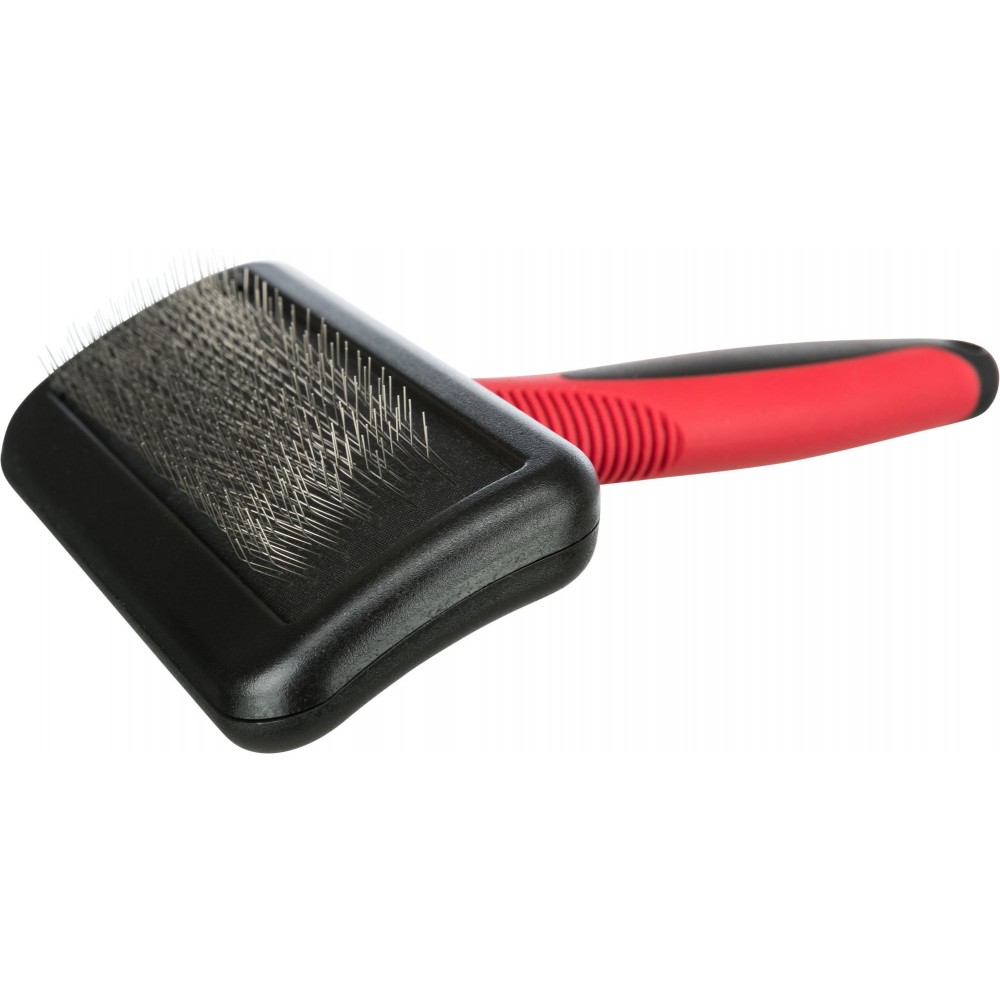
Trixie Soft Brush — slicker brush with soft bristles, 12x16 cm
Buy
HOME FOOD Beauty: “Perfect Care” shampoo + “Silky Touch” conditioner + pink cosmetic bag
Buy
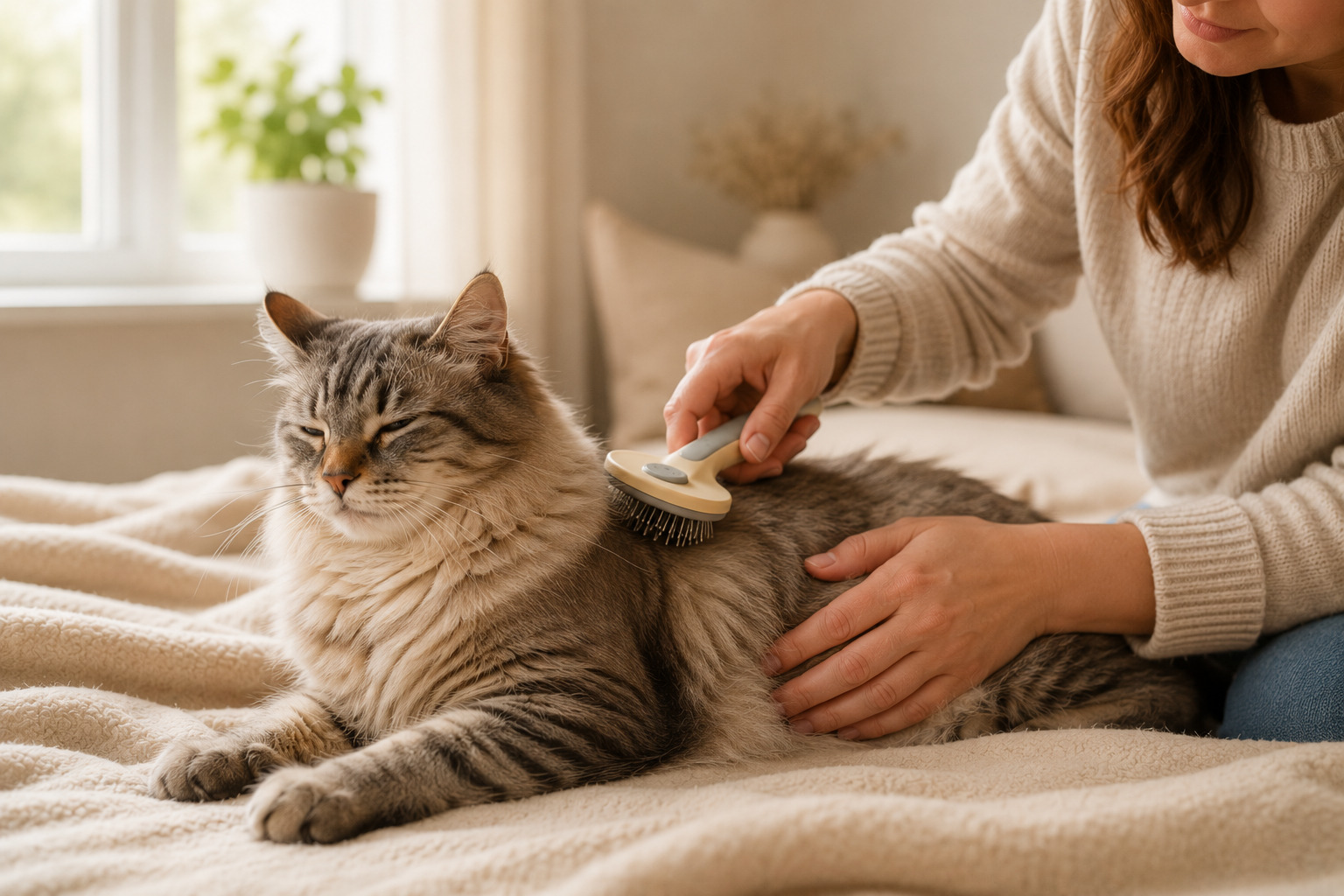

The right tool and a calm step-by-step routine make grooming safe and comfortable for the cat
A Simple Brushing Routine: Before and After Bathing
The correct sequence of actions during brushing greatly affects the condition of the coat, the skin, and the cat’s overall comfort. It is important to consider whether bathing is planned, because the care routine before and after water procedures differs.
When and Why to Brush Before Bathing
Brushing should always be done before bathing, especially in semi-long-haired and long-haired cats.
- Dead hair is removed.
- Mats are less likely to tighten after getting wet.
- The coat is washed more evenly with shampoo.
- Less hair ends up in the drain.
Routine before bathing:
Start with a soft brush or a wide-toothed comb
Move in the direction of hair growth.
Pay special attention to difficult areas
Focus especially on the neck, armpits, belly, and the area behind the ears.
Untangle mats before bathing
If there are mats, gently work them out before bathing and do not try to “soak them out” with water.
Important: bathing a cat with mats can worsen their condition and cause pain.
Brushing After Bathing: Important Nuances
In most home situations, brushing is recommended only after the coat has fully dried, because wet hair is more vulnerable. However, in professional grooming and breeding practice, there is another approach. Experienced breeders and groomers use temperature-controlled dryers, special combs, and slicker brushes to brush the coat during controlled drying.
- Preserve the natural coat texture.
- Create the right volume.
- Help maintain a neat coat appearance for longer.
It is important to understand that this method requires skill, a calm cat, and appropriate equipment, so it is not recommended without experience.
Why You Should Not Comb Wet Fur Without Preparation
- The hair becomes more fragile.
- The risk of minor skin trauma increases.
- There is a greater chance of pulling live hair and causing discomfort for the cat.
That is why, in home care, it is better to follow a safe routine.
Safe Brushing Routine After Bathing (for Home Care)
Gently blot the coat with a towel
Do not rub the fur.
Let the coat dry
Allow the coat to dry naturally or use a blow dryer on the lowest heat and noise setting only if the cat is already accustomed to it.
After drying, start brushing with a soft brush
If there is a dense undercoat, gradually add a comb or slicker brush without applying strong pressure.
Finish with light smoothing of the coat
Shape it in its natural direction.
Professional brushing during drying can produce excellent results, but in home conditions safety and comfort should always come first. If you do not have the appropriate experience, it is better to wait until the coat dries and proceed gradually.
If Bathing Is Not Planned
In that case, you can use the following approximate brushing frequency based on coat type:
- Short-haired cats — 1–2 times per week.
- Semi-long-haired and long-haired cats — 3–5 times per week.
- During shedding season — daily in short sessions.
The Role of Eco-Cosmetics in Cat Coat Care
During and after bathing, it is important to use special cosmetics for cats, preferably with eco-certification or a minimal ingredient list.
- Cats actively lick themselves and may swallow product residues.
- Cat skin is thinner and more sensitive than dog skin.
- Harsh ingredients may cause dryness, dandruff, and itching.
What to look for:
- Shampoos without sulfates, parabens, or artificial colorants.
- A neutral or slightly acidic pH.
- Plant extracts such as chamomile, aloe, or oats.
- No strong scent.
Do not use human shampoos.
After looking at standard brushing and coat care, it is also worth mentioning professional methods for accelerated removal of dead hair and undercoat. One such method is express shedding — a salon procedure that effectively reduces the amount of loose hair, helps prevent mats, and keeps the coat in excellent condition. During an express shedding procedure, a groomer or veterinarian uses a furminator or a special comb to carefully remove dead hairs and undercoat. The procedure is performed on a dry coat, usually in several stages, so the skin is not injured.
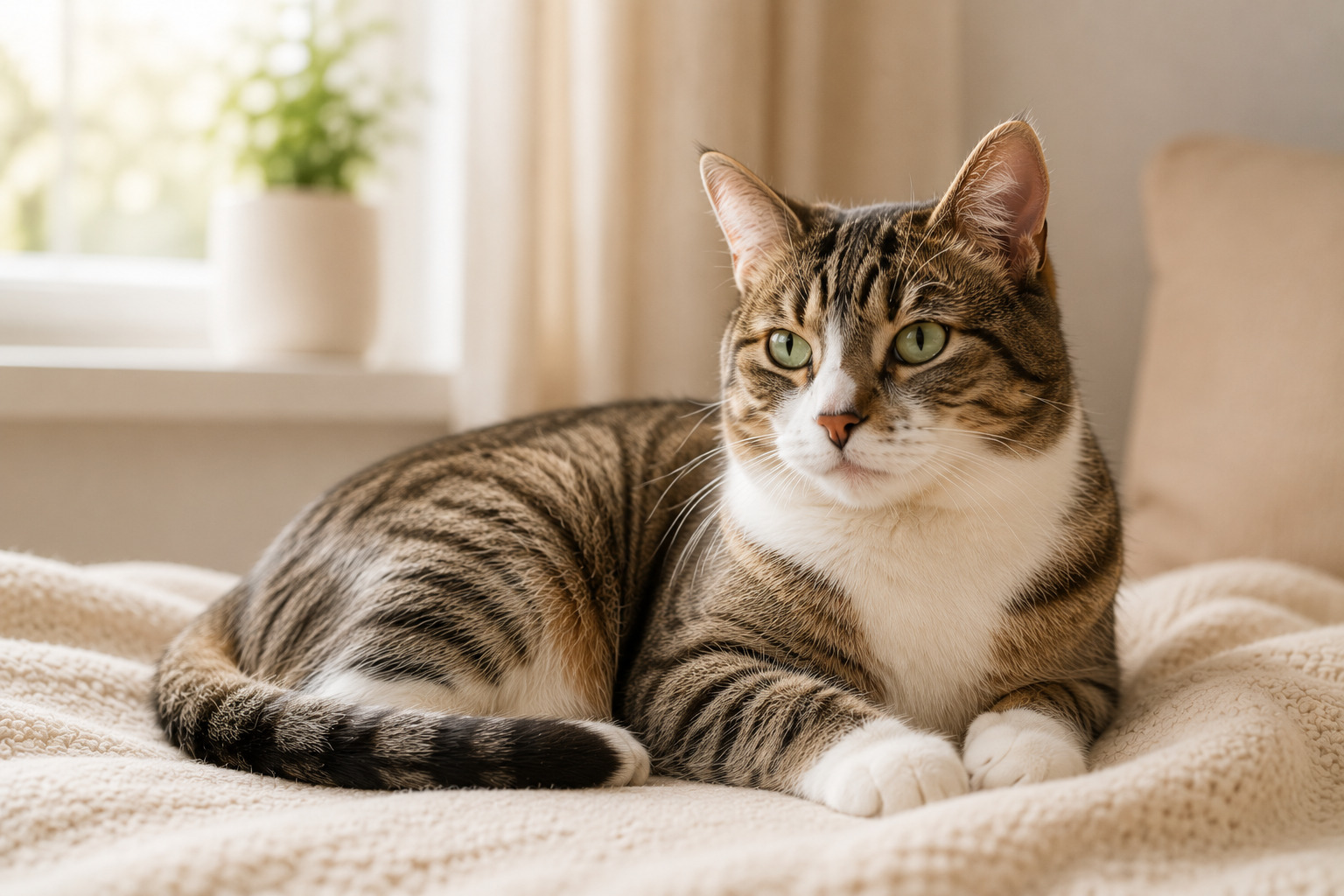
Regular grooming helps prevent mats, skin problems, and excessive shedding
Conclusion
Brushing a cat is more than just coat care. It is a time of attention, care, and mutual trust between the owner and the animal. Regular grooming not only makes the coat shiny and healthy, but also helps prevent mats, skin problems, and excessive shedding.
Remember: it is best to start early, choose the right tools, and follow a safe routine, and when needed, turn to professional groomers. Even a short daily brushing session can become a moment of calm, trust, and gentleness for your cat, strengthening your bond and making life more harmonious and comfortable for both of you.