Today, pet store shelves are filled with a huge variety of foods for virtually every need. Among them, you can often find products with a bold “grain free” label. But what does it really mean: a health benefit or marketing? This topic often sparks debate among pet owners, and many myths can be heard in these discussions. In this article, we will help you understand what grain-free food is and, more importantly, whether your pet actually needs it.
What grain-free really means
Let’s start with the basics: grain-free food is food that contains no grains. You will not find wheat, corn, rice, barley, or oats in it. It is important to note that being “grain-free” is only a characteristic of the food’s composition, not an unquestionable indicator of high quality, so the ingredient list should always be assessed carefully.
At the same time, grain-free food is almost always gluten-free. Gluten is a plant protein found in wheat, rye, and barley. However, do not confuse the two: not all gluten-free foods are grain-free. For example, food containing rice does not contain gluten.
The absence of grains also does not mean that the food contains no carbohydrates. Carbohydrates are an important source of energy for the body, so grains in such diets are replaced with other ingredients such as peas, chickpeas, potatoes, or sweet potatoes.
It is a mistake to assume that grain-free food is hypoallergenic by default. In fact, such a diet may be appropriate only in cases of an allergy to grains, which is less common than an allergy to a particular protein.
For example, a cat that is allergic to chicken will not be able to eat grain-free food containing chicken, while it may be perfectly suitable for a cat with a wheat allergy.
Grain-free foods address specific individual needs and are not, by themselves, a marker of hypoallergenicity
How the trend emerged
The gluten-free diet trend gained popularity in the 2000s and 2010s and remains popular today. Initially, gluten-free diets were prescribed to people with celiac disease (an autoimmune condition), but over time the topic moved beyond medicine. Eventually, the idea of “clean eating” became widespread: the belief that giving up gluten would make the body healthier, make weight loss easier, reduce gastrointestinal inflammation, and so on.
Later, this trend spread to pet food as well. Manufacturers quickly adapted to the new direction in nutrition and used its popularity to promote grain-free foods as products that do not contain gluten. However, the logic remains the same: not all animals need to avoid gluten and grains. This may be justified for dogs and cats with an individual intolerance or allergy to the relevant ingredients.
Among supporters of grain-free diets for pets, one common argument is that their ancestors ate only meat. “Wolves ate meat, not corn” is a phrase often used to support this view.
Indeed, wolves were not known for eating corn or oats, but neither did they live on selected fillet cuts of meat. Wolves consume prey almost entirely — including internal organs, bones, and other tissues, and sometimes even the contents of the digestive tract.
When it comes to modern dogs, their digestive system differs significantly from that of their ancestors after roughly 20,000 years of domestication. Dogs have adapted to living alongside humans in many ways, and their digestive system is no exception.
Enzyme activity in dogs is higher than in wolves, allowing them to digest starch better and process plant-based components more efficiently. Of course, dogs have not become omnivores in the same way humans are, but direct comparisons with wolves are no longer entirely appropriate.
Cats, on the other hand, are indeed closer to their ancestors by nature. Cats are obligate carnivores and need a higher proportion of animal protein for a balanced diet. Nevertheless, they are able to digest grains, although less efficiently than dogs. Therefore, the main criterion when choosing food should not be the presence or absence of grains, but a sufficient amount of high-quality animal protein and an overall balanced formula.
Which grains are used in pet food and why
Grains should not be demonized without first understanding why they are added. In addition to being a source of carbohydrates, grains perform various functions in pet food and have both advantages and disadvantages.
Rice
It is easy to digest, which is why it is often added to therapeutic diets and foods for sensitive digestion. One drawback of white rice is its high glycemic index.
Corn
It not only provides energy but also contains linoleic acid, which the body needs to support healthy skin and coat.
Heat-treated corn is relatively well digested, so it is not merely a “filler.”
Wheat, barley, and oats
These grains are sources of starch and fiber, which is necessary to support normal intestinal function. It is worth remembering that wheat and barley contain gluten, while oats may be contaminated with traces of it.
In addition to their nutritional value, grains also serve a direct technological purpose: they all contain starch, which is necessary for forming kibble during pet food production.
Risks of grains: myths and facts
Myth: grains are just a cheap filler
Fact: grains do more than add bulk to pet food; they also have nutritional value because they provide starch, fiber, fatty acids, certain vitamins, and minerals. The key is not simply whether grain is present, but first and foremost its quality and amount in relation to other ingredients.
Myth: grain is the main allergen
Fact: food allergies are most often associated with animal proteins (chicken, beef, dairy products), rather than grains. This does not rule out an allergy to wheat or corn, but statistically these are not the “leading” allergens. The only way to determine whether a particular ingredient is an allergen for your pet is through an elimination diet.
Myth: cats cannot digest carbohydrates at all
Fact: as obligate carnivores, cats have a much lower requirement for plant-based components, but they are able to digest heat-treated starch. The presence of grains alone does not make a food unsuitable for an animal; what matters most is balance.
Where the risk is real
Fact: pet food containing grains may be harmful if it contains an excessive amount of carbohydrates, a high proportion of cheap low-quality ingredients, and too little animal protein.
An unbalanced formula is what can harm an animal, regardless of the carbohydrate source, whether grains or potatoes.
When grain-free is actually needed
There are cases when grain-free food is a necessity.
- A confirmed allergic reaction to a grain ingredient — statistically, this is fairly uncommon, but it does happen, and in such a case a grain-free diet can be an appropriate choice.
- Grain-free food can be used as one option in an elimination diet to identify food allergens
- A need for a diet with a high proportion of animal protein. Some grain-free diets may meet this need, but the ingredient list should be read carefully.
When a grain-free diet is NOT needed: a healthy animal with no individual reactions to grains does not require such a diet, as it does not provide automatic benefits.

If a grain-free diet is genuinely indicated for your pet, choose not simply a food labeled Grain-free, but a complete and balanced formula that meets the animal’s individual needs
How to read the ingredient list and choose pet food
Not every pet owner knows how to read the ingredient list on a food package correctly. We will share a few practical tips to help you choose a high-quality diet.
Ingredients in pet food are listed in descending order by weight. This means that the first ingredients are present in the largest amounts, while each subsequent ingredient is present in a smaller amount. That is why animal protein should appear among the first ingredients. It is better to choose foods that clearly identify their sources of animal protein. For example, the label should say “dehydrated duck meat” or “fresh veal,” rather than “meat products.”
If you decide to choose a grain-free food, assess the ingredient list carefully: what exactly has replaced the grain and in what proportion.
When choosing food, consider not only the claims on the package but also your pet’s individual needs. For example, to support healthy skin and coat, pay attention to the levels of omega-3 and omega-6 fatty acids, biotin, and zinc. Diets containing glucosamine and chondroitin may be useful for large-breed dogs and cats, while foods with easily digestible ingredients and prebiotics may suit animals with sensitive digestion.
And most importantly, the best food for a cat or dog is the one that suits that individual animal. If you do not observe negative reactions, your pet looks well, the coat is shiny, weight remains stable, stools are regular and well formed, and the animal is active and eats the food with pleasure, then… Congratulations, you have probably found the ideal food for your pet.
HOME FOOD solution: when grain-free is appropriate
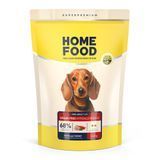
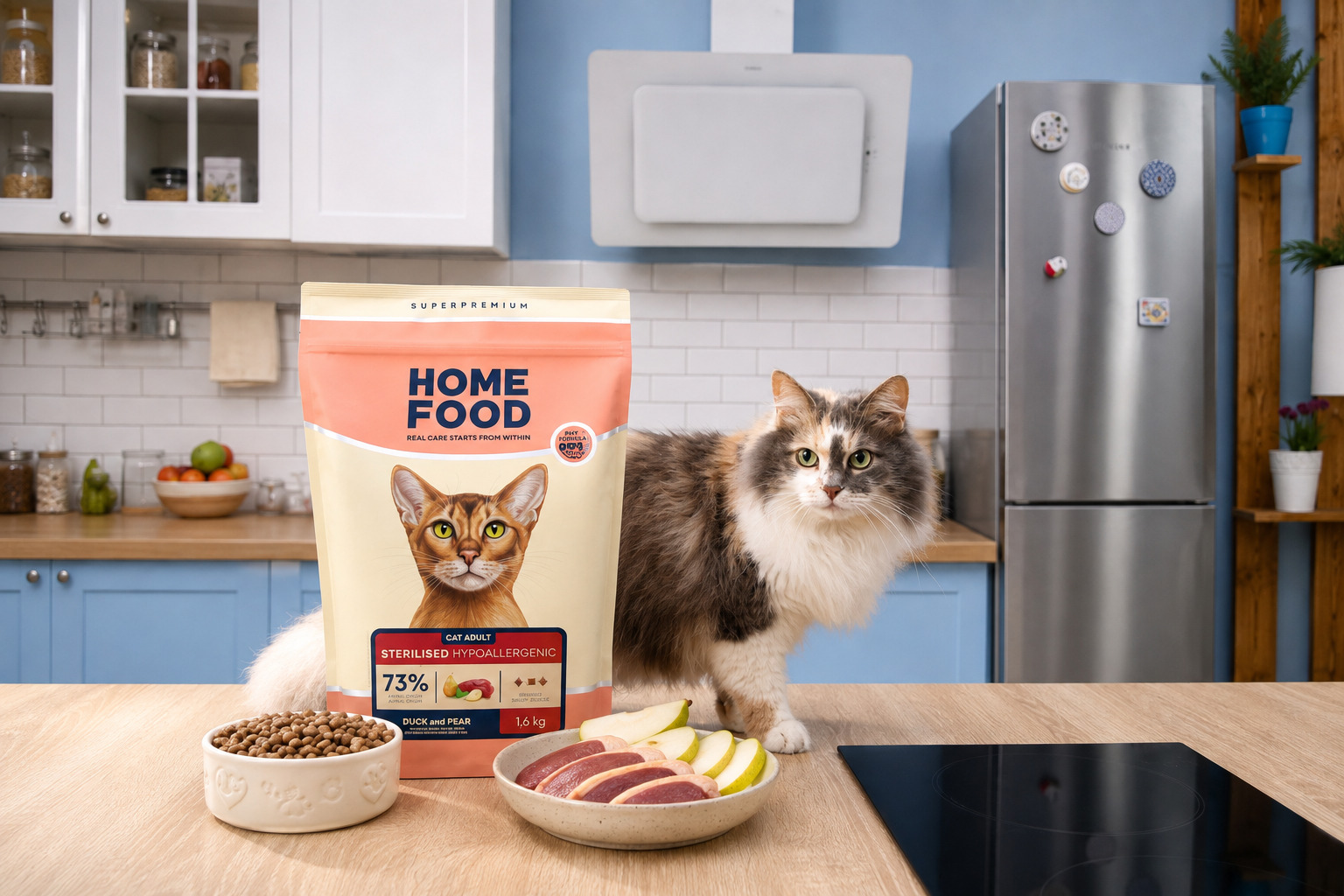
A grain-free diet makes sense when it meets the specific needs of an animal, rather than simply because this type of feeding is popular. One example of this approach is HOME FOOD “Duck and Pear” grain-free hypoallergenic dry food for adult spayed/neutered cats.
The combination of a grain-free recipe and a hypoallergenic formula may be an appropriate choice for cats with sensitive digestion when a diet needs to be selected with the animal’s individual characteristics in mind. Chickpeas and lentils are used instead of grains as sources of carbohydrates.
The food is also formulated for spayed/neutered cats, as metabolism and nutritional needs change after the procedure. The recipe contains L-carnitine, L-methionine, and taurine, which play an important role in supporting normal body function.
Thus, the value of a grain-free recipe lies not only in the absence of grains, but also in a comprehensive approach to the formulation and its suitability for the needs of a particular animal.
In this case, therefore, the grain-free recipe is not simply a response to a popular trend, but part of a comprehensive approach to creating a diet for a cat’s specific needs.

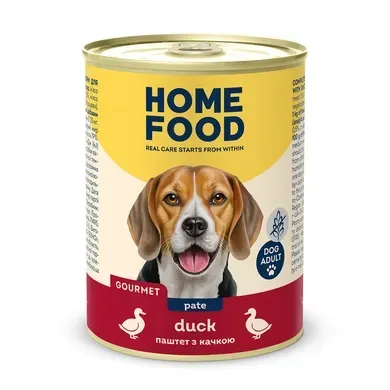
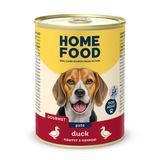
HOME FOOD grain-free wet food for dogs — Duck pâté, 360 g
Buy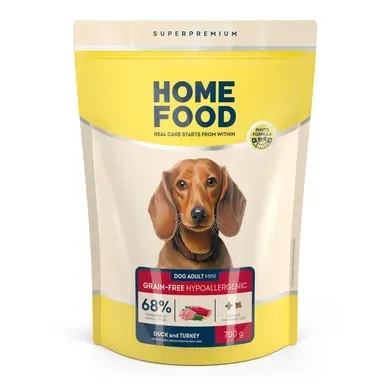
HOME FOOD grain-free hypoallergenic dry food for adult small-breed dogs Duck and turkey, 700 g
Buy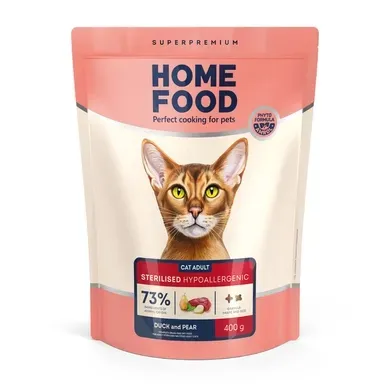
HOME FOOD grain-free hypoallergenic dry food for adult spayed/neutered cats Duck and pear, 400 g
Buy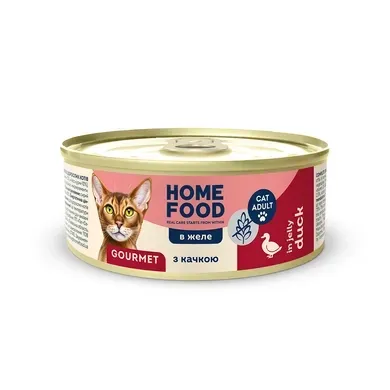
HOME FOOD complete grain-free canned food for fussy adult cats with duck in jelly, 85 g
Buy
Frequently asked questions (FAQ)
Is grain-free food harmful?
No. The absence of grains by itself does not make a food harmful. What matters is whether the food is complete and balanced and whether it meets all of the animal’s nutritional needs.
Is grain an allergen?
Grains, like any other ingredient, can cause individual allergic reactions in some animals. Whether your pet is allergic to grains can be determined through an elimination diet under veterinary supervision.
Grain-free = hypoallergenic?
No. The absence of grains does not automatically make a food hypoallergenic. For example, a grain-free food containing chicken (one of the most common allergens) will not be hypoallergenic.
Does a healthy cat need grain-free food?
If an animal is healthy and has no individual reactions to grains, there is no need for a grain-free diet. You may still consider such diets, but they are not required.