When choosing food for a pet, owners often pay attention to the protein content in the diet — and this is indeed very important. However, if we look deeper into the issue, is the protein percentage always informative enough on its own?
Two different foods may both contain 28% protein, while their compositions can differ dramatically: in one, the main source of protein may be meat or fish, while the other may contain a large amount of corn gluten and pea concentrate.
Plant and animal proteins have many differences, so it is worth taking a closer look at which food composition is preferable. In this article, we will help you learn not only to read the numbers, but also to understand what stands behind them.
Why protein is needed at all
The body needs a sufficient amount of protein because it serves as a building material. Protein itself is not absorbed as a whole molecule — under the action of enzymes in the gastrointestinal tract, it is broken down into amino acids, which the body can then use to build its own tissues. They are used to maintain muscles and ligaments, support coat growth, and ensure normal immune system function.
In addition, amino acids can be non-essential or essential. The body can synthesize non-essential amino acids on its own, although they are also obtained from food. Essential amino acids, however, are not synthesized by the body and therefore must be supplied with food.
If a cat or dog does not receive enough of them, the body will not be able to fully synthesize its own proteins, which can negatively affect growth, tissue repair, and overall health.
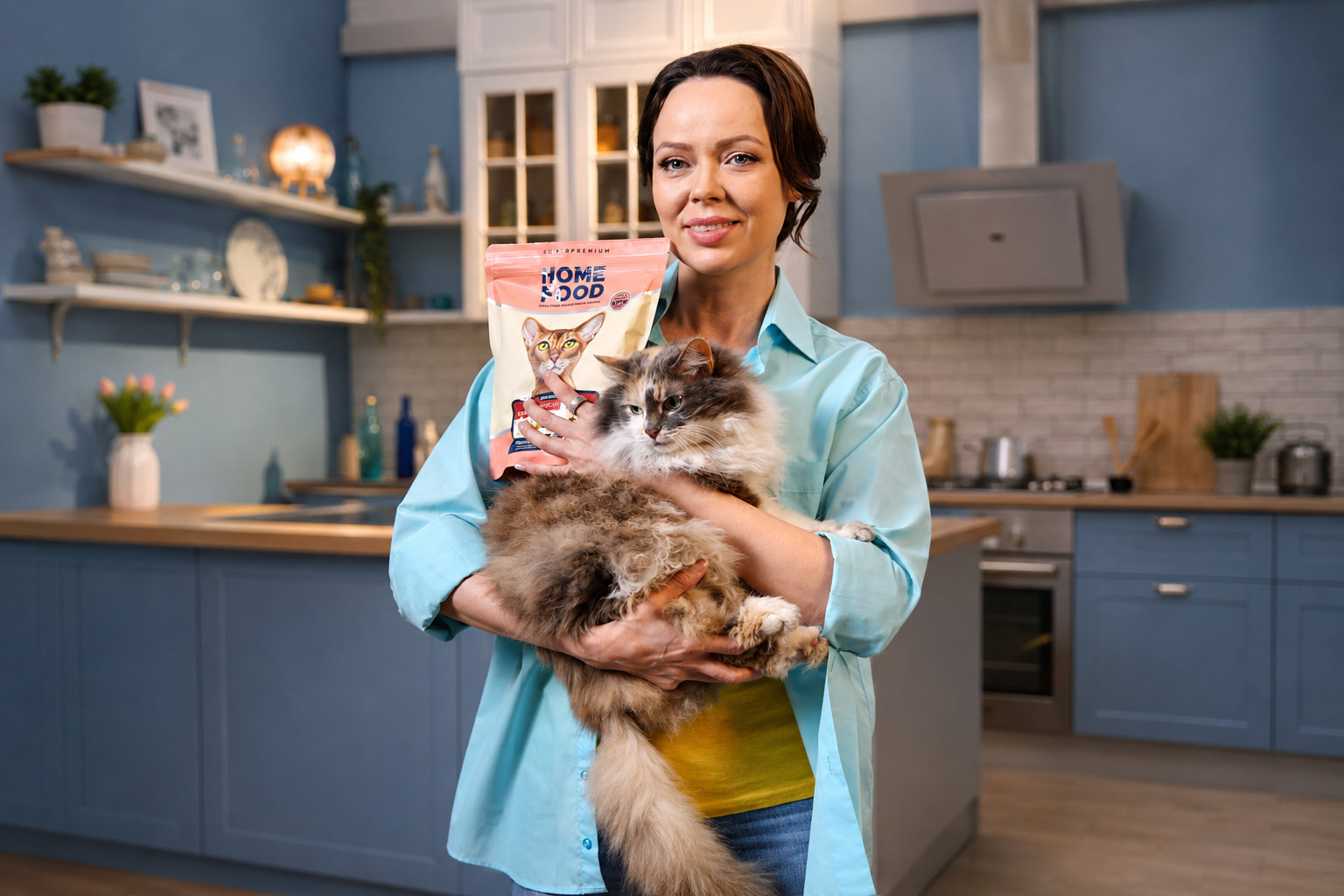

Essential amino acids are not synthesized by the body, so they must be supplied with food
Animal protein: a complete profile
The most significant advantage of animal protein over plant protein is that it better meets the nutritional needs of dogs and especially cats. First of all, this is due to its complete amino acid profile, meaning that it contains virtually all of the essential amino acids required by the body. In addition, the ratio of amino acids in animal protein is optimal for their efficient utilization by the body. Sources include meat, fish, organ meats, meat meal, eggs, and seafood.
Plant protein: limitations
The amino acid profile of plant proteins is less complete — some sources may contain insufficient amounts of certain essential amino acids. This is why plant protein cannot fully replace animal protein, especially in diets for cats.
In general, plant proteins have lower digestibility and are absorbed less efficiently. However, these ingredients should not be demonized: plant protein can be successfully used in pet nutrition as a useful supplement rather than the basis of the diet. Your task as an owner is to check which protein sources predominate in the composition.
Taurine and obligate carnivores
Cats are obligate carnivores, meaning that evolutionarily their diet consisted of 70% meat from other animals. This is why they have a particular need for animal-derived proteins.
The first need we must meet in cats is taurine. For felines, it is an essential amino acid that is completely absent from plant-based raw materials.
If a pet’s diet does not contain enough taurine, this can lead to dilated cardiomyopathy, retinal degeneration, impaired reproductive function, and developmental problems in kittens.
“Gluten” protein and how the percentage is inflated
Pet food manufacturers may sometimes increase the protein percentage by adding corn gluten, pea concentrate, or potato protein to the food. This is because these ingredients are significantly cheaper than meat or fish. In such a food, the crude protein value in the guaranteed analysis will be high, but it will not provide equivalent value for the animal’s body.
Manufacturers may also use a marketing technique known as splitting. This means that one ingredient can be divided into several components, for example: peas, pea protein, pea flour, and pea fiber. By splitting it into several components, each one appears lower on the ingredient list, making it harder for the consumer to understand the actual total proportion of plant protein in the diet.
Biological value (BV) and digestibility
It is important to understand that biological value (BV) is an indicator of how efficiently an animal’s body can use absorbed protein to build its own tissues. This is influenced by the protein’s amino acid profile and digestibility.
Simply put, two different foods may both contain 28% crude protein, but in one the main source is meat, while in the other it is plant concentrates. Accordingly, the biological value of these foods will be different.
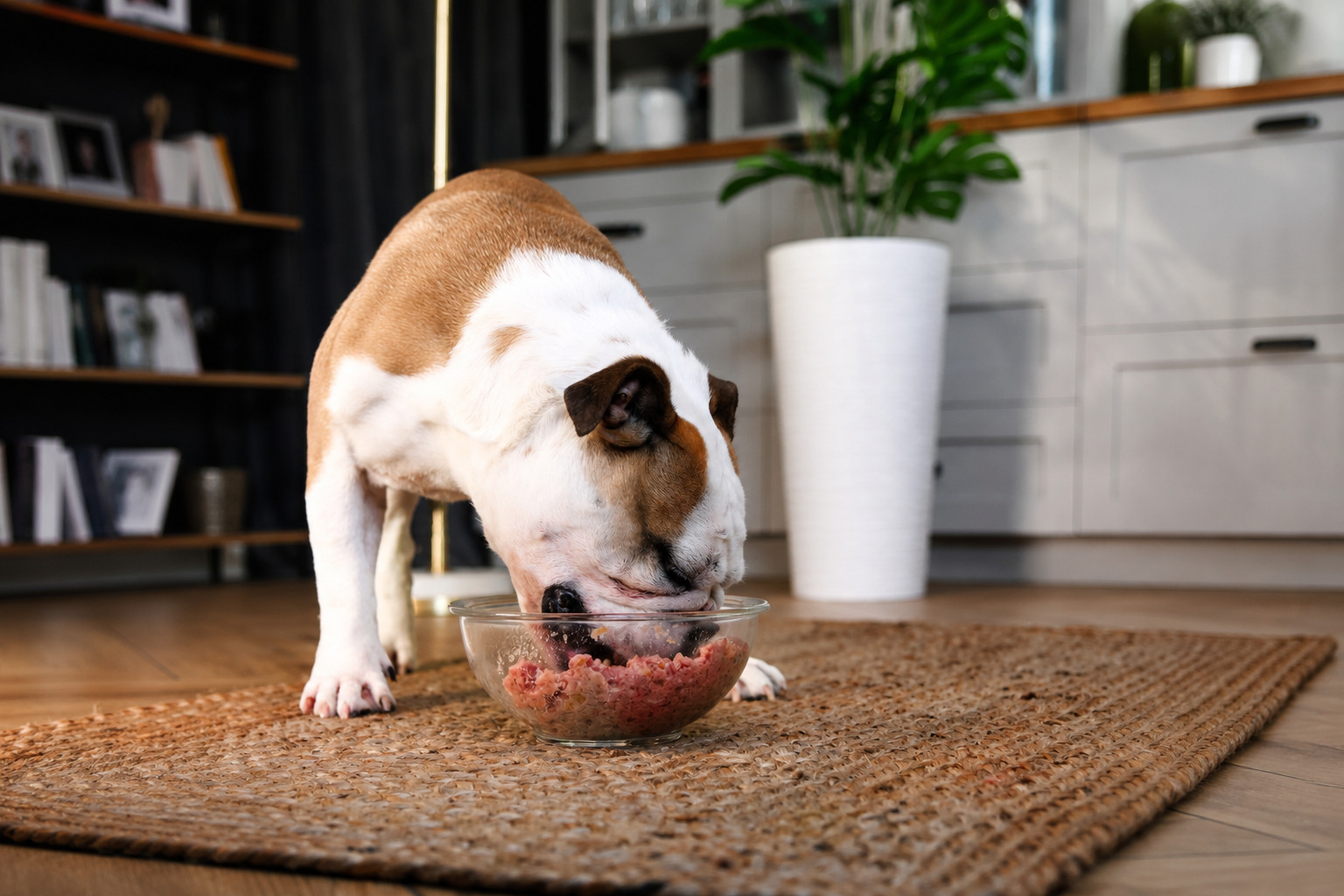
Food should not be evaluated solely by the protein percentage in the guaranteed analysis. It is important to consider which ingredients the protein comes from
How to read the guaranteed analysis and ingredient list
On every package of pet food, consumers can review the product’s ingredient list as well as its guaranteed analysis.
Ingredients are always listed in descending order by their proportion in the food. In other words, if meat is listed first, it indicates that meat is present in the largest amount compared with the other ingredients. It is also worth paying attention to how specifically the manufacturer identifies the ingredients. “Meat raw materials” is too general a description. It is much more informative when a specific source is stated, such as fresh poultry meat, dehydrated veal, or fresh fish.
The guaranteed analysis provides information about the nutrient content of the food, namely crude protein, crude fat, crude fiber, crude ash, and moisture. This is useful information, but the guaranteed analysis should not be assessed without considering the ingredient list, because it does not indicate the origin of these nutrients.
When reviewing the ingredient list, pay attention to whether meat ingredients occupy the first positions. If corn gluten, potato protein, or pea protein appears immediately after the first ingredient, this may indicate that a significant proportion of the protein is plant-based.
Why “the same % of protein costs differently: HOME FOOD vs budget options
The cost of pet food is determined not only by the percentage of protein, but also by its sources, the quality of the raw materials, and the proportions of ingredients in the diet. If the main source of protein in the food is meat or fish, such a diet will often be more expensive than budget options in which part of the protein comes from plant concentrates.
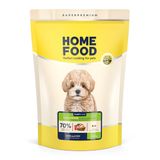
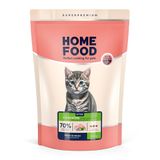
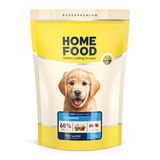
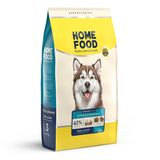
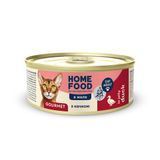
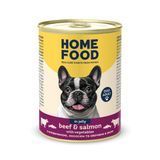
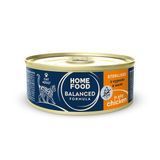
In HOME FOOD diets, the main sources of protein are meat ingredients, which occupy the first positions in the ingredient list. This approach helps provide the animal with protein that has a complete amino acid profile and high biological value, which is especially important for dogs and cats.

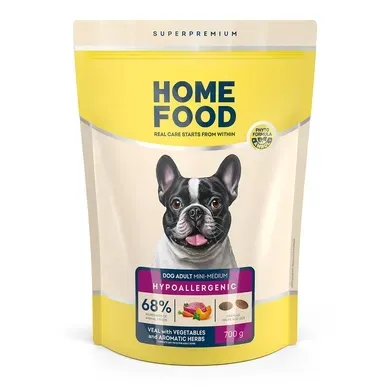
HOME FOOD hypoallergenic dry food for adult small and medium breed dogs Veal with vegetables and aromatic herbs, 700 g
Buy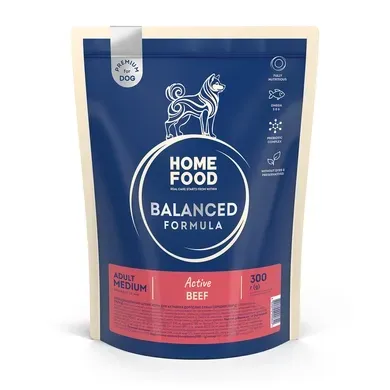
HOME FOOD dry food for active adult medium breed dogs Beef Active Balanced Formula, 300 g
Buy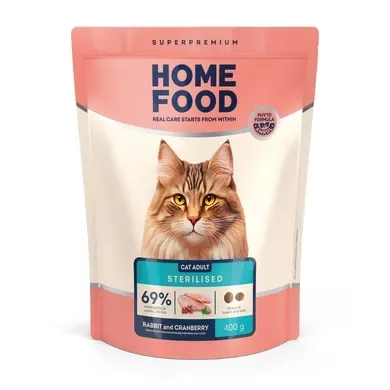
HOME FOOD dry food for sterilized/neutered adult cats Rabbit and cranberry, 400 g
Buy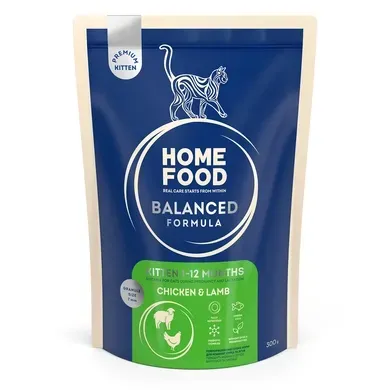
HOME FOOD dry food for kittens Chicken and lamb Kittens Balanced Formula, 300 g
Buy
Frequently asked questions (FAQ)
How much protein should pet food contain?
The optimal amount of protein depends on the animal species, age, and health status. Diets containing approximately 30–40% crude protein are often used for adult cats, while for dogs the range is around 18–30%.
Is plant protein harmful?
No, plant protein is not harmful, but it cannot fully replace animal-derived protein.
How can you identify the protein source from the ingredient list?
Pay attention to the first ingredients listed and to specific protein sources such as meat, fish, and organ meats. The presence of plant concentrates should also be taken into account.
Why can a more expensive food be better at the same %?
The same protein percentage does not mean the same quality. What matters is which ingredients the protein comes from and how efficiently the body can use it.