Cats are amazing animals and, at the same time, our little furry “children” who never seem to grow up. They need our attention and care, but play, exploration, hunting, and new experiences are just as important.
Unlike dogs, cats actively explore not only the floor but also vertical space. Shelves, elevated beds, cat houses, activity centres, and scratching posts let them climb higher, watch over the home, and choose a cosy, safe place. Even an ordinary toy becomes more interesting when it moves, hides, or appears at different heights.
But a cat’s world is not made up only of what can be seen or caught with a paw. Scents play an enormous role in it. Cats use their sense of smell to explore their territory, find food, recognise familiar animals and people, and gather a wealth of information about everything around them.
The use of plant scents for environmental enrichment is based on this very aspect of feline perception. Today, catnip and plants with similar effects are added to toys, cushions, scratching posts, and treats, while scented sticks, pellets, and sprays are also available.
The best-known of these plants is, of course, catnip. But it is far from the only one.
Beyond catnip: which plants attract cats?
People noticed cats’ unusual fondness for certain plants long before modern veterinary ethology emerged. A cat would find a plant, sniff it for a long time, rub its cheeks against it, lick and bite it, roll around nearby, or literally hug it with its paws.
Over time, these observations attracted the attention of scientists. They found that the characteristic behavioural response is triggered by certain volatile plant compounds that cats perceive through smell. Feline preferences, however, are highly individual.
In a study involving 100 domestic cats, the animals were offered catnip, matatabi, Tatarian honeysuckle, and valerian root. Catnip elicited a response in 68% of the cats, matatabi in 79%, Tatarian honeysuckle in 53%, and valerian in 47%. Among cats indifferent to catnip, almost three quarters showed interest in matatabi.
Catnip — Nepeta cataria
This is the best-known natural plant attractant for cats. One of the main substances that triggers the characteristic response is nepetalactone, a volatile compound perceived primarily through smell. The reaction is hard to miss. A cat carefully sniffs the catnip, rubs against it with its cheeks and head, rolls onto its back, licks or gently nibbles the plant, hugs the toy with its paws, and becomes more active and playful.
And there is one wonderful detail: every cat is different.
About one third of cats do not show a clear response to catnip. So if you ceremoniously bring home a brand-new catnip toy and your furry companion sniffs it, looks at you, and goes to sleep, everything is fine. They simply have different tastes.
Matatabi, or silver vine — Actinidia polygama
Matatabi, or silver vine, has long been known in Japan and other East Asian countries and is now appearing more and more often in local pet shops.
The plant contains a whole complex of active volatile compounds. Under the influence of its scent, a cat sniffs the object, rubs against it with its head and cheeks, rolls around, licks it, and plays with it.
Matatabi often makes an excellent alternative for cats that are indifferent to catnip: in a comparative study, almost 80% of the animals responded to it. Matatabi powder, toys filled with it, and silver-vine chew sticks familiar to many owners are now available.
Incidentally, research into this remarkable reaction led to an even more interesting discovery. When a cat rubs against the plant, active substances are transferred to the fur on its head and face, and one such compound has demonstrated a mosquito-repellent effect. So behaviour that looks like nothing more than amusing feline play has a very practical biological function as well.
Tatarian honeysuckle — Lonicera tatarica
It is much less familiar to owners, although it also deserves attention.
Just over half of the cats in the study responded to Tatarian honeysuckle. It is particularly interesting that some animals indifferent to catnip showed interest in this plant. It is less common in pet products but remains another option for scent-based environmental enrichment.
Valerian — Valeriana officinalis
Yes, the same valerian whose scent is familiar to people.
Cat products primarily use valerian root. Its volatile compounds arouse interest in some cats and produce behaviour similar to their response to other plant attractants. In the study, 47% of the cats responded to valerian.
And that is not the whole list
Scientists are studying other plants and individual aromatic compounds as well. These include, for example, Acalypha indica.
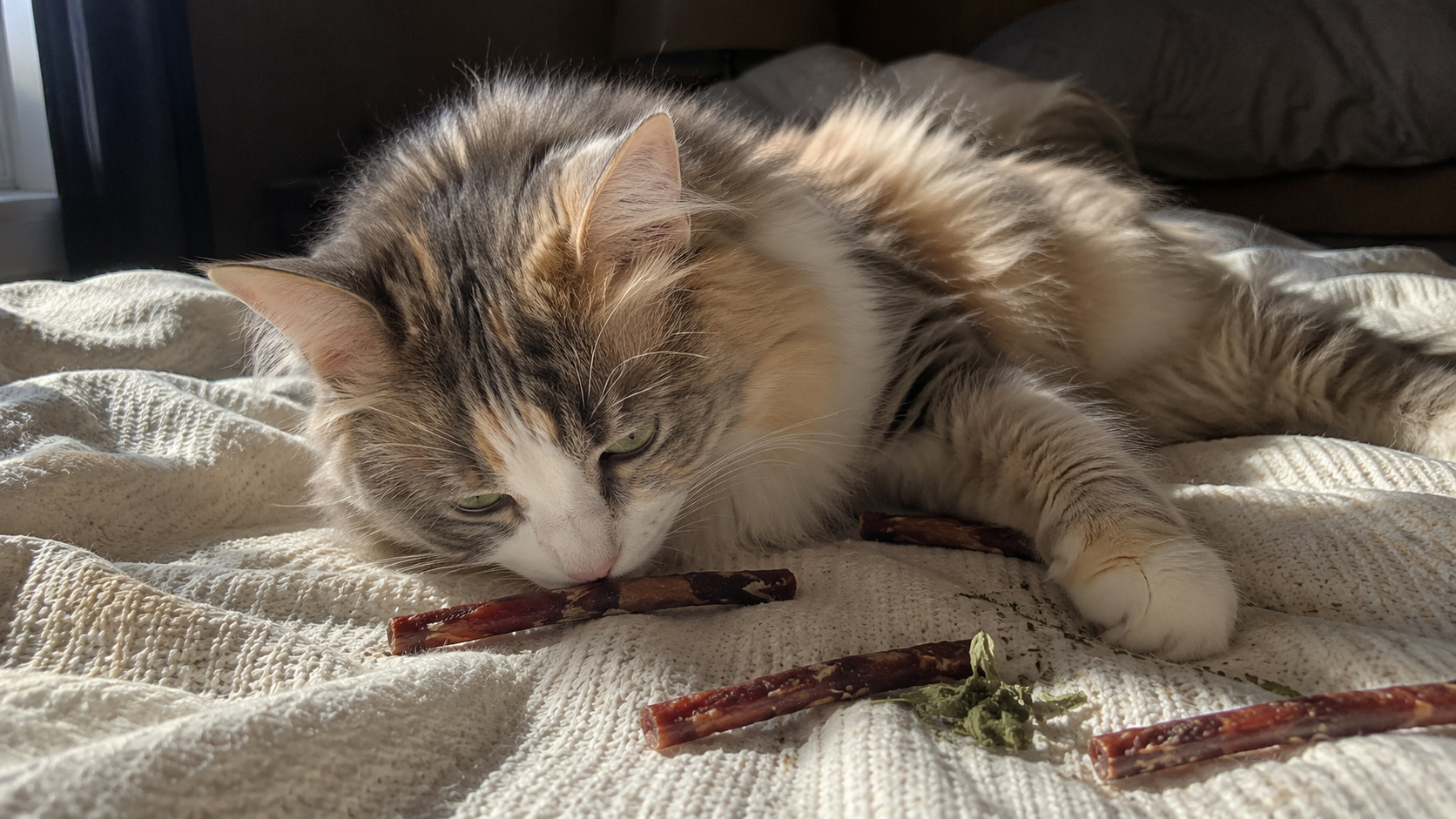

One thing is already clear: there is no single plant scent that appeals equally to every cat
The behavioural response and the duration of interest vary considerably from one animal to another.
Which is more popular: catnip or matatabi?
Catnip and matatabi remain the undisputed favourites for domestic cats today.
Catnip is far better known among owners, but matatabi is notable because it attracts a significant proportion of cats that are indifferent to catnip. These plants are therefore not so much competitors as two different ways to find a scent that appeals to your particular cat.
This is an important point: catnip is neither a “feline drug” nor a magical route to euphoria. It is much more accurate to see it as one tool for environmental enrichment—a small scented event that makes life at home more interesting.
At what age can a kitten be introduced to catnip?
Very young kittens are often indifferent to catnip. The characteristic response develops as they mature, and scientific evidence has not established a clear universal age threshold. Researchers have also observed that the nature of the response changes with age.
There is therefore no need to hurry when using it at home. It is reasonable to postpone an introduction to catnip until approximately 4–6 months of age.
If the kitten grows older and still shows no interest, there is no need to insist. It is not missing out on anything. Its little feline heart has simply chosen another form of entertainment.
Which forms of catnip do cats prefer?
Catnip is sold as dried leaves, powder, pellets and compressed balls, sprays, and fillings inside toys.
What matters most to a cat is access to the aromatic compounds. High-quality dried catnip, a pellet, or a catnip-filled toy therefore makes an excellent introduction.
From a practical perspective, a compressed pellet or toy is often more convenient than fine powder: it produces less dust, does not scatter around the room, and makes it easier for the owner to control the amount of plant material.

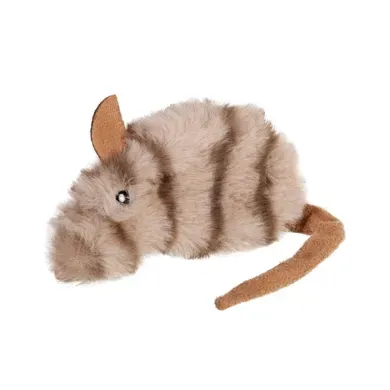
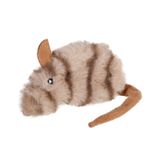
GiGwi Catnip — cat toy “Mouse” with catnip
Buy
GiGwi Catnip — cat toy “Compressed catnip” with feathers
Buy
Can a cat overdose on catnip?
Inhaling the scent is not expected to cause a conventional toxic “overdose”. The response is usually brief, after which interest in the scent fades.
Eating a large amount of the dried plant is a different matter. Excess plant material can cause digestive upset.
So pay attention not only to the clock but also to the cat. If play turns into excessive excitement, irritability appears, or the animal persistently eats the catnip, it is time to put the scented amusement away.
When is catnip especially useful?
First and foremost, when you want to make a cat’s life more interesting.
A little catnip can draw attention to a new scratching post or toy, encourage an inactive indoor cat to move, add variety to play, and introduce a new scent into familiar surroundings.
Catnip is not a medicinal sedative and does not treat anxiety disorders. After contact, one cat may play actively, another may relax and roll around, while a third may quickly lose interest.
Why is catnip added to treats?
Because this combines flavour, scent, and a positive interaction with food. An ordinary treat becomes another interesting sensory experience for the cat.
It is important to remember that treats are still a complementary food. Follow the manufacturer’s recommended daily amount, include it in the diet’s total calorie content, and do not use treats to replace complete and balanced nutrition.
Does a senior cat need catnip?
Yes, if the cat enjoys it.
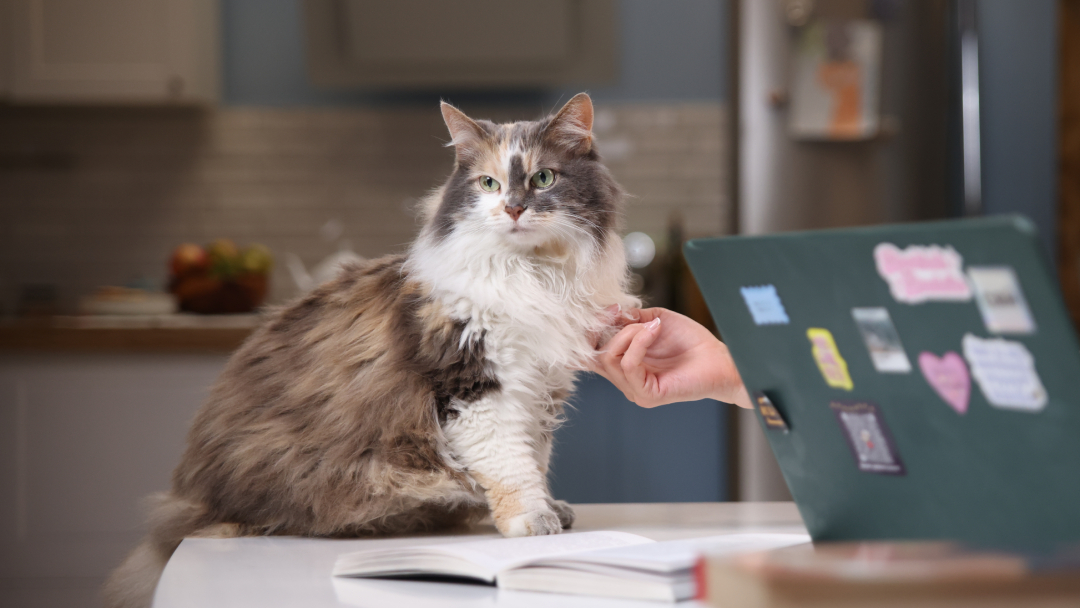
Advancing age does not take away a cat’s need for new experiences
On the contrary, scent enrichment can be especially engaging for an older pet that is no longer ready to chase a wand toy for hours.
A wonderful rule applies here: look first at the cat, not the number in its veterinary record. If it happily rubs its cheek against a favourite scented toy, let it enjoy that little pleasure.
When is it better not to give catnip?
Healthy cats generally tolerate it well. At the same time, catnip does not need to become a compulsory form of entertainment.
It is better to avoid it if a particular cat responds with pronounced overexcitement or aggression, or after vomiting or diarrhoea associated with eating the plant.
It is also not the best time for active play with catnip when a veterinarian has prescribed restricted movement—for example, during recovery from surgery or injury.
If the cat has a serious chronic condition, discuss any additional plant-based products with a veterinarian.
Does catnip smell like ordinary mint?
Catnip and peppermint are different plants, although both belong to the same family.
People perceive catnip as having a distinctive herbal scent, sometimes with subtle mint or lemon notes. A cat’s nose, however, “reads” this aroma very differently. Dogs can of course smell the plant as well, but they are not expected to show the typical behavioural response for which catnip is used in feline products.
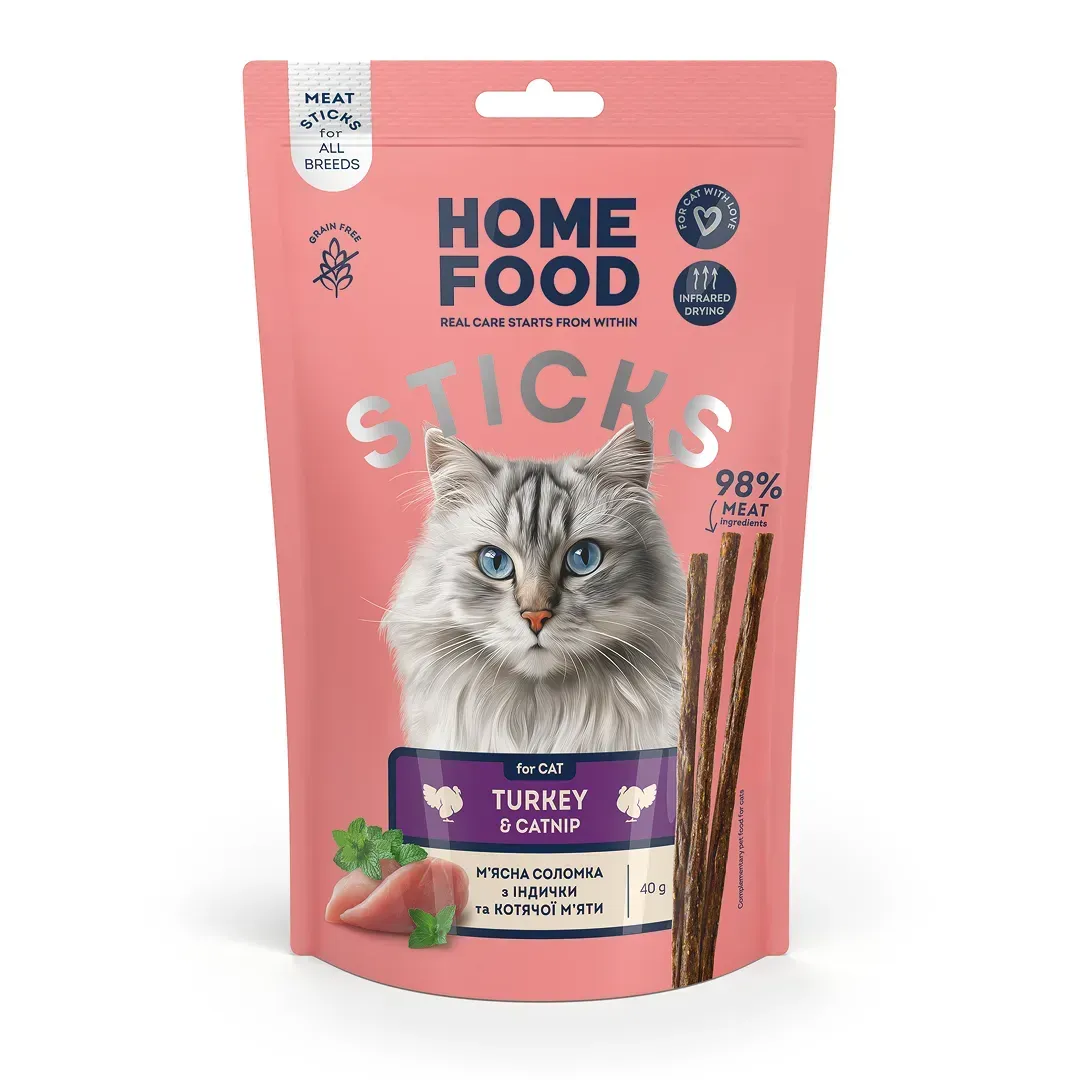
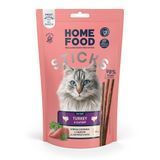
HOME FOOD meat-stick treats for cats with turkey and catnip, 40 g
Buy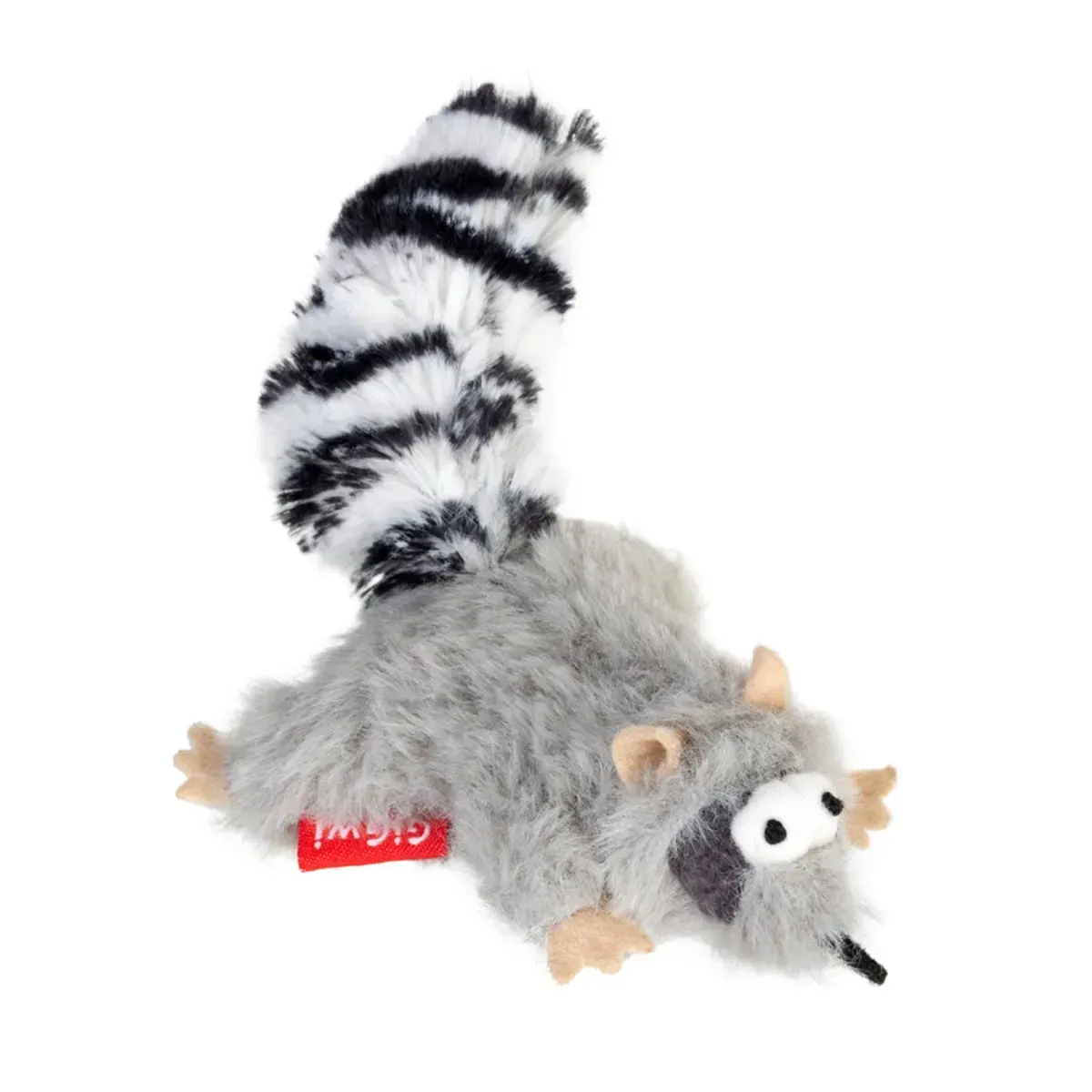
GiGwi Scratch — cat toy “Raccoon” with catnip
Buy
Frequently asked questions (FAQ)
Is catnip safe?
For a healthy cat, yes, when used in moderation. It does not cause a conventional drug dependence. Problems are usually associated not with sniffing but with eating an excessive amount of the dried plant.
Why does my cat not respond?
Because every cat is different. Sensitivity to plant attractants is individual, and a lack of interest in catnip is not abnormal. If catnip leaves your furry companion indifferent, try offering matatabi next time. If that fails to impress as well, that is perfectly fine. Not every cat needs a scented party.
How often can catnip be offered?
It is better to offer it periodically—for example, a few times a week during play or when introducing a new toy or scratching post. There is no need to leave a strong scent constantly available: breaks preserve the novelty of this enrichment.
Can catnip be given to a kitten?
A very young kitten simply does not need it. For home use, it is reasonable to postpone an introduction until approximately 4–6 months of age and then follow the kitten’s own level of interest.
A small plant in a big feline world
Catnip is not required for complete nutrition, does not treat disease, and does not have to appeal to every cat. Perhaps that is precisely what makes it so interesting.
It is simply another way to make an indoor cat’s life a little richer in experience: introduce a new scent, revive an old toy, invite the cat to play, or watch a dignified furry philosopher suddenly roll onto its back while hugging a favourite cushion.
We share the same home with our cats, but we experience it in very different ways. Where we see an ordinary fragrant sprig of grass, a cat discovers an entire world of scents, sensations, and associations.