📌 HOME FOOD Blog: Features of Nutrition for British and Scottish Cats
Features of Nutrition for British and Scottish Cats
British and Scottish cats — true aristocrats among domestic pets. Their origins trace back to the early 20th century when breeders in Great Britain decided to create a breed with a sturdy body, round cheeks, thick plush fur, and a balanced temperament. Over time, through selective breeding and genetic mutations, Scottish cats with characteristic folded ears emerged. Their calm temperament and refined appearance quickly made these breeds extremely popular worldwide.
What is the Difference Between British and Scottish Cats?
Although British and Scottish cats may seem similar due to their round faces, thick fur, and calm temperament, there are significant differences between them. British Shorthair cats have a more massive build, broad chest, and well-developed musculature. Their fur is dense and plush, and their face is short with powerful jaws. Scottish cats, particularly Scottish Folds, have a more rounded head, a lighter skeleton, and a distinctive feature — ears that gently fold forward and downward due to a mutation in the TRPV4 gene. Scottish cats can also be straight-eared.
What to Consider When Breeding Scottish Cats?
The most important aspect when breeding Scottish cats is the hereditary characteristics of the gene responsible for the folded ear shape (Fold gene, a mutation in the TRPV4 gene). This gene is dominant, meaning a single copy is sufficient for a kitten to be born with the characteristic folded ears. Therefore, in ethical and scientifically grounded breeding, a strict rule is followed: only crossbred Scottish Folds with straight-eared Scottish cats (Scottish Fold × Scottish Straight). This approach helps preserve the breed, reduce the risks of genetic complications, and give kittens a chance at a full and healthy life.
However, beauty and gentle nature are not the only traits passed down genetically. Unfortunately, due to active popularization and insufficiently controlled breeding, certain genetic traits have accumulated in these breeds, which can sometimes manifest as serious hereditary diseases. A caring owner should be aware of these risks to conduct timely diagnostics, provide prevention, and maintain their pet's health. Let’s look at the main conditions to watch for.
Osteochondrodysplasia: A Hereditary Condition in Scottish Cats
Osteochondrodysplasia (OCD) is a hereditary disease affecting the development of cartilage and bones. In Scottish cats, it is linked to a mutation in the TRPV4 gene (c.1024G>T), which causes the characteristic ear folding and can lead to deformities in the limbs and tail. Studies have shown that all Scottish cats with this mutation are at risk of developing OCD, although clinical manifestations may vary.
It’s important to note that cats with two copies of the mutant gene (homozygotes) have a higher risk of developing severe forms of the disease. Therefore, genetic testing is recommended before breeding to avoid passing this mutation to offspring.
Polycystic Kidney Disease: A Hidden Threat for British Cats
Polycystic kidney disease (PKD) is a hereditary condition in which numerous cysts form in the kidneys, potentially leading to kidney failure over time. In British Shorthair cats, this disease is associated with a mutation in the PKD1 gene, also found in Persian cats. Research has identified this mutation in British cats, suggesting possible gene transmission through crossbreeding with Persian breeds.
Since PKD may not show clinical signs until later in life, regular ultrasound examinations and genetic testing are crucial for early detection.
Hypertrophic Cardiomyopathy: A Heart Disease in British Cats
Hypertrophic cardiomyopathy (HCM) is a condition where the heart walls thicken, which can lead to heart failure or sudden death. In British Shorthair cats, HCM is one of the most common heart conditions. Studies suggest this disease may have a genetic basis, though the exact mutations are yet to be determined.
Regular cardiologic check-ups are recommended, especially for cats over 5 years old, to detect and manage the condition early.

Phytomin for Cats "Fitogama" Extract for Cardiovascular Support, 100 ml
Buy
Phytomin for Cats "Renavit" Extract for Urinary Stone Prevention, 100 ml
Buy
Phytomin for Cats "Stimul" Oil Effective Immunomodulator, 100 ml
Buy
Phytomin for Cats "Salmon" Oil for Skin Health and Coat Shine, 100 ml
Buy
Genetic Testing: A Step Toward a Long and Happy Life for Your Cat
Don’t be afraid of the term “hereditary disease” — it’s not a sentence but a signal to be more attentive to your pet’s health. Genetic deviations can occur even in the best breeding lines and don’t necessarily indicate poor care or maintenance.
For instance, osteochondrodysplasia is recorded in over 70% of Scottish cats with folded ears if they carry a homozygous mutation. Polycystic kidney disease affects approximately 6–10% of British Shorthair cats, mostly those with shared lines with Persian breeds. And hypertrophic cardiomyopathy is diagnosed in 15–20% of British cats, particularly males of middle and senior age.
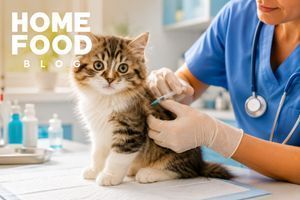
Thanks to modern veterinary medicine, we can detect these conditions in time through genetic testing — a simple blood analysis. This is no longer an exception or exotic practice but a norm for responsible owners. Such diagnostics not only allows excluding an animal from breeding but also timely adapting its diet, regimen, and prevention to improve its quality of life.
Care begins with understanding — and that’s how true love for your furry friend is shown.
After discussing genetics and disease prevention, it’s worth mentioning another extremely important aspect of British and Scottish cats’ health — proper nutrition.

What Should Be the Ideal Food for British and Scottish Cats?
What Should Be the Ideal Food for British and Scottish Cats?
The diet for these breeds must be carefully balanced, taking into account their predispositions. In preventive food, key components play a crucial role:
- Taurine — an essential amino acid vital for the health of the heart muscle, vision, and nervous system function. Its deficiency is directly linked to the development of cardiomyopathies in cats.
- L-carnitine — supports energy metabolism, promotes fat oxidation, reduces the risk of obesity, and helps the heart muscle work more efficiently under physical stress.
- Chondroprotectors (glucosamine, shrimp, fish collagen) — maintain the integrity of cartilage tissue, prevent early joint wear, and form the basis for preventing osteochondrodysplasia.
- Natural antioxidants — protect body cells from free radical damage, strengthen the immune system, and slow age-related changes.
Moreover, the foundation of a quality diet should be easily digestible animal protein with a high amino acid profile.
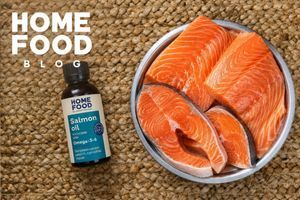
Sources of slow carbohydrates — maintain a stable glucose level. Omega-3 from salmon oil supports heart, vascular, skin, and coat health. Additions like psyllium, inulin, probiotics, and beta-glucans help regulate digestion and support gut microbiota.
British and Scottish cats have a unique jaw structure that influences their eating habits. Specifically, a study published in the journal Animals in 2023 showed that the skulls of these cats have distinctive features, such as a broad face and robust jaw.
These anatomical features can complicate the grasping and chewing of standard food pellets. Therefore, food manufacturers have developed special pellets with a curved shape, adapted to the wide jaw. These pellets facilitate food grasping and stimulate chewing, contributing to oral health maintenance.
Furthermore, the shape and texture of pellets can affect food consumption and dental health. Studies have shown that certain pellet shapes can stimulate chewing, promoting mechanical teeth cleaning and maintaining oral hygiene.
Thus, considering the anatomical features of British/Scottish cats when choosing the shape and texture of food pellets is an important aspect of ensuring their health and comfort during meals.

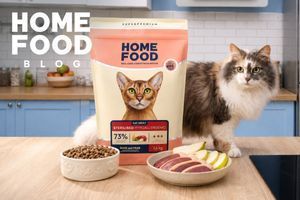
Dry Food for Adult British and Scottish Breed Cats Turkey and Duck For British and Scottish breeds. Suitable for large breeds, 1.6 kg
Buy
Dry Food for Supporting the Musculoskeletal System of Sterilized/Neutered Adult Large Breed Cats Veal with Salmon and Sun-Dried Tomatoes For the support of the musculoskeletal system. For large breeds, 1.6 kg
Buy
Such a balanced diet is not just food but daily care, prevention, and a true extension of your pet’s life. By choosing the right diet, you provide not only satiety but also health, activity, and affection for many years.
A balanced diet is the foundation of health, but it doesn’t always cover all the specific needs of the breed, especially when it comes to genetically determined risks. In cases where an animal is fed homemade meals or standard dry foods without breed-specific orientation, there arises a need for additional support.
This is where specialized dietary supplements come in, designed with the needs of British and Scottish cats in mind. These products may contain increased doses of taurine, L-carnitine, glucosamine, chondroitin, omega-3 fatty acids, antioxidants, and nutraceutical extracts, which help maintain the health of the heart, kidneys, joints, and nervous system.

Hepatoprotector for Liver Function Support Liver Pro HOME FOOD Expert, 30 ml
Buy
Enterosorbent for Body Detoxification Detox Pro HOME FOOD Expert, 30 ml
Buy
Synbiotic for Digestive and Immune Support HePawSyn HOME FOOD Expert, 250 g
Buy
Dietary Supplement CBD Oil 2% for Reducing Anxiety and Pain Relax Pro HOME FOOD Expert, 10 ml
Buy
This is a kind of “health insurance,” especially important when the composition of the main diet is not tailored to the breed’s needs.