Instinctive cat behavior is one of the main reasons for territory marking. Through marks, the animal announces its presence, defines the boundaries of its space, and seems to tell others that this area is already occupied.
But the problem does not always come down to instinct alone. If a cat suddenly starts marking an apartment, furniture, or doors, it is worth assessing not only its reproductive status, but also stress levels, household changes, and possible health problems.
In this article, we will look at why a cat marks territory, how it appears, whether female cats can do it too, and what truly helps reduce or stop this behavior.
Why a cat marks territory
Although instinct is the main reason for territory marking, other factors can also influence this behavior. It is important not to reduce everything to the animal’s character, especially if the problem appeared suddenly.
| Cause | What it means | What to pay attention to |
|---|---|---|
| Instinctive boundary marking | The cat leaves marks to define its territory and announce its presence to other animals | More often appears on vertical surfaces, near entrances, windows, or new objects in the home |
| Sexual maturity and hormones | Unneutered males mark territory more often during sexual maturity, and female cats may sometimes do it during heat | The behavior is combined with vocalization, restlessness, searching for a mate, or attempts to escape |
| Stress factors | Marks may be a way to regain a sense of control in an anxious environment | Moving, renovation, a new animal, guests, conflicts, constant noise, furniture rearrangement |
| Medical reasons | Diseases of the urinary tract, kidneys, or metabolic disorders can sometimes change toilet behavior | Frequent urges, pain, lethargy, cloudy urine, meowing during urination |
- Territory marking does not always mean disobedience or revenge.
- Sudden marking with no previous history requires ruling out a medical cause.
- Stress in cats often shows itself through changes in toilet behavior.
Once the root cause is identified, it becomes much easier to choose the right approach and avoid wasting time on random solutions that do not work.


Relax Pro HOME FOOD Expert — dietary supplement CBD oil 2%, 10 ml
Buy
Harmony Pro HOME FOOD Expert — anti-stress feed supplement, 20 g
Buy
Toy for cats «Windmill»
Buy
HOME FOOD treats for cats «Turkey and catnip meat sticks», 40 g
Buy


When a cat marks territory, it usually does not empty a full bladder, but leaves a small amount of urine on a noticeable vertical surface to reinforce a scent signal
How a cat marks its territory
A cat can mark territory in different ways. The most common option is urine marking, when the animal approaches a vertical surface, raises its tail, and leaves a small mark. This differs from normal urination in the litter box and often has a stronger smell.
Another method is scratching. Cats scratch surfaces not only to wear down their claws, but also to leave visual traces and scent signals. Another way is rubbing the chin, sides, or tail against objects: this is how the pet uses scent glands located on the body.
| Marking method | What it looks like | What it may mean |
|---|---|---|
| Urine marks | Small sprays on walls, furniture, doors, curtains, near windows | Territorial signal, stress, hormonal behavior |
| Scratches | Repeated claw marks on corners, posts, sofas, near the entrance | Boundary marking, tension relief, muscle stretching |
| Rubbing with the face or body | The cat rubs against furniture, people’s legs, door frames, bags | Creating a familiar scent environment, self-soothing |
Female cats can also mark territory, although this happens less often than in males. In females, this behavior is more often associated with stress, anxiety, or a period of sexual activity. If marking is combined with signs of pain or frequent squatting, this is no longer a typical territorial issue.
How to stop a cat from marking territory: effective methods
If a cat has started marking territory, owners can use several methods to solve the problem. The best results usually come not from one trick, but from a combination of environmental correction, hygiene, stress reduction, and, if needed, veterinary advice.
Consider neutering or spaying
This is one of the most effective ways to reduce hormonally driven marking. After surgery, this behavior becomes weaker or disappears in many animals, although if the habit has been established for a long time, behavioral correction may also be needed.
Reduce stress factors
Create a stable environment for the cat: a quiet resting place, access to the litter box, water, a scratching post, and hiding places. If a new animal has appeared in the home, introduce changes gradually and do not take away your pet’s safe zones.
Provide more activity
Sometimes marking becomes stronger because of boredom, pent-up energy, or underlying anxiety. Daily play, interactive toys, enrichment treats, and regular interaction help redirect behavior into a safer channel.
Do not punish the cat
Punishment, shouting, or pushing the cat’s nose into a mark almost always increases stress. Instead, support desired behavior when the cat calmly uses the litter box and avoid creating extra anxiety.
Clean marked areas thoroughly
If the smell remains, the cat often returns to the same spot. It is better to use products that remove not only the stain but also the odor, and not to mask it with harsh household chemicals with a strong scent.
See a veterinarian if the problem continues
Long-term marking can be a symptom of urinary tract disease, pain, or another medical discomfort. This is especially important if the behavior changed suddenly or is accompanied by frequent trips to the toilet.
- Cleanliness and odor neutralization are just as important as behavioral correction.
- Positive reinforcement works better than punishment.
- If a cat marks because of anxiety, you need to address the source of stress, not just the symptom.
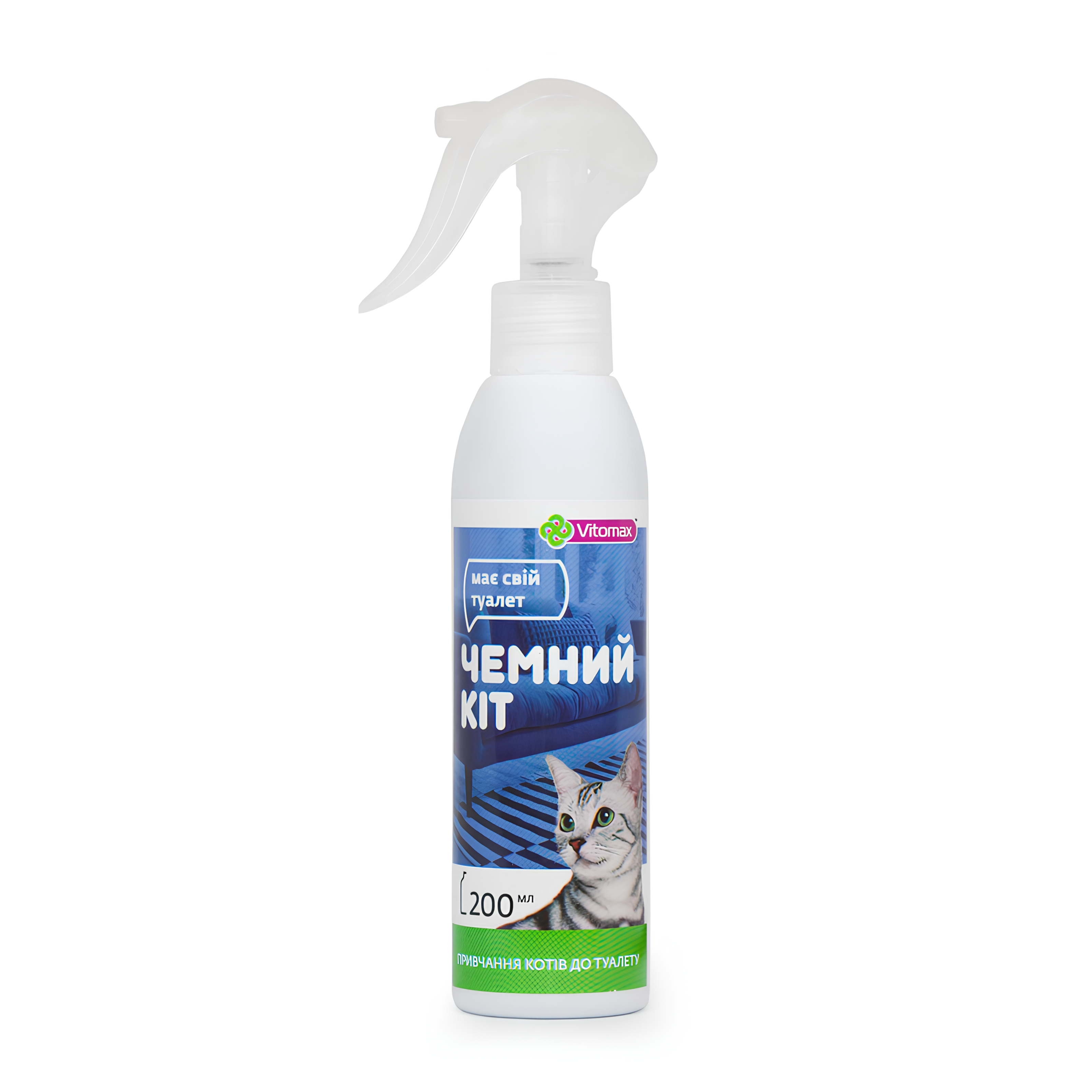
Spray Chemnyi Kit «Toilet training for cats», 200 ml
Buy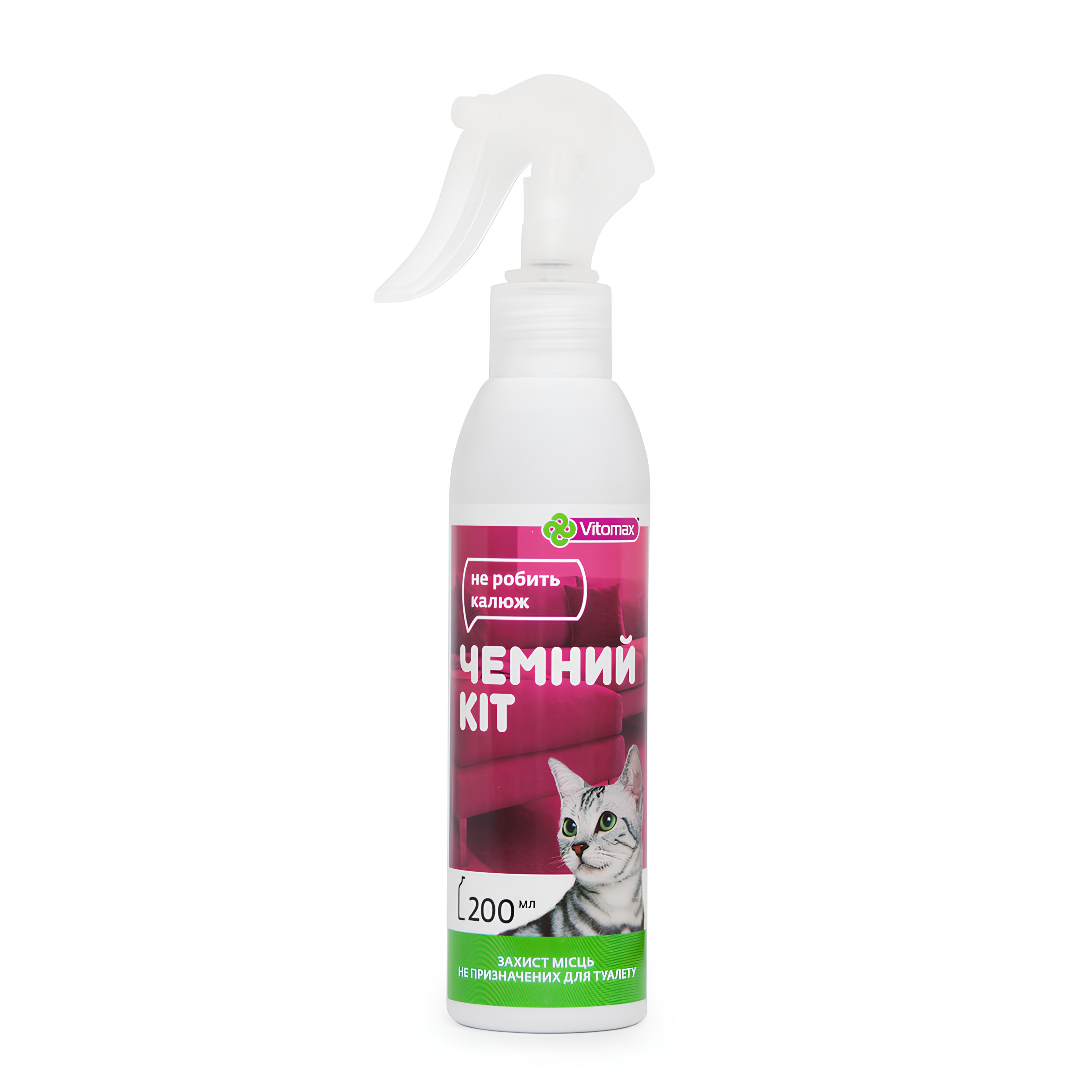
Spray Chemnyi Kit «Protection of places not intended for toileting», 200 ml
Buy
Smartis — stain and odor remover spray for cats, 250 ml
Buy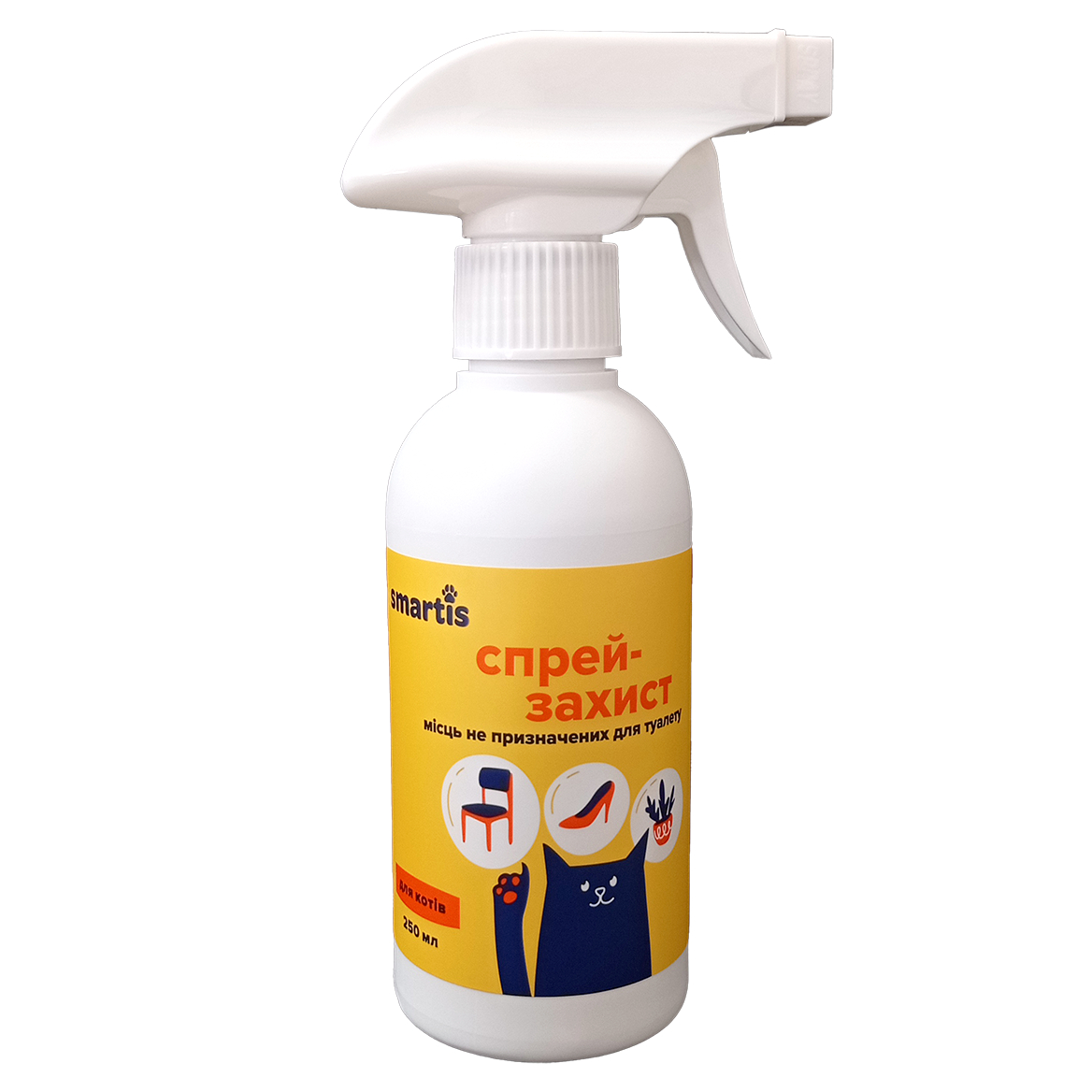
Smartis — protection of places not intended for toileting for cats, 250 ml
Buy
Even the right product will not work if the smell of old marks remains at home, the cat has no safe space, or the litter box is in an inconvenient, noisy, or conflict-prone place
When to see a veterinarian
Sometimes marking is indeed a behavioral problem, but there are situations when an examination should not be delayed. Be especially attentive if the cat is not just leaving marks, but often squats to urinate in small amounts, looks tense, or starts avoiding the litter box.
- Contact a veterinarian urgently if the cat often goes to the toilet but barely urinates.
- Do not ignore blood in the urine, pain, lethargy, or refusal to eat.
- After medical causes are ruled out, the veterinarian may recommend further behavioral correction.
In males, lower urinary tract diseases can develop quickly, so a sudden change in toilet behavior is always a reason to look more closely.
Conclusion
Territory marking is natural cat behavior, but in some cases it can become a problem for owners. Understanding the causes of this behavior and using the right methods can help reduce or completely stop these signs. Neutering or spaying, reducing stress, active play, thorough cleaning of marked areas, and attention to the cat’s health will help keep the home clean and build a calmer relationship with your furry friend.