📌 HOME FOOD Blog: tips on pet care, health and nutrition for cats and dogs. 🩺 Useful articles for caring pet parents ❤️
A well-managed drinking regime is the foundation of your pet’s health, vitality, and longevity

Water is the foundation of life: a proper drinking regime is essential for your pet’s health
Water is the most vital structural component of any living organism. In dogs and cats, it makes up 65–75% of total body mass. This amount ensures the normal function of all physiological systems. It’s worth noting that water distribution in the body is uneven: it accounts for up to 95% in the blood, about 75% in muscles, and only 10–20% in fat tissue. That’s why overweight animals are prone to hypohydration — a hidden lack of fluids.
Water and your pet’s age
As animals age, their ability to retain water gradually decreases. In pets older than 10 years, intracellular fluid levels may drop to a critical 40%, negatively affecting metabolism, cell regeneration, and the function of internal organs. These changes are not always immediately visible but can provoke chronic illnesses or worsen existing conditions.
The biological role of water in the body
Water participates in every single biochemical reaction. Without it, proper digestion, metabolism, nutrient transport, and toxin elimination are impossible. A lack of water can cause the following physiological disorders:
- slowed intestinal motility, constipation;
- hormonal imbalance;
- loss of skin elasticity, poor coat condition;
- weakened immune barrier of mucous membranes;
- thickened joint fluid, joint pain;
- reduced visual acuity;
- impaired kidney and liver function, formation of sediment;
- accelerated aging and degenerative changes in organs.


Dehydration is invisible but always dangerous
How much water does your pet need?
Veterinarians recommend the following daily water intake for pets:
- for dogs: 60–70 ml per 1 kg of body weight per day;
- for cats: 30–50 ml per 1 kg of body weight per day.
These values may vary depending on the type of diet. With dry food, water needs increase, whereas with natural or wet food, part of the moisture comes from the meal itself.
How to encourage your pet to drink more?
1. Behavioral (psychological) approach
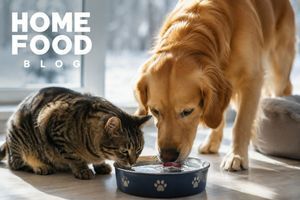
Pets often prefer drinking from interesting sources: fountains, streams, or even taps. Constant water circulation enriches it with oxygen and sparks curiosity. It's advisable to place several water bowls in different areas of the home.
2. Organoleptic method
Different types of water have distinct tastes. You can offer your pet filtered, bottled, or tested spring water, or water with approved microdoses of minerals — this helps identify your pet’s preferences.
3. Physiological method
Adding cartilage, skin, fish, or poultry to the diet supplies glycosaminoglycans — compounds that retain water in cells, support joint hydration and the intercellular matrix. Beet-derived betaine is another powerful compound that reduces water loss through the skin and has a hepatoprotective effect.
Water quality: what you should know
Drinking water must be safe — both bacteriologically and chemically. If you have doubts about the quality of tap water, consider using:
- water filtered through coarse and fine purification systems;
- UV-sterilized water;
- special veterinary water with controlled mineral content and pH level.
Your pet’s health condition, age, sex, physiological state (e.g., lactation, pregnancy, active or resting phase), and any existing diseases (such as diabetes) require a personalized approach to water quality and quantity.

High-quality water is the foundation of an animal’s longevity
What to consider when managing your pet’s hydration
- Daily water requirement based on weight and activity level.
- Water quality — it should be changed daily.
- Type of diet: moisture content of food, hydrophilic nature of ingredients.
- Health condition (e.g., in case of kidney disease — only low-mineralized water).
- Age: older animals drink less; excess water may cause edema.
- Sex and physiological state (lactation, heat, growth).
- Behavioral characteristics of the animal.
Drinking water is not just important — it’s a critically essential component in a pet’s life. Lack of water leads not only to thirst but also to conditions that can gradually undermine your pet’s health over years. A properly managed hydration routine is the foundation for disease prevention, longevity, and an active life.


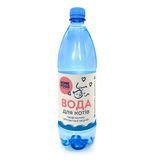
Drinking water for dogs to support the immune system, 1 L
Buy
Drinking water for cats to prevent urolithiasis, 1 L
Buy
Solutions from HOME FOOD
We recommend supplements and treats for your pets that are suitable for both preventive use and regular consumption:
- HOME FOOD water for dogs based on succinic acid and silver nanoparticles is an excellent source of drinking water with immunity-boosting properties. It is a full replacement for regular water and can be given in courses or continuously.
- HOME FOOD drinking water for cats enriched with ascorbic acid and silver nanoparticles helps reduce inflammation and has antiseptic properties. It is especially beneficial for preventing cystitis and urolithiasis in neutered or spayed pets. It can fully replace regular drinking water and be used in courses or on a regular basis.
- HOME FOOD cat sticks with salmon or shrimp contain natural glycosaminoglycans that help retain moisture in the body, especially in joints and skin.
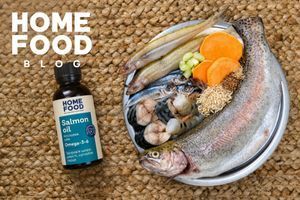
- Omega-3 fatty acids from HOME FOOD salmon oil help reduce inflammation and support moisture retention in cells, particularly in the skin, where hydration is essential for elasticity and health.