📌 HOME FOOD Blog: How to Choose Dry Food for Dogs
How to Choose Dry Food for Dogs
Food is not just a set of nutrients, vitamins, and minerals. It is the basic foundation of a healthy and happy life for your pet. When choosing it, a lot is at stake — health, activity, well-being, and even the lifespan of your dog. That is why it is so important to pay proper attention to choosing food, so as not only to avoid making a mistake, but also to select the optimal diet for your four-legged friend, taking into account all its characteristics.
When and why dry dog food appeared
The first commercial dog foods began to appear at the end of the 19th century. In 1860, the Englishman James Spratt created the world’s first dry “biscuits” for dogs — a hard nutritious product that resembled crackers. The impetus for this was a simple idea: dog owners in cities needed convenient, long-lasting, and balanced nutrition for their pets.
With the development of urbanization, dogs increasingly lived not in yards, but in homes with people, so traditional “homemade” food scraps ceased to be the optimal option. In the 20th century, especially after World War II, extrusion technologies (producing granules under high temperature and pressure) made it possible to produce dry food in its modern form — crunchy granules that retain nutritional value, taste, and are convenient to store.
This is how dry foods turned from experimental food tiles into a complete, balanced daily diet for dogs, which millions of owners use today.
How high-quality dry food is created: the path from science to the finished granule
Creating a complete food is a complex, multi-level process involving zoologists, veterinarians, technologists, nutritionists, and quality control laboratories. High-quality dry food does not begin at production — it begins with science.
1. Studying the physiological needs of a specific group of dogs
The first stage is analyzing exactly who the food is being developed for. The team of specialists studies:
- age (puppies, adults, seniors)
- size (small, medium, large breeds)
- activity level
- special needs (sensitive stomach, allergies, sterilization, joint problems)
It is from this that the future formula will depend: energy value, amount of proteins, fats, fiber, micro- and macroelements.
2. Formulating the diet in accordance with FEDIAF and AAFCO standards
After determining the animals’ needs, a basic diet is formulated.
Specialists are guided by:
- FEDIAF (European Pet Food Industry Federation)
- AAFCO (Association of American Feed Control Officials)
These organizations set minimum and maximum standards for proteins, fats, vitamins, microelements, amino acids, and energy value. The formula must comply with nutritional standards, not just look balanced.
3. Calculating the technological map using “feed programs”
Specialized programs are used for precise recipe creation, which:
- select optimal ingredient proportions
- automatically control compliance with standards
- calculate energy density
- model changes during heat treatment
This creates a technological map of the food — a clear formula that can be produced stably and reproducibly.
4. Calculating the premix: vitamins and minerals
No quality food is complete without a premix — a complex of vitamins, microelements, amino acids, and antioxidants.
Since some nutrients are lost during processing, they are added with a reserve calculated in the same feed programs.
5. Evaluation and verification of ingredients
Before ingredients reach production, they undergo:
- veterinary-sanitary control
- analysis for moisture, protein, ash, fiber
- testing for mycotoxins, radionuclides, intestinal pathogens, heavy metals
- confirmation of origin (animal proteins, grains, oils, etc.)
The quality of raw materials is half the success.
6. Production and laboratory testing of the food
After creating a test batch, the food undergoes comprehensive checks:
- chemical analysis (proteins, fats, fiber, calcium/phosphorus)
- microbiological safety
- determination of toxins and heavy metals
- shelf-life stability
- taste appeal testing
Some manufacturers send samples to independent European or American laboratories for additional control.
7. “Feeding test” — testing on dogs
The next stage is test protocols where the following is checked:
- how dogs tolerate the food
- whether the protein and fat composition suits them
- what changes occur in coat condition, digestion, and activity
- whether the food meets digestibility standards
This is an important point, because the formula must work not only “on paper” but also in real life.
8. Market launch of the food and quality system
After successful testing, the food can be certified in a certain quality system:
- ISO 22000
- HACCP
- GMP+ and others
These standards guarantee safety, stability, and control at every stage — from raw materials to packaging.
Only after this does the food reach store shelves as a product that has gone the full path from scientific standards to real tests on dogs.
Size, shape, and texture of granules: how it affects food choice
When it comes to dry dog food, it is important to remember that not all granules are the same. The size, shape, and texture of the food affect not only taste preferences, but also dental health, digestion, and the ease of consuming the food.
1. Granule size
Granule size is selected according to the breed size and age of the dog:
- Small granules (3–8 mm) — suitable for small breeds, puppies, and dogs with small jaws. They are easy to chew and swallow, reducing the risk of choking.
- Medium granules (8–12 mm) — universal for medium-sized dogs. They provide moderate mechanical impact on the teeth, helping to remove plaque.
- Large granules (12–20 mm) — designed for large breeds. Large granules stimulate chewing, which is beneficial for teeth and jaws, and also slows down food consumption, preventing overeating.
2. Granule shape
The shape of the food also matters:
- Round — classic, easy to swallow, suitable for most dogs.
- Oval or elongated — stimulate active chewing, good for medium and large breeds.
- Shaped (bones, stars, hearts) — more marketing-oriented and for encouragement, may be less effective for cleaning teeth.
3. Granule texture
Texture affects taste sensations and digestibility:
- Crunchy granules — traditional dry food. They promote mechanical teeth cleaning and a feeling of satiety.
- Soft or partially moistened granules — suitable for dogs with dental or jaw problems, as well as elderly animals.
- Very hard granules — usually for special foods that protect teeth or are intended for slow eating.
How to choose correctly
When choosing food, focus on the size and strength of your dog’s jaws. For example, a small Bichon is unlikely to be able to chew a 15 mm granule, while a large Labrador may quickly swallow small round kibbles, which will not benefit the teeth.
Also consider the texture: if the dog has dental problems or age-related changes, soft granules will be a safer and more comfortable choice.

Choosing dry food for dogs by age
Dogs of different ages have completely different nutritional needs. Choosing food according to the age category helps maintain health, activity, and longevity of your pet.
1. Puppies (puppy)
Puppies grow quickly, so they need food with a high content of protein and energy.
- Composition features: high concentration of proteins and fats, sufficient calcium and phosphorus for bone development, DHA for brain and vision.
- Granule shape and size: small, easily chewed granules.
- Advantages: the food stimulates growth, supports immunity, and provides energy for active play.

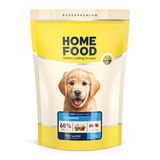
Dry food HOME FOOD for small breed puppies Lamb and Rice For puppies 1-12 months, 1.6 kg
Buy
Hypoallergenic dry food HOME FOOD for medium and large breed puppies Trout and Rice Hypoallergenic. For puppies 1-12 months, 1.6 kg
Buy
2. Adult dogs (adult)
For adult dogs, the balance of energy and nutrients is important to avoid excess weight and health problems.
- Composition features: optimal amount of proteins and fats, vitamins and minerals to support organs and joints, fiber for digestion.
- Granule shape and size: medium granules that provide moderate chewing and teeth cleaning.
- Advantages: supports healthy weight, activity, and well-being.

Hypoallergenic dry food HOME FOOD for adult small breed dogs Trout and Rice Hypoallergenic, 1.6 kg
Buy
Dry food HOME FOOD healthy skin and shiny coat for adult medium breed dogs Turkey and Salmon Healthy skin and shiny coat, 1.6 kg
Buy
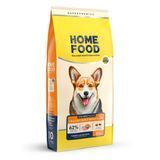
Dry food HOME FOOD for active adult large breed dogs “Beef” Active Balanced Formula, 10 kg
Buy
Dry food HOME FOOD for adult medium breed dogs with sensitive digestion “Fish and Rabbit” Sensitive Balanced Formula, 10 kg
Buy
3. Senior dogs (senior)
With age, dogs’ bodies become less active, metabolism slows down, and teeth and digestion become more sensitive.
- Composition features: fewer calories for weight control, increased antioxidants to support immunity, special additives for joints (glucosamine, chondroitin).
- Granule shape and size: soft or medium granules that are easy to chew and reduce stress on the teeth.
- Advantages: support for joint, heart, and digestive system health, help in maintaining activity.

Hypoallergenic dry food HOME FOOD for adult small and medium breed dogs Veal with vegetables and aromatic herbs Hypoallergenic, 1.6 kg
Buy
Grain-free hypoallergenic dry food HOME FOOD for adult small breed dogs Duck and Turkey Grain-free hypoallergenic, 1.6 kg
Buy
How to choose food by calorie content for a senior or neutered dog
1. Checking energy value (calories)
- In the food composition, pay attention to the number of kcal per 100 g or per 1 kg of food — if such information is available.
- For senior or neutered dogs, it is advisable to choose food with lower energy density than for an active adult or young dog. This helps avoid excess calories, excess weight, or obesity.
- If the line has “for adults / adult” — choose the basic adult formula, not “energy”, “for active/athletes”, “max energy”, etc.
2. Pay attention to the composition: proteins, fats, fiber
- In the diet for senior/neutered dogs, it is better for fats and proteins to be moderate, not too high, to reduce the load on metabolism.
- Fiber and dietary fibers are important — they help digestion and support intestinal function, especially if the dog’s activity is reduced.
- Pay attention to the presence of additives: glucosamine / chondroitin (for joints), antioxidants (for immunity support), vitamins and minerals in moderate amounts.
3. Focus on the approximate feeding rate
- With lower activity or after neutering, dogs need a smaller portion. If the package indicates the recommended rate — reduce it, focusing on feeding frequency and the animal’s physical activity.
- It is important to monitor the dog’s weight after switching to the food: if you notice weight gain — reduce the portion or change the food to a less energy-dense one.
4. Preference should be given to “everyday / standard” rations, not “energy / for active dogs”
5. Transition to new food — gradually and with monitoring
- The transition should occur gradually over 7–10 days, gradually reducing the old and adding the new food.
- After the transition, monitor the condition of the coat, activity, stool character, appetite, general well-being, and weight for several weeks. If everything is good — the food is suitable. If there is too much food (the dog is “not full” or, conversely, overeating) — adjust the portion.
Dry food for dogs with special needs: general overview
Some dogs require a special approach to nutrition due to diseases, allergies, or physiological characteristics. There are several main categories of “dietary” foods in feed lines that help maintain health:
- Gastrointestinal (for sensitive stomach) — easily digestible ingredients, increased fiber content, support for digestion.
- Hypoallergenic / anti-allergic — proteins and carbohydrates that minimize the risk of allergic reactions; often contain one source of protein and one source of carbohydrates.
- For weight control (weight management / light) — reduced calorie content and increased fiber for long-lasting satiety.
- For joint support (joint care) — with the addition of glucosamine, chondroitin, and omega-3 fatty acids.
- For kidneys and urinary system (renal / urinary care) — control of protein, minerals, and food pH to support kidney and urinary tract function.
These rations are formulated taking into account the dog’s age, size, and activity, and their purpose is always best coordinated with a veterinarian.
After we have figured out how high-quality food is created and by what criteria to choose it, it is also worth understanding why different foods differ so much from each other. This will help avoid mistakes and choose the optimal option specifically for your dog.
How do economy, premium, and super-premium foods differ?
The gradation of foods is determined primarily by the quality of ingredients, the balance of the recipe, and the bioavailability of nutrients.
Economy class
- Uses cheaper raw materials: large amounts of grains, plant proteins, by-products of animal origin.
- Nutritional value is lower, and digestibility is not as effective, so the dog often needs larger portions.
- Suitable only as a temporary option if there is no possibility to purchase higher-quality food.
Premium class
- Contains more animal protein, a balanced composition, stable vitamin-mineral supplements.
- Has average digestibility and good nutritional value.
- Suitable for most healthy adult dogs as a daily diet.
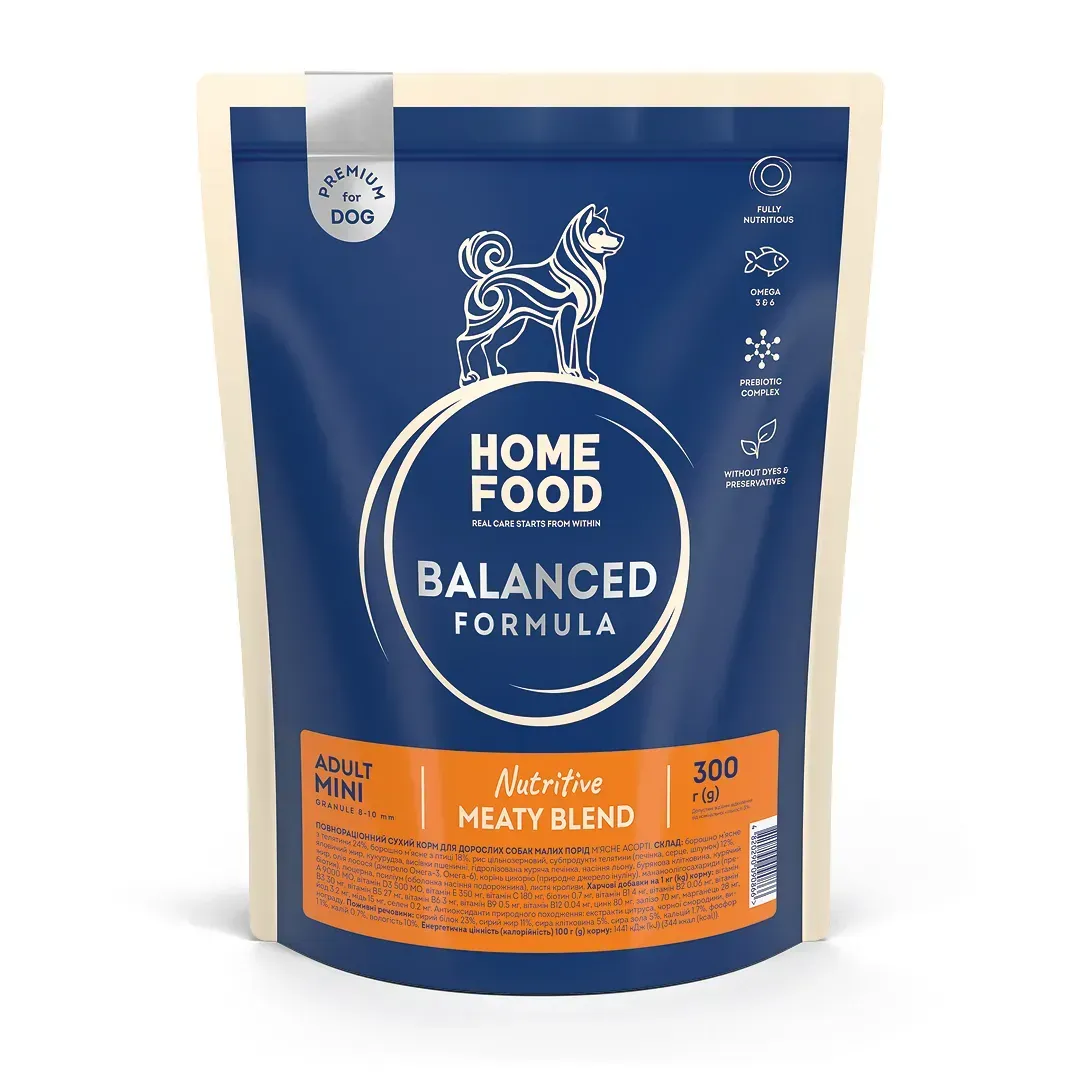
Dry food HOME FOOD for adult small breed dogs “Meat assortment” Nutritive Balanced Formula, 300 g
Buy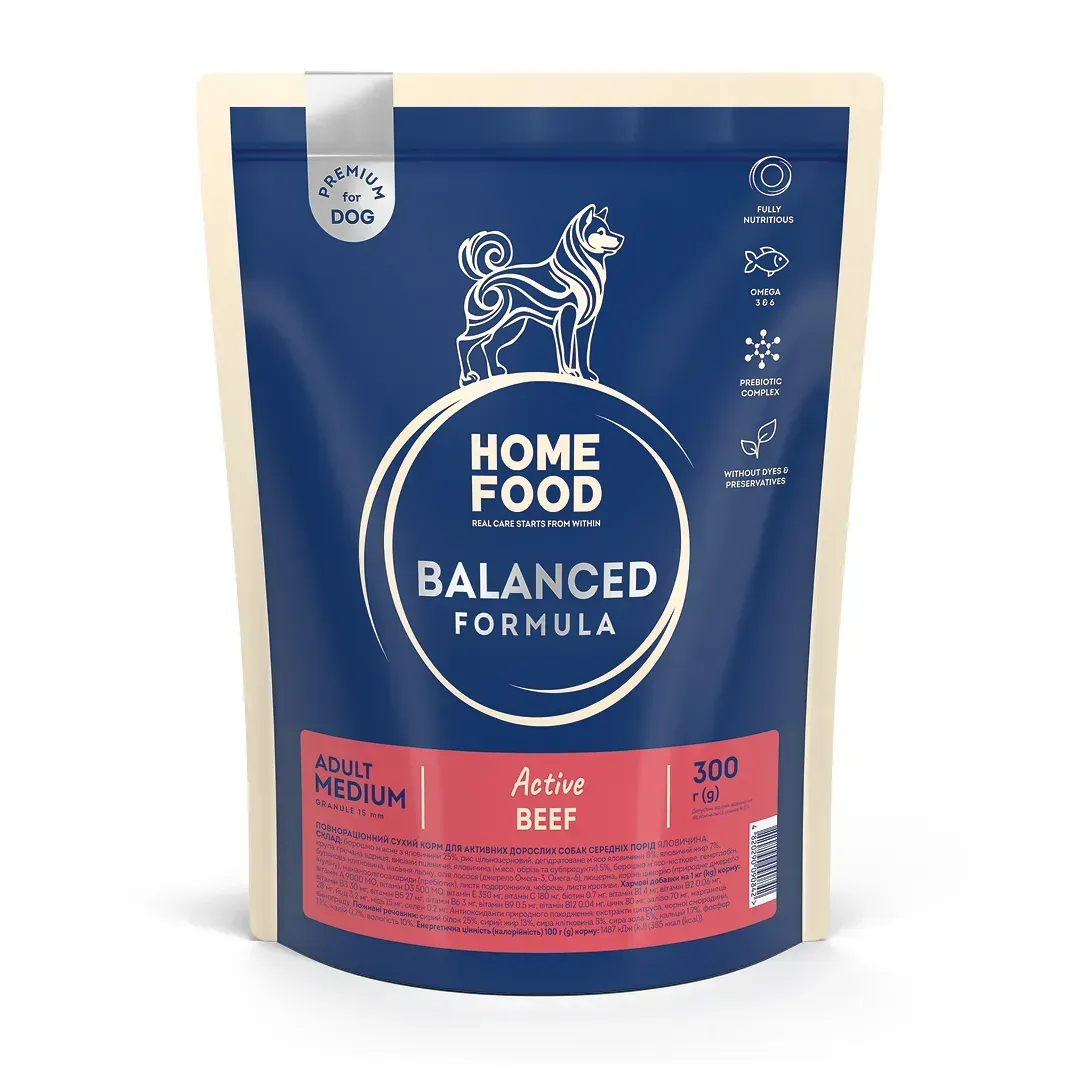
Dry food HOME FOOD for active adult medium breed dogs “Beef” Active Balanced Formula, 300 g
Buy
Super-premium and holistic
- Uses high-quality meat ingredients, a minimum of grains or their complete absence.
- Often has functional additives (prebiotics, omega acids, chondroprotectors), high bioavailability of nutrients.
- Provides noticeable benefits for digestion, coat condition, and overall health. Portions are usually smaller due to high nutritional density.

Dry food HOME FOOD for active adult dogs and juniors of medium and large breeds Lamb and Rice For active adult and junior dogs, 1.6 kg
Buy
Grain-free hypoallergenic dry food HOME FOOD for adult medium and large breed dogs Duck and Nut Grain-free hypoallergenic, 1.6 kg
Buy
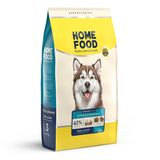
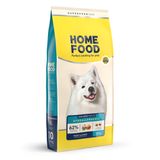
Hypoallergenic dry food HOME FOOD for adult large breed dogs Trout and Rice Hypoallergenic, 3 kg
Buy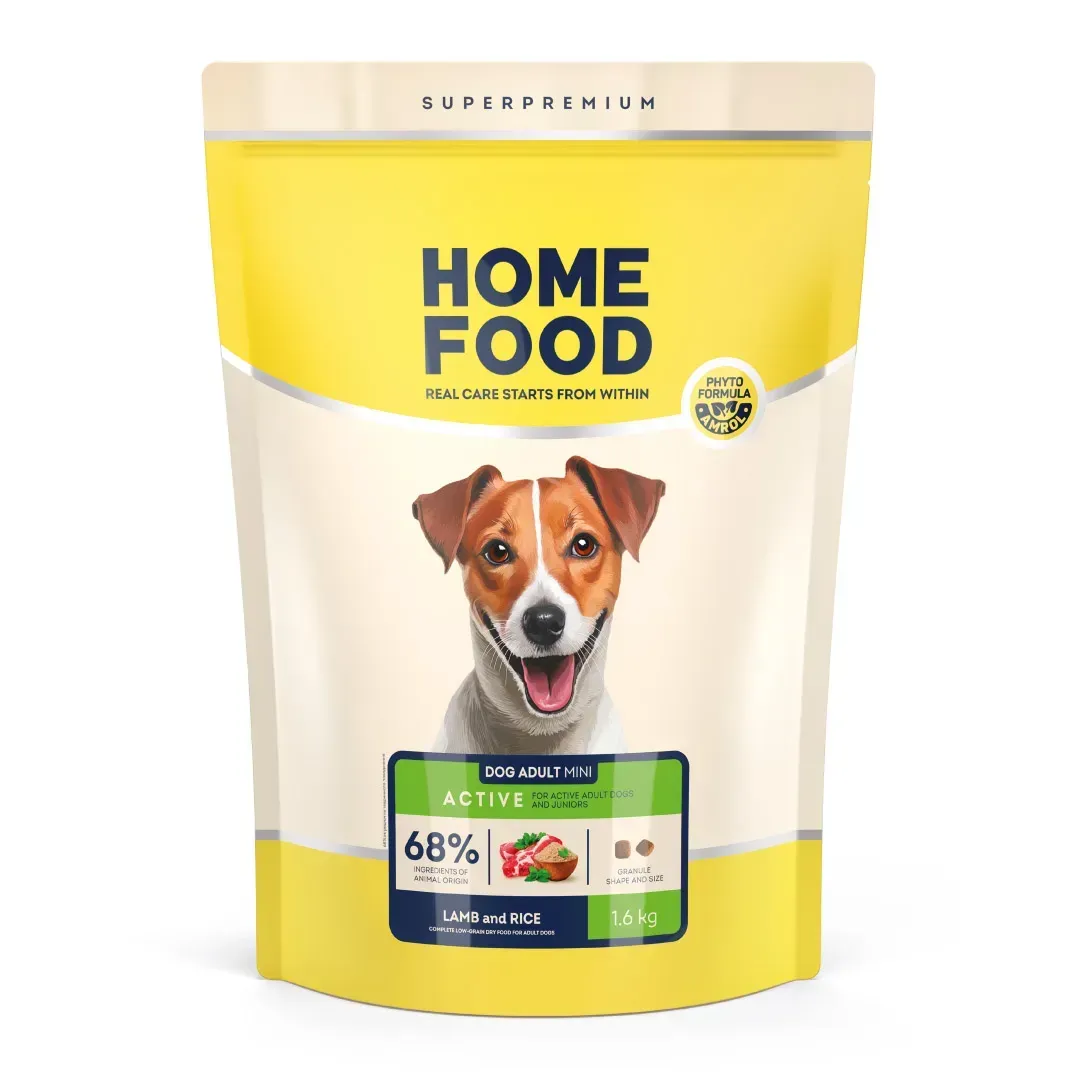
Low-grain dry food HOME FOOD for active adult dogs and juniors of small breeds Lamb and Rice Low-grain For active adult and junior, 1.6 kg
Buy
The higher the class of food, the higher the quality and more precisely formulated its recipe. But you should choose not only by class, but also by how well a particular food suits your dog in terms of age, activity, sensitivity, and special needs.