📌 HOME FOOD Blog: tips on pet care, health and nutrition for cats and dogs. 🩺 Useful articles for caring pet parents ❤️
Nutrition after spaying or neutering — the key to your pet’s health, longevity and overall well-being

Neutering and spaying are surgical procedures that eliminate an animal’s reproductive ability.
Neutering involves the removal of reproductive glands (testicles or ovaries), which stops the production of sex hormones.
Spaying is a procedure in which the reproductive ducts (spermatic cords or fallopian tubes) are cut or tied, preserving hormonal activity but eliminating the ability to reproduce. Both procedures can be performed on males and females. In veterinary practice, neutering is more common as it also prevents various hormone-dependent diseases.
Is neutering or spaying necessary?
Spaying and neutering are widely accepted and recommended practices for pets today. After reaching sexual maturity, cats often experience a hormonal surge, leading to behavioral changes such as restlessness, aggression, and anxiety. Without reproductive function, disruptions may occur in the endocrine and nervous systems. Female cats are also prone to ovarian cysts and uterine inflammation.
Neutering or spaying is recommended for animals that are not intended for breeding, have hereditary disorders, chronic urinary or reproductive issues, or if you simply want a calm, well-balanced, loyal companion.
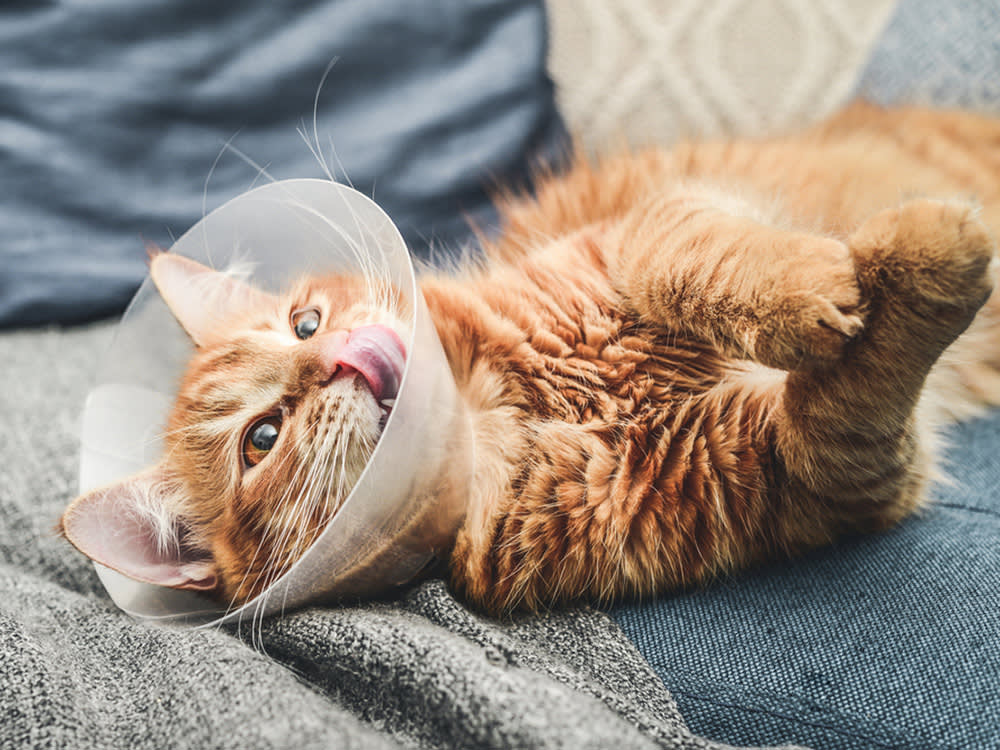

Neutering and spaying are relevant procedures for both male and female animals.
What changes occur in the body after surgery?
After the removal of hormone-producing organs, the body adapts: the adrenal glands and pituitary temporarily take over the hormonal function. Over time, hormone levels drop and metabolism slows down. As a result, muscle mass gradually decreases and fat accumulates instead. This is a natural response of a body no longer preparing for competition over territory or mates.
Without proper physical activity and a balanced diet, obesity becomes inevitable. This increases the risk of diabetes, cardiovascular diseases, and high cholesterol.
Proper nutrition is key to prevention
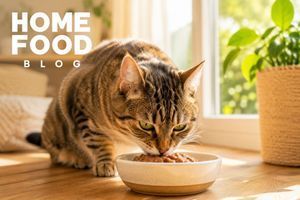
The diet for neutered or spayed cats should meet the following criteria:
- high levels of quality protein from easily digestible sources — rabbit, lamb, fish;
- optimal balance of saturated, monounsaturated, and polyunsaturated fatty acids;
- balanced content of calcium, phosphorus, and magnesium in organic forms;
- presence of L-carnitine to support stable body weight;
- ingredients that help acidify urine — to prevent struvite stone formation;
- natural phytonutrients (cranberry, bearberry, D-mannose, nettle) to support urinary tract health;
- botanical extracts (chamomile, echinacea, raspberry, rosehip) to support the immune system.
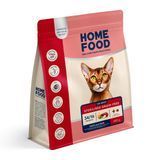
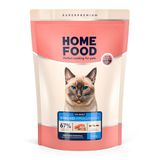
All these ingredients are found in HOME FOOD’s super-premium complete cat food with rabbit and cranberry, specially formulated for neutered and spayed adult cats.


Dry food for neutered/spayed adult cats Rabbit and Cranberry, 1.6 kg
Buy
Dry food for neutered/spayed adult cats Rabbit and Cranberry, 10 kg
Buy
Why is drinking water important?
To support urinary health and prevent obesity, it is essential to provide constant access to clean, low-mineral drinking water. Water balance is a critical element of metabolism. It is recommended to use purified water and refresh it daily.
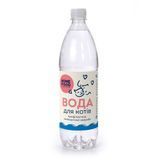
We especially recommend HOME FOOD drinking water for cats — it is made from purified water with added ascorbic acid and silver nanoparticles. This formula has a mild antiseptic effect and helps reduce inflammation in the urinary tract.
If your pet doesn’t drink enough, try HOME FOOD meat topping. It can be added to water — this encourages interest in drinking thanks to its pleasant natural meat flavor while maintaining nutritional benefits and a balanced formula. This is especially relevant for cats that tend to consume little fluid.

Drinking water for cats to prevent urinary stone disease, 1 L
Buy
Meat topping for cats in stick tubes, 3 g x 30
Buy
Anatomical Features of the Urinary System
The urinary systems of male and female cats differ. A male cat’s narrow and long urethra is easily blocked even by small crystals, while a female’s is shorter and wider, so stones may not cause symptoms for a long time. This means issues in females can go unnoticed. An annual veterinary examination of the urinary system is recommended.
Recommended Products for Spayed/Neutered Cats:
- Dry food with rabbit and cranberry — basic choice for UTI prevention.
- Food with chicken and liver — for picky eaters with low appetite.
- Grain-free food with duck and pear — for cats with grain intolerance.
- Food with lamb and salmon — for sensitive digestion and skin.
- Hypoallergenic “Sea Cocktail” food — for pets prone to allergies.
- Food with turkey and berries — helps remove hair from the stomach.
- Food with veal, salmon, and dried tomatoes — supports joints in large br
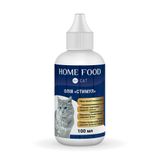
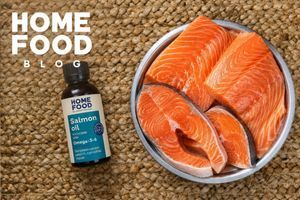
- HOME FOOD oils — natural anti-inflammatory supplements to prevent cystitis.
- Snacks with shrimp, salmon, or turkey — tasty treats with health benefits.
- HOME FOOD drinking water with vitamin C and silver nanoparticles — antiseptic and urinary system support.
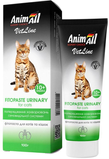
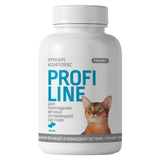
- Other supplements: phyto pastes, ProVET complexes, phyto vitamins, and products supporting the urinary system.
- Tools to encourage water intake — automatic fountains, ceramic bowls.
- Toys to promote activity — teaser wands, balls, interactive feeders.