📌 HOME FOOD Blog: A Pet in the Home: What Do You Need to Know?
A Pet in the Home: What Do You Need to Know?
A pet in the home is not just a new resident, but a little heart that brings warmth, joy, and vibrant energy into the house. However, along with tenderness and admiration comes responsibility. It is important to understand in advance that caring for a pet is not a temporary impulse, but daily work, attentiveness, and love that build trust and a true bond.
In this blog, we will talk about what you need to know before inviting a pet into your life: from everyday details to deeper emotional aspects. After all, a properly prepared home and heart are the key to your new friend feeling safe, and your shared journey bringing only joy and harmony.
And how to arrange space for a pet — what is really needed? When a new four-legged friend appears — whether a puppy, kitten, or already adult dog or cat — it is very important to think ahead about their “living space” in the home. The comfort, safety, and happiness of your pet depend on good arrangement.
What is Needed for a Puppy or Kitten?
Young animals have special needs. Here is a basic list of things to prepare before they arrive:
1. Bowls for Food and Water
For a puppy, it is recommended to have at least two bowls — one for food and one for water.
It is better to choose bowls made from safe materials — ceramic or stainless steel — they are more stable and safe for teeth.

Handmade Ceramic Bowl for Dogs and Cats (Beige)
Buy
Trixie - Universal Dispenser Bowl, Plastic, 1.5 L (Colors Assorted)
Buy
2. Sleeping Place
The baby should have their own “nest” — a soft bed, mat, or house. This is a place where they will feel protected.


3. Collar, Leash, Tag
Even in the first days, it is important to accustom the animal (especially dogs) to a collar or harness. An address tag or microchip is additional protection if the pet gets lost.

Address Tag for Dogs and Cats Bone Shape Flag WAUDOG Smart ID with QR Passport
Buy
Round Address Tag for Dogs and Cats Home WAUDOG Smart ID with QR Passport, 25 mm
Buy
4. Toys
Puppies and kittens are very active and curious, so they need several toys: balls, ropes, interactive toys.


5. Hygiene and Grooming
- Brush or comb, depending on the coat.
- Shampoo, ear and eye cleaning products.
- Toothbrush and toothpaste specially for animals — this helps maintain healthy teeth.

Large Grooming Comb-Trimmer for Dogs and Cats
Buy
HOME FOOD Beauty Set for Dogs and Cats: Shampoo “Perfect Care” 200 ml + Conditioner “Silky Touch” 200 ml
Buy
Tropiclean Spa Tear Stain Remover for Dogs and Cats Face Cleaner, 236 ml
Buy
ProbioDay Ear Drops for Dogs and Cats with Probiotics and Antibacterial Effect, 30 ml
Buy
Enzymatic Virbac Oral Hygiene Kit for Dogs and Cats
Buy
6. Litter Box (for Dogs or Cats)
- For a puppy: absorbent pads or training tray.
- For a kitten: litter and an easy-to-clean tray.

Pryroda - Cat Litter Tray with Grid 36.5 x 27.5 x 5.5 cm
Buy
AnimAll Tofu Classic — Unscented Soy Litter, 6 L
Buy
Pryroda SaniPet - Absorbent Pads for Dogs and Cats 45x60 cm, 50 pcs
Buy
AnimAll Puppy Training Pads - Training Pads for Puppies and Dogs 60x45 cm, 10 pcs
Buy
7. Pet First Aid Kit
Even if everything is fine — a basic first aid kit should still be on hand. It may include antiseptics, bandages, a special thermometer, flea/tick remedies.
8. Carrier / Crate
For vet visits or travel — a convenient carrier is essential.

Georplast Panzer — Carrier for Dogs and Cats, 50×33×31 cm
Buy
COLLAR — Carrier Bag for Dogs and Cats, 43x20x33 cm
Buy
What If We Are Adopting an Adult Pet?
If you are adopting an adult dog or cat, you may already have some basic items (bowls, bed, toys) — but there are still nuances:
- Bowls
May be larger or heavier depending on the animal's size. Sturdy bowls ensure they won't tip over during meals. - Comfortable Resting Place
For an adult dog or cat, it is important to have a space to retreat and rest, especially if the home is lively. - Toys
Adult animals also need stimulation — balls, puzzles, interactive toys help keep them physically and mentally fit. - Equipment
Harness, leash, collar — may be stronger and more durable. It is also important to have an ID tag with contact details. - Coat Care
Especially for long-haired cats or dogs — regular brushing and shedding tools (e.g., Furminator) can be very useful. - Hygiene and Health
- Checking ears, teeth, eyes.
- Regular bathing if the breed requires it.
- First aid kit: antiseptics, parasite remedies; if adopted from a shelter or street, consult a vet immediately.
- Litter Area (for Cats)
An adult cat may need a comfortable litter box with good litter, possibly enclosed.
How to Choose Food for a Puppy and an Adult Dog?
Proper nutrition is the foundation of a dog’s health at any life stage. But diets for puppies and adults differ as much as a child’s and adult’s nutritional needs. To ensure your pet grows healthy and active, understand these differences and choose food carefully and responsibly.
Why is Puppy Food a Separate Category?
Puppies grow rapidly, and their bodies need:
- Higher protein concentration — for muscle formation, immunity, and internal organ development.
- More calories — so the baby has energy for an active day, play, and learning.
- Balanced organic minerals and vitamins — especially calcium and phosphorus for healthy bones and joints.
- Smaller kibble — for easy chewing.
In other words, puppy food is more nutrient-dense, concentrated, and energy-rich. Simply feeding a puppy “adult” food deprives them of essential resources for development.

HOME FOOD Dry Food for Small Breed Puppies Lamb and Rice For puppies 1-12 months, 1.6 kg
Buy
Hypoallergenic HOME FOOD Dry Food for Medium and Large Breed Puppies Trout and Rice Hypoallergenic. For puppies 1-12 months, 1.6 kg
Buy
Food for Adult Dogs: Different Focus
An adult body no longer grows, so the main goal is health maintenance and proper weight. Here’s what matters:
- Optimal highly digestible protein for muscle tone.
- Balanced fats without excess calories.
- Support for heart, joints, digestion.
- Formula tailored to the dog’s lifestyle (active, junior, moderately active, prone to weight gain, etc.).

Hypoallergenic HOME FOOD Dry Food for Adult Small and Medium Breed Dogs Veal with Vegetables and Fragrant Herbs Hypoallergenic, 1.6 kg
Buy
HOME FOOD Dry Food Healthy Skin and Shiny Coat for Adult Small Breed Dogs Turkey and Salmon Healthy skin and shiny coat, 1.6 kg
Buy
Hypoallergenic HOME FOOD Dry Food for Adult Large Breed Dogs Trout and Rice Hypoallergenic, 3 kg
Buy
Low-Grain HOME FOOD Dry Food for Active Adult Dogs and Juniors of Small Breeds Lamb and Rice Low-grain For active adult and junior, 1.6 kg
Buy
Grain-Free Hypoallergenic HOME FOOD Dry Food for Adult Medium and Large Breed Dogs Duck and Chickpeas Grain-free hypoallergenic, 1.6 kg
Buy
Grain-Free Hypoallergenic HOME FOOD Dry Food for Adult Small Breed Dogs Duck and Turkey Grain-free hypoallergenic, 1.6 kg
Buy

Why Choose Super-Premium and Holistic Foods?
Super-premium and holistic class foods:
- use natural ingredients without artificial flavor enhancers;
- contain high-quality protein sources — meat, not “meat by-products of unknown origin”;
- are guaranteed balanced in nutrition;
- are better absorbed, reducing risks of stomach issues, allergies, nutrient deficiencies.
Cheap food often skimps on protein quality and ingredient balance — this can lead to allergies, obesity, or deficiencies.
The Importance of Quality Drinking Water
Proper nutrition is impossible without clean, fresh, high-quality water.
Water should be available 24/7 — and this is especially important:
- for growing puppies,
- for dogs on dry food,
- for active breeds,
- for animals prone to excess weight (water partially reduces hunger and supports metabolism)

Drinking Water for Dogs to Strengthen the Immune System, 1 L
Buy
How to Choose Food for Kittens and Adult Cats?
Cat nutrition requires a gentle and very careful approach, as these animals have unique needs different from dogs. Their bodies work by their own rules, so it is important to choose a diet that fully matches age and physiological characteristics.
Kittens are small but extremely energetic predators that need food with high animal protein content, increased calories, beneficial fats, essential amino acids like taurine, and a balanced vitamin-mineral complex; the food should be easy to chew and support a smooth transition from milk to solid food.

HOME FOOD Dry Food for Kittens Fresh Chicken For kittens 1-12 months, 10 kg
Buy
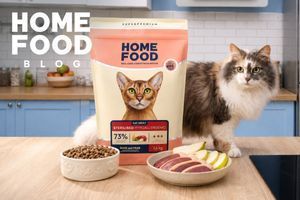
Adult cats need a different focus: moderate calories, balanced proteins, minimal excess carbohydrates, and urinary system support; food for neutered/spayed cats is especially relevant, as these formulas help control weight, reduce kidney load, and prevent crystal formation in urine.
Super-premium and holistic class cat foods are particularly valuable because they contain only high-quality meat sources, optimal nutrient ratios, and no harmful additives; cats are very sensitive to food quality, so such diets help maintain skin health, coat shine, stable digestion, and overall comfort.

HOME FOOD Dry Food for Sterilized/Neutered Adult Cats Rabbit and Cranberry For sterilised/neutered, 1.6 kg
Buy
HOME FOOD Dry Food for Hairball Removal for Sterilized/Neutered Adult Cats Turkey and Berries Hairball control For sterilised/neutered, 1.6 kg
Buy
Hypoallergenic HOME FOOD Dry Food for Sterilized/Neutered Adult Cats Seafood Cocktail Hypoallergenic For sterilised/neutered, 1.6 kg
Buy
HOME FOOD Dry Food for Sterilized/Neutered Adult Cats with Sensitive Digestion Lamb and Salmon With sensitive digestion. For sterilised/neutered, 1.6 kg
Buy
Water is equally important: cats naturally drink little, so constant access to fresh, clean liquid is essential; specialized cat water — soft, low-mineralized, designed for preventing kidney and urinary issues — is especially beneficial, as are drinking fountains that encourage cats to drink more.

Drinking Water for Cats for Urolithiasis Prevention, 1 L
Buy
Psycho-Emotional Environment: The Atmosphere Where the Animal Feels at Home
Psycho-emotional comfort is one of the most important components of a pet’s well-being. Both dogs and cats acutely sense the home atmosphere: tone of voice, daily rhythm, noise level, people’s presence and mood. For an animal, home is not just where they eat and sleep, but a space where they must feel protected, accepted, and understood.
The first days and weeks after a new pet arrives are especially important. The animal explores the territory, smells, sounds, people, and needs calm, predictability, and a gentle routine. Excessive activity, loud voices, clingy hugs, or attempts to “train immediately” can only heighten stress. It is far better to let the animal adapt at their own pace, supporting with affection, calm, and gentle attention.
Dogs usually orient toward humans, so stability and clear rules are vital: defined boundaries, predictable daily rituals, friendly tone, and non-violent training. They feel confident knowing expectations and sensing love through consistency and care, not strictness.
Cats, more independent and space-sensitive, highly value calm, territory control, and privacy. A cat needs “safe zones” — hiding spots, high perches, quiet corners where no one disturbs them. This is not a whim but a natural need that helps maintain balance and confidence.
The overall home atmosphere matters greatly: animals subtly sense stress, arguments, anxiety, even human emotional exhaustion. When the home is warm, friendly, and calm, the animal mirrors it — becoming gentler, more trusting, balanced.
Psycho-emotional comfort is the invisible foundation of health. It’s about a soft voice, predictable daily rhythm, personal space, honest attention, and love without imposition. When an animal lives in harmony with people and surroundings, it fully opens up — becoming happy, confident, and bringing that warm energy into the home, the very reason we welcome them into our family.