HOME FOOD Blog: What You Can and Cannot Feed Your Dog
What You Can and Cannot Feed Your Dog
Proper nutrition is one of the most important factors affecting a dog’s activity, well-being, health, and lifespan. Every owner tries to improve their pet’s diet, but not everyone knows that a dog’s digestive system is different from a human’s. Dogs cannot eat everything. Often, what ends up in a dog’s bowl from our table is dangerous for the animal. Some foods provide no benefit, others are poorly digested, and some can cause real harm.
Young puppies are especially vulnerable, so special attention must be paid to their nutrition. Even when choosing treats for dogs, you need to be careful. Find out which foods should never be given to your pet and which ones are safe.
Foods Strictly Forbidden for Dogs
Let’s go through the list of foods that veterinarians categorically do not recommend. “No” alone isn’t enough — here are the details for each one.
Cow’s milk
Many adult dogs have reduced ability to digest lactose (milk sugar). This can cause diarrhea, bloating, and abdominal discomfort. It’s best to limit or completely exclude cow’s milk from the diet, especially if you notice digestive issues after consuming it.
Chocolate
Dogs must never be given chocolate because it contains theobromine and caffeine — substances toxic to the heart and nervous system. Even a small amount can cause rapid heartbeat, tremors, seizures, and poisoning. The darker the chocolate, the more dangerous it is.
Sugar and sweets
Adding sweets to a dog’s diet is highly undesirable: it leads to weight gain, insulin resistance, pancreatitis, and dental problems. Particularly dangerous are products containing xylitol (a sugar substitute). It is safe for humans but causes a sharp drop in blood glucose (hypoglycemia) in dogs and can lead to acute liver damage.
Yeast dough and products
They can trigger fermentation in the intestines and cause painful colic.
Alcohol
Extremely dangerous! Any type of alcohol causes intoxication, heart failure, and paralysis of the nervous system. Severe alcohol poisoning can be fatal. Even tiny doses are strictly forbidden.
Onions and garlic
Onions and garlic contain thiosulfates that destroy red blood cells and can cause hemolytic anemia. Symptoms don’t always appear immediately, so the danger often goes unnoticed. Even small but regular amounts can be harmful. It’s best to exclude these completely.
Smoked meats and sausages
No matter how pleadingly your furry friend looks at you during a holiday meal, do not share these delicacies. Sausages contain substances that disrupt metabolism and negatively affect the pancreas.
Smoked products irritate mucous membranes. High salt content can cause inflammation of the bile ducts and liver. Salt poisoning (potentially fatal) can occur at a dose of 3.7 g per 1 kg of body weight.
Raw river fish
Dangerous parasites are found not only in the intestines (as many anglers believe) but also in other tissues of river fish. There’s also a risk of choking on sharp bones.
Raw and cooked bones
It’s hard to say where the strange and dangerous tradition of giving dogs bones came from, but it must stop. Cooked bones are especially problematic — they become brittle and can splinter into sharp fragments that injure the mouth, esophagus, or stomach. Even whole bones can cause intestinal obstruction, requiring emergency veterinary care and often surgery.
Spices and seasonings
Pepper, mustard, and other spices found in many foods are dangerous. They irritate the gastrointestinal mucosa and can trigger ulcers.
Tea and coffee
Not the best drinks — they contain caffeine, which is harmful to a dog’s cardiovascular system.
Pearl barley
Cooking porridge for your dog? Avoid pearl barley — this seemingly harmless grain is very poorly digested by dogs.
Mushrooms
Heavy food — not only for children but also for dogs.
Vinegar
We don’t know how your dog might try vinegar, but avoid giving foods containing it. It can cause chemical burns and stomach ulcers.
Butter
Butter, like other high-fat dairy and plant-based analogs, is harmful. It can affect the liver, cause vomiting, lead to obesity, and other negative consequences.
A Proper Diet for Your Dog
When it comes to your pet’s life and health, how you feed your dog matters just as much as what you feed. Here are some recommendations to help adjust the diet.

Never mix commercial and homemade food
Dogs should not be fed two different types of food at the same time. Natural homemade food lacks sufficient vitamins, minerals, and macronutrients. For puppies, this can critically affect immune system development and growth.
Overfeeding or an improper nutrient balance is also harmful. Feeding a puppy only meat, too fatty food, bread, sweets, or pasta will lead to kidney and liver problems, obesity, joint issues, skin and coat problems, and cardiovascular disorders.
Balancing a natural diet at home is very difficult. Calculating the exact percentage of nutrients is challenging. You have to be extremely careful because:
- Excess calcium makes bones brittle — they can fracture from a fall or bad jump.
- Excess protein combined with a lack of calcium, phosphorus, and vitamin D disrupts bone growth and joint development, leading to deformed limbs (especially in large breeds).
- Insufficient fat-soluble vitamins? Lack of vitamin E can slow reproductive organ development and reduce fertility.
- Lack of copper, zinc, and iodine reduces production of essential enzymes and hormones.
Remember the key point: only commercial complete foods contain the correct proportions of all necessary nutrients, perfectly matched to the dog’s age, activity level, and needs (when the right food is chosen).
If you prefer homemade food, supplement it with vitamins and minerals in the form of approved additives. The best option is to consult a veterinary nutritionist to create an optimal diet.

Synbiotic for digestion and immunity support HePawSyn HOME FOOD Expert, 250 g
Buy
Probiotic & enzymes for gut microbiota restoration ImmunoBiotic Pro HOME FOOD Expert, 20 g
Buy
Hypoallergenic dry food HOME FOOD for adult large breed dogs Trout & Rice, 10 kg
Buy
Grain-free hypoallergenic dry food HOME FOOD for adult small breed dogs Duck & Turkey, 10 kg
Buy
Why mixed feeding is also dangerous
Feeding 50/50 (half commercial, half homemade) creates an imbalance of nutrients. The liver gets overloaded, and it has many functions, including producing bile that helps break down nutrients. The pancreas always comes to its aid.
Different foods require different enzymes. With mixed feeding, both organs work to exhaustion trying to compensate for the lack of enzymes. Inflammation or even dystrophy can develop. The result: digestive disorders, vomiting, diarrhea, constipation, weight loss or gain.
Feed strictly on schedule
Don’t make the common mistake of leaving a full bowl of food out all day. Dogs need intervals between meals — in the wild, food isn’t available on demand. Although pets don’t face that problem, it’s still better to feed them several times a day rather than allowing constant access to food.
This is not cruelty — quite the opposite. An empty stomach signals the brain that it’s time to eat, triggering hunger and appetite. The digestive system prepares for work, and food is absorbed much better. The dog stays active all day.
Stop treating your dog from the table
Don’t give in to temptation and add “something tasty” (in your opinion) to your pet’s bowl. Such treats, combined with poor appetite, cause digestive upset and ruin the coat.
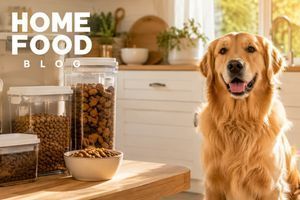
Calculate exactly how much food your puppy, adult, or senior dog needs and feed only complete food and store-bought treats at set times — no table scraps, not even as an exception.

Protein turkey cookies for dogs HOME FOOD, 80 g
Buy
Treats for dogs HOME FOOD Rabbit lungs, 80 g
Buy
Treats for dogs HOME FOOD Beef heart, 80 g
Buy
Treats for dogs HOME FOOD Beef udder, 80 g
Buy
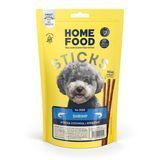
Treats for dogs HOME FOOD Rabbit meat sticks, 80 g
Buy
Treats for dogs HOME FOOD Poultry meat sticks, 80 g
Buy
Foods not recommended for dogs
There are products that veterinarians do not recommend. They won’t cause immediate serious harm, but such nutrition cannot be considered proper. Metabolic disorders can eventually lead to chronic diseases.
If you feed your pet homemade food instead of balanced commercial food, pay attention to the following “treats” that should not go into the bowl:
- Eggs. In moderate amounts — beneficial. Too many can cause allergies. Veterinarians recommend giving eggs no more than twice a week. It’s better to switch from chicken to quail eggs — they cause allergies less often.
- Pork. Not forbidden, but choose lean cuts (tenderloin, carbonade, shoulder). Ears and other parts are acceptable — they contain no fat.
- Potatoes. Not forbidden, but never give potato peels or potatoes with green areas. This root vegetable is poorly digested and can cause diarrhea, though it is generally not dangerous.
- Nuts. Rich in valuable nutrients, but not all nuts are suitable. You may occasionally give pine nuts, cashews, or a small amount of peanuts. Avoid walnuts, pistachios, hazelnuts, acorns, and nutmeg.
- Ice cream. Contains sugar and palm oil. Still, it’s probably the only treat many owners give. It can be offered very rarely and only if it contains no sugar or lactose.
Important! Never give cold ice cream to a weakened dog or puppy.
Conclusion:
A dog’s diet must be not only filling but also safe. Many foods we consider harmless or even healthy for humans can harm a dog. The most reliable way to care for your pet’s health is to choose high-quality complete commercial food developed according to veterinary standards — it contains balanced proteins, fats, carbohydrates, vitamins, and minerals in the right proportions. If you want to vary the menu, do it safely with veterinary-approved treats or under the guidance of your veterinarian.