📌 HOME FOOD Blog: Care and Features of Puppy Keeping: A Scientific Approach to Upbringing and Development
Care and Features of Puppy Keeping: A Scientific Approach to Upbringing and Development
Congratulations on the new family member — a puppy! This is not only a joy but also a great responsibility. To ensure your little one grows up healthy, happy, and well-socialized, it’s essential to provide proper care and upbringing from the very first days of life. In this blog, we’ll explore the key aspects of puppy care, based on scientific research and expert recommendations.
When is the Best Time to Bring a Puppy Home?
The optimal age for weaning a puppy from its mother is 8–10 weeks. This is the period when the formation of immune protection through the mother’s milk is completed, and the critical phase of primary socialization with siblings also ends.
If a puppy is taken too early (4–6 weeks), it can affect its behavior:
- impaired self-control ability,
- development of an unstable psyche,
- increased risk of anxiety, fears, and even aggression.
If a puppy is left without human contact for too long, it may become withdrawn, cautious, and develop a high level of distrust toward strangers.
Thus, the period of 8–10 weeks is considered ideal: the puppy is still flexible enough to adapt but is no longer entirely dependent on its mother.
The First Days in a New Home: Adaptation and Support
Moving to a new home is a huge stress for a puppy, even if it seems cheerful and playful. The little one has just lost everything familiar: the scent of its mother, the fur of its siblings, the rhythm of its previous life. It’s highly likely that the first nights will involve crying, whining, or searching for its mother.
What Helps Reduce Stress?
Create a Sense of Security:
Set up a cozy sleeping area — in a corner, away from drafts and noise. It’s best if this is a permanent, "own" space. A basket, bed, or even a box with a soft blanket are great options.
Imitate Familiar Scents:
Ask the breeder for a towel or toy with the "home scent" — this significantly reduces anxiety levels. If that’s not an option, place an old sweater of yours in the bed: the owner’s scent is soothing.
Heartbeat Sound and Warmth:
Puppies fall asleep when they hear a heartbeat. There are special toys that mimic a heartbeat, or you can place a heating pad (carefully, not too hot!) or a bottle with warm water nearby.
Routine Like in a Kindergarten:
In the first days, establish a clear schedule for feeding, toileting, play, and sleep. This provides a sense of predictability and safety. Avoid rushing into loud introductions, visits, or loud music.
Games Instead of Tears:
Active play throughout the day helps relieve stress, excitement, and physical tension. A tired and happy puppy will fall asleep faster and more soundly.
Scientific Fact:
Research (Serpell & Jagoe, 1995) has shown that establishing early positive contact with a human within the first 1–2 weeks after moving ensures better adaptation, fewer stress reactions in adulthood, and stronger social attachment to the owner.
The most important thing is to be there. Your calm demeanor, soft voice, and gentle touches will help the puppy adapt. In return, you’ll gain trust that will last a lifetime.
Information from the Previous Owner
Before bringing a puppy home, it’s important to obtain the following information from the previous owner:
- Details about the parents, breed, age, and temperament.
- Information about feeding: when it started eating solid food, type of food, number of feedings per day.
- Details about completed deworming and vaccinations.
- Information about parasite treatments.
- Details about bathing and products used.
- Toileting habits: use of pads or outdoor walks.
- Genetic testing data for parents and close relatives (if needed).
Protection from the Start: Modern Vaccination, Deworming, and Parasite Control Schedule
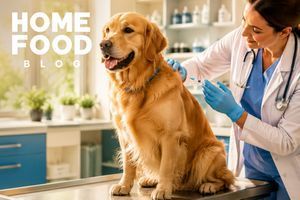
The best care for a puppy is not only love and attention but also timely disease prevention. The puppy’s immune system is still developing, so it’s crucial to perform deworming, administer basic vaccinations, and start regular protection against external parasites. All of this is an integral part of a healthy start to life. Let’s explore when and how to act to provide your puppy with a reliable immune shield for years to come.
Vaccination and Deworming Schedule for Puppies
| Puppy Age | Vaccination | Deworming | Parasite Control |
|---|---|---|---|
| 2-3 weeks | - | First time (suspension) | - |
| 4-5 weeks | - | Second time (suspension, tablet) | - |
| 6 weeks | DHPPІ | - | - |
| 9 weeks | DHPPІ + Lepto | - | - |
| 12 weeks | DHPPІ + Lepto +Rabies | Third time (suspension, tablet, drops) | First treatment |
| 16 weeks | - | Treatment according to the manufacturer’s instructions. | Second treatment |
| 20 weeks | - | - | Third treatment |
| 1 year | DHPPІ + Lepto +Rabies | - | Treatment according to the manufacturer’s instructions. |
Notes:
- DHPPI + Lepto is a combined vaccine protecting against parvovirus, distemper, adenovirus, parainfluenza, leptospirosis (+ optionally "coronavirus enteritis" at the owner’s request).
- Rabies: rabies vaccine, typically administered after 12 weeks.
- Parasite Control: applied according to veterinarian recommendations, usually every 4 weeks.
Triple vs Double Vaccination: Which to Choose?
Modern recommendations from the World Small Animal Veterinary Association (WSAVA) support a triple vaccination schedule for puppies, including vaccine administration at 6, 9, and 12 weeks, with subsequent boosters annually thereafter.
Advantages of the Triple Schedule:
- Provides more stable and long-lasting immunity.
- Reduces the risk of infection development.
- Accounts for the decline in maternal antibodies in puppies.
The double schedule may be used in some cases but is less effective, especially if the first vaccination was given after 8 weeks.
Deworming: When and How Often?
Deworming is a crucial part of puppy care, as they can be infected with worms before birth or through the mother’s milk.
Recommended Deworming Schedule:
- Start at 2-3 weeks, repeat (depending on the epizootic environment).
- After 12 weeks — monthly until 6 months (depending on the epizootic environment, sometimes every 3 months is sufficient).
- After 6 months — every 3–6 months, depending on infection risk (depending on the epizootic environment).

KRKA Milprazon — anti-worm tablet Milprazon for dogs weighing up to 5 kg
Buy
AnimAll VetLine DeWorm Ultra — anti-worm medication AnimAll Ultra for dogs and puppies up to 5 kg
Buy
Parasite Control: Important Points
Parasite control, such as for fleas and ticks, should be regular, especially in warm months. The choice of product depends on the puppy’s age, weight, and health condition. Always consult a veterinarian before using any products.

Zoetis Stronghold — antiparasitic drops Stronghold for puppies and kittens weighing up to 2.5 kg, 1 pipette
Buy
Zoetis Simparica Trio — Simparica Trio tablet for worms, fleas, and ticks for dogs weighing 1.25–2.5 kg
Buy

Hygiene and Care
After completing the vaccination quarantine (10 days after the last initial vaccination), you can start introducing the puppy to hygiene routines: bathing, drying, and brushing. These procedures help maintain cleanliness and foster trust between you and your pet.

Shampoo "Perfect Care" for dogs and cats Total Care HOME FOOD Beauty, 200 ml
Buy
Trixie Shampoo for Puppies, 250 ml
Buy
Vitomax Herbal Shampoo for Puppies "Tear-Free", 200 ml
Buy
Tropiclean Spa Face Cleanser for Dogs and Cats to Remove Tear Stains, 236 ml
Buy
Toilet Training
During the first few weeks, you can train the puppy to use a pad or go outside. After feeding, the puppy usually needs to go to the toilet within 15–30 minutes. It’s important to praise and reward it for correct behavior to build a positive association.

AnimAll Puppy Training Pads - training pads for puppies and dogs 60x45 cm, 10 pieces
Buy
AnimAll Puppy Training Pads - training pads with activated charcoal for puppies and dogs 60x60 cm, 10 pieces
Buy
Lucky Pet - hygienic absorbent pads with activated charcoal for puppies and dogs 60x45 cm, 10 pieces
Buy
All-Absorb Basic Training Pads - training pads for dogs and puppies 56x56 cm, 10 pieces
Buy
Socialization and Training
The critical period for puppy socialization is from 3 to 14 weeks. During this time, they actively explore the world and form attitudes toward people, animals, and various situations. Studies show that early socialization reduces the risk of fear and aggression in the future. Participation in specialized puppy classes is recommended, where they can interact with other animals and people in a controlled environment.
Nutrition and Development: Foundations of a Healthy Start
Proper nutrition is the foundation of your puppy’s health and harmonious development. From the first feeding to transitioning to an adult diet, each stage has its own peculiarities and needs. Let’s explore the key aspects of this journey.
Artificial Feeding for Orphan Puppies
If you’re caring for a puppy without a mother, it’s important to ensure proper nutrition. Use special milk replacers for puppies, available at veterinary pharmacies. Feed the little one every 2–3 hours, gradually increasing the interval to 4 hours. Monitor weight gain: it should increase by 5–10% of the initial weight daily. Stool should be soft, without signs of diarrhea or constipation.
Weaning from 3 to 6 Weeks
Starting at 3 weeks, introduce weaning food: soft porridges with water or special puppy purees. Initially, mix them with milk, gradually increasing the proportion of solid food. By 6 weeks, the puppy should fully transition to solid food.
Transition to Dry Food
From 6 weeks, begin a gradual transition to dry food. Initially, mix it with water or wet food, gradually increasing the proportion of dry food. Choose a food specifically designed for puppies, considering their age and size.
Puppy Nutritional Needs: Calorie Calculation
To feed a puppy properly, it’s important to understand its energy needs — the number of calories (kcal) the little one should receive daily. This determines how much food or home-cooked meals to give to ensure healthy growth and development without the risk of overfeeding or underfeeding.
Most commercial food packaging lists the recommended daily amount in grams or cups, along with its energy value — calories per 100 grams. However, these recommendations are often approximate, as each puppy is unique: weight, activity level, breed, and health condition affect its energy needs.
Therefore, the exact amount of food is best calculated individually using the Birmingham E. formula:
Daily Need (kcal)= 70 × body weight (kg)0.75
This formula helps determine the basic energy need for maintaining the puppy’s life at rest. You can use it as a starting point, adding energy expenditures for physical activity.
For example, for a 3 kg puppy, the daily need is approximately 210 kcal (70 × 30.75 ≈ 210). Knowing the food’s calorie content, you can calculate the required amount to meet this need.
This approach ensures balanced nutrition, supports healthy weight gain, and promotes your pet’s healthy development.
Recommended Macronutrients
To ensure optimal growth and development, it’s equally important to properly balance the puppy’s diet with key nutrients — proteins, fats, and carbohydrates. Each of these macronutrients plays a unique role in sustaining life, providing energy, and building a healthy immune system.
- Proteins: 22–32% of dry matter. Essential for muscle and tissue growth.
- Fats: 10–25% of dry matter. Source of energy and essential fatty acids.
- Carbohydrates: 20% of dry matter. Source of energy and digestive system support.
- Fiber: Supports digestive health.
- Chondroprotectors: Support joint development.
Feeding Frequency from 1 to 12 Months
| Age (months) | Feeding Frequency |
|---|---|
| 1–2 | 4–5 times a day |
| 3–6 | 3–4 times a day |
| 7–12 | 2–3 times a day |
After 12 months, you can switch to an adult feeding schedule.
Feeding Tips
- Choose food suited to the puppy’s age, size, and breed.
- Avoid feeding adult food during the growth period.
- Regularly check the puppy’s weight and body condition.

Dry food for small breed puppies Lamb and Rice For puppies 1-12 months, 1.6 kg
Buy
Hypoallergenic dry food for medium and large breed puppies Trout and Rice Hypoallergenic. For puppies 1-12 months, 1.6 kg
Buy
Baby box for puppies
Buy
If you opt for feeding with home-cooked food, ensure comprehensive nutritional support. A home diet is rarely fully balanced in all essential micro- and macronutrients, so veterinary experts recommend daily supplements of vitamin-mineral complexes, probiotics, and omega-3 fatty acids. These additives promote a healthy immune system, proper development of the musculoskeletal system, digestive health, and glossy fur. Before choosing specific products, consult a veterinarian or dietitian to avoid deficiencies or overfeeding.

Fitomin for dogs Salmon oil for skin health and glossy fur, 100 ml
Buy
Symbiotic for digestion and immunity support HePawSyn HOME FOOD Expert, 250 g
Buy
Weight Gain Monitoring for Puppies from 2 to 12 Months
After 2 months, puppies continue to grow and develop actively, so regular weight monitoring remains necessary. Key aspects of weight control from 2 to 12 months:
- Growth rates depend on breed: they last longer in large and giant breeds, while small breeds reach adult weight faster.
- Weight gain indicators decrease with age, so it’s important to consider individual body growth, not just absolute numbers.
- Regular weigh-ins (every 1-2 weeks) allow for timely adjustments to diet and feeding schedule.
- Pay attention not only to weight but also to overall body condition, activity, and muscle development.
Table of Average Weight Gain (g/day) for Puppies from 2 to 12 Months
| Breed Category | Expected Adult Weight (kg) | Average Daily Weight Gain (g/day) | Approximate Monthly Gain (g) |
|---|---|---|---|
| Very Small Breeds | < 5 | 5 – 10 | 150 – 300 |
| Small Breeds | 5 – 15 | 10 – 20 | 300 – 600 |
| Medium Breeds | 15 – 30 | 20 – 40 | 600 – 1200 |
| Large Breeds | 30 – 50 | 40 – 60 | 1200 – 1800 |
| Giant Breeds | > 50 | 60 – 80 | 1800 – 2400 |
Practical Tips:
- Weigh the puppy regularly on the same surface and at the same time of day for accurate data.
- Monitor not only weight but also coat condition, appetite, and behavior, as they also indicate health.
- Excessive weight gain may indicate overfeeding or metabolic issues, while slow gain may suggest underfeeding or illness. Consult a veterinarian if you have any concerns, especially with sudden weight fluctuations.
Emotional Bond and Attention
The most important thing is your attention, love, and care. Puppies need communication, play, and training. Don’t leave them alone for long periods, as this can lead to anxiety and other behavioral issues. Remember that your pet is part of your family, and your attitude determines its happiness and health. Don’t hesitate to seek help from veterinarians, dog trainers, and experienced pet owners. Your puppy deserves the best!