📌 HOME FOOD Blog: Kitten Nutrition: With Love, Care, and a Professional Approach
Kitten Nutrition: With Love, Care, and a Professional Approach
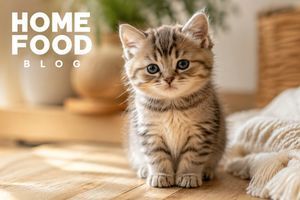
A kitten in the house is a true new life. Warm, trusting, tender, and entirely dependent on us. Its body is just beginning to explore the world, and the slightest mistake or, conversely, the right step in nutrition can affect its entire future life. Therefore, we’ll talk about a kitten’s diet not just as dietitians, but as attentive and caring guardians.
Why Are the First Months of Life So Important?
When a kitten leaves its mother, it loses not only a source of warmth and emotional security but also natural protection: antibodies from maternal milk. Its own immunity is only just beginning to form. This phenomenon has a scientific name — the immune vulnerability window.
Between the 3rd and 8th weeks of life, a kitten becomes particularly vulnerable to bacteria, viruses, and fungi. During this period, it’s essential to provide food that not only provides calories but also actively supports the body’s protective mechanisms.
Toxic Foods
Some foods that are safe for humans are toxic to animals. For example:
- Chocolate: Contains theobromine, which is poisonous to dogs.
- Onions and garlic: Can cause anemia in cats and dogs.
- Grapes and raisins: Can lead to kidney failure in dogs.
What’s Happening Inside a Kitten?
A kitten’s body is like a true biological startup. Everything is still being fine-tuned:
- The intestines lack a formed layer of immunoglobulins;
- The liver, pancreas, salivary, and gastric glands operate in “test mode”;
- The jaws and muscles are still weak, and teeth are just erupting.
Teething: How to Adjust the Diet?
Kittens are born without teeth, but by the 3rd–4th week of life, their first milk teeth appear — 26 in total. Around 3.5 to 4 months, the replacement of milk teeth with permanent ones begins, continuing until 6–7 months. This is a very sensitive period: a kitten may experience gum itching, temporary loss of appetite, or discomfort while chewing.
During this period, it’s especially important to choose the right food texture:
- Not too hard, to avoid injuring sensitive gums.
- Not too soft, to maintain chewing stimulation and mechanical teeth cleaning.
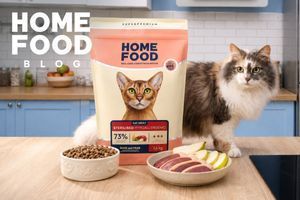
The ideal is an airy, crumbly pellet that breaks easily but doesn’t crumble into dust. It stimulates chewing muscles, promotes natural teeth cleaning, and doesn’t cause pain.

Dry Food for Kittens Fresh Chicken For Kittens 1-12 Months, 1.6 kg
Buy
Dry Food for Kittens "Chicken and Lamb" Kittens Balanced Formula, 300 g
Buy
Also, during teething, avoid bones, hard biscuits, and tough treats that could cause micro-injuries or associate pain with eating. Choose treats adapted for young teeth.

Treats for Cats Poultry Meat Strips, 40 g
Buy
Treats for Cats Shrimp Strips, 40 g
Buy
Treats for Cats Rabbit Meat Strips, 40 g
Buy
Treats for Cats Turkey Meat Strips + Olives, 40 g
Buy
The Secret to a Kitten’s Health — Nutrient Balance
Immune Support
The diet should include:
- Prebiotics (e.g., inulin, mannanoligosaccharides) — for the growth of beneficial gut microflora;
- Probiotics — to support the intestinal ecosystem;
- Vitamins A, C, E, D3 — for antioxidant protection, mucous membrane formation, and lymphocyte function.
Studies confirm that diets enriched with probiotics and prebiotics help kittens develop stable immunity faster and reduce the risk of gastroenteritis.
Skeletal Development
Kittens grow at lightning speed. Therefore, the calcium-to-phosphorus ratio must be ideal: from 1.2(1.5):0.9(1). Without vitamin D3, calcium isn’t absorbed, and its deficiency threatens rickets, limb deformities, and joint pain.
Excess minerals are also dangerous: they can impair kidney function, cause tissue calcification, and overload the endocrine system (NRC, 2006).
Ligaments, Joints, Muscles
Kittens are little acrobats. They need:
- Omega-3 (DHA, EPA) — for anti-inflammatory protection;
- Collagen and chondroitin — for joint elasticity;
- Sulfur-containing amino acids (methionine, cysteine) — for building ligaments and cartilage.
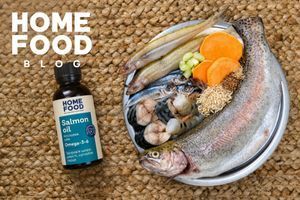
Natural sources can include components of marine fish — cartilage, skin, liver, and added natural nutrients.

Phytomin for Cats Oil "Omega Balance" Omega-3, -6, -9 Balance, 100 ml
Buy
Phytomin for Cats Oil "Salmon" for Skin Health and Coat Shine, 100 ml
Buy

What About Homemade Food?
What About Homemade Food?
Many owners want to cook for their kitten themselves. The motivation is understandable: the desire to control ingredient quality. However, preparing homemade food is not an intuitive process. Without precise nutrient calculations, a balance of trace elements, and sources of calcium, phosphorus, taurine, DHA, vitamin A, and others, such a diet can be dangerous.
Practice shows that over 90% of homemade diets for kittens are unbalanced (Dzanis, 2011). Their consequences include growth delays, anemia, bone issues, heart problems, and even blindness.
If you still want to cook yourself, work with a veterinary nutritionist and use scientifically backed recipes with precise additions of ready-made vitamin-mineral complexes.
Example of an Ideal Food — "Lamb with Rice for Kittens"

Dry Food for Kittens “Lamb with Rice” For Kitten, 10 kg
Buy
This diet is designed with the needs of young age in mind:
Lamb — easily digestible protein rich in iron, zinc, taurine, and essential amino acids;
Rice and lentils — sources of fiber and B vitamins;
Chelated trace elements — better absorbed than inorganic forms;
Natural phyto-formula (amaranth, milk thistle, flax) — supports immunity, digestion, and reduces the risk of food reactions;
Ideal pellet texture — airy, tender, breaks easily but doesn’t instantly dissolve: perfect for the teething period.
Life in Every Drop: How to Teach a Kitten to Drink Water
The habit of drinking water is one of the most important for a kitten’s health. Unlike dogs, cats are less inclined to drink water, especially if they eat wet food or natural diets. However, sufficient intake of clean water supports kidney function, the urinary system, and thermoregulation. Teaching a kitten to drink should start early: place several bowls of water in different rooms, use pet fountains, and always refresh the water to keep it fresh and appealing.
Care and Attention for a Kitten
In addition to proper nutrition, ensuring proper care in other aspects is crucial for a kitten’s full development. Play is not just fun but an essential part of development: it helps release energy, strengthens muscles, and supports the nervous system. Playing with your kitten stimulates its intellectual and physical development and builds a strong bond.
Equally important is litter box training. This should start from a very young age, as soon as the kitten is capable of using it independently. Litter training should not be stressful for the kitten, so use natural products and reward successes at every step.
Antiparasitic treatment is another critical aspect of care, as kittens can be susceptible to infections or parasites early in life. Preventive measures help avoid serious illnesses, so regular vet visits for checkups and timely treatments are an integral part of kitten care.

KRKA Milprazon Tablets for Deworming Cats Weighing Less Than 2 kg, 4 mg/10 mg, 1 Tablet (Blister)
Buy
Antiparasitic Drops for Cats NexGard Combo (Up to 2.5 kg), 1 Applicator
Buy
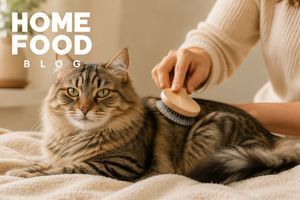
Don’t forget about coat hygiene. Kittens have very delicate skin and fur, so they need regular brushing to prevent matting and maintain skin health. This also helps reduce shedding and prevent hairballs.
And Most Importantly — Love
No perfect formula can replace care. A kitten should feel safe with you. Monitor its mood, appetite, and behavior. Play, pet, and talk to it — and it will respond with trust that is priceless.
Because a kitten’s happiness begins where it is loved.