📌 HOME FOOD Blog: tips on care, health and nutrition for cats and dogs. 🩺 Up-to-date articles for caring pet owners ❤️
Abyssinian cat: where this breed comes from, what its temperament is like, how to care for its short ticked coat, what to feed an active Abyssinian, and who it truly suits in everyday home life
At first glance, the Abyssinian cat is truly captivating. It seems to combine the grace of a wild cat, a lively mind, and a very domestic attachment to people.
But the Abyssinian — is not just a beautiful breed. It has its own rhythm and its own needs for movement, contact, and high-quality nutrition. That is why, before choosing such a cat, it is important to understand what it is like in everyday life.
Let us look at where the Abyssinian cat comes from, what it looks like, what temperament it has, what matters in its care, and who this breed suits best.
Brief breed profile
| Origin | Ethiopia (historical Abyssinia), developed in Great Britain in the 19th century |
| Other name | Abyssinian |
| Breed type | Short-haired, naturally selected |
| Size | Medium |
| Weight | 3–5 kg |
| Life expectancy | 12–15 years |
| Coat color | Ticked; popular colors include sorrel, ruddy, blue, and fawn |
| Coat type | Short, dense, glossy, close-lying |
| Temperament | Active, curious, intelligent, attached to people |
| Attitude toward children | Good, especially with calm and attentive children |
| Attitude toward other animals | Friendly, can get along with cats and dogs |
| Activity level | High; loves climbing, playing, and exploring |
| Coat care | Minimal — wiping with a damp hand or brushing once a week is enough |
| Health features | Possible predisposition to amyloidosis and kidney disease |
| Suitable for | Active people and families who enjoy interaction and play with a pet |
A breed with history: how it all began
The Abyssinian cat is considered one of the oldest breeds. Its homeland is traditionally called Abyssinia, now modern Ethiopia. These cats were likely brought to Europe by British soldiers back in the 19th century.
In appearance, the Abyssinian resembles a wild African cat — this is often used to explain its expressive posture, attentive gaze, and distinctive ticked coat. Early representatives of the breed were crossed with British Shorthairs and later with Oriental cats.
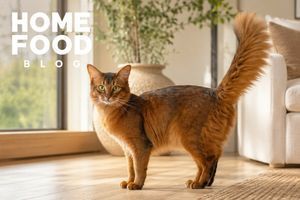
An interesting fact is that fluffy Abyssinian kittens periodically appeared in litters and were later developed into a separate breed — the Somali.
That is why the Abyssinian is often perceived as a breed with a very “pure” and recognizable type: it has long had an established image that is almost impossible to confuse with other short-haired cats.
- The Abyssinian has an ancient history, yet it looks very modern and striking.
- Its “wild” appearance is combined with gentle social behavior at home.
- The breed has long been established in European breeding and is easily recognized by its ticked coat.
Appearance
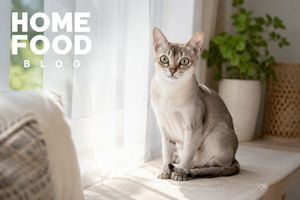
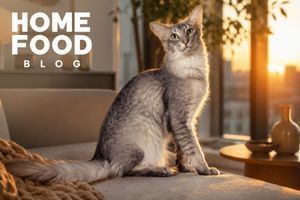
The Abyssinian — is a medium-sized cat with long legs, a muscular body, and a flexible posture. Its head is wedge-shaped, its eyes are almond-shaped, and its ears are large, slightly pointed, sometimes with small “tufts”.
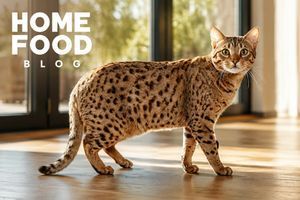
The coat is short, but it is exactly what makes the breed so recognizable. Each hair is colored in several shades, and this effect is called ticking. The most popular color is warm ruddy, or ruddy, although sorrel, blue, and fawn also occur.
In motion, the Abyssinian looks very agile and fluid. It does not seem heavy or massive, but its dexterity, strong legs, and love of heights are immediately noticeable. That is why representatives of the breed often choose shelves, cat trees, and the highest spots in the home.
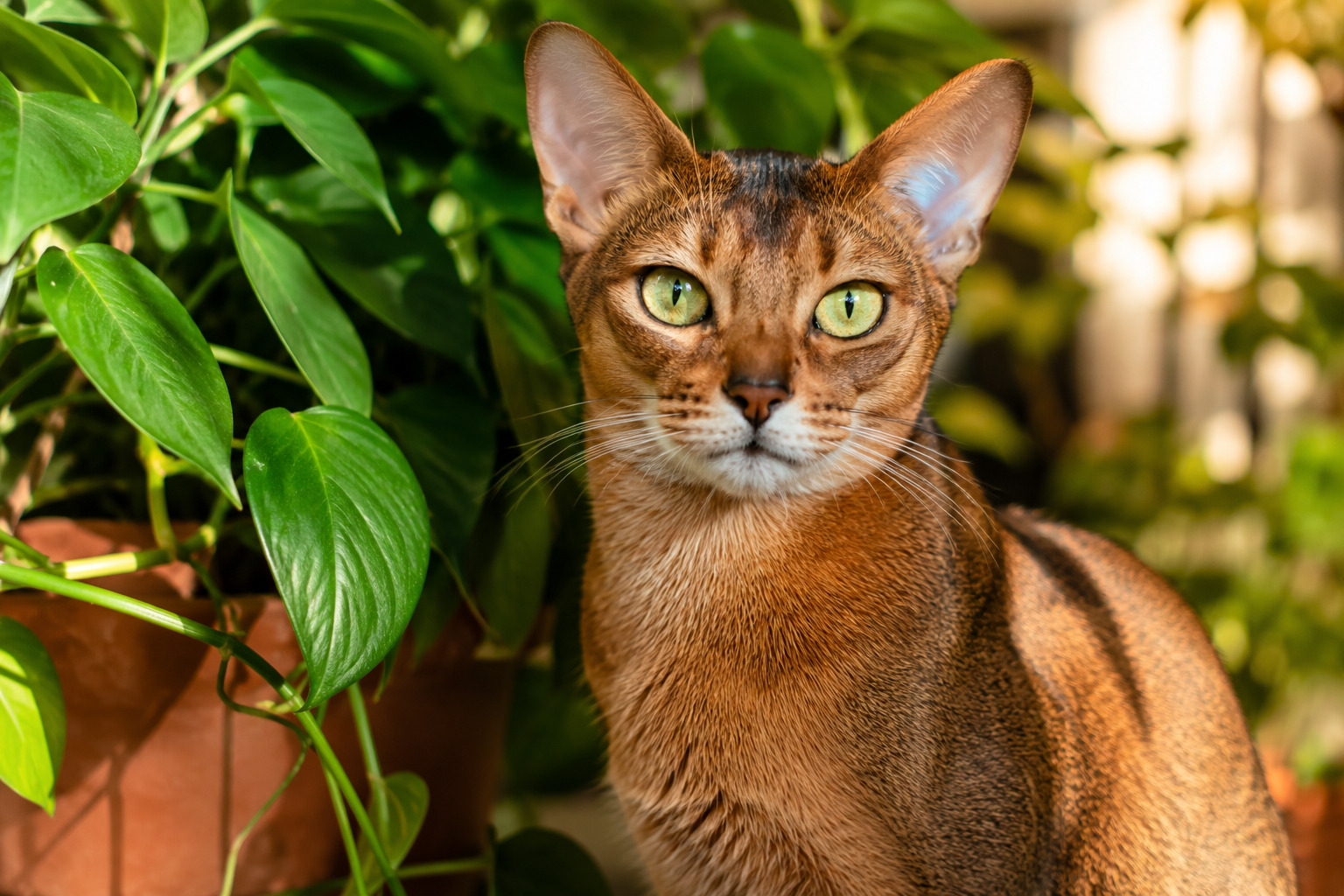

The Abyssinian looks elegant and light, but it is a very lively, strong, and springy cat that loves heights, movement, and constant interaction with the space around it
Temperament: smart, active, and very attached
The Abyssinian cat is not the kind of breed that lies on a windowsill all day. It loves movement, heights, observation, and communication. You will not need to persuade it to play for long — most likely, it will draw you into interaction itself.
Abyssinians carefully watch everything that happens at home and actively take part in family life. They often do well with children, especially calm and attentive ones, and can also get along with other cats and even dogs.
At the same time, it is important to understand that this breed does not like loneliness. It needs attention, contact, and the feeling that it does not simply live nearby, but is truly part of shared life.
The Abyssinian gladly greets guests, often willingly goes into arms, but does not lose independence in the best sense of the word. It is not intrusive, yet almost always wants to be somewhere nearby and see what its person is doing.
- The Abyssinian is well suited to people who enjoy active interaction with an animal.
- This is a breed with high intelligence and lively curiosity.
- It is much less suitable for long periods of loneliness and a completely passive lifestyle.

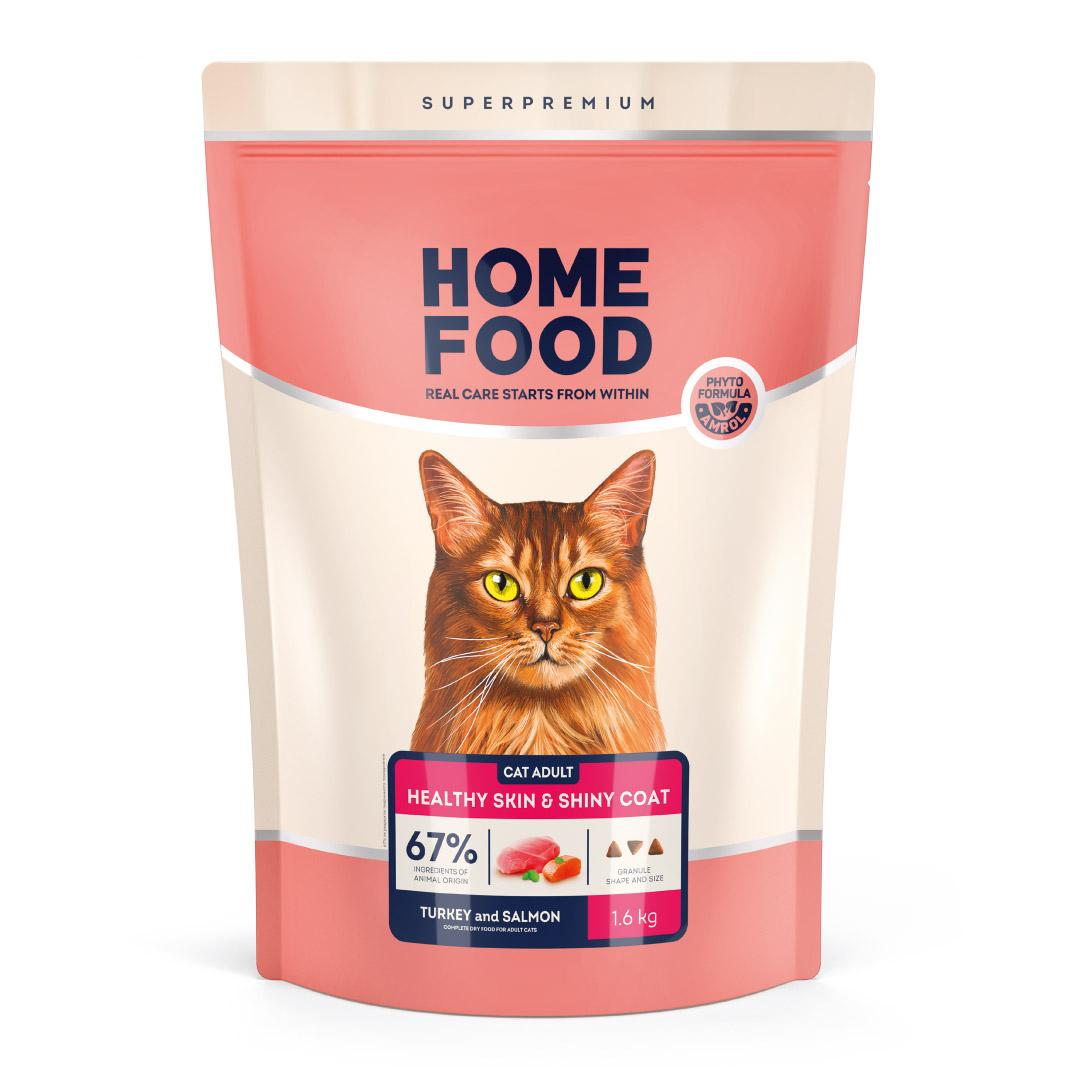
HOME FOOD Healthy skin and shiny coat — dry food for adult cats, turkey and salmon
Buy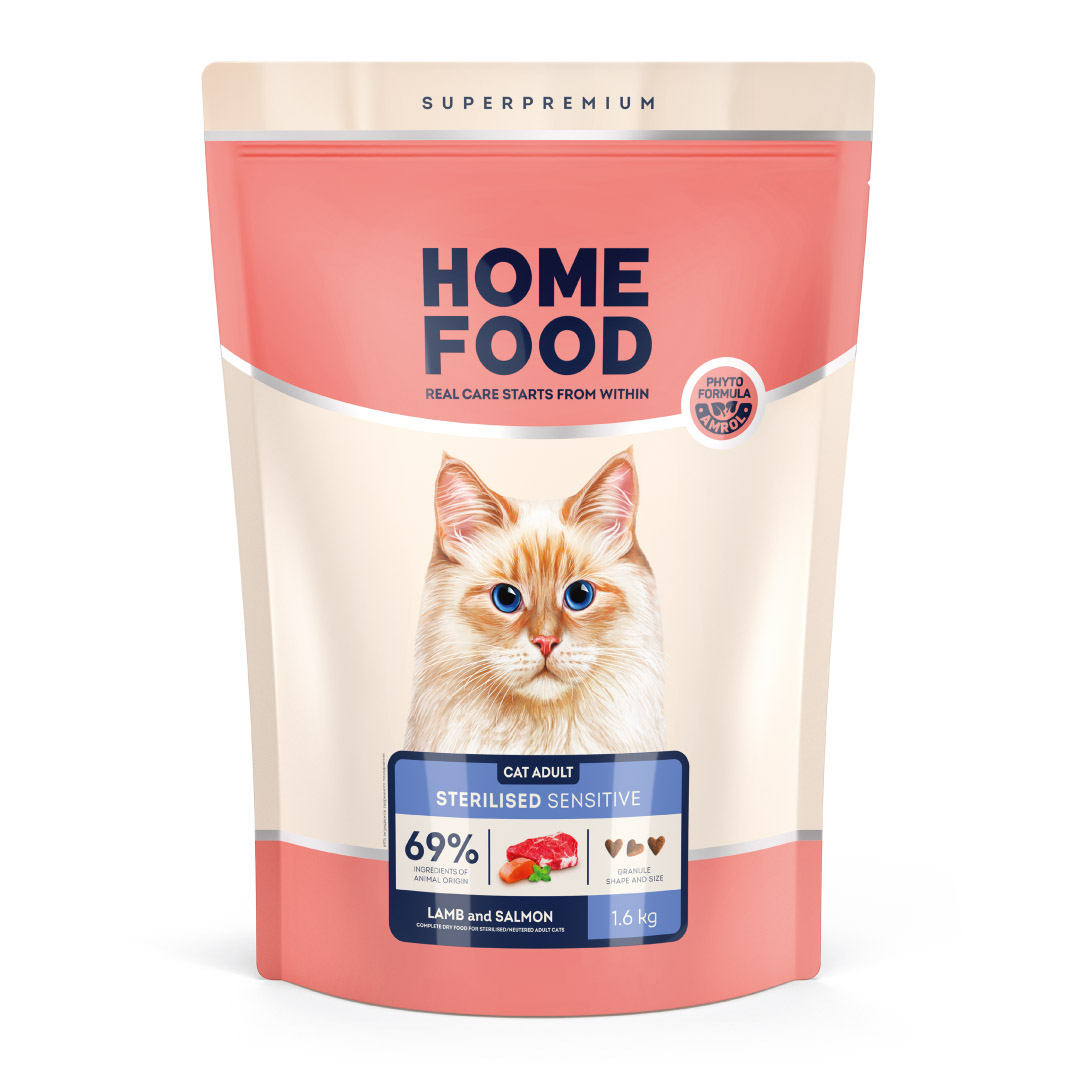
HOME FOOD With sensitive digestion — dry food for sterilised cats, lamb and salmon
Buy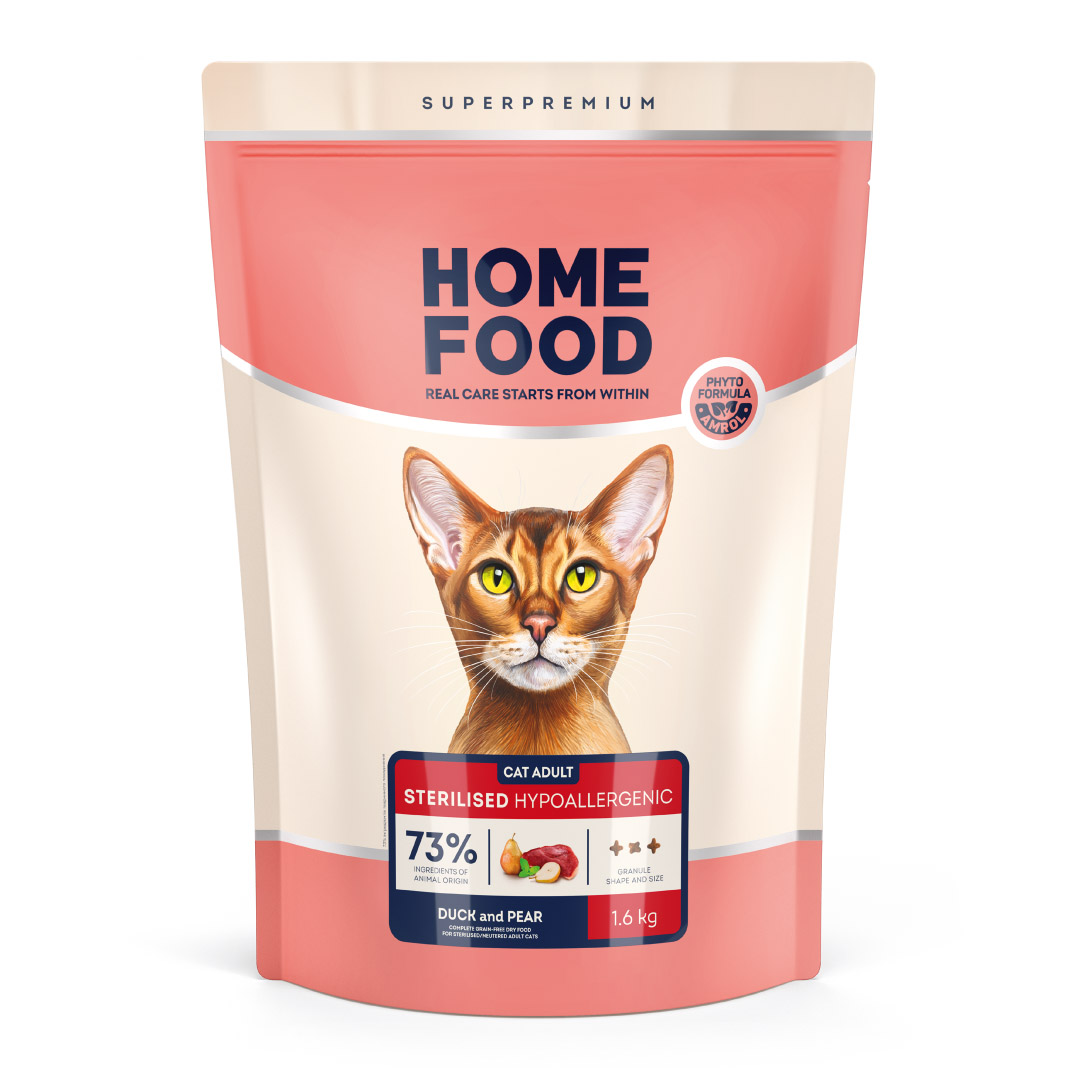
HOME FOOD Grain-free hypoallergenic — dry food for sterilised cats, duck and pear
Buy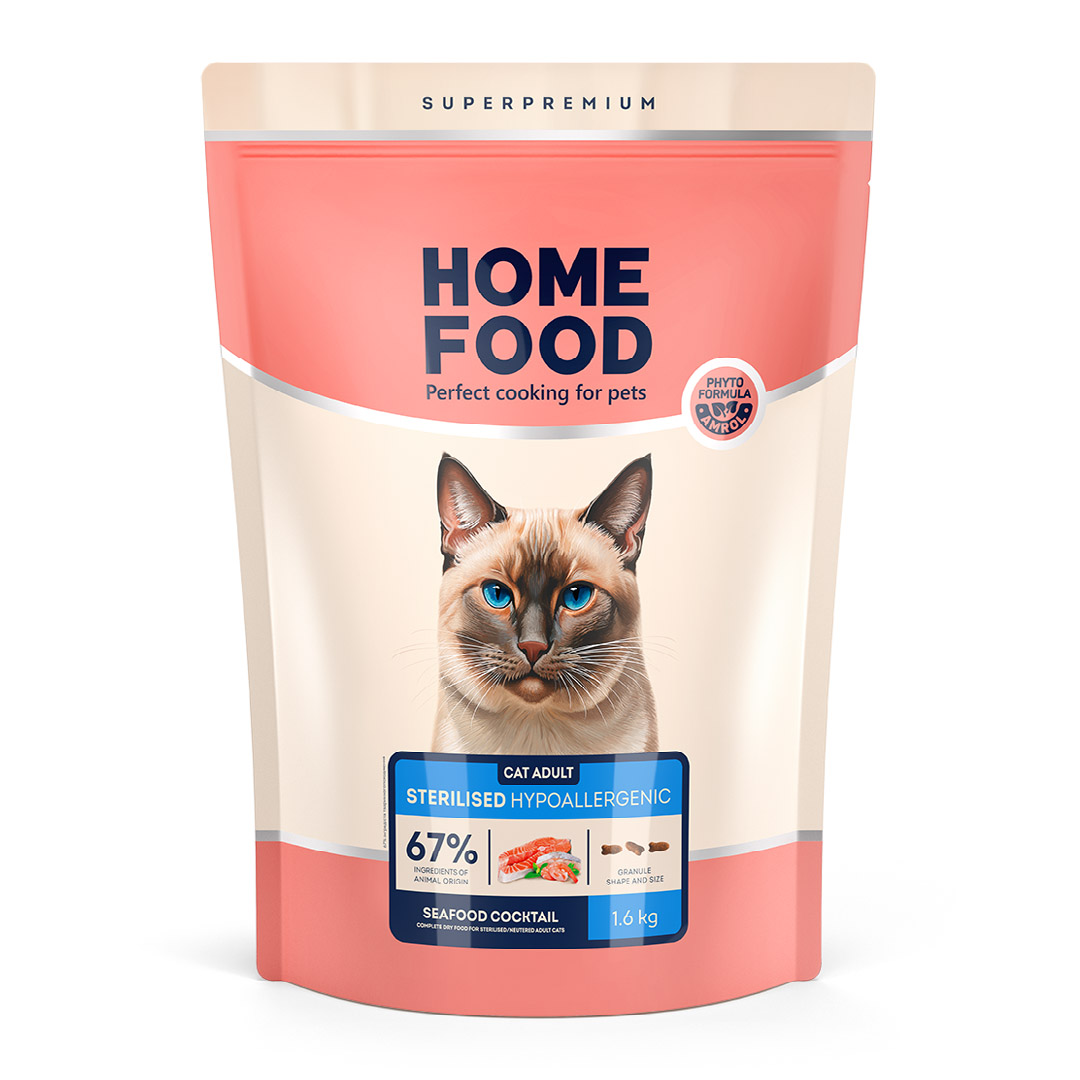
HOME FOOD Hypoallergenic For sterilised/neutered — dry food for cats, seafood mix
Buy
Care and health: without fanaticism, but with care
Abyssinian cats have short coats that do not require frequent brushing. In most cases, wiping the coat with a damp hand or a soft chamois cloth once a week is enough. This helps remove dust, stimulates the skin, and maintains natural shine.
The breed’s overall health is generally considered fairly good, but there are several genetic nuances that are important to know in advance. In particular, the breed may have pyruvate kinase deficiency, which affects hemoglobin levels, as well as progressive retinal atrophy, which gradually worsens vision.
That is why, when choosing a kitten, it is worth asking the breeder whether carrier tests have been performed. In everyday care, do not forget parasite prevention, monitoring the condition of the eyes and claws, and regular visits to the veterinarian.
It is also worth mentioning the general rules of daily care: claws should be trimmed on time, and the home should ideally have a scratching post or a full climbing structure. For an Abyssinian, this is not a luxury but a way to express its activity normally.
- Coat care for an Abyssinian is minimal, but regularity matters more than intensity.
- Genetic risks are best clarified before purchasing a kitten.
- Parasite prevention, hygiene, and routine checkups remain the foundation even for a cat that looks healthy.
Nutrition: sensitive, but not necessarily picky
Abyssinians are energetic, so they need food with high nutritional value. But this does not mean that a cat can be given anything or that appetite alone should guide feeding. The diet should be balanced and match the animal’s age, activity level, and physiological condition.
The younger or more active a cat is, the more protein and energy it needs. For adult animals, especially those with lower activity, weight control and a clearly measured portion become more important.
The source text specifically emphasizes that a cat needs 41 types of nutrients in the right proportions. That is why reading the food packaging and choosing the portion individually really makes sense.
In other words, the Abyssinian is not so much picky as sensitive to the quality of its diet. If the food meets the cat’s needs, it maintains good condition, stays active, and keeps a beautiful coat. If the diet is poorly chosen, this quickly affects both well-being and appearance.
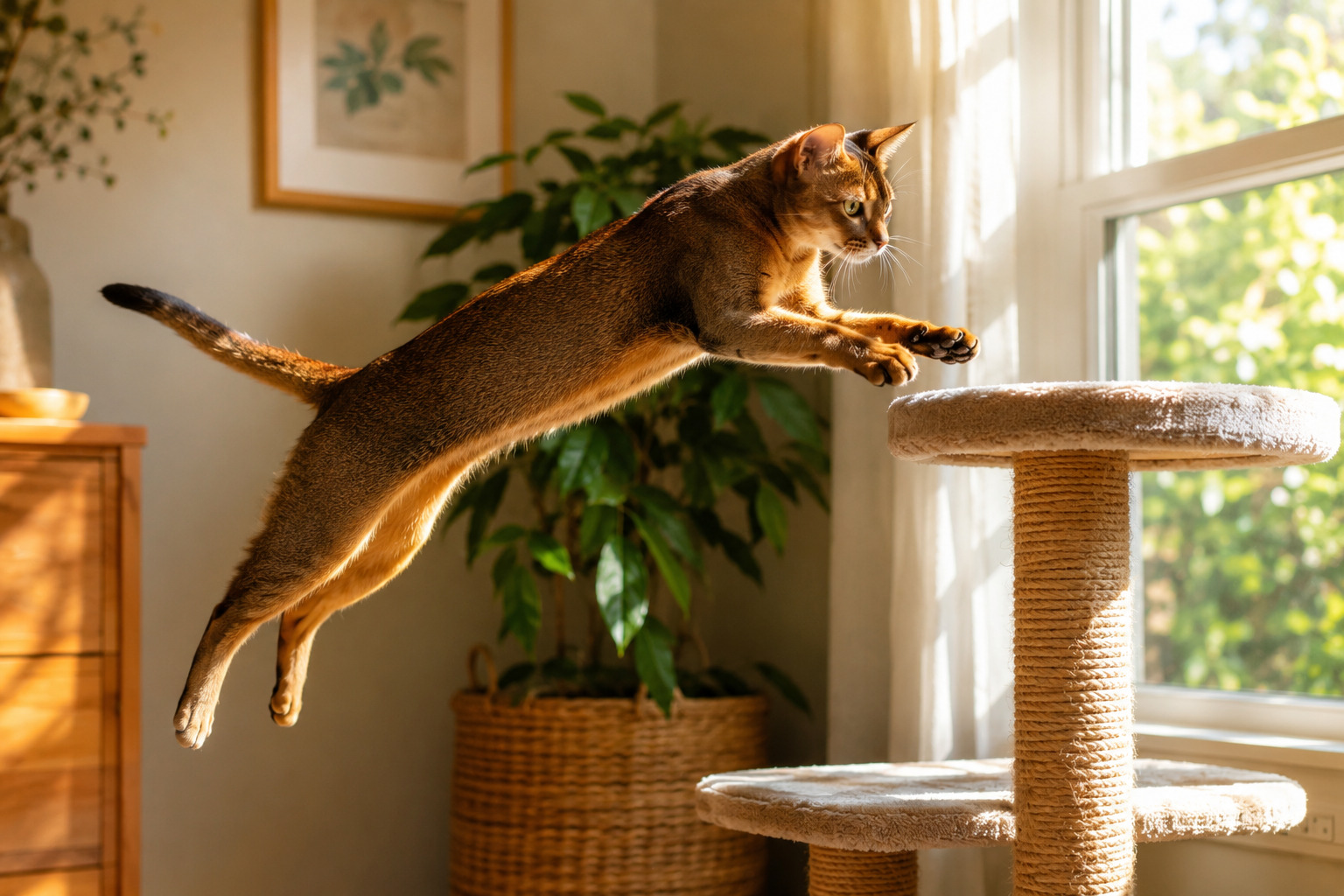
The Abyssinian looks light and slender, but because of its high activity level it needs not a random snack, but a truly high-quality, nutrient-dense diet
Who the Abyssinian cat is suitable for
If you are looking for a beautiful, intelligent, and truly “lively” cat, the Abyssinian can be a wonderful choice. It suits active people and families who enjoy communicating with a pet, playing with it, and being involved in its daily life.
This breed feels especially good where it is given time and is not treated as a decorative observer. The one thing that is truly important to keep in mind is that the Abyssinian needs more emotional contact than many calmer breeds.
So for people looking for a “sofa observer” who do not want to interact with an animal often, this breed may seem too involved in home life. But for those who love sociable and intelligent cats, the Abyssinian often becomes an almost ideal partner.

HOME FOOD "Krill" oil — phytomin for cats for recovery after shedding
Buy
HOME FOOD "Omega Balance" oil — Omega-3, -6, -9 balance for cats
Buy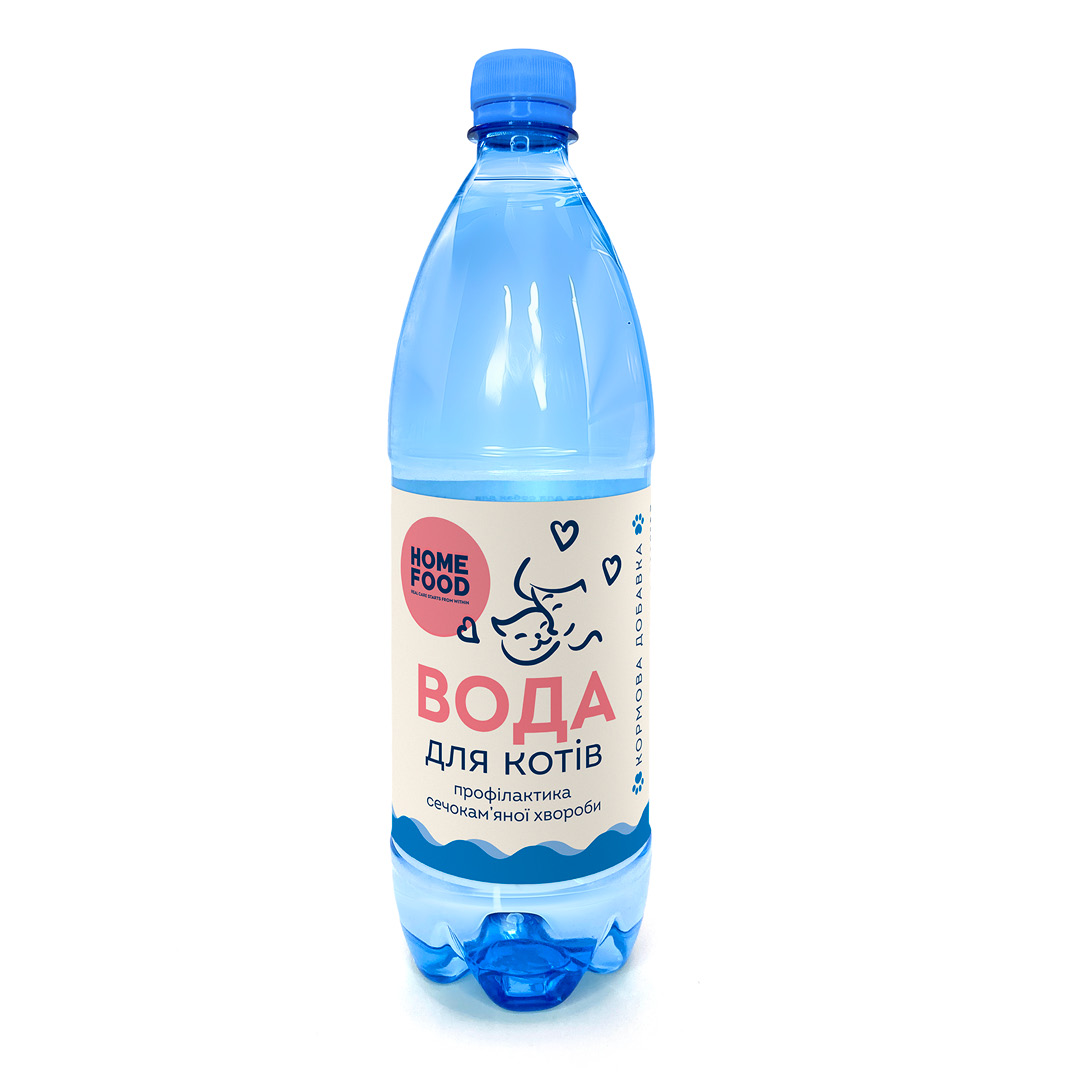
HOME FOOD — drinking water for cats for urinary stone prevention
Buy
HOME FOOD Beauty — set: shampoo, conditioner, and cosmetic bag
Buy
Conclusion
The Abyssinian cat — is not just a striking appearance and beautiful coat. It is a very sociable, intelligent, and active breed that thrives with people who are ready to invest in communication, play, and attentive care.
If you need a true companion rather than a passive “apartment resident”, the Abyssinian may be an ideal fit. But it should be chosen consciously, with an understanding of its temperament, need for movement, basic health risks, and the importance of a properly selected diet.