📌 HOME FOOD Blog: tips on care, health and nutrition of cats and dogs. 🩺 Current articles for caring pet owners ❤️
Burmese cat: breed origin, appearance, character, behavior, care, health, nutrition and who this people-oriented, intelligent and very devoted cat is suited for

Burmese cats have long been considered one of the most pleasant home companions. They combine a compact, strong build, expressive eyes, smooth silky coat and a very people-oriented temperament, which is why they are often compared to small dogs.
This is a breed for those who want to see not only beauty in their pet, but also genuine emotional presence. Burmese cats easily establish a connection with people, love to be nearby, pick up on their owner's mood well and at the same time maintain a pleasant balance at home.
In this article, we'll figure out where the Burmese cat comes from, what it looks like, what its character is like, how it interacts with children and other animals, what to pay attention to in care, nutrition and health prevention.
Brief breed characteristics
| Origin | Myanmar (Burma), modern line formed in the USA in the 1930s |
| Other name | Burmese |
| Breed type | Short-haired, selectively bred |
| Size and weight | Medium size, approximately 3–6 kg, sometimes more in sturdy lines |
| Lifespan | On average 13–18 years |
| Coloring | Solid colors: sable, blue, champagne, lilac, chocolate and others |
| Coat type | Short, dense, smooth, glossy, without pronounced undercoat |
| Character | Affectionate, sociable, playful, intelligent, devoted to people |
| Care | Simple: regular brushing, basic hygiene, and monitoring of weight and teeth |
| Suitable for | Families, couples and single people who spend enough time at home and value a people-oriented pet |
Breed history: from Burma to American breeding
Burma, now Myanmar, is considered the birthplace of Burmese cats, where these animals were long associated with temple culture, noble households and ideas of prosperity. In local tradition, Burmese cats were perceived as special cats, and later this reputation only increased interest in them in Europe and the USA.
The true history of the modern Burmese breed in the West began in 1930 when American breeder Joseph Thompson brought a cat named Wong Mau to the USA. Her unusual type and coloring became the foundation for further selection. Crossing her with Siamese cats made it possible to establish the same deep sable shade of coat that became the breed's hallmark.
Within a few years, Burmese cats received a standard and began to gain popularity rapidly. However, excessive interest in the breed for some time created a risk of losing line purity through outside crossings. Breeding work had to be stabilized, and by the late 1940s the breed type was clearly established again.
In Great Britain, Burmese cats also gained popularity, but there the selection took a somewhat different path. As a result, two well-known directions were formed: American and European type. They differ slightly in appearance, but share a common trait for which Burmas are so valued—an extraordinarily soft, social character.
- The modern Burmese cat combines the ancient Burmese image and careful American breeding.
- The key figure in the breed's history was the cat Wong Mau, from whom breeding work began in the USA.
- Today, American and European types of Burmese cats are distinguished, but both are valued for their people-oriented nature and gentleness.
Appearance of the Burmese cat
At first glance, a Burma may seem compact and even light, but when held, this cat often feels heavier than expected. Its body is dense, muscular, well-built, with a strong skeleton and a very well-proportioned silhouette. This is why Burmese cats are often described as cats with "deceptive weight".
The head is round, with soft lines, the muzzle is short and wide, and the eyes are large, expressive, mostly in warm amber or golden tones. The gaze in a Burma is lively, attentive and very emotional, which makes the breed easy to remember.
The coat is short, lies close to the body and has a characteristic silky sheen. It is this smooth texture combined with deep solid colors that creates an impression of neatness and sophistication. Classic colorings remain sable, champagne, blue and platinum, but modern lines can have other shades.
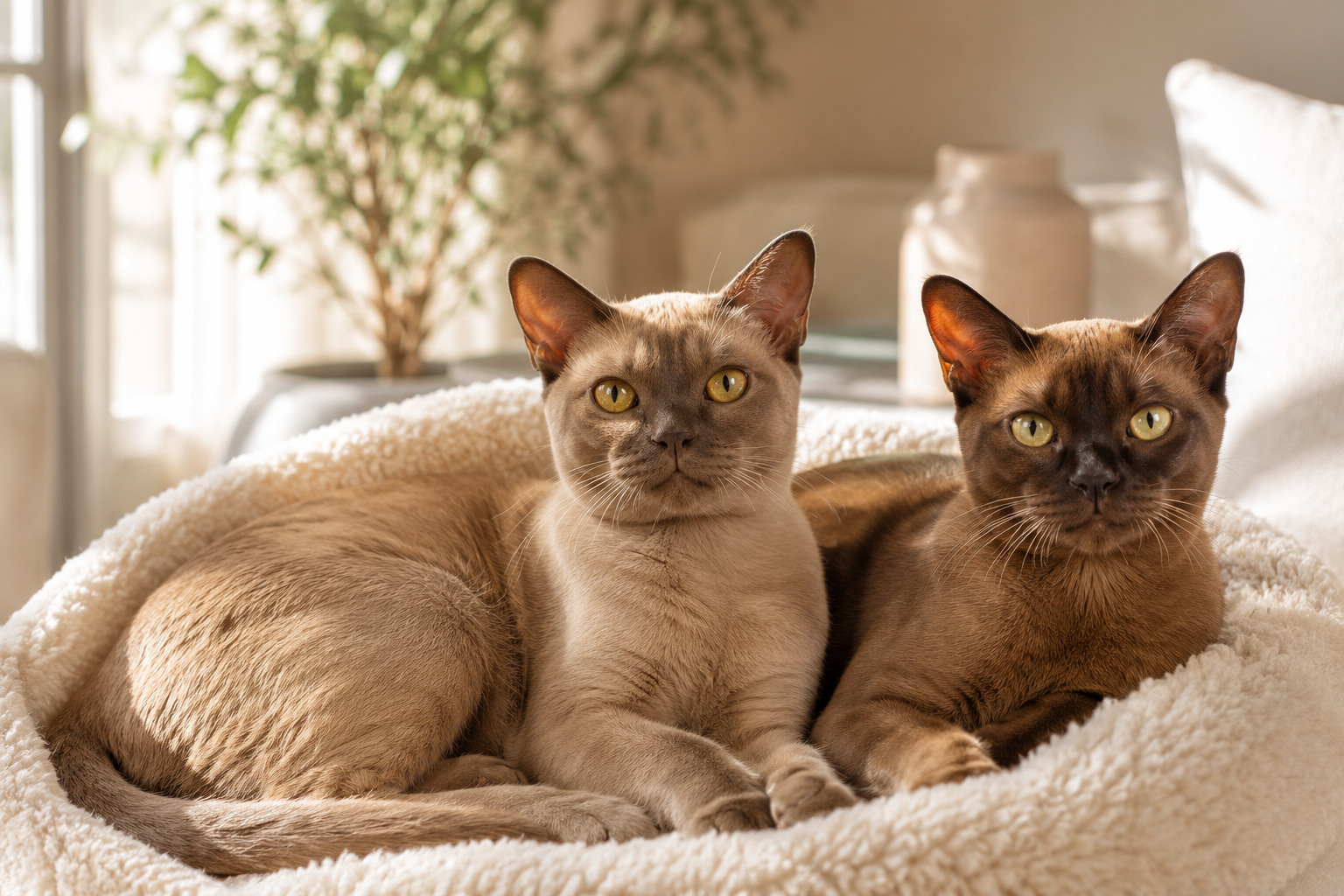

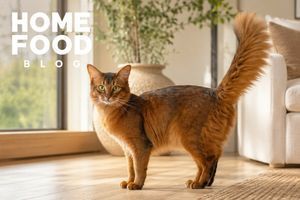
The Burmese cat looks compact and soft, but behind its silky appearance lies a strong, well-built and very lively breed with a striking presence
Character: one of the most people-oriented cats
The Burmese cat is a true companion. It doesn't just tolerate human presence, but actively seeks communication, loves to be nearby and very easily fits into the family's daily life. For many owners, it is this deep people-oriented nature that becomes the main reason to fall in love with the breed.
Burmese cats are quite talkative, but usually not harsh. They can comment on events, respond to calls, gently draw attention to themselves. In behavior, traits are often noticeable that many call "dog-like": such a cat greets at the door, follows its owner, lies nearby and loves to be involved in household affairs.
The breed adapts well to the family rhythm, but does not like prolonged emotional isolation. If a Burma is left without company for too long, boredom and lack of contact can affect its behavior. This is why this cat feels best where people talk to it, play with it and simply spend time around it.
Interaction with children, other animals and training
Burmese cats get along wonderfully with children if the family respects the animal's boundaries. They are patient, gentle, willing to play and rarely resort to aggressive reactions in response to clumsy contact. It is this restraint and goodwill that made the breed popular among families.
Similarly, Burmese cats generally get along well with other cats and dogs, especially if the introduction happens gradually. Their natural sociability and behavioral flexibility facilitate adaptation to a multi-animal household.
It's worth mentioning intelligence separately. The Burmese cat is able to recognize intonations well, quickly gets used to household rules, can learn simple commands and interacts with interest in toys, tunnels and interactive puzzles. If you work with it in a playful manner, it learns very willingly.
- The Burmese cat is very people-oriented and loves constant, but calm contact.
- The breed interacts well with children and other animals when introductions are handled properly.
- This cat is intelligent, emotionally sensitive and responds well to gentle training through play.
The influence of environment and home atmosphere
Although the Burmese cat has a fairly established breed temperament, the environment in which it grows and lives is also very important. If a kitten gets used to being handled, toys, household sounds and calm communication from an early age, it usually grows up even more open and confident.
On the other hand, isolation, constant noise or a tense atmosphere can make even such a social cat wary. The Burmese cat is very sensitive to the emotional atmosphere at home, so it feels best in a stable, friendly environment where it receives attention and is not left without contact for long.
Health and lifespan
With good care, Burmese cats often live 15–18 years or even longer. Overall, the breed is considered quite robust, but it has several features worth knowing about before a kitten arrives in the home.
The source mentions hereditary risks, including orofacial pain syndrome, hypokalemia, and rare congenital skull deformities. It's also worth remembering possible problems with gums or heart, in particular the risk of hypertrophic cardiomyopathy in some lines.
Another important trait of the breed is a tendency to have a strong appetite. Burmese cats love food and, without proper control, can quickly gain weight. That's why prevention here relies not only on vaccinations and parasite prevention, but also on an adequate diet, portion control, and sufficient physical activity.
Special attention should be paid to a Burmese cat's condition if lethargy appears, unusual pain in the oral cavity, decreased activity, shortness of breath, excessive tearing, or breathing problems. Such symptoms don't always indicate serious pathology, but they require veterinary consultation.
- The breed is generally robust, but has certain hereditary risks worth knowing about.
- Weight control for a Burmese cat is especially important due to their good appetite.
- Regular check-ups, dental care, and parasite prevention should be part of your routine.
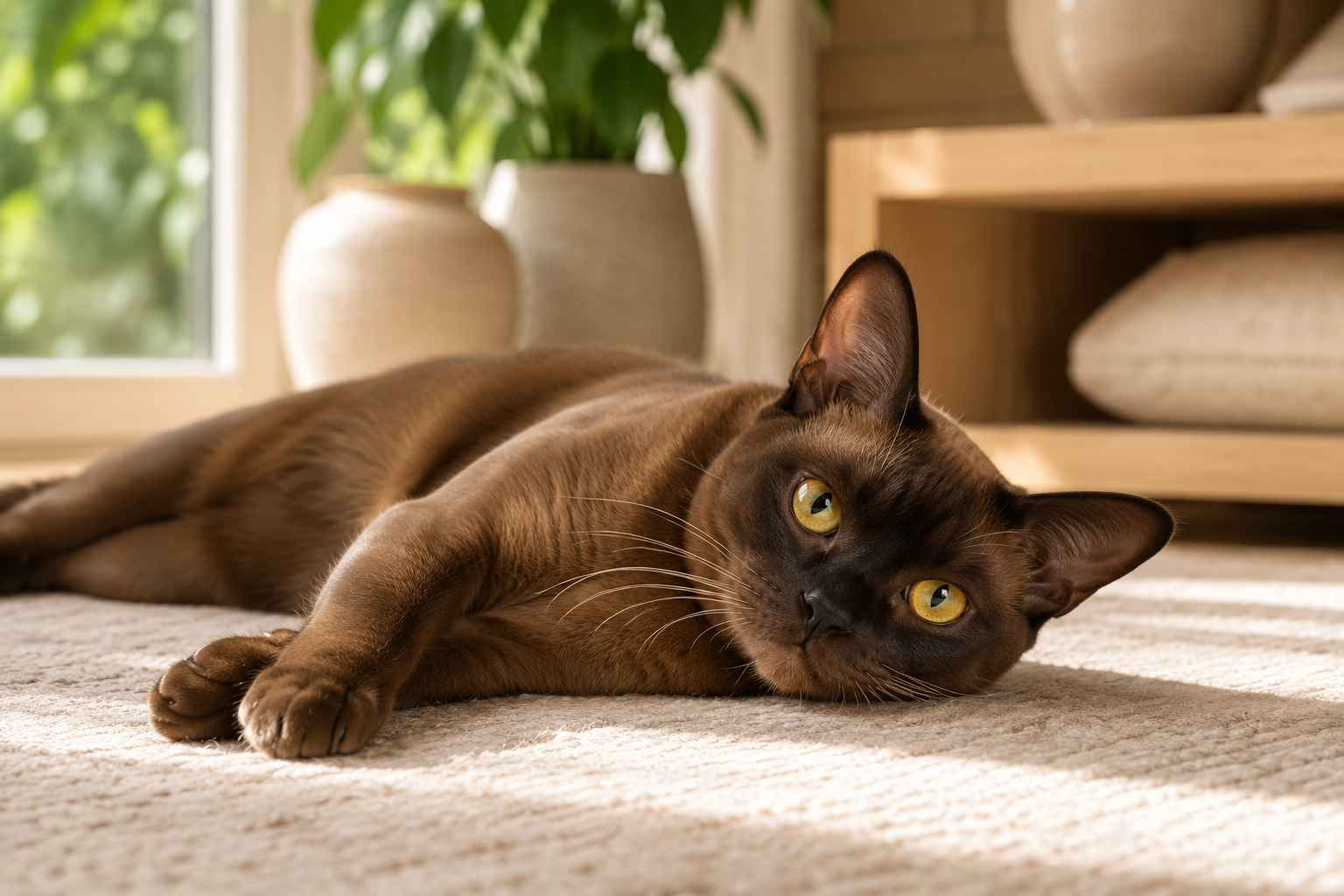
A Burmese cat thrives best in a home that combines emotional closeness, sensible feeding habits, physical activity, and regular preventive care.
Care and maintenance
Burmese cats are not a complicated breed for grooming. Their short, fine coat usually needs brushing 1–2 times a week, and bathing should be done as needed using gentle cat products. Due to their short coat and love of home warmth, Burmese cats should not be exposed to cold or left in cold conditions for long periods.
Basic care includes daily or regular eye checks, ear cleaning, nail trimming every 3–4 weeks, and dental hygiene several times a week. To prevent boredom and excess weight, it's important to set up your Burmese cat's living space with scratching posts, shelves, toys, and observation areas.
Since the Burmese cat is very social, it needs not only physical but also emotional care. This is the kind of breed that needs more than just a food bowl and a bed: it needs attention, play, interaction, and the feeling that it is a full member of the household.


NexGard Combo — antiparasitic drops for cats up to 2.5 kg
Buy
HOME FOOD Omega Balance — oil for cats, balance of Omega-3, -6, -9
Buy
HOME FOOD Beauty — set: shampoo, conditioner, and cosmetic bag
Buy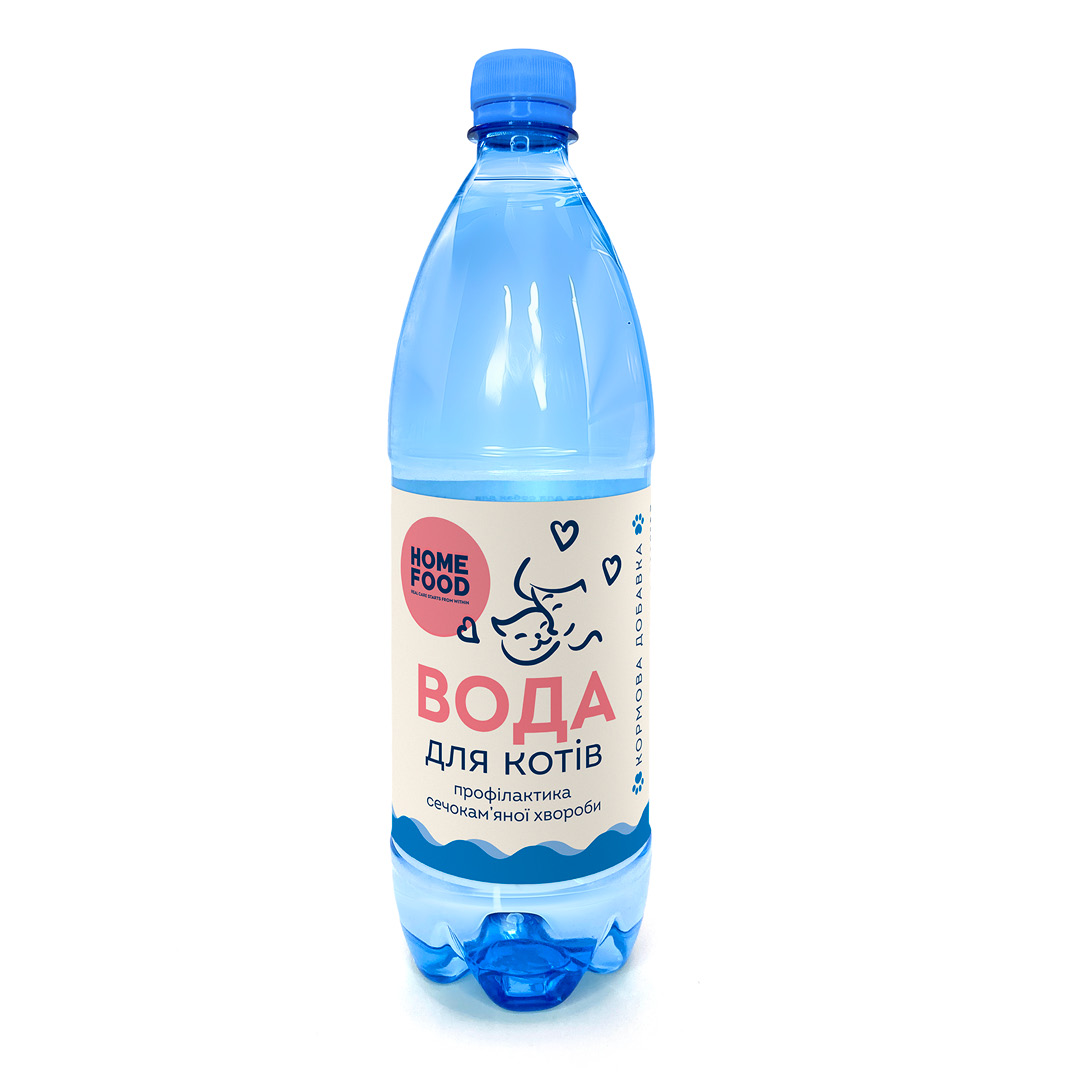
HOME FOOD — drinking water for cats for the prevention of urinary tract issues
Buy
Feeding a Burmese cat
Burmese cats can do well on both commercial diets and well-planned natural feeding, but the latter requires veterinary consultation and careful nutritional balance. That's why most owners choose high-quality complete commercial foods that already account for the needs of an adult cat.
When choosing a diet, it's important to consider age, activity level, spay/neuter status, and individual digestive characteristics. If your Burmese cat is not very active or lives mainly in an apartment, you cannot ignore the caloric content of the diet. Access to clean drinking water should be constant.

HOME FOOD Healthy skin and shiny coat — dry food for adult cats, turkey and salmon
Buy
HOME FOOD Hypoallergenic — dry food for spayed cats, seafood cocktail
Buy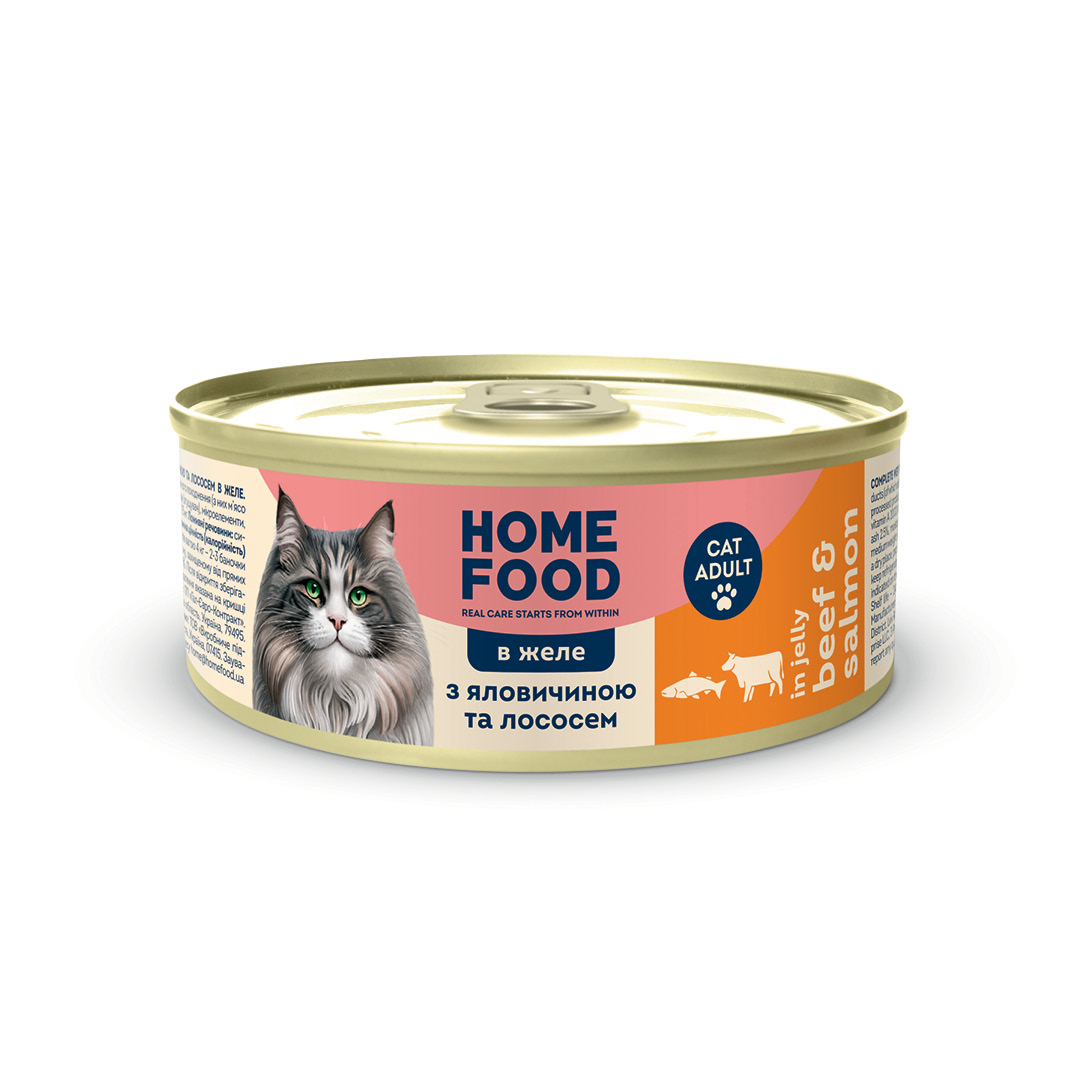
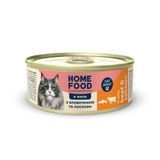
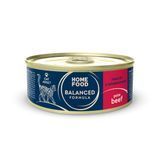
HOME FOOD — complete food for adult cats with beef and salmon in jelly
Buy
HOME FOOD — treats for cats, meat sticks with salmon
Buy
Pros and cons of the breed
Before bringing a Burmese cat home, it's helpful to realistically assess its strengths and possible challenges. This way it's easier to understand whether this breed truly matches your lifestyle.
- The pros include affection, intelligence, loyalty, good compatibility with children, and a pleasant home temperament.
- Among the cons are the need for attention, sensitivity to loneliness, tendency to gain weight, and the need for regular dental and overall health care.
- A Burmese cat is best suited for people who want not just a beautiful cat, but an everyday emotional companion.
Conclusion
A Burmese cat is a breed that very easily transforms from simply a beautiful animal into a true family member. It is intelligent, affectionate, emotionally sensitive, and very pleasant in daily interaction, making it perfect for people who want deep contact with their pet.
If you need a cat that will be there not just in appearance but in personality, a Burmese cat is truly worth your attention. With proper care, good nutrition, and sufficient attention, it can remain a bright, warm, and very devoted companion for many years.