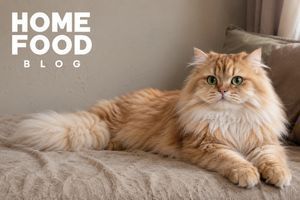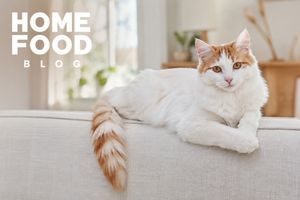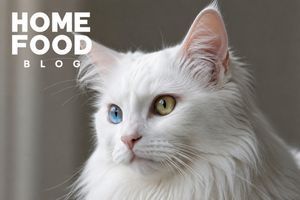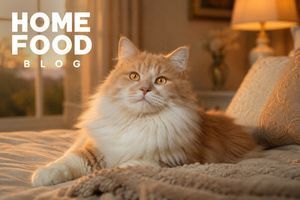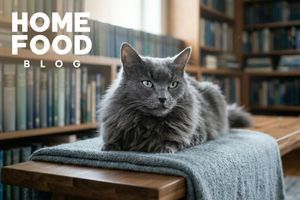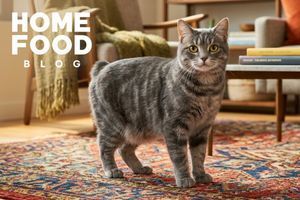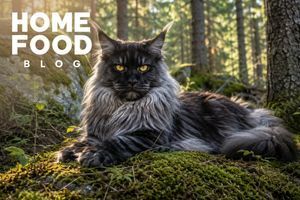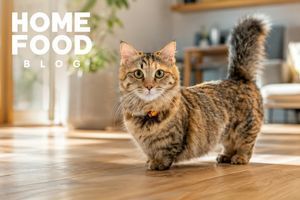
The Norwegian Forest Cat makes an impression of a strong, natural and very harmonious animal. It is easily recognized by its dense semi-long coat, luxurious tail, large size and calm confident movement. At the same time, this is not a 'wild cat for decoration', but a soft home companion that combines independence, affection and endurance well.
This the natural origin of the breed, adaptation to harsh climate and striking appearance that made the Norwegian Forest Cat one of the most beloved large cats in the world. But along with beauty, this breed requires thoughtful space organization, regular coat care, weight control and careful attention to health.
In this article, we will explore where the Norwegian Forest Cat comes from, what its temperament is like, how to organize its living space properly, what to pay attention to in care, what health risks are worth knowing about and how to choose the right diet without unnecessary mistakes.
Brief breed characteristics
| Origin | Norway; natural Scandinavian breed |
| Other names | Norwegian Forest Cat, Norsk Skogkatt, Wegie ('Wegie') |
| Breed type | Large semi-long-haired natural domestic cat |
| Size and weight | Medium-large or large size; males often 5–7 kg and more, females lighter |
| Lifespan | Average 13–16 years |
| Colors | Many variations; certain colorings such as chocolate, lilac and colorpoint are not allowed |
| Coat type | Semi-long, dense, with thick undercoat and water-repellent guard hair |
| Temperament | Friendly, calm, observant, independent, but attached to family |
| Care | Regular brushing, shedding control, nail, weight, teeth, eye and ear care |
| Suitable for | People and families who want a large natural cat and are ready for systematic coat care and space management |
Breed origin
The Norwegian Forest Cat is considered a natural breed that formed in Scandinavia without artificial type construction for show effect. Breed descriptions often mention Norwegian legends, folklore and even versions about cats that Vikings might have brought, while modern feline organizations describe it more cautiously as an ancient Norwegian domestic cat well adapted to a cold climate.
In the 20th century, the breed began to be deliberately preserved and standardized in Norway. According to TICA and GCCF data, the first clubs and attempts to fix the type appeared in the 1930s, and international popularity began to grow rapidly in the second half of the century. Today, the Norwegian Forest Cat remains one of the most famous examples of a large natural breed.
Its appearance is logically explained by the environment: dense coat, strong skeleton, long fluffy tail, good climbing ability and endurance. This is not a decorative image, but a functional animal type that formed under conditions of wet cold winters.
- The Norwegian Forest Cat is a natural breed that formed in Scandinavia.
- Its modern official recognition began in Norway in the 20th century.
- Dense coat, large size and strong build are related to adaptation to cold climate.
Appearance and standards
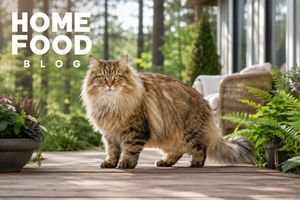
The Norwegian Forest Cat is a large, well-balanced animal with a long body, strong legs and a very distinctive tail. For it, not just massiveness is important, but a sense of strength, naturalness and functionality. The head has a triangular shape, the profile is usually straight, and the ears are large, set high, often with tufts.
The breed's coat is two-layered: soft dense undercoat and longer guard hairs that help repel moisture. This structure is what distinguishes the Norwegian Forest Cat from many other long-haired cats. A distinctive 'collar' forms on the neck, 'pants' on the hind legs, and the tail should look very fluffy and well-furred.
The breed matures slowly. Breed descriptions note that full maturity may not occur until about four years of age, and some feline descriptions mention an even longer path to the full adult type. Therefore, a young cat may continue to mature for a long time before reaching the striking appearance we are used to seeing in photos of adult animals.
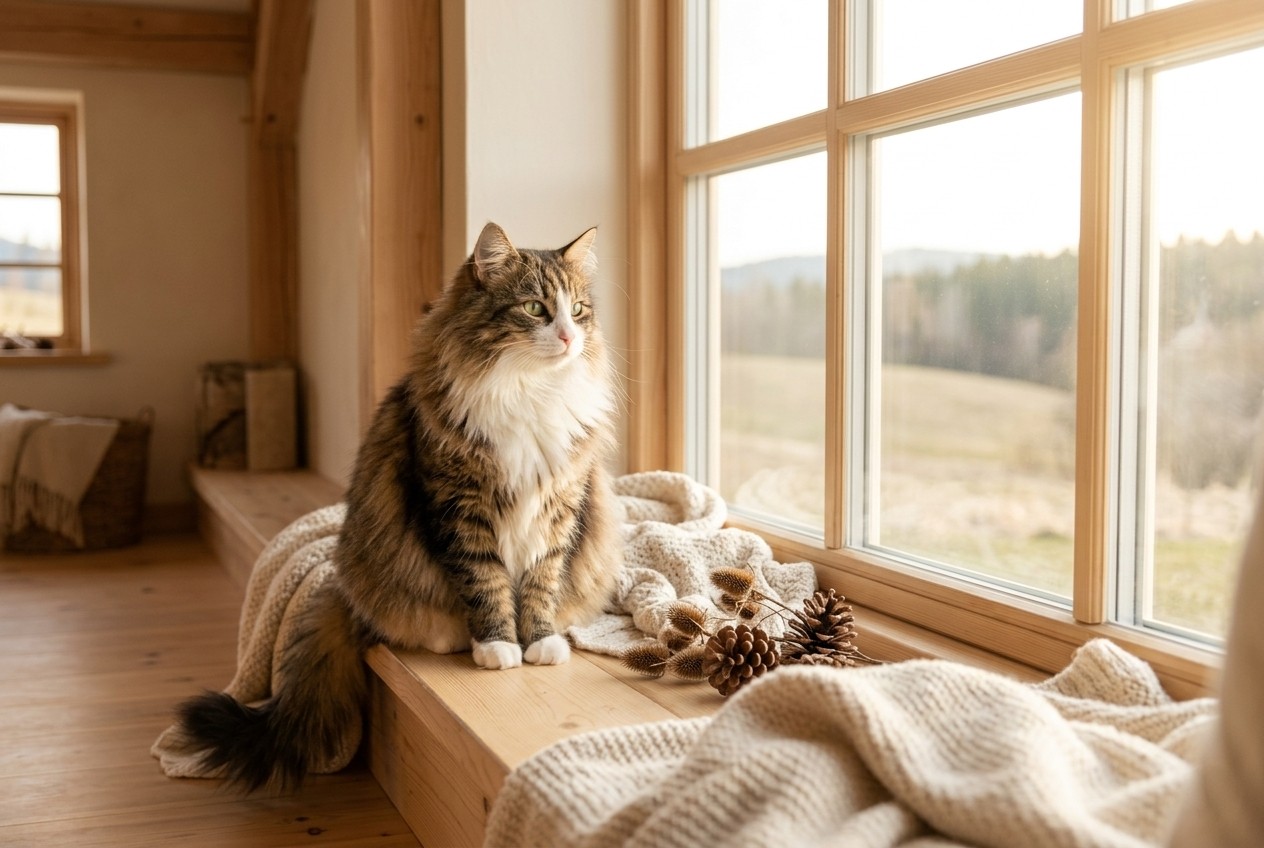

The Norwegian Forest Cat is easily recognized by its triangular face, dense water-repellent coat and large fluffy tail
Temperament and personality
The Norwegian Forest Cat typically combines friendliness, restraint and inner confidence. It is not an overly intrusive breed, but not cold either. It often enjoys being near the family, likes to observe people, follow them around the apartment and be part of daily life, without requiring constant physical contact.
Many representatives of the breed respond well to play, climbing and calm interaction rituals. They are intelligent, curious and love to observe space from height. At the same time, in most cases the Norwegian Forest Cat does not appear nervous or chaotic: even its activity usually has a sense of composure.
With children and other animals, the breed often gets along well if introductions happen gradually and the animal's boundaries are respected. This is one of the reasons why the Norwegian Forest Cat is so valued as a family cat: it combines endurance, a soft temperament and sufficient independence.
Housing and space organization
Despite its large body and dense coat, the Norwegian Forest Cat can live wonderfully in an apartment. But its living space should be well-thought-out: sturdy cat tree, high observation points, stable scratching posts, convenient large litter box, enough space for jumping and safe routes at height. The breed loves to climb, so vertical space here is not a luxury but a real need.
It is also important to maintain a predictable daily rhythm. The Norwegian Forest Cat is usually adaptable, but opens up better in a home with stable feeding, clean water, resting places and a calm opportunity to get away from excess noise. If the animal constantly lives in an overloaded environment without resources, its behavior can become more tense.
- The Norwegian Forest Cat needs height, sturdy surfaces and the opportunity to observe space calmly.
- The breed's large size makes a roomier litter box, sturdy accessories and safe jumping routes important.
- This cat feels best in a predictable living environment without constant chaos.
Health and possible risks
Overall, the Norwegian Forest Cat is considered a hardy breed, but this does not mean a complete absence of hereditary risks. In feline and veterinary sources, the breed is primarily mentioned for hypertrophic cardiomyopathy, hip dysplasia, and glycogenosis type IV in certain lines. That is why responsible breeding and transparent information about parents really matter.
Special attention is needed for weight control. A large cat with a dense coat can imperceptibly gain excess weight, and this creates unnecessary strain on the heart and joints. If a cat jumps less, has difficulty climbing, changed its gait or became noticeably less active, it's not worth attributing everything solely to age or 'large breed'.
As with any domestic cat, for the Norwegian Forest Cat vaccination, deworming, external parasite control, oral health, water balance and regular check-ups are important. The breed's true hardiness is best maintained not by myths about 'unpretentiousness', but by basic prevention.
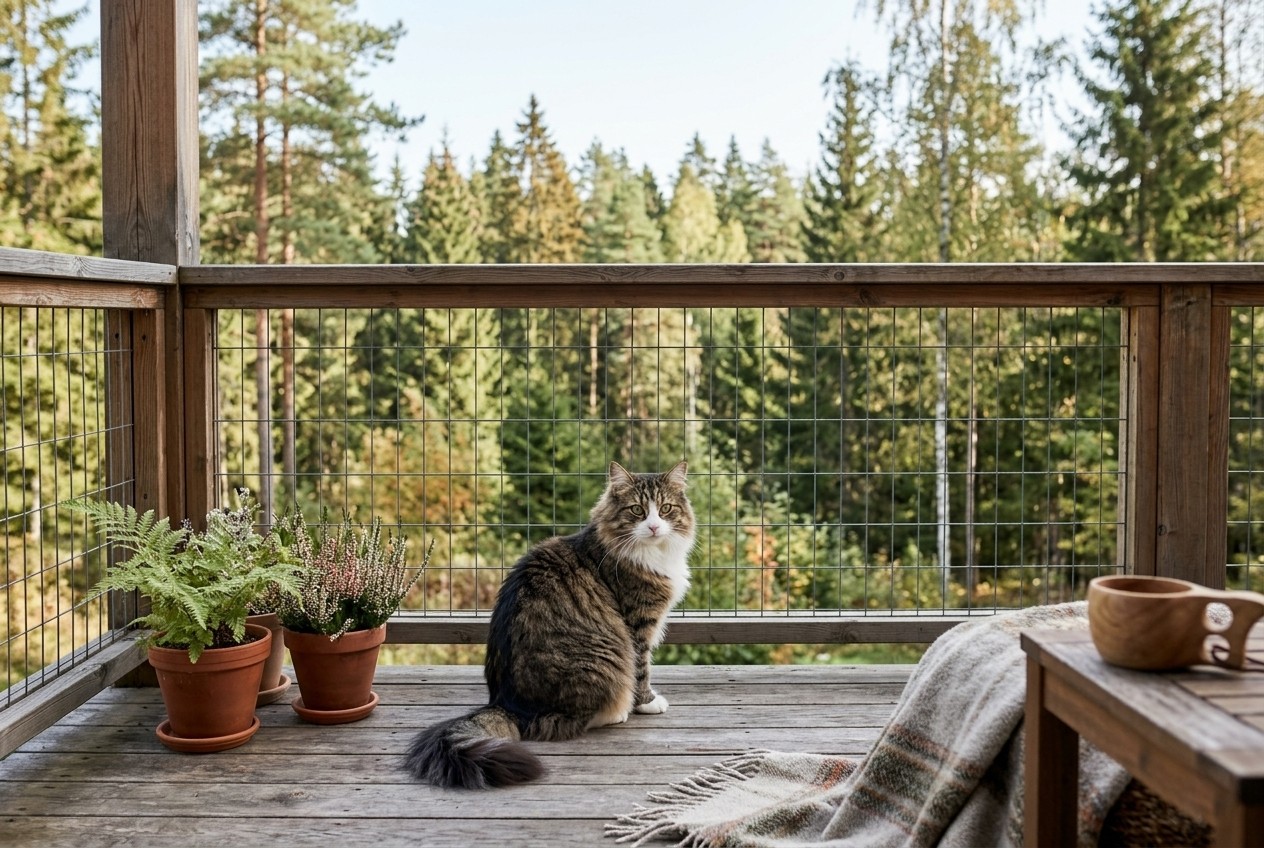
For the Norwegian Forest Cat, weight control, prevention of cardiac and joint risks and regular dense coat care are important
Care
Norwegian Forest cats need regular brushing, although their coat is often less prone to matting than it might seem at first glance. During normal periods, a few sessions per week are sufficient, and during seasonal shedding — more frequently. Special attention is needed for the "pants", collar, groin area, and places behind the ears.
Such cats are bathed infrequently and only when necessary. Much more important is maintaining systematic home care: nails, eyes, ears, teeth, monitoring skin and coat condition. Due to the breed's size, it's more convenient to accustom a kitten to short regular grooming procedures from an early age than to later struggle with a large strong cat that dislikes grooming.
In the home, it's also worth taking care of hygiene essentials: clean bedding, sufficient space for movement, a good grooming tool, and a calm grooming routine without rushing.


Steam massage brush 3 in 1 — "Avocado" for coat care for dogs and cats
Buy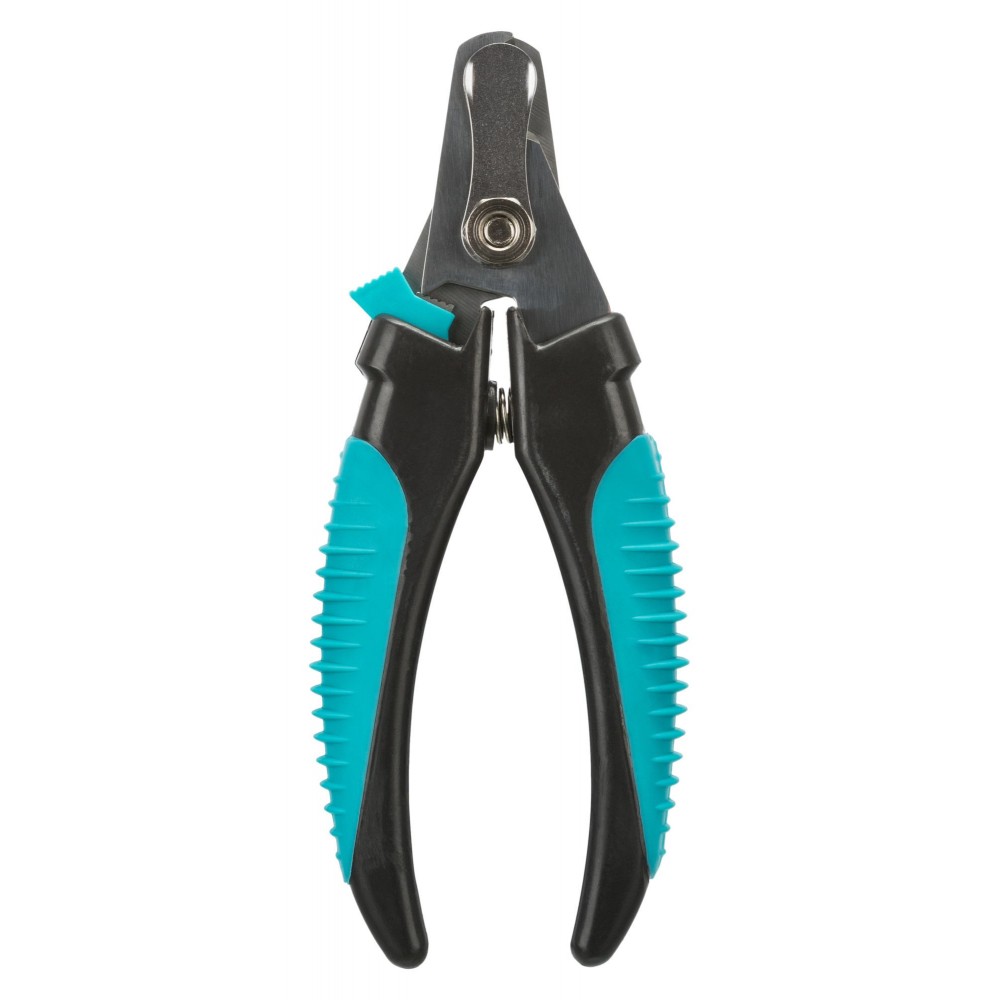
Trixie Luxe — nail clipper for pets, large, 16 cm
Buy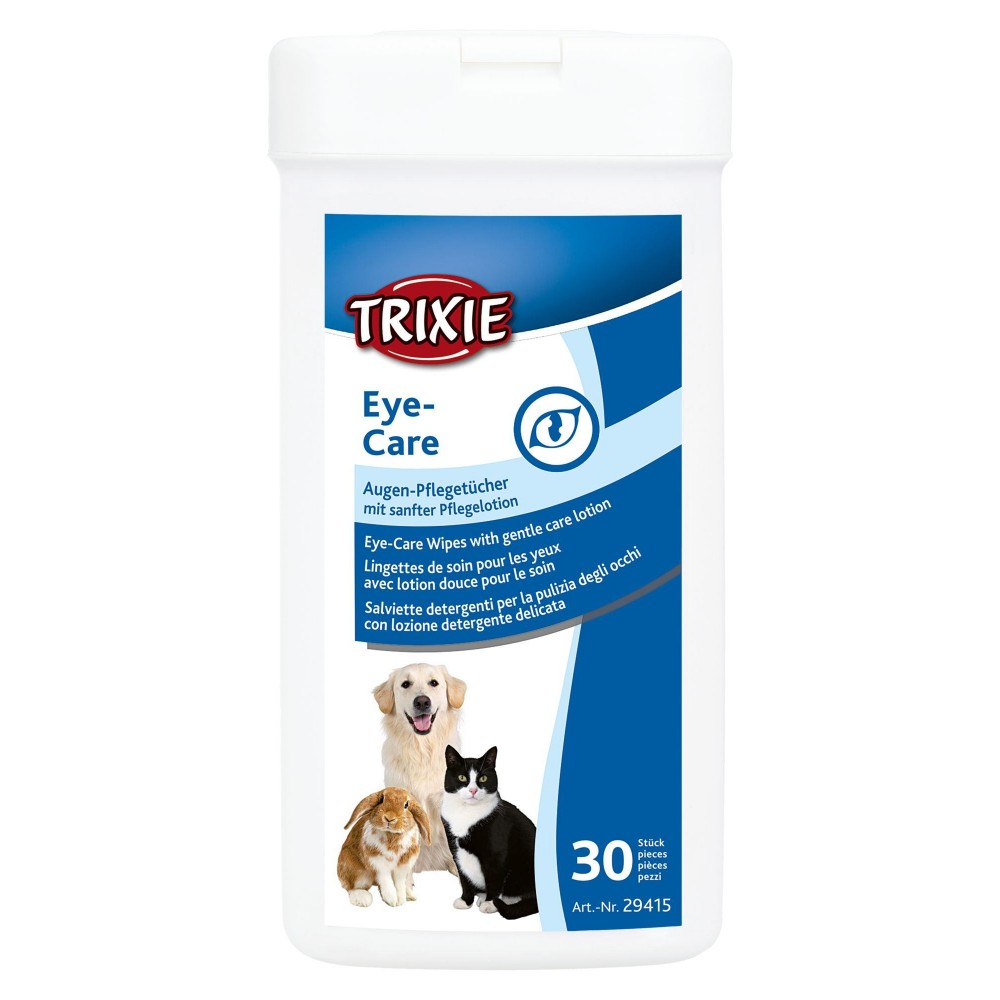
Trixie — eye care wipes for dogs and cats, 30 pcs
Buy
HOME FOOD Beauty — set for dogs and cats: "Perfect Care" shampoo 200 ml + "Silky Touch" conditioner 200 ml
Buy
Nutrition
For a Norwegian Forest cat, it's important to combine a quality protein diet with weight control. Due to slower maturation, kittens need balanced nutrition for growth, while adult animals need portion sizes that correspond to their actual activity level, sterilization status, and overall health.
It's practically most convenient to rely on ready-made complete feed with clear composition and precise portion control. For a large breed, it's especially important not to overfeed the animal just because it's "big and fluffy". If a cat gains excess weight, both the joints and the cardiovascular system suffer.
It's also useful to monitor water consumption, coat quality, appetite, and stool. These everyday things often show first that the diet needs adjustment.
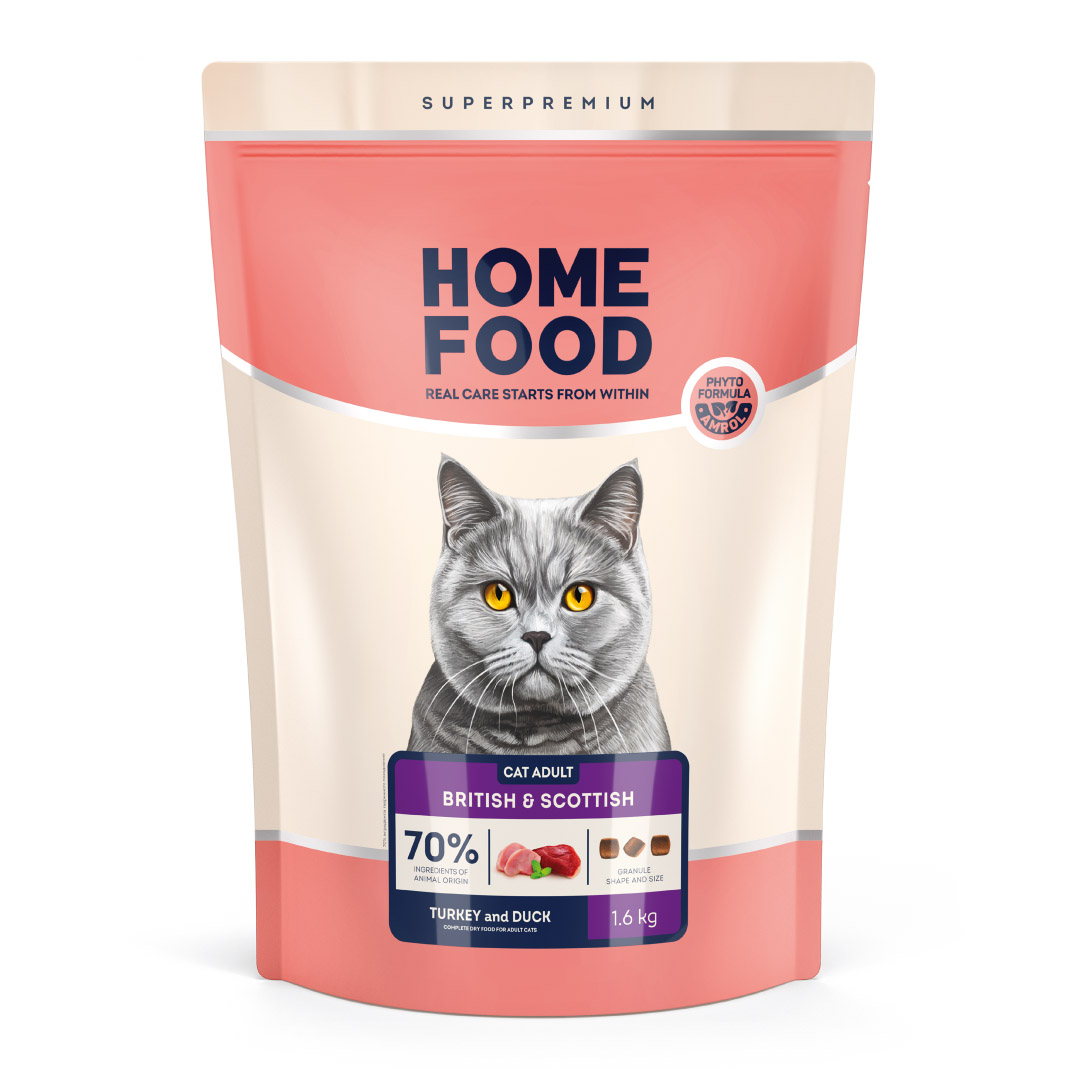
HOME FOOD For British and Scottish breeds — dry food for adult cats of British and Scottish breeds, turkey and duck
Buy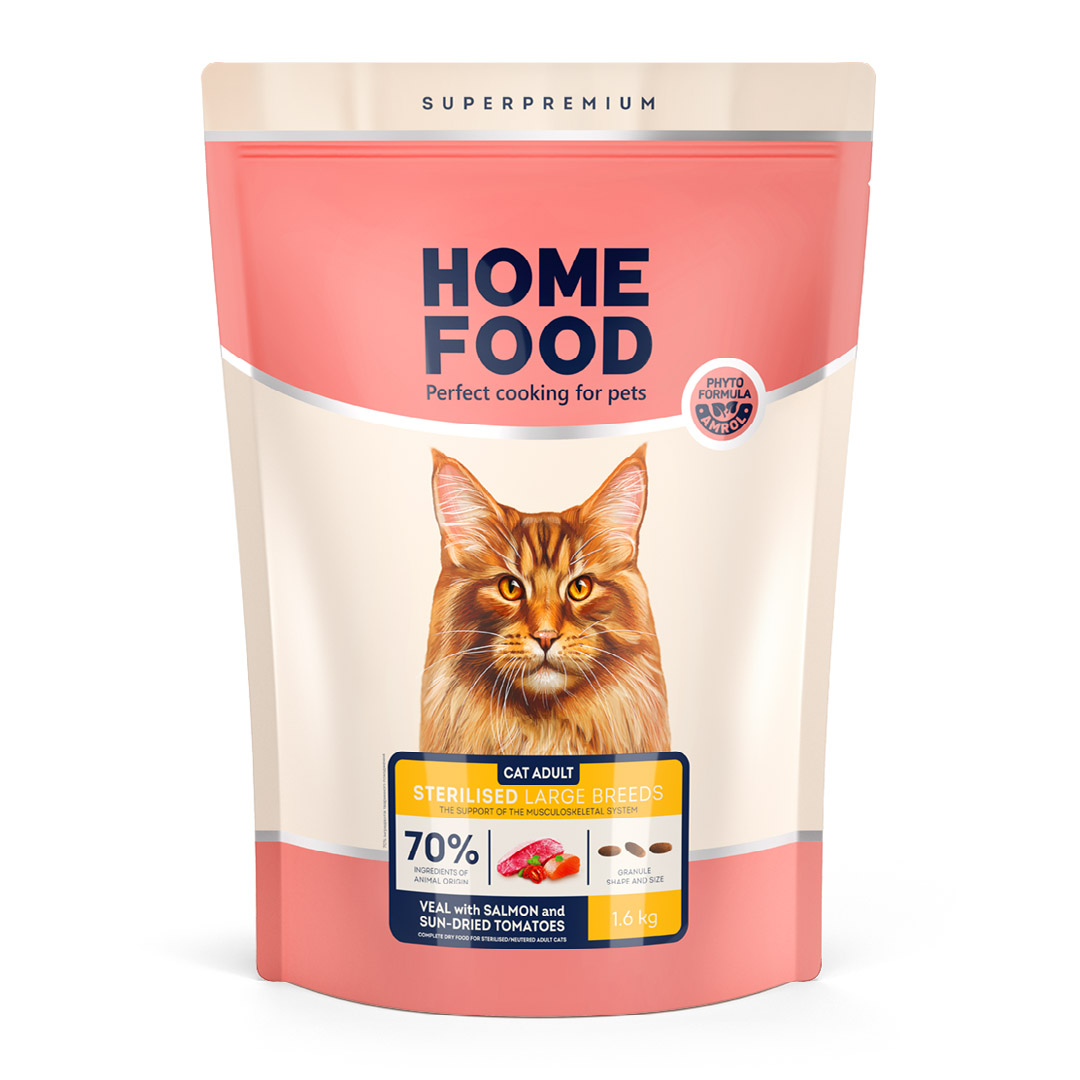
HOME FOOD For the support of the musculoskeletal system — dry food for musculoskeletal support of sterilized/neutered adult cats of large breeds, veal with salmon and sun-dried tomatoes
Buy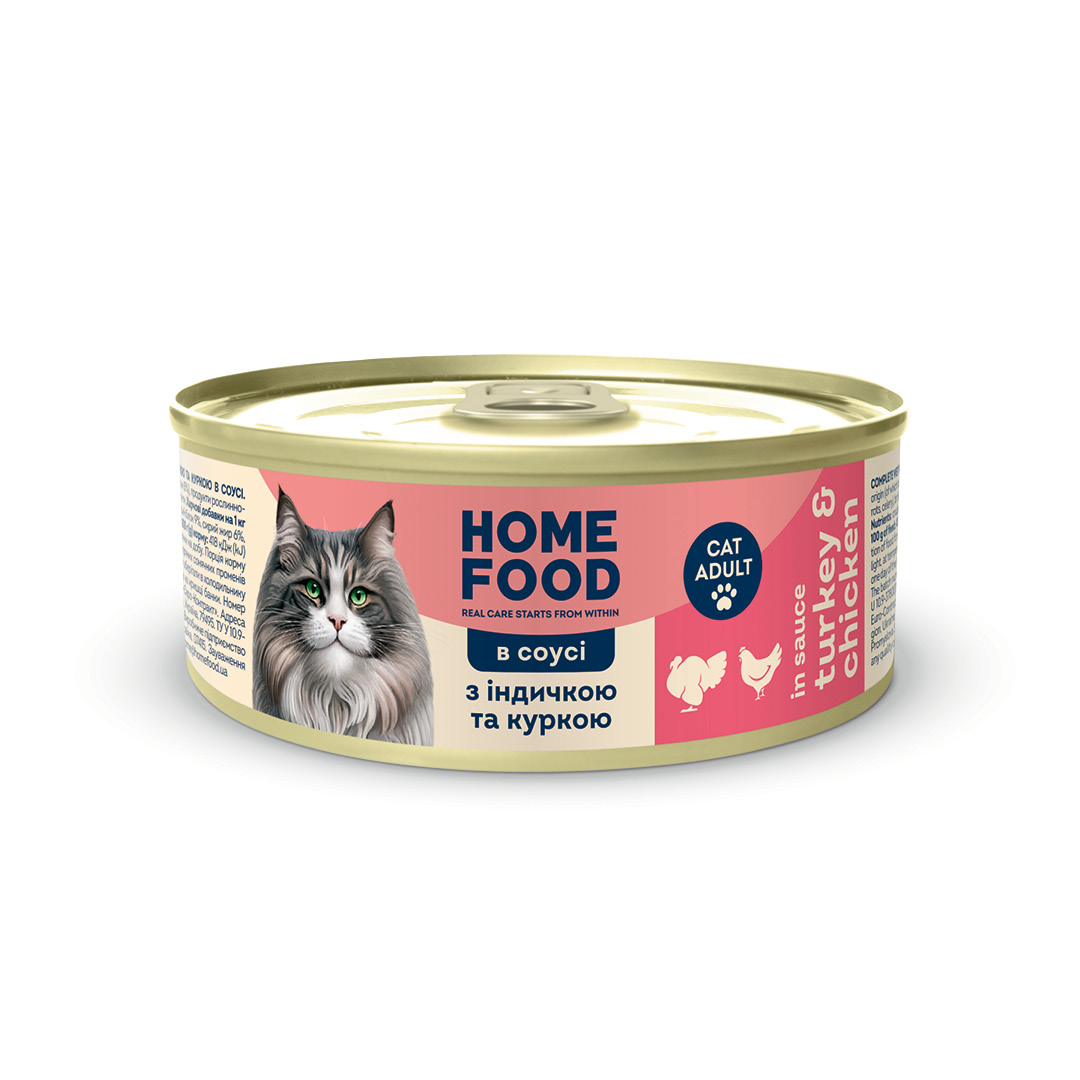
HOME FOOD — complete canned food for adult cats with turkey and chicken in sauce
Buy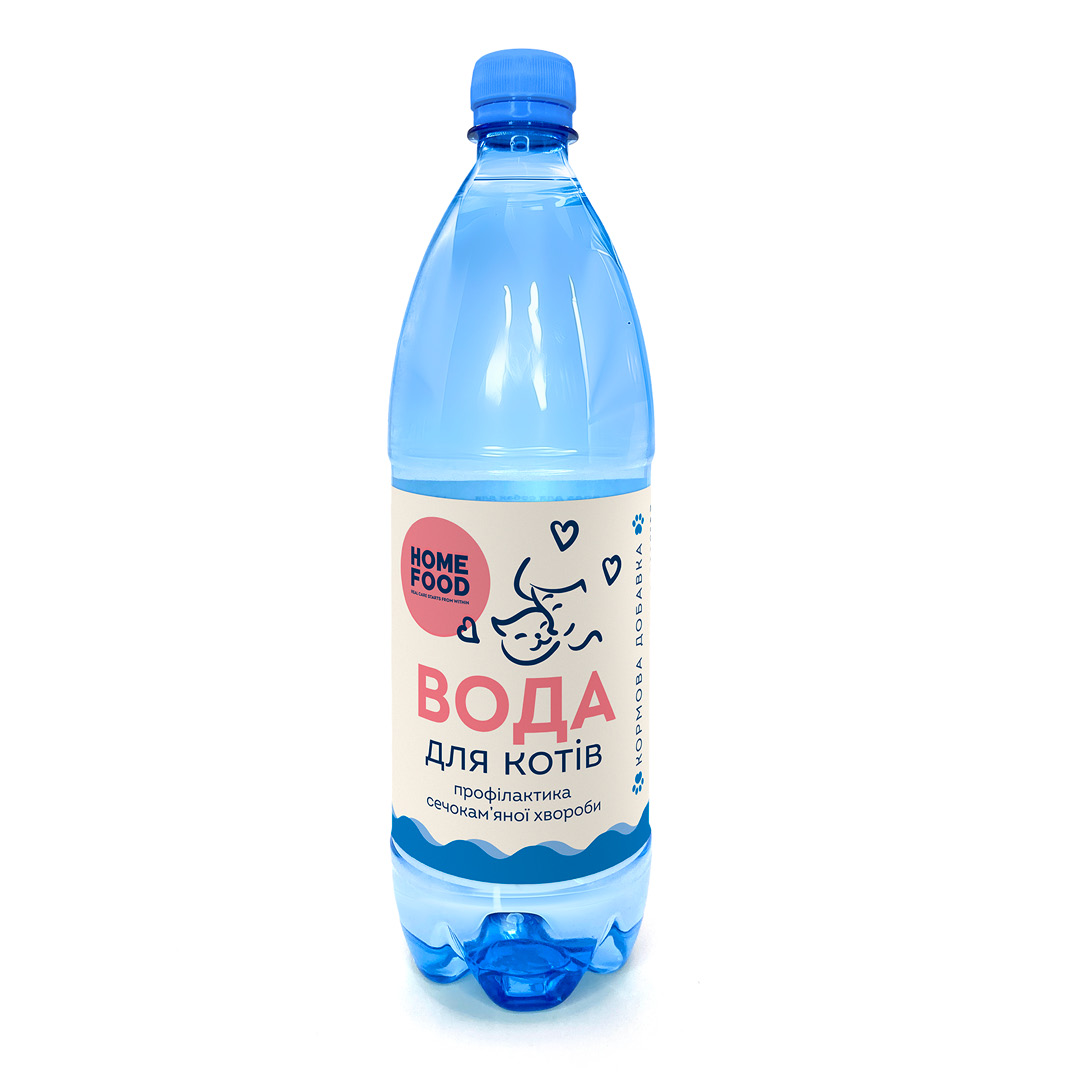
HOME FOOD — drinking water for cats for prevention of urolithiasis, 1 l
Buy
Pros and cons of the breed
Before choosing a Norwegian Forest cat, it's important to assess not only the beauty of the breed, but also the real everyday characteristics of a large long-haired animal.
- The pros include a balanced temperament, beautiful natural appearance, good intelligence, and the ability to integrate well into family life.
- Norwegian Forest cats often get along well with children and other animals with proper introduction.
- The cons include the need for systematic grooming, weight control, and more thoughtful space for a large cat.
- The breed is not suitable for people who want a "big fluffy cat without any fuss" and are not ready for regular grooming.
How to choose a healthy kitten
A kitten should be purchased from a breeder who understands the breed type well, speaks openly about the health of the lines, and doesn't sell the animal based solely on emotion from the fluffy baby. For a Norwegian Forest cat, it's important to inquire not only about documents, but also about the temperament of the parents, rearing conditions, socialization, and information about the heart, joints, and hereditary risks.
A healthy kitten should be attentive, clean, active, with good coat, clear eyes, and without obvious movement stiffness. Also remember that this breed matures slowly, so you shouldn't expect a very young kitten to already have a fully formed "adult show appearance".
Frequently asked questions
- Does the Norwegian Forest cat shed heavily: seasonal shedding can be pronounced, so grooming during these periods needs to be intensified.
- Is the breed suitable for an apartment: yes, if there is vertical space, sturdy accessories, and enough movement.
- When does the Norwegian Forest cat fully mature: often only by 4 years old, sometimes a bit later.
- Is this a very affectionate cat: usually yes, but without being clingy; it often likes to be nearby rather than constantly in your arms.
Conclusion
The Norwegian Forest cat is a combination of strength, natural beauty, endurance, and a very comfortable home temperament. It doesn't appear fussy or overly demanding, but requires thoughtful living conditions, regular grooming, and responsible attention to health.
If you combine the right choice of kitten, quality nutrition, weight control, coat care, and safe space for movement, the Norwegian Forest cat can become an extraordinarily harmonious companion for many years.