The Russian Blue cat is a true symbol of elegance, intelligence and tranquility. Its recognizable silvery-blue coat, expressive emerald eyes and soft, balanced character make this cat one of the most beloved among connoisseurs of calm domestic breeds.
Behind the external refinement lies much more: an interesting origin story, a very special double coat, a delicate temperament and sensitivity to changes in the home environment. That is why future owners need to understand not only the beauty of the breed, but also its domestic needs.
In this article, we will explore where the Russian Blue comes from, how it differs from other blue breeds, what its appearance is like, what character these cats have, what conditions they need at home and what to pay attention to regarding care, health and nutrition.
Brief breed characteristics
| Origin | Russia, probably Arkhangelsk |
| Alternative name | Russian Blue |
| Breed type | Short-haired |
| Size and weight | Medium format; approximately 3–5.5 kg |
| Lifespan | On average 15–20 years |
| Coloring | Solid blue, grey-blue with silvery sheen |
| Coat type | Short, dense, double, very soft |
| Character | Calm, delicate, intelligent, somewhat shy and very devoted to home |
| Care | Easy grooming, weight control, ear hygiene, teeth and clean litter box |
| Suitable for | People and families who value quiet, stability and a delicate cat companion |
Origin history
The main version of the Russian Blue's origin is considered to be the port city of Arkhangelsk. It was from there, according to the most common historical account, that sailors brought such cats to Great Britain in the 19th century, where they quickly attracted attention with their unusually dense coat, restrained beauty and even blue coloring.
It is known that as early as 1875, cats of this type were presented at an exhibition in London. Subsequently, the development of the modern breed took place mainly in England and Scandinavia. After World War II, the breed was on the verge of extinction, so to restore its numbers, breeders involved Siamese lines with blue markings, and later deliberately returned to a more classic type of Russian Blue.
Today, the Russian Blue is an established breed with a very recognizable type. It is valued not for its exoticism, but for the combination of an intelligent appearance, restrained character and impressive coat quality.
- The breed most likely originates from the Arkhangelsk region.
- Such cats appeared in Britain in the second half of the 19th century.
- The modern type of Russian Blue was formed thanks to the work of British and Scandinavian breeders.
Appearance
The Russian Blue cat has an elegant, moderately elongated build. It does not look massive, but does not give the impression of a fragile animal either: the body is flexible, slender, with noticeably graceful movements. The head is wedge-shaped, the skull is relatively flat, and pronounced whisker pads create a characteristic delicate muzzle contour.
Eyes are large, widely set, and in adult animals should be bright green. In kittens, they are often initially yellowish, and this is normal: the final shade forms gradually. The nose is straight, the profile is clean and very neat.
The most famous feature of the breed is the double coat. The undercoat and guard hair are almost the same length, so the coat stands up like "plush" and appears extremely dense. The color should be an even blue, and the silvery tipping on the hair tips gives that same cold metallic sheen for which the Russian Blue is so easily recognized.
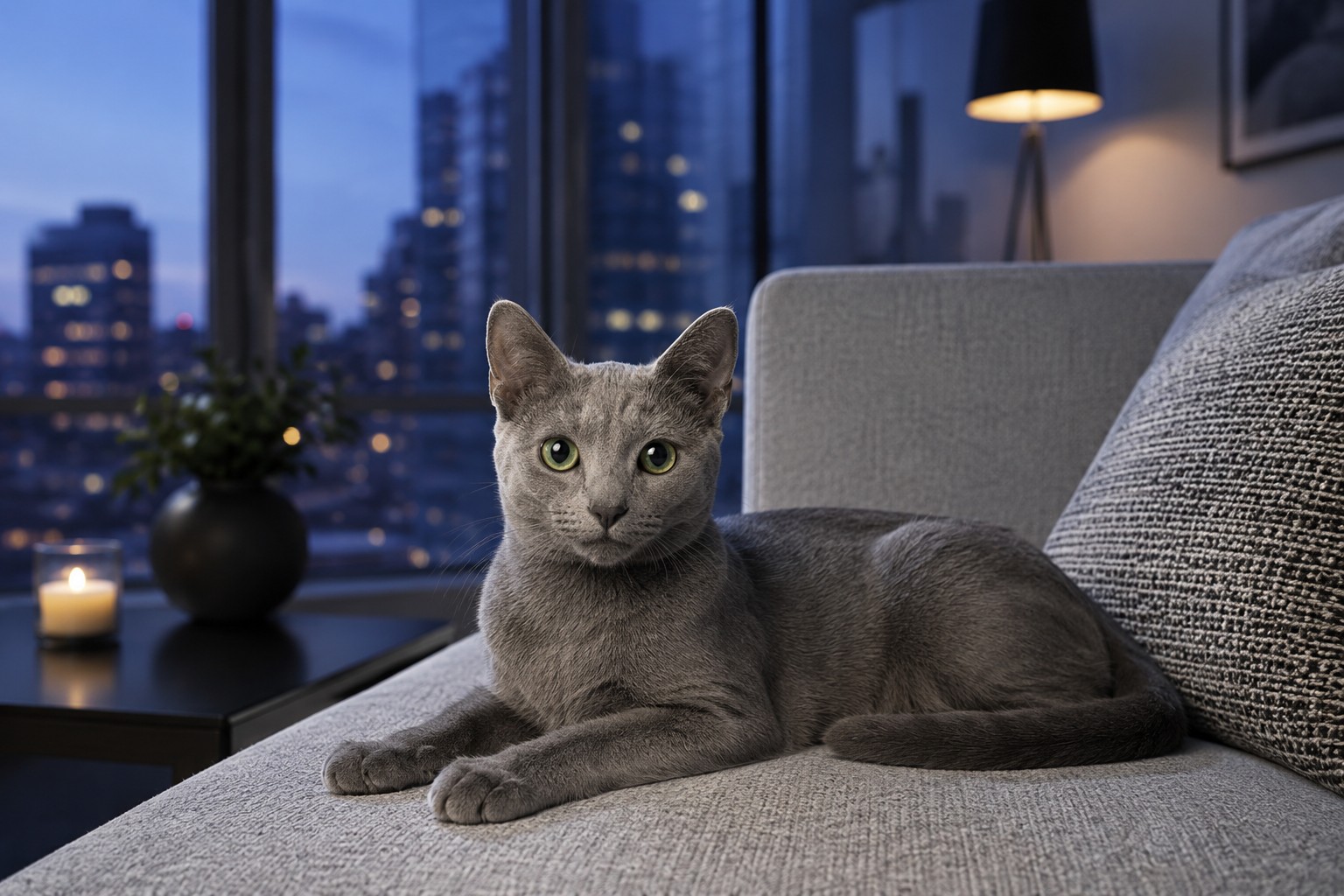

The Russian Blue is easily recognized by its emerald eyes, silvery coat sheen and very soft plush coat
Character and behavior
The Russian Blue has a balanced temperament. This is not an extroverted cat that immediately goes to meet all guests. Rather the opposite: many representatives of the breed are cautious about strangers, noise and sudden changes in the environment. But in a familiar environment, they are very tender, devoted and finely attuned to a person's mood.
These cats are not prone to being pushy. They know how to spend time alone, but at the same time become strongly attached to their owners and usually choose one or two "their" people in the house. Russian Blues retain playfulness into adulthood, love to observe events in the home and often adore vertical routes, windowsills and tall complexes.
The breed's voice is usually quiet. Such cats rarely put on loud concerts for attention, but greatly value stability and rituals. That is why the Russian Blue feels especially good in a calm, predictable home atmosphere.
Attitude towards children and living environment
Russian Blues usually get along well with children if there is no excessive noise around and the animal is treated carefully. This is not a conflictual breed, but it prefers calm handling and does not like pushy noisy contact. Such cats can coexist well with other animals if there is no aggression and rough pressure nearby.
For an apartment, the Russian Blue is perfect. It values quiet, cleanliness and stability, loves a clean litter box, soft resting places and the opportunity to observe the space from above. This is one of those breeds for which the quality of living conditions matters more than the area itself.
- The Russian Blue feels better in a calm home than in a chaotic environment.
- The breed is usually not pushy, but becomes very attached to its people.
- Litter box cleanliness, a stable routine and a quiet atmosphere are especially important for it.
Features of keeping and care
The Russian Blue is considered undemanding in care. Its coat is not prone to matting, so frequent brushing is not required: usually one quality session per week is enough, and during shedding—a bit more often. Frequent bathing is not necessary for this breed, as the double coat maintains its structure well with proper basic care.
Ears, teeth and claws require special attention. Another important point is litter box cleanliness. Many Russian Blues are very sensitive to its cleanliness and can become anxious if it is not cleaned regularly. Also, such cats like vertical surfaces, scratching posts and not overly chaotic games that do not overload the nervous system.
Due to its delicate character, the Russian Blue adapts better to calm, predictable training. Shouting and physical punishment are especially harmful here: the breed is very sensitive to tone of voice and can lose trust for a long time.
In daily care of the Russian Blue, the most important things are gentle brushing, eye and ear hygiene, claw control and basic prevention without unnecessary stress.


Steam massage brush 3 in 1 — "Avocado" for grooming dogs and cats
Buy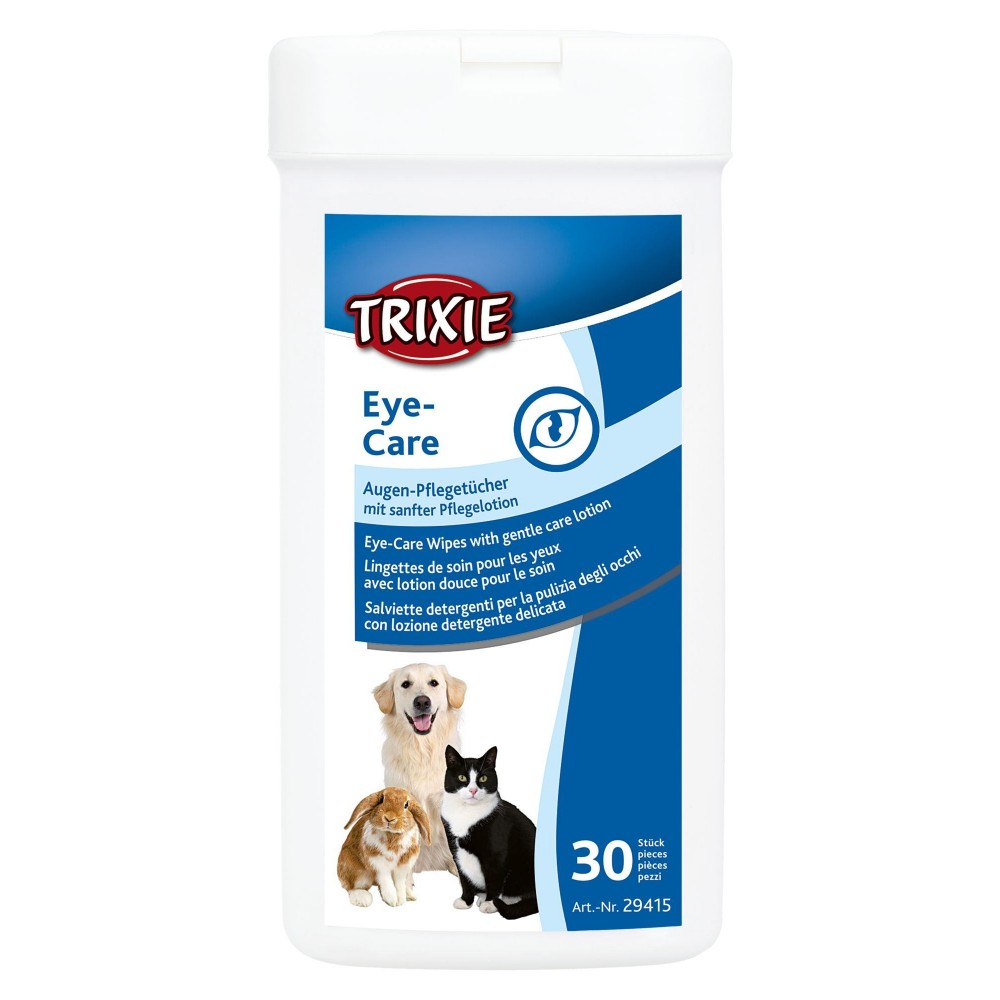
Trixie — eye care wipes for dogs and cats, 30 pcs
Buy
Trixie Luxe — nail clipper for pets, large, 16 cm
Buy
NexGard Combo — antiparasitic spot-on drops for fleas, ticks and worms for cats
Buy
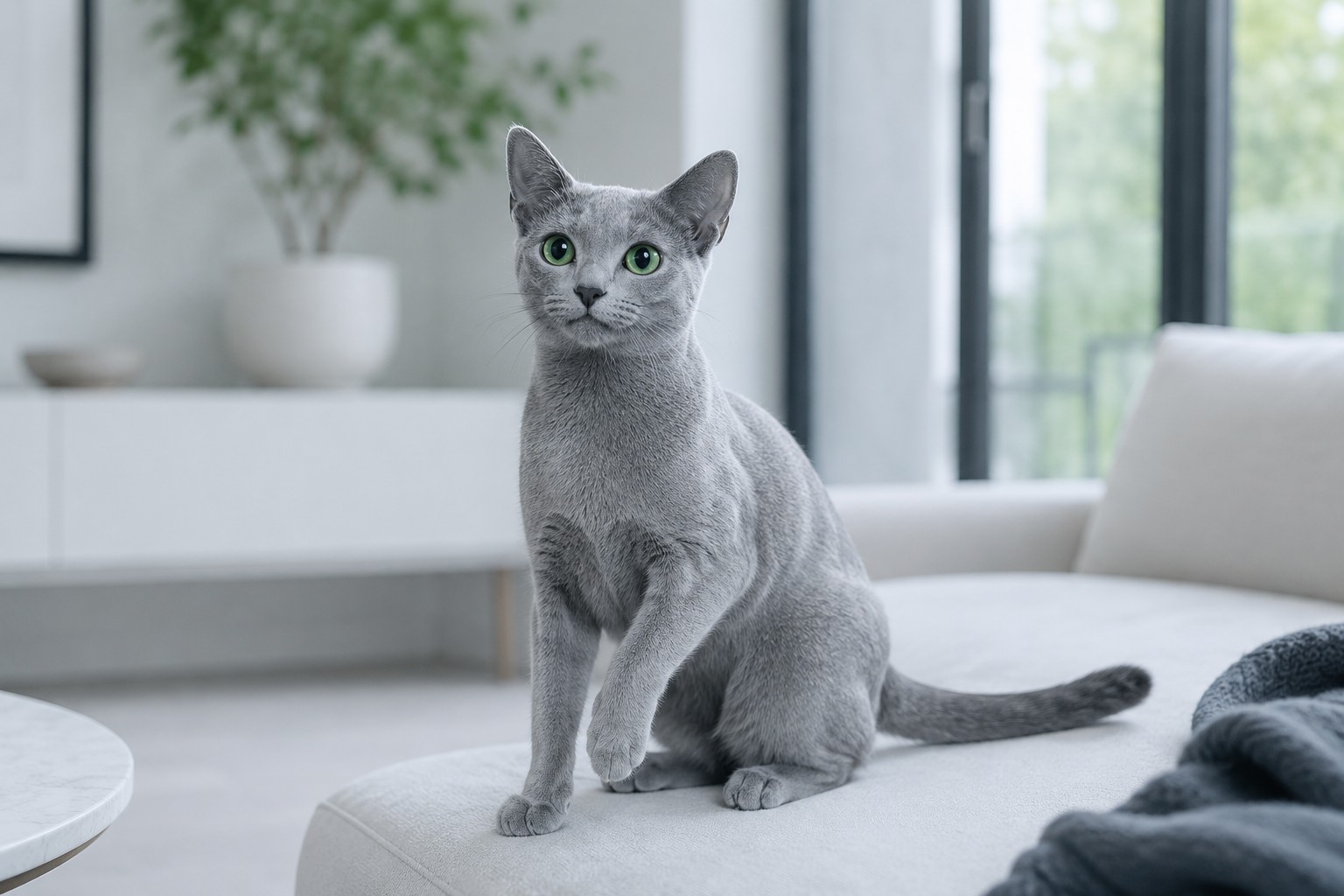
For a Russian Blue, the most important things are quiet, a clean litter box, light regular grooming, and a predictable home routine
Health and nutrition
Russian Blues belong to breeds with generally strong natural health, and specific hereditary diseases unique to this breed are not described as a defining trait. However, this does not mean that prevention is not needed. In practice, it is important for the owner to monitor weight, dental condition, water balance, and overall body condition.
The most common household risk for this breed is overfeeding. Russian Blues often have a good appetite, and with a calm apartment lifestyle, excess weight is gained quite quickly. This puts strain on the cardiovascular system, joints, and generally reduces quality of life. That is why portions are better measured out rather than fed "by eye".
Water intake also deserves special attention. With unbalanced nutrition and insufficient fluid intake, the risk of urinary system problems increases, so access to clean fresh water should be constant. The diet should be based on complete, nutritionally balanced products with quality protein, moderate fat levels, and controlled total calories.
- For Russian Blues, portion control is especially important to prevent excess weight gain.
- Constant access to water is a basic condition for maintaining urinary system health.
- Quality complete nutritionally balanced food and attention to teeth and gums help maintain good body condition for a long time.

HOME FOOD Hypoallergenic For sterilised/neutered — hypoallergenic dry food for sterilized/neutered adult cats, seafood cocktail
Buy
HOME FOOD Omega Balance — oil for cats, balance of Omega-3, -6, -9
Buy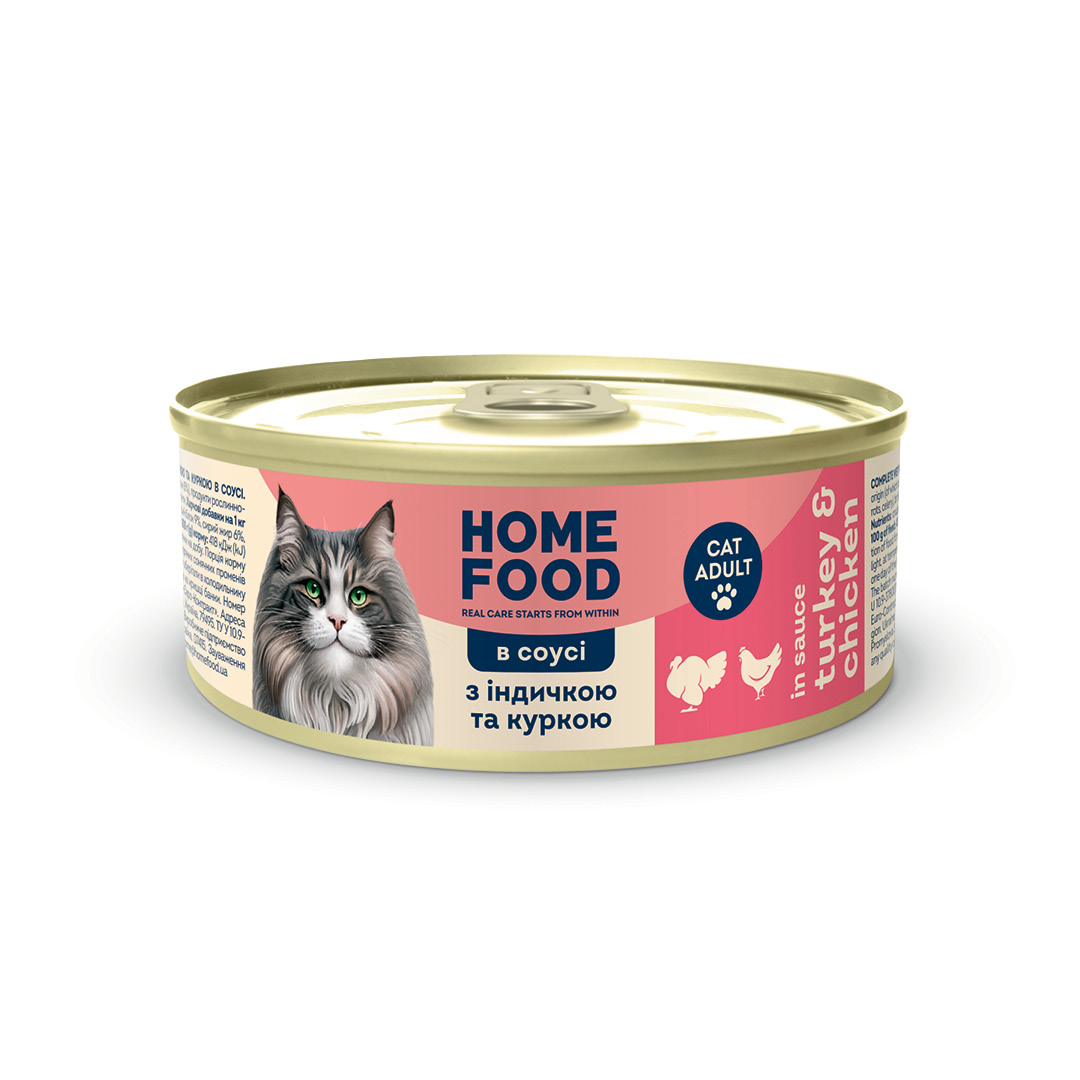
HOME FOOD — complete canned food for adult cats with turkey and chicken in sauce
Buy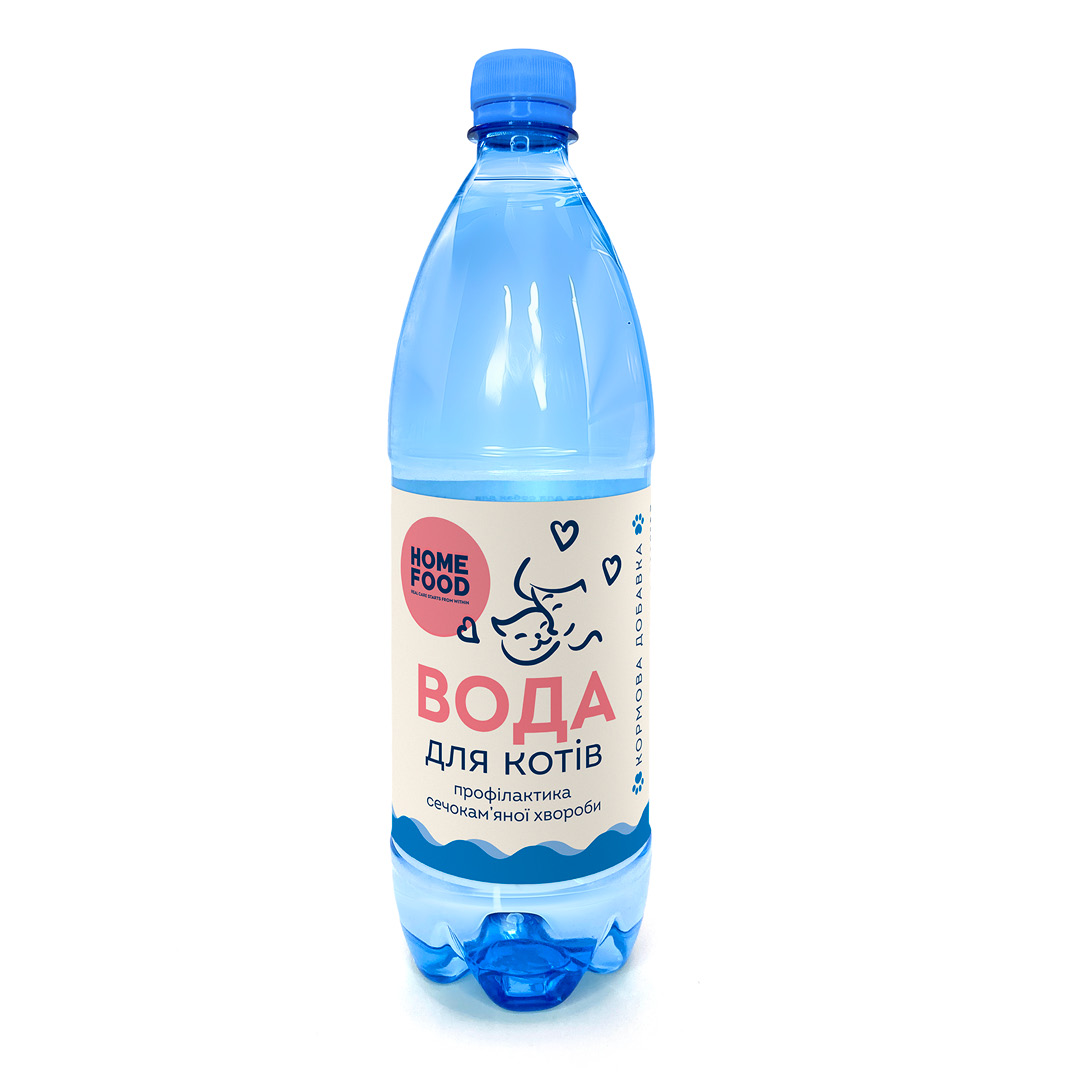
HOME FOOD — drinking water for cats for help prevent urinary stone disease, 1 l
Buy
Training
Cats of this breed are easy to train: they quickly get used to the litter box, scratching post, and household rules. Thanks to their delicate nature, Russian Blues are less likely than some other breeds to test the durability of curtains or randomly damage furniture. But this only works when they are immediately given a clear alternative.
The most important rule is to avoid shouting and physical punishment. Russian Blues are very sensitive to tone of voice and can lose trust in a person for a long time if training is based on harshness. The best approach here is calm, rituals, clear boundaries, and positive reinforcement.
Breed pros and cons
Before choosing a Russian Blue, it is important to evaluate not only its beauty but also the lifestyle that suits it.
- The pros include elegant appearance, quiet temperament, cleanliness, high intelligence, and relatively simple coat care.
- The breed is excellent for apartment living and for people who value a calm home routine.
- The cons include sensitivity to noise, dislike of chaos, and a tendency to gain weight when overfed.
- Russian Blue will not always be comfortable in a very loud house with constant hustle and bustle.
Similar breeds
Russian Blue is often compared to Chartreux or British Shorthair due to the blue coat color, but these are different breed types. Russian Blue is noticeably more refined, has bright green eyes, a characteristic silvery sheen to the coat, and a more delicate, reserved temperament.
Conclusion
The Russian Blue cat is a breed for those seeking an intelligent, quiet, and very beautiful companion with a soft but not intrusive nature. It does not require complex care, but values stability, calm, and subtle emotional attunement with people.
If you combine quality nutrition, portion control, clean water, light regular grooming, and calm training, Russian Blue can become an exceptionally harmonious home companion for many years.