HOME FOOD Blog: How to Properly Deworm and Protect Kittens from Parasites
How to Properly Deworm and Protect Kittens from Parasites
Protecting little fluffballs is one of the most pleasant, yet most responsible parts of life with cats. It’s especially important to take care of a kitten’s health in the first months of life, because during this period the immune system is still weak and the risk of picking up parasites is quite high. Worms, fleas, or ticks can ruin a baby’s well-being, slow down growth, and even cause serious complications.
In this blog, we’ll explain how to properly and safely treat kittens for parasites, what to pay attention to, and how to choose the best products so your little tailed friend grows healthy and happy.
Deworming and Treatment of Protozoa in Kittens
Worms (round and tapeworms) and protozoa can affect kittens literally from the first days of life. Some parasites can be transmitted in utero or through the mother’s milk, so even an outwardly healthy kitten may already have an infestation. That’s why preventive deworming is not just a formality — it’s a necessity.

Vitomax Coccidostop — antiparasitic remedy Coccidostop for dogs and cats, 10 ml
Buy
Milprazon KRKA - deworming tablets for cats weighing less than 2 kg, 4 mg/10 mg, 1 tab
Buy
From What Age Do We Start Treatment?
The first deworming is recommended at 3 weeks of age. If the kitten is weakened, it’s better to check the timing with a veterinarian — sometimes treatment is postponed until 4 weeks.
Treatment Schedule
Up to 6 months, the kitten’s body is actively developing and the risk of infection is high.
Up to 6 months:
- deworming every 2–4 weeks
(depending on rearing method, outdoor contact, feeding raw meat, etc.).
After 6 months:
- prevention once every 3 months or more often if risks are high.
Active Ingredients in Popular Preparations
Among the most common anthelmintic components for kittens:
For roundworms (Toxocara, Toxascaris):
- Pyrantel pamoate — gentle, safe for very young kittens.
- Febantel — often used in combinations for broader spectrum.
For tapeworms (Dipylidium, Taenia):
- Praziquantel — the “gold standard” against cestodes.
Combination products (round + tape + protozoa):
In addition to worms, young animals often suffer from protozoa — coccidia, giardia, cryptosporidium. These microscopic parasites affect the intestines, causing diarrhea, dehydration, weight loss, and general weakness. They are especially dangerous for kittens up to 3–4 months because their immune system is not yet fully formed. For protozoa, products based on specific active ingredients are used — e.g., toltrazuril, fenbendazole, milbemycin oxime (in some complex products) — which suppress development and reproduction in the gut. Treatment must be confirmed by fecal analysis because each type requires its own approach. Hygiene is also essential — change the litter box more often, wash bowls, disinfect surfaces, as coccidia oocysts survive well in the environment. This comprehensive approach quickly reduces infestation and restores the kitten’s well-being.
- Milbemycin oxime — effective against nematodes and some protozoa (coccidia, hookworms).
- Emodepside — used in spot-on drops.
What Is Suitable for Kittens?
- pyrantel — from 2–3 weeks;
- praziquantel — usually from 6 weeks;
- emodepside — from 8 weeks;
- milbemycin oxime — depends on the product, most often from 6 weeks.
All exact age restrictions depend on the specific brand — always check the instructions.
Tablet, Suspension, or Spot-on Drops?
Suspension
- The most convenient format for very young kittens.
- Easy to dose by body weight.
- Mild taste, easier to administer.
Best for: first treatments.
Tablets
- Usually contain a wider range of active ingredients.
- Suitable for older kittens (usually from 6 weeks or 500–700 g).
Best for: regular prevention after 2–3 months.
Spot-on drops
- Contain emodepside + praziquantel or other combinations.
- Very easy application — no forced swallowing.
- Effective against both intestinal parasites and some external ones.
Best for: kittens that are difficult to medicate orally.
How to Administer the Products Correctly?
Suspension
- Shake the bottle well.
- Measure the dose according to body weight.
- Administer with an oral syringe into the corner of the mouth.
- Make sure the kitten swallowed.
- Feed before or during meal (depends on the product).
Tablets
- Calculate exact dose (some tablets can be divided).
- Give with food or after to reduce risk of vomiting.
- If the kitten refuses — place the tablet at the base of the tongue and gently hold the mouth closed for a few seconds.
- Offer water afterwards.
Spot-on drops
- Part the fur between the shoulder blades.
- Apply the product directly to the skin.
- Do not bathe the animal for 48 hours after application.
- Do not let kittens lick each other for 6–8 hours.
How to Safely Protect a Kitten from Fleas and Ticks?
External parasites cause not only discomfort and itching but also dangerous infections, anemia, and allergic reactions. A young kitten’s body is especially sensitive, so product choice must be careful. Below we analyze the active ingredients of popular products, their action, and the age from which they are allowed.

NexGard Combo - spot-on antiparasitic drops against fleas, ticks and worms for cats (up to 2.5 kg), 1 applicator
Buy
Advantage - antiparasitic drops against fleas for cats and kittens under 4 kg (1 pipette)
Buy
Drontal - tablet for treatment and prevention of helminthiasis in cats, 1 pc
Buy
Vitomax - ECO collar against fleas and ticks for kittens, 25 cm
Buy

Analysis of Active Ingredients and Age Restrictions
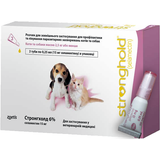
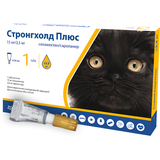
1. Moxidectin + Fipronil + Pyriproxyfen
(combination typical for broad-spectrum spot-on products)
- Active ingredients:
- Moxidectin — against nematodes and some external parasites
- Fipronil — powerful insecticide against fleas and ticks
- Pyriproxyfen — inhibits flea larvae development
- From what age: usually from 8 weeks and the weight specified in the instructions (usually from 0.8–1 kg).
- Note: very broad spectrum.
2. Fipronil + (S)-methoprene
(typical combination for flea & tick drops)
- Active ingredients:
- Fipronil — kills adult parasites
- (S)-methoprene — prevents development of eggs and larvae
- From what age: usually from 8 weeks.
- Note: classic option for flea and tick control without effect on worms.
3. Lotilaner
(systemic isoxazoline in tablet form)
- Active ingredient:
- Lotilaner — works against fleas and ticks by disrupting their nervous system
- From what age: usually from 8 weeks and minimum weight of about 0.5–1 kg (depends on dosage).
- Note: one of the few tablet forms for cats.
4. Selamectin
(spot-on drops effective against fleas, some ticks, worms and even certain protozoa)
- Active ingredient:
- Selamectin
- From what age: from 6 weeks.
- Note: suitable even for very young kittens; safer than many other systemic drugs.
5. Permethrin
(often in sprays with auxiliary components)
- Active ingredient:
- Permethrin or derivatives
- Warning: pure permethrin is toxic to cats.
However, there are specially adapted cat-safe formulations with much lower concentration or combined with safer components. - From what age: for cats — usually from 8–12 weeks, depending on concentration.
- Note: use only sprays officially approved for cats.
6. Spinosad
(oral products with narrow action against fleas)
- Active ingredient:
- Spinosad — natural insecticide, works only on fleas, no effect on ticks
- From what age: usually from 14 weeks and weight from 1.3 kg.
- Note: suitable for animals with sensitive skin or allergies to spot-on products.
How to Choose Truly Effective Flea Protection for a Kitten
Effectiveness depends not only on the active ingredient but also on correct and regular use. All modern products — drops, tablets, or sprays — can give excellent results only when used properly.
What Determines the Effectiveness of Flea Products?
1. Active ingredient and concentration
- Isoxazolines, selamectin, fipronil, spinosad — each has its own spectrum.
- Some work only against fleas, others against fleas + ticks or also have anthelmintic action.
- Effectiveness decreases with incorrect dosing or use outside age/weight limits.
2. Product quality
- Always choose certified veterinary products, not “similar” or questionable ones.
- Counterfeit products may have wrong concentrations, weak action, or be dangerous.
3. Environment condition
Even the best drops won’t work if:
- the house has flea hotspots in carpets, bedding, cracks;
- other untreated animals are in contact;
- the kitten goes outside without regular prevention.
Fleas spend only 5% of their time on the animal — the rest of the population lives in the environment. Sometimes both pet and home treatment are needed.
4. Correct application
- Drops applied to fur instead of skin work poorly.
- A tablet spat out by the kitten = no protection.
- Sprays applied unevenly may miss parasites.
Hygiene and Safety Rules for the Owner
To keep treatment safe for you and effective for the kitten:
- Wash hands before and after application.
- Do not touch the treated area for several hours after spot-on drops.
- Do not let children touch the application site.
- When using sprays — work in a well-ventilated area and avoid getting product on your own mucous membranes.
- Store products out of reach of children and animals.
- Always dose by weight — it’s best to weigh the kitten before treatment.
Key Takeaway
Flea products today are truly effective, but their success depends on:
- choosing the right active ingredient;
- following age and weight restrictions;
- regular prevention;
- taking the kitten’s living conditions into account.
The right approach creates a reliable barrier against parasites and ensures your little pet’s comfort and healthy development.
When Parasites Affect the Whole Body: Why It’s Important to Support the Kitten’s Liver and Immunity
Even a small parasitic load exhausts the body, but heavy worm infestation or severe flea dermatitis can cause serious damage. In kittens whose immune system is still forming, parasites can trigger deep inflammatory reactions, intestinal disorders, anemia, allergies, and skin lesions. The liver — the body’s main filter — works under triple load: it neutralizes parasite toxins, their waste products, and medication components.
Therefore, when fighting parasites, it’s important not only to eliminate them but also to support the kitten’s body. In such cases, it makes sense to include products like Detox Pro (for detoxification support) and hepatoprotectors such as Liver Pro, which reduce liver stress and promote faster recovery after treatments. They can be given before and after specific antiparasitic therapy, especially if the infestation was severe.

Liver Pro HOME FOOD Expert — hepatoprotector for liver function support, 30 ml
Buy
Detox Pro HOME FOOD Expert — enterosorbent for body detoxification, 30 ml
BuyThis creates a gentler and safer approach to prevention, reduces the risk of side effects, and helps the kitten return to activity and good health faster.