The Asian cat is one of those breeds that does not try to impress with loud exoticism, yet very quickly wins people over with its temperament. It combines Oriental grace, gentle sociability, and a balanced nature that is very convenient for home life.
This breed is rare, and that is exactly what makes it especially interesting: it seems created for people who need not just a beautiful cat, but an intelligent and tactful companion for a long life together.
Next, we will look at how the Asian cat appeared, what it looks like, what temperament it has, what matters in care, nutrition, and health, and who this breed suits best.
Brief breed profile
| Origin | Great Britain, the 1980s |
| Other name | Asian cat, Burmilla group |
| Breed type | Short-haired or semi-long-haired, developed from Burmese and Chinchilla Persian lines |
| Size and weight | Medium size, approximately 4–6 kg |
| Life expectancy | 13–16 years |
| Coat color | Smoke, shaded, tabby, spotted, solid; eyes are most often golden or green |
| Coat type | Short or semi-long, soft, silky, with a light sheen |
| Temperament | Balanced, affectionate, intelligent, sociable, enjoys attention |
| Care | Simple — brushing 1–2 times a week, basic hygiene, weight control, and regular prevention |
| Best suited for | Feels comfortable in an apartment, suitable for families and single people who value a calm companion |
History of origin
Despite its name, the Asian cat was developed in Great Britain in the early 1980s. It appeared as a result of crossing Burmese, Chinchilla Persian, and Abyssinian cats. The breeders’ goal was to combine the best qualities of each breed: elegance, an affectionate temperament, and expressive appearance.
At first, the breed was represented in only a few colors, but its variety increased greatly over time. Today, the Asian cat group usually includes several subtypes: Asian Self, Asian Smoke, Asian Tabby, Burmilla, and Tiffanie.
In the 1990s, the breed gained recognition from British and international felinological associations. Even today, however, the Asian cat remains rare outside Great Britain.
- The Asian cat is not an ancient native breed, but a carefully planned result of modern breeding.
- It deliberately combines striking appearance with a temperament that is convenient for home life.
- Its rarity outside Britain is exactly what makes the breed especially interesting for connoisseurs.
Appearance
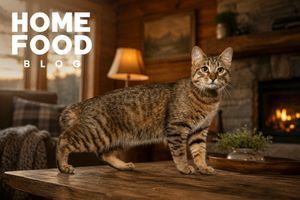
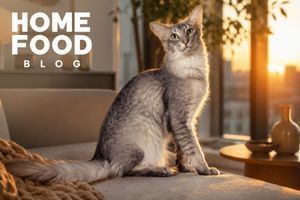
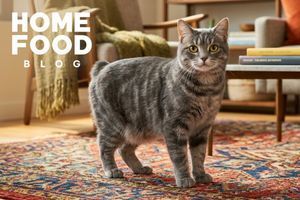
The Asian cat is a medium-sized animal with well-developed musculature. Outwardly, it may seem elegant and even delicate, but in reality it is a strong and resilient cat with a firm body and sturdy bone structure.
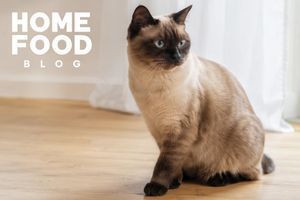
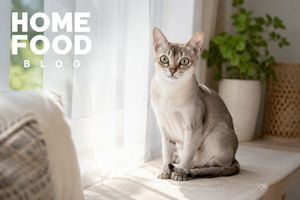
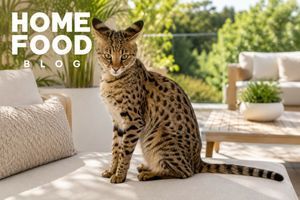
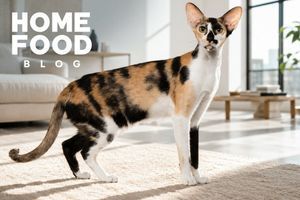
The breed is characterized by a wedge-shaped head, rounded cheekbones, a broad forehead, large almond-shaped eyes with amber or golden tones, and medium-sized ears set wide apart.
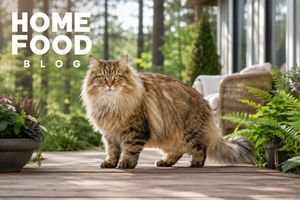
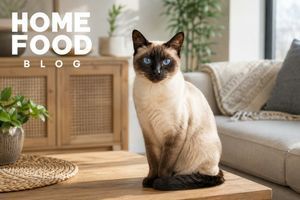
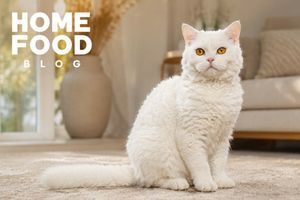
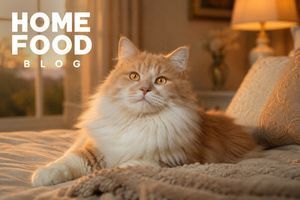
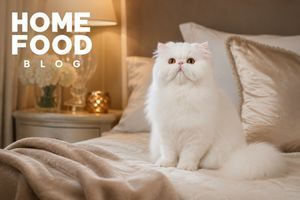
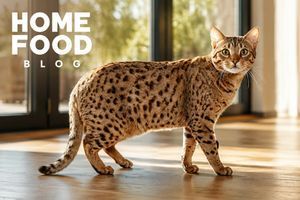
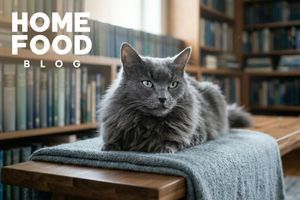
The coat is short or semi-long, very soft and silky, with a light sheen. Color can vary from smoky to rich chocolate, sometimes with spots or stripes.
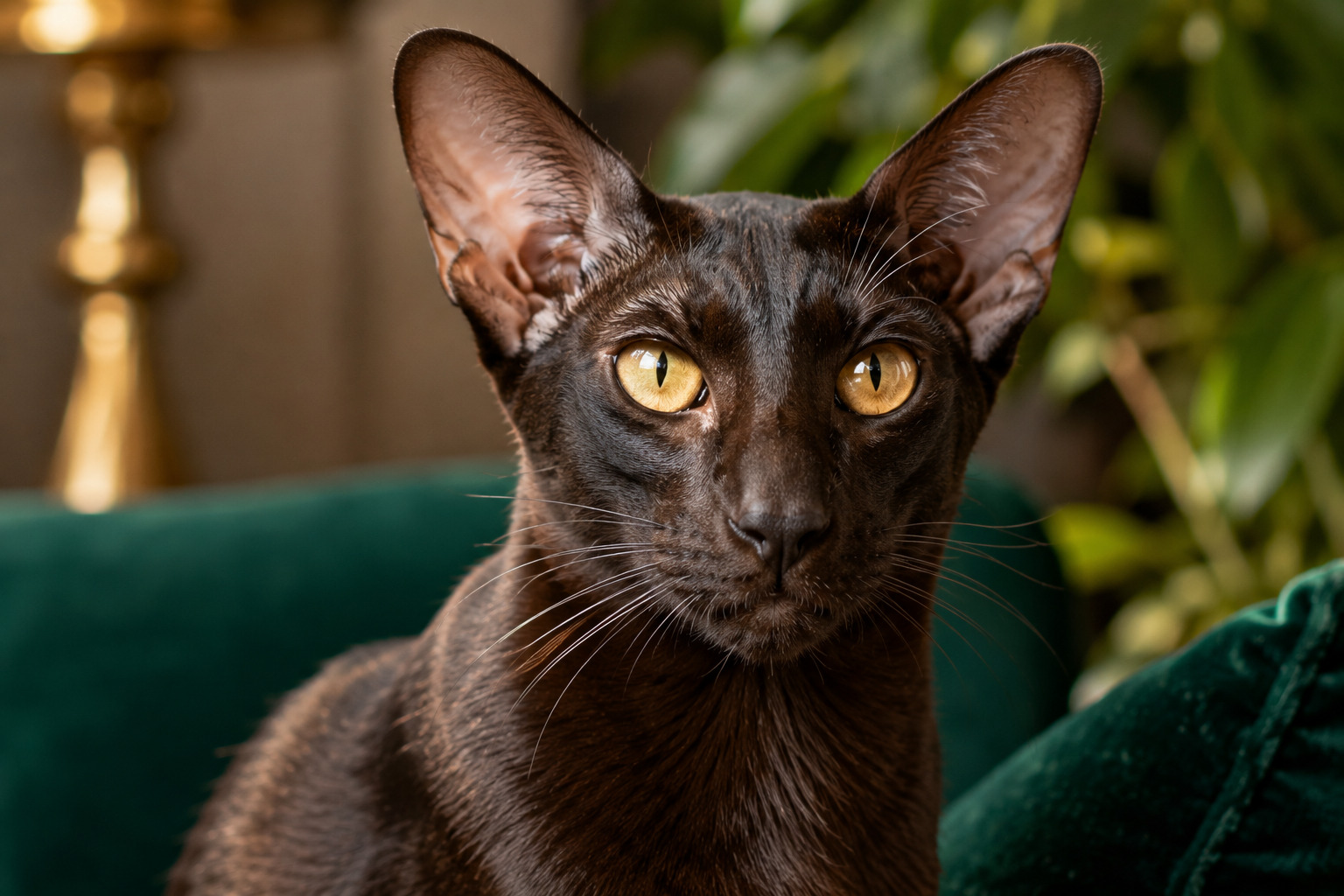

The Asian cat looks very delicate, but behind this softness stands a strong, resilient, and well-built animal with distinct breed dignity
Temperament and behavior
Asian cats sense a person’s mood very well and can adapt to the owner’s rhythm of life. They are not too intrusive, but are almost always nearby when they feel their presence is needed.
They usually get along easily with children and other animals, especially if they have grown up in a family environment from kittenhood. The main traits of this breed include calmness, balance, high intelligence, curiosity, independence, and good adaptation to the household routine.
The Asian cat does not demand constant attention, but it also does not live completely “on its own”. This is the type of companion that seems to know when to come closer and when it is better simply to lie quietly nearby.
- The breed suits people who need a sociable, but not restless, cat.
- The Asian combines sociability and restraint without sharp behavioral extremes.
- It is this tactfulness and calmness that make it very pleasant for family life.

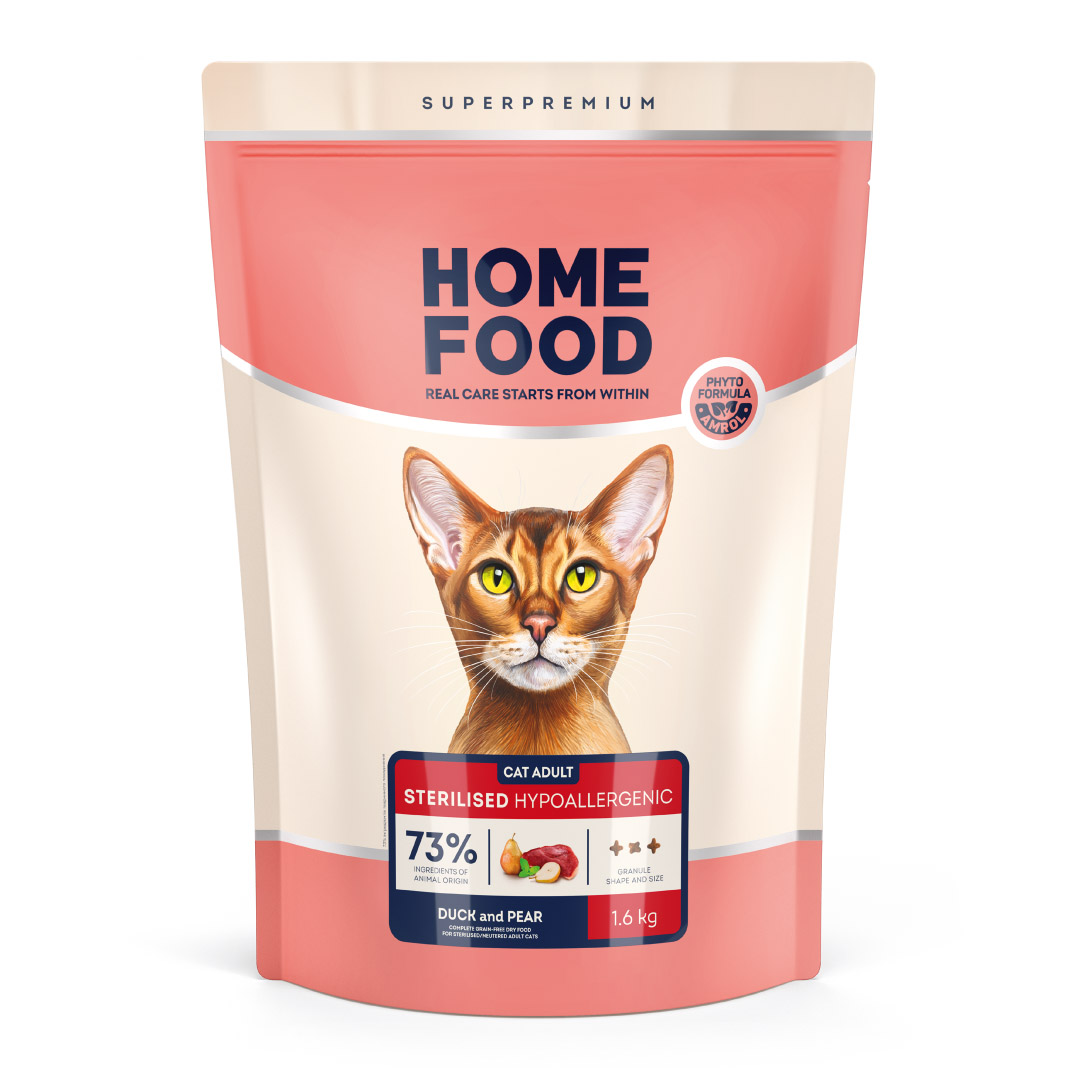
HOME FOOD Grain-free hypoallergenic — food for sterilised cats, duck and pear
Buy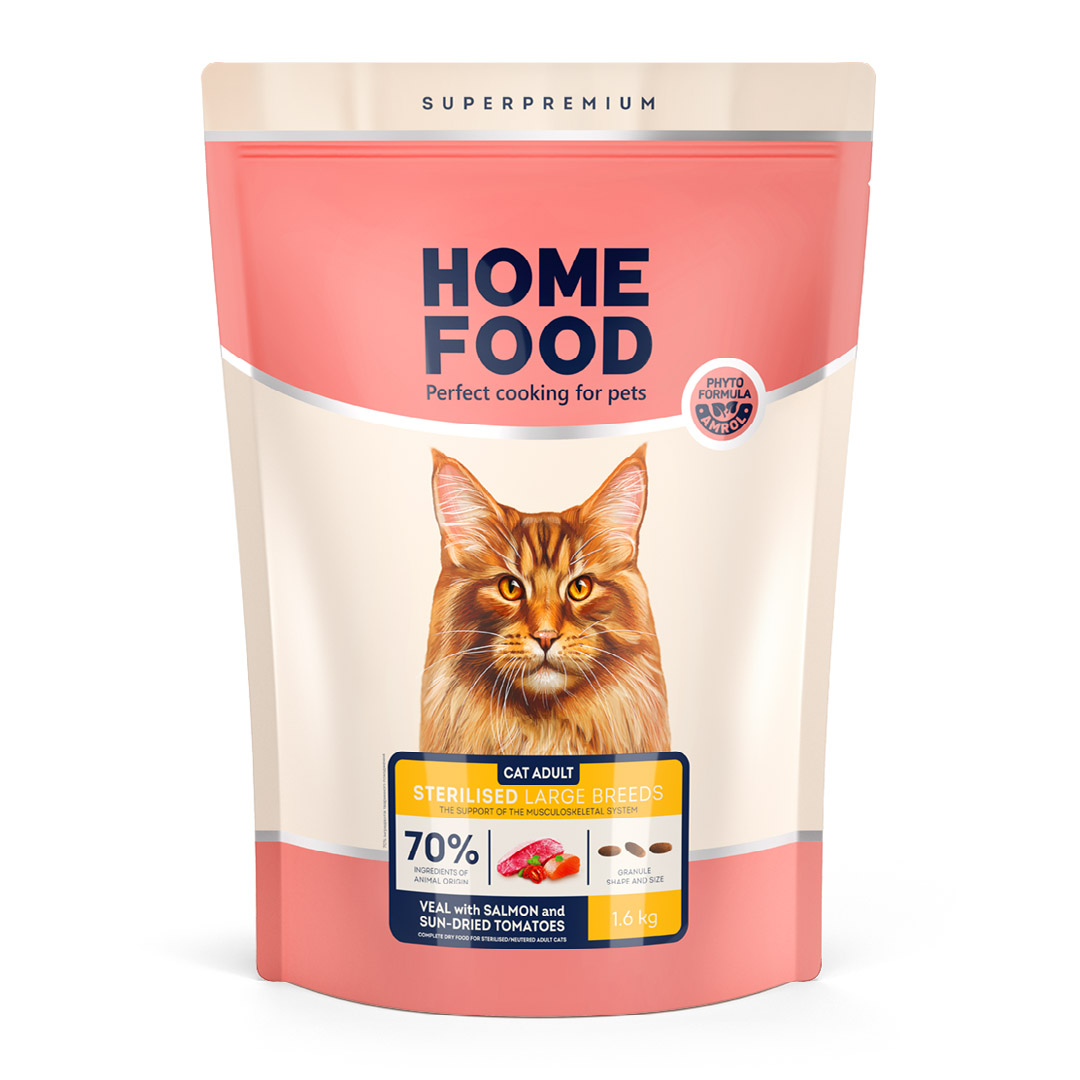
HOME FOOD For the support of the musculoskeletal system — food for large sterilised cats
Buy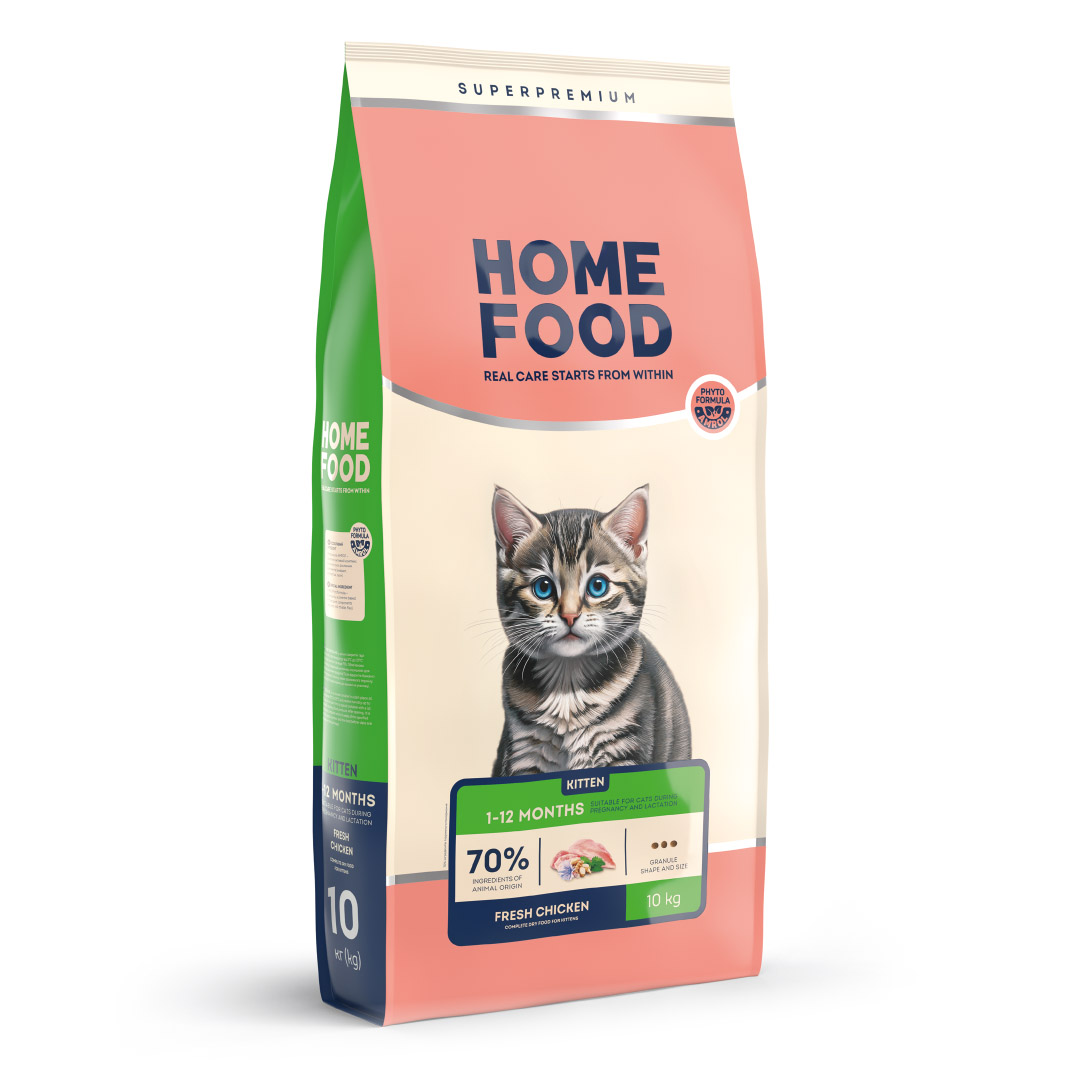
HOME FOOD Fresh Chicken For kittens — dry food for kittens
Buy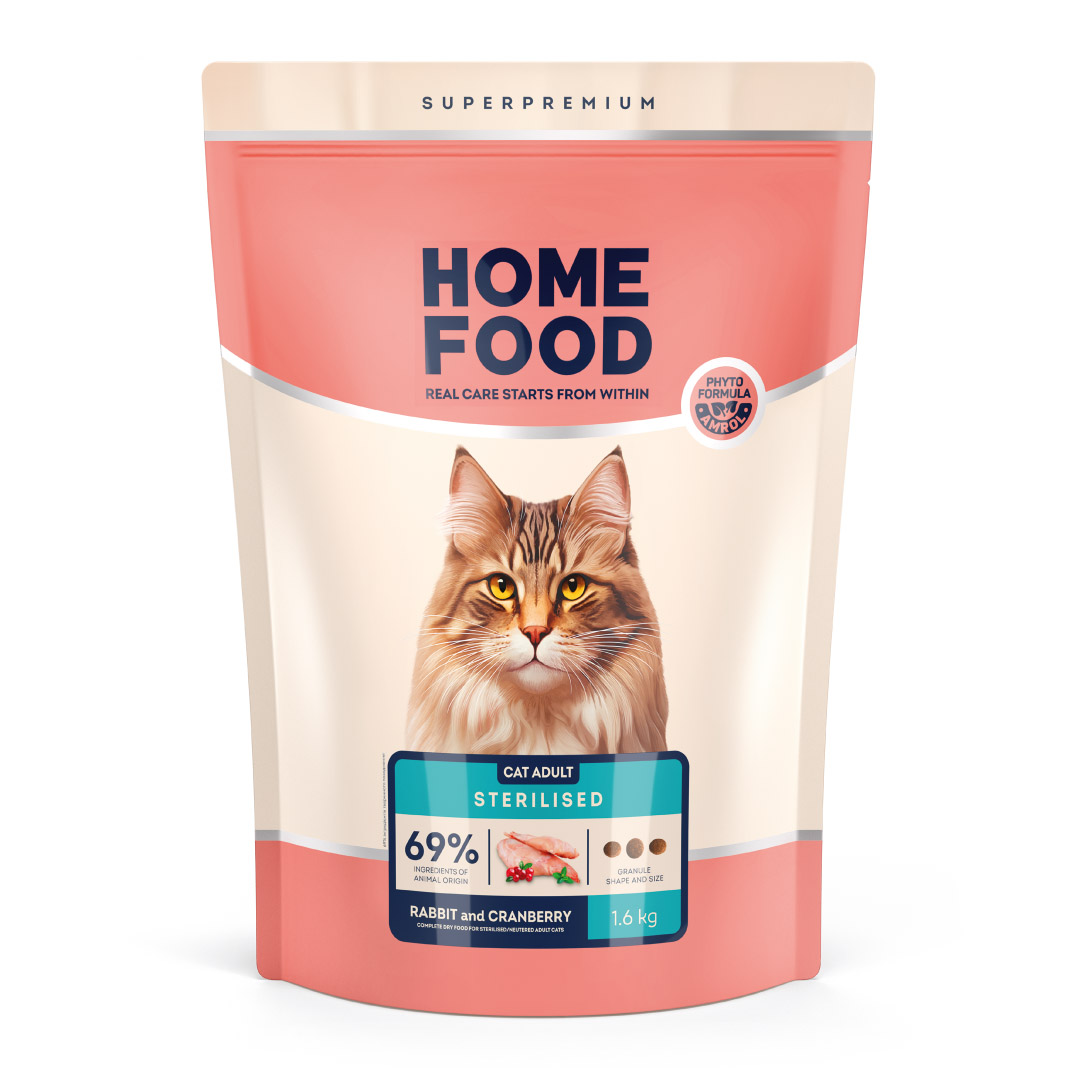
HOME FOOD For sterilised/neutered — dry food for cats, rabbit and cranberry
Buy
Care
Caring for an Asian cat does not require excessive effort, and this is exactly what makes the breed very convenient for busy people. The basic procedures are simple, but regular.
Brushing the coat 1–2 times a week is enough to keep it clean and healthy. Bathing is done as needed, but usually no more often than once every 3–4 months. The eyes and ears are wiped with special products, and claws are trimmed every 2–3 weeks.
Oral hygiene also deserves special attention: it is advisable to brush the teeth with a special toothbrush and paste at least once a week to reduce the risk of dental problems.
In addition, the cat needs a cozy place to rest, regular play, and access to clean fresh water. The combination of simple care and high everyday comfort often makes this breed especially rewarding to live with.
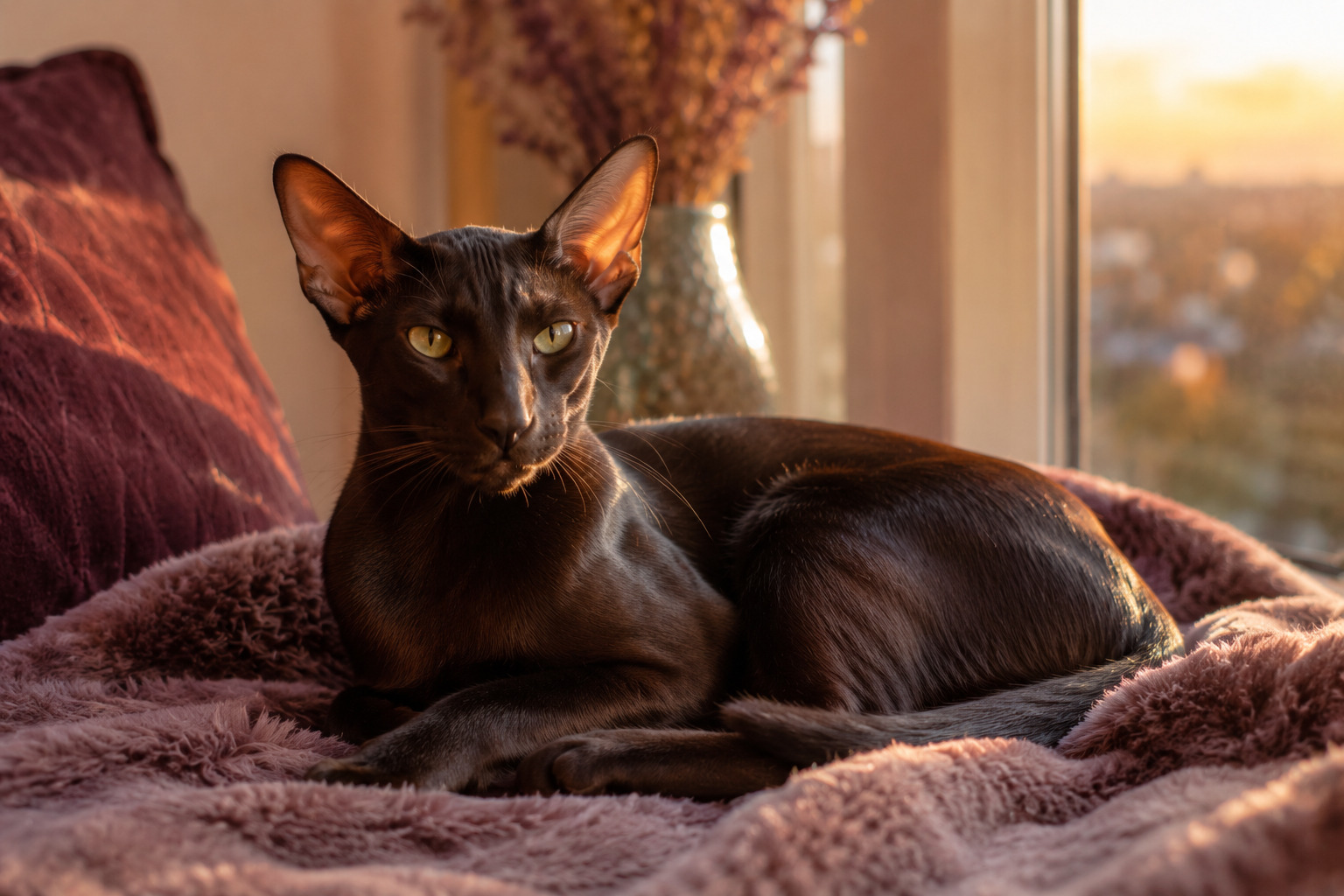
One of the main advantages of the Asian cat is that it remains very elegant and well-groomed without complicated grooming if simple regular habits are followed
Nutrition
The Asian cat’s diet should be complete and balanced. Premium-class ready-made foods or higher are best, as they take the animal’s age, physiological condition, and activity level into account.
If the owner chooses natural feeding, it is advisable to consult a veterinary nutritionist. The source text emphasizes that such a diet should include approximately 70% meat and offal and 30% grains, vegetables, fats, and vitamin components.
At the same time, feeding “from the table” is not suitable for this breed, as for any cats: seasonings, fried foods, and sweets harm the animal and cannot be considered a safe everyday compromise.
- A high-quality ready-made diet is often the simplest and most reliable solution for an Asian cat.
- With natural feeding, it is important not to improvise, but to calculate the balance of nutrients.
- Human food from the table is not suitable for a cat, even if it asks very convincingly.
Health
Asian cats are considered a breed with good immunity and strong health. Genetic diseases are relatively rare in them, which makes the breed quite resilient in everyday life.
According to the source text, average life expectancy is 15–18 years, and with proper care some cats can live to 20 years or more.
To support the health of an Asian cat, annual vaccinations, regular parasite treatment, veterinary checkups 1–2 times a year, and control of weight and activity are important. Excess weight can be one of the factors that gradually begin to worsen the condition of the joints and heart.
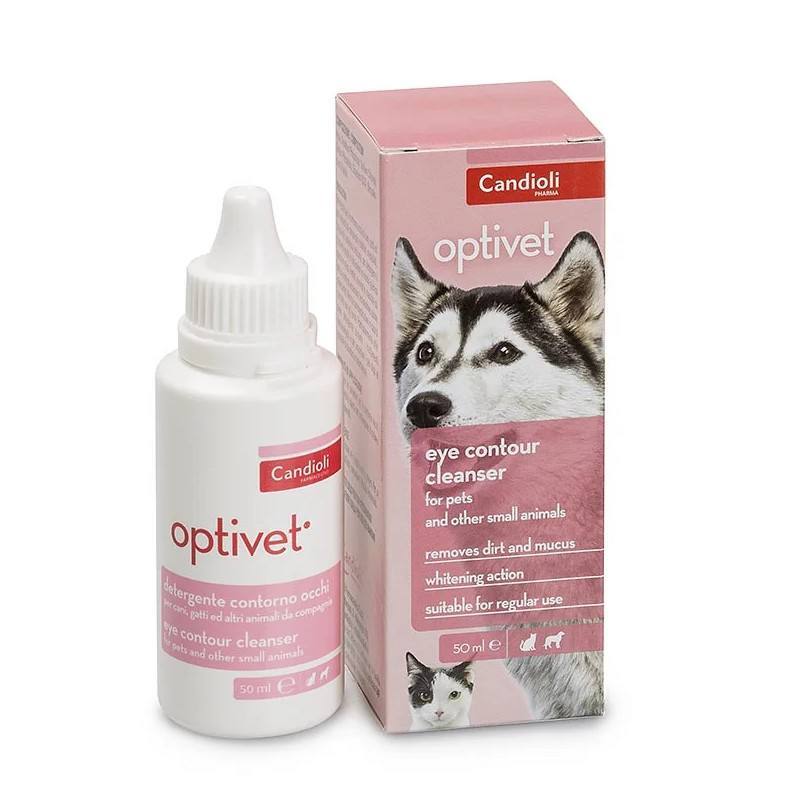
Optivet by Candioli — eye care lotion for cats and dogs
Buy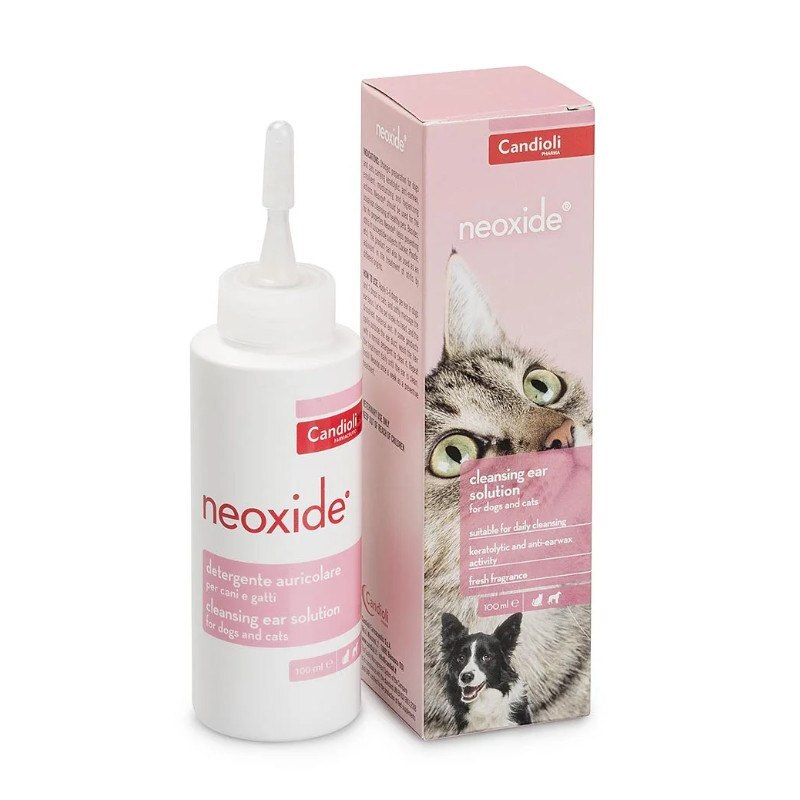
Neoxide — ear cleaning solution for dogs and cats
Buy
Profender Spot-On — deworming drops for cats up to 2.5 kg
Buy
Advantage — antiparasitic flea drops for cats and kittens under 4 kg
Buy
Pros and cons of the breed
Like any rare breed, the Asian cat has strengths for which it is especially valued, as well as certain nuances that a future owner should consider before choosing a kitten.
Advantages
- Intelligence and balance: these cats are smart, quickly learn household rules, and rarely create chaos without a reason.
- Ease of care: a short or soft semi-long coat does not require complicated grooming.
- Friendliness and tolerance: Asian cats get along well with children and other animals.
- Adaptability: they can live comfortably both in an apartment and in a more spacious home.
Possible difficulties
- The high cost of pedigree kittens, especially rare colors.
- The rarity of the breed outside Great Britain, which can make it difficult to find a good breeder.
- The need to spend time looking for a truly high-quality cattery, and sometimes to arrange delivery from another country.
Ultimately, this is a breed for those who value not only external beauty, but also the noble, calm presence of an animal nearby. If you are ready for such a choice, the Asian cat can become a very rewarding companion for many years.
Conclusion: a cat chosen with the heart
The Asian cat is not just a beautiful pet. It is a full-fledged family member that combines tactfulness, calmness, intelligence, and a very pleasant everyday temperament.
If you need a long friendship with an animal that senses people well, does not create unnecessary fuss, yet gladly lives nearby, the Asian cat may truly turn out to be “the one” breed.