Summer smells of sunshine, grass and, of course, watermelon. Sweet, cool and juicy — the very treat that sometimes attracts the close attention of a pair of canine eyes. And that naturally raises the question: can you share some with your dog?
Let’s find out what makes watermelon beneficial, how much to offer, and when it is better to give your pet a different treat.
What are the benefits of watermelon for dogs?
The main feature of watermelon is its remarkably high water content of around 91–92%. And yes, despite its impressive size, this sweet giant is botanically a type of berry — more precisely, its fruit is known as a pepo, a specialised kind of berry. A few chilled pieces on a hot day are therefore not only a tasty treat but also an additional source of fluid.
Of course, even the juiciest watermelon cannot replace drinking water. A bowl of fresh water should always remain freely available.
Another advantage is its low calorie content: around 30 kcal per 100 g of flesh. A small serving of watermelon can therefore be a light alternative to many high-calorie treats.
It also contains useful nutrients, including potassium, vitamin C, carotenoids and other natural antioxidant compounds. Its red flesh owes its colour in part to lycopene, a pigment from the carotenoid group.
Still, watermelon should not be credited with magical properties. A healthy dog produces its own vitamin C, while a balanced complete food already supplies the necessary vitamins and minerals. Watermelon is therefore not a vitamin supplement but a wholesome natural treat.
There is one more small benefit: the flesh contains dietary fibre. The amount is modest, so there is no need to feed watermelon specifically “for the fibre”.


WAUDOG — automatic illuminated drinking fountain for dogs and cats, 2.5 L
Buy
Trixie nylon cooling mat for pets, 40×30 cm
Buy
Not every part of a watermelon is safe
The rule is very simple: offer your dog the red flesh and remove the rind and seeds.
Watermelon rind is tough and difficult to digest. Swallowing a large piece can cause vomiting, abdominal pain, abnormal stools and, in the worst case, an intestinal obstruction.
The seeds should also be removed carefully. One or two seeds swallowed accidentally are unlikely to pose a serious threat to most dogs. A large number of seeds is a different matter, especially for a small dog: it places an unnecessary burden on the digestive tract and creates an additional risk of obstruction.


Yes, a healthy dog can eat watermelon — but only ripe flesh without the rind or seeds, and in a sensible amount
At what age can a puppy have watermelon?
There is no need to rush. During the first months of life, a puppy grows rapidly, and its diet must first and foremost meet all of its developmental needs.
Once the puppy has fully transitioned to eating independently, at around 3–4 months of age, you may offer a tiny piece of rind-free flesh.
Introduce new foods gently: offer only a very small amount today, then monitor your little companion’s digestion and general well-being.
How much watermelon can a dog have?
A useful guideline is that all treats combined should account for no more than approximately 10–15% of the diet’s daily calorie content. This approach is also recommended by the World Small Animal Veterinary Association.
If a dog eats a complete dry food, watermelon should not be added as another full meal. If you offer watermelon, slightly reduce the other treats given that day.
The same principle applies to a home-prepared diet: watermelon does not replace meat or sources of protein, fat, minerals and other essential nutrients.
For the first serving, 1–2 small pieces are enough. The smaller the dog, the smaller the portion should be.
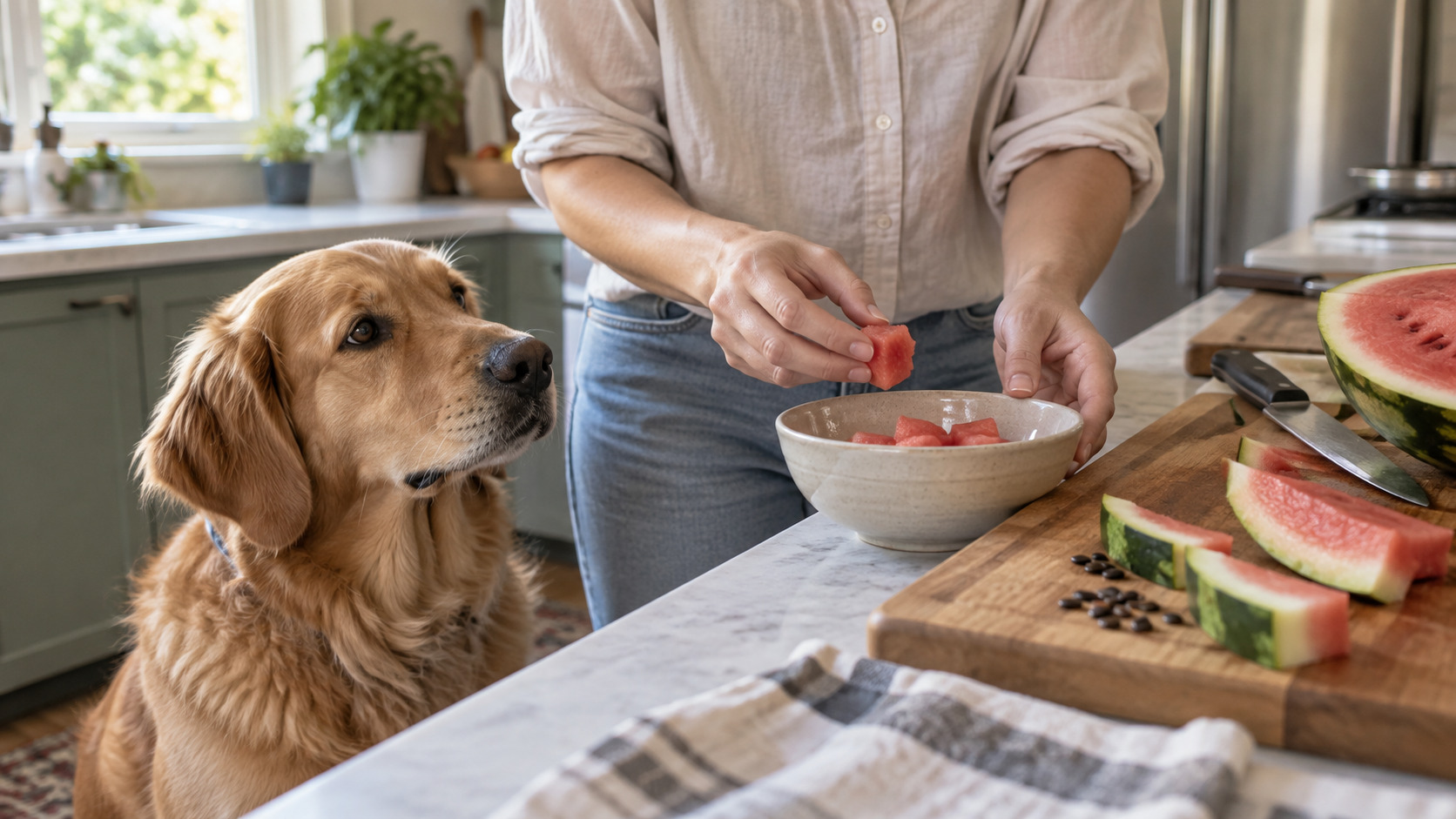
Watermelon remains a treat regardless of the type of diet
Is watermelon a good alternative to summer treats?
For a healthy dog, yes.
In hot weather, it can be refreshing to replace some familiar treats with cool pieces of watermelon. It contains plenty of water and relatively few calories.
The flesh can be chilled or cut into small cubes and frozen. This makes a simple summer treat without salt or excess fat.
Just make sure a frozen piece is not too large — your dog should be able to eat it comfortably rather than trying to swallow it whole.
Which dogs should have limited watermelon?
- If a dog has diabetes, do not add watermelon to the diet without a veterinarian’s approval: the sweet flesh contains natural sugars.
- There is no universal prohibition for kidney disease. However, the intake of certain nutrients is often controlled in dogs on a therapeutic renal diet, so additional foods are best discussed with a veterinarian.
- Pregnancy and lactation are not contraindications in themselves. Nutritional value is especially important during this period, however, so large portions of fruit are unnecessary.
- Likewise, watermelon should not be automatically prohibited for a senior dog simply because of age. Consider the dog’s digestion, teeth, ability to swallow normally, concurrent health conditions and prescribed diet.
- If a dog is receiving therapeutic food or a veterinarian has prescribed a special diet, any additional treats should be discussed with a professional.
What should you do if your dog eats watermelon rind or seeds?
First assess exactly what was eaten, approximately how much, and the size of the dog.
A few seeds are generally no cause for panic in a healthy large dog — simply monitor how the dog is feeling.
If a small dog has swallowed a substantial piece of tough rind or a large number of seeds, contact a veterinarian. Do not induce vomiting yourself.
Repeated vomiting, pronounced lethargy, refusal to eat, abdominal pain or distension, and difficulty passing stools require a veterinary examination.
Which other summer fruits and berries are safe?
Watermelon is far from the only option. In small amounts, a healthy dog can have strawberries, blueberries, melon, apple without the seeds or core, banana, kiwi and pineapple, while cucumber makes an excellent summer vegetable treat.
Variety without excess works best: a piece of watermelon today and a few blueberries on another day. Treats should remain a small pleasure rather than turning into a second dinner.
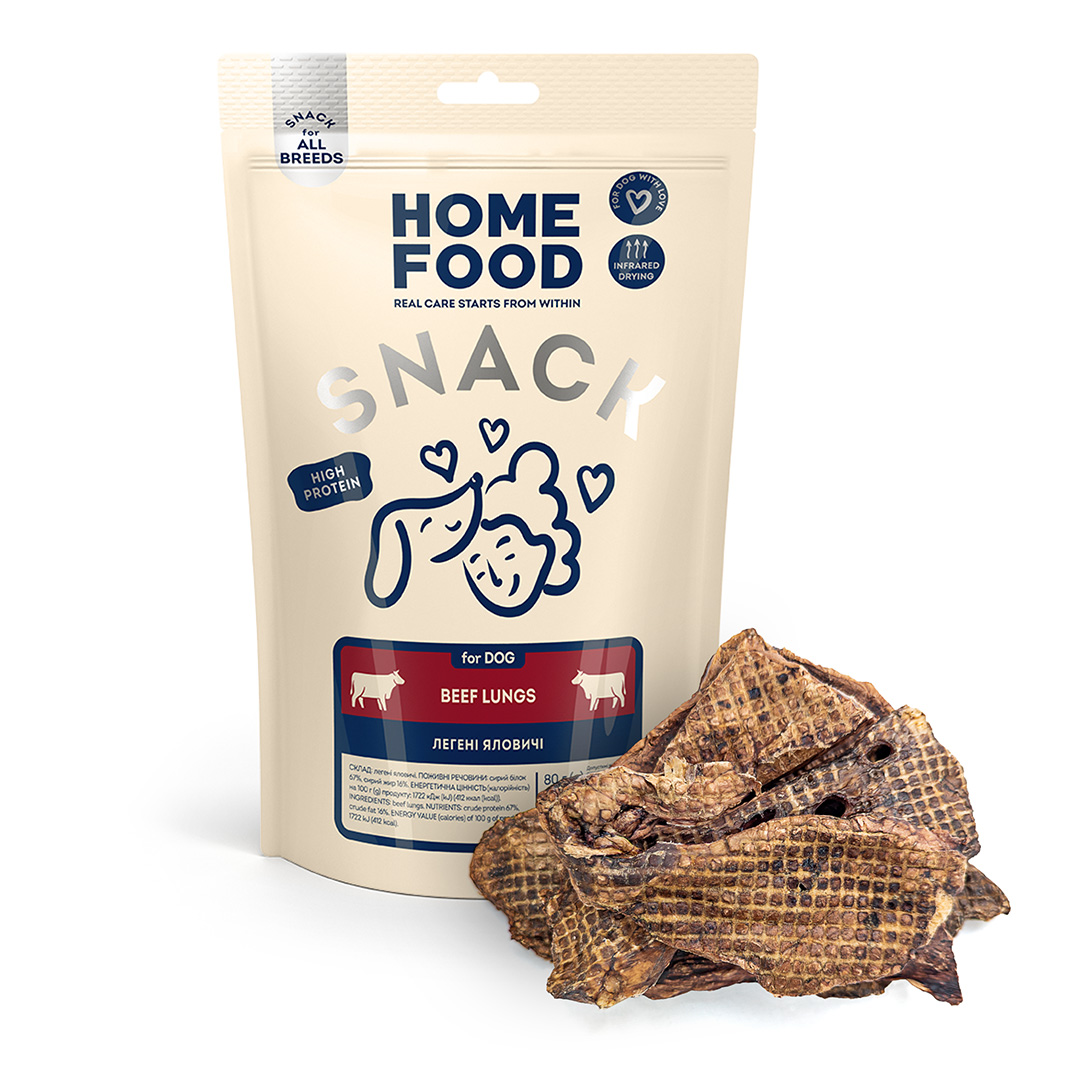
HOME FOOD Beef Lungs dog treats, 80 g
Buy
HOME FOOD Turkey and Pumpkin Meat Strips dog treats, 80 g
Buy
What must dogs never be given?
Pay particular attention to grapes and raisins. They are toxic to dogs and associated with a risk of acute kidney injury. No safe amount that an owner can calculate independently at home has been established. If a dog eats grapes or raisins, contact a veterinarian immediately.
Do not give your dog unfamiliar wild berries either!
The summer formula is simple: a familiar safe food + a small portion + no dangerous stones, seeds or additives.
Frequently asked questions (FAQ)
Can a dog eat watermelon rind?
No. It is tough, difficult to digest and can cause digestive upset or an intestinal obstruction. Only offer a dog ripe flesh with the rind removed.
How much watermelon can a dog have?
Start with 1–2 small pieces. As a general rule, all treats given throughout the day should remain within 10–15% of the diet’s daily calorie content.
Can a puppy have watermelon?
Yes, once the puppy has transitioned to eating independently. At around 3–4 months of age, start with a tiny piece of flesh without the rind or seeds.
What happens if a dog eats watermelon seeds?
One or two seeds swallowed accidentally usually do not cause problems. If a dog has eaten many seeds, especially a small dog, monitor it closely. Vomiting, abdominal pain, lethargy or difficulty passing stools are reasons to contact a veterinarian.
A little taste of summer for someone we love
A dog does not need watermelon for a balanced diet, and it certainly does not treat any illness. But food is sometimes about more than protein, fat, carbohydrates and calories.
Sometimes it is a small piece of cool watermelon saved for your dog from your own plate. Your companion crunches it, licks its lips and looks at you with contented eyes — and an ordinary summer evening feels just a little warmer.
Because care is not made up only of the right diet. It also consists of small, safe pleasures that are so delightful to share with those we love.