Chicken is unsuitable, beef is causing concern, and your pet pointedly turns away from yet another bowl of food? In situations like these, dog and cat owners often start looking for an alternative protein — and turn their attention to duck.
Duck has a distinctive flavour, provides complete animal protein and fits well into modern diets for dogs and cats. It is also used in foods with less common protein sources for animals that experience adverse reactions to familiar dietary ingredients.
Let’s explore the benefits of duck for dogs and cats, when to choose a duck-based food, and which ingredients pair well with it.
Why is duck valuable in pet food?
First and foremost, duck is a source of animal protein. Dietary proteins provide the body with amino acids needed to maintain muscles, skin, coat and many metabolic processes.
Duck meat also contains iron and other micronutrients. However, it is incorrect to assess a prepared pet food solely by the properties of one type of meat: the entire recipe matters, including the quantity and quality of protein and fat sources, mineral balance, energy value, and suitability for the needs of the individual animal.
Another practical advantage of duck is its rich aroma and flavour. This makes duck food for dogs or cats an appealing option for fussy pets that have grown tired of the usual taste of their diet.
Finally, duck is useful as an alternative protein source. This quality is particularly important when an adverse food reaction is suspected.
Duck as an alternative protein: what does novel protein mean?
The term novel protein does not refer to an exotic or especially beneficial type of meat. It means a protein source that a particular animal has never encountered before or has encountered only minimally.
Duck can therefore be a novel protein for a dog that has eaten chicken- and beef-based foods for years. But for a cat that has regularly received canned duck food and duck treats, it will no longer be a new protein.
According to the Merck Veterinary Manual, common food allergens in dogs include beef, dairy products and chicken, while common allergens in cats include beef, fish and chicken. At the same time, an allergic reaction can potentially develop to any dietary protein. This is why duck may sometimes be a suitable alternative for an animal allergic to chicken — but not because duck is “non-allergenic”. The reason is much simpler: if the body has not encountered this protein before, a reaction to it is less likely.
If a food allergy is only suspected, the most reliable method of confirmation remains an elimination diet followed by a challenge with the previous diet. Blood, saliva or hair tests cannot reliably replace this type of dietary trial.


One important clarification: the word “duck” on the packaging does not make a food a universal solution for allergies
When should you choose a duck-based food?
Duck-based food for dogs or cats is worth considering if:
- an adverse reaction to one of the proteins in the previous diet is suspected;
- the animal has had little or no duck before;
- an alternative to familiar sources of animal protein is needed;
- the pet is fussy and has lost interest in the usual flavour of its food;
- a veterinarian has recommended changing the diet’s main protein source.
Diets with novel or hydrolysed protein are also sometimes used for sensitive digestion. Veterinary guidance includes dietary trials with such foods for certain adverse food reactions and chronic enteropathies.

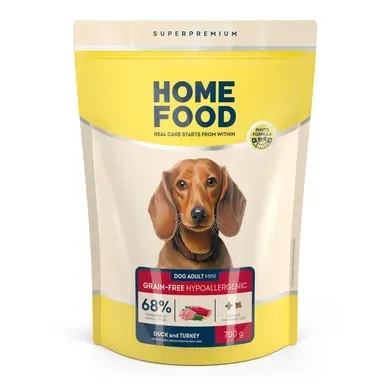
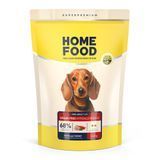
HOME FOOD grain-free dry food for adult small-breed dogs “Duck and Turkey”, 1.6 kg
Buy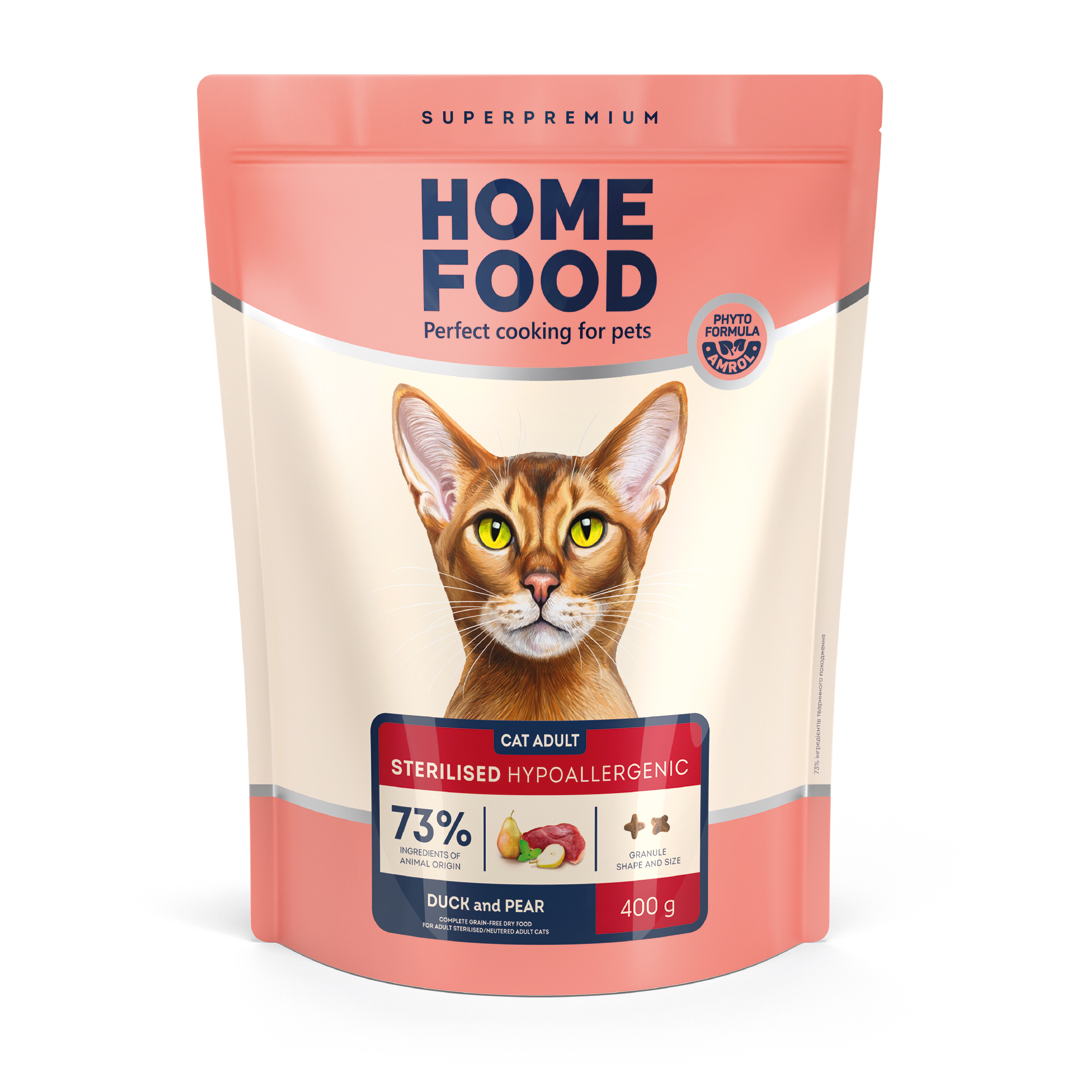
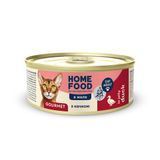
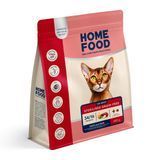
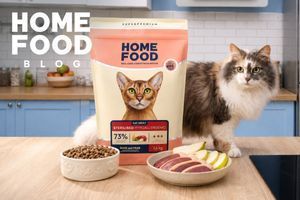
HOME FOOD grain-free food for spayed/neutered cats “Duck and Pear”, 400 g
Buy
Why is duck combined with chickpeas, pear and turkey?
A recipe is more than a list of tasty ingredients. Every component should serve a nutritional or technological purpose.
Duck + chickpeas
Chickpeas are legumes that serve as a source of carbohydrates, plant protein and dietary fibre in grain-free recipes. This combination makes it possible to create a grain-free duck food without wheat, maize or rice.
However, it is important not to confuse the terms: grain-free does not automatically mean hypoallergenic. Most animals digest grains normally, while adverse food reactions are often associated with the protein components of the diet.
Duck + pear
In cat food, pear does not replace animal protein — nor should it. Cats remain carnivores, so appropriate sources of animal-derived nutrients form the basis of their complete diet.
A small amount of pear adds variety to the recipe as well as plant ingredients and dietary fibre. The combination of duck and pear also creates an unusual flavour profile that can be particularly appealing to fussy cats.
Duck + turkey
Combining two types of poultry diversifies the sources of animal protein and creates an appealing flavour.
When a food allergy has been confirmed, however, what matters is not an ingredient’s reputation as “light”, but the animal’s individual dietary history. If the reaction was specifically to turkey, its presence in the food is relevant regardless of how much duck the recipe contains.
Duck in grain-free diets
Duck is often found in grain-free formulas, so it is easy to start treating these concepts as a single whole. In reality, they describe different properties of a food.

Duck identifies the source of animal protein, while grain-free means the absence of grains
A grain-free food with duck should therefore be selected not on the principle that “grains are bad”, but according to the animal’s needs and the characteristics of the complete diet.
This is especially important in cases of allergy. Removing grains while retaining a protein to which the animal is sensitive does not solve the problem.
Is duck really too fatty?
This is one of the most persistent myths.
When we picture roast duck, we do indeed think of fairly fatty meat with the skin attached. But it is incorrect to transfer this characteristic directly to dry pet food.
The fat content of a finished diet is determined by the entire recipe, not simply by the word “duck” on the packaging. The raw materials used, the amount of added fats and oils, the proportions of the ingredients, and the production technology all matter.
For example, HOME FOOD duck diets for adult dogs contain 15–16% crude fat. The answer to the question “is duck too fatty for dogs?” should therefore be sought not in stereotypes about duck meat, but in the guaranteed analysis of the specific food.
HOME FOOD duck diets: three different combinations
In the HOME FOOD range, duck is used for more than its unusual flavour. The recipes combine it with other ingredients according to the type of diet.
For small-breed dogs — “Duck and Turkey”
HOME FOOD “Duck and Turkey” grain-free dry food for adult small-breed dogs contains 34% duck meat and 19% dehydrated turkey meat.
The recipe also includes chickpeas, sweet potato, salmon oil, chia seeds, chicory inulin, psyllium and other functional ingredients. It contains 28% protein and 16% fat.
This is an option for owners seeking a grain-free duck diet for a small dog and wishing to move away from the traditional chicken-based combination.
For medium- and large-breed dogs — “Duck and Chickpeas”
HOME FOOD “Duck and Chickpeas” Grain-free hypoallergenic dry food contains 32% duck meat, 21% dehydrated turkey meat and 15% chickpeas.
The recipe is supplemented with sweet potato, apple fibre, salmon oil, pumpkin, chia, inulin, psyllium, glucosamine and chondroitin. The food contains 26% protein and 15% fat.
This is an example of how duck and chickpeas form the grain-free base of a diet for adult dogs.
For spayed and neutered cats — “Duck and Pear”
HOME FOOD “Duck and Pear” Grain-free hypoallergenic dry food for spayed/neutered cats contains 31% duck meat and 25% dehydrated turkey meat.
Fresh pear makes up 5% of the recipe. It also includes green lentils, krill, fresh duck liver, apple, salmon oil, cranberries, inulin and psyllium. The food contains 34% protein and 16% fat, while taurine is included among the added nutrients at 2,100 mg/kg.
In practice, the phrase “duck and pear cat food” therefore describes not a dessert-like combination but a complete recipe in which sources of animal protein remain the foundation and pear is an additional plant ingredient.
Important: duck-based diets may be a suitable option for animals with certain food sensitivities, but they are not a treatment for allergies. If a dog or cat has persistent itching, ear infections, digestive problems or other symptoms, the choice of diet should be discussed with a veterinarian.

HOME FOOD grain-free dry food for adult medium- and large-breed dogs “Duck and Chickpeas”, 1.6 kg
Buy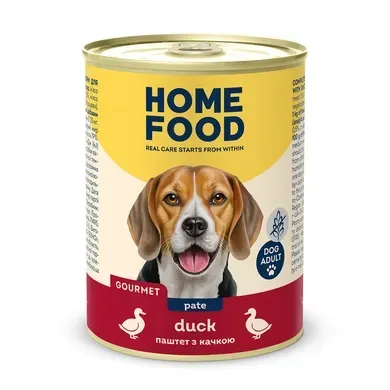
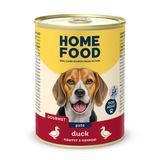
HOME FOOD grain-free wet food for dogs — Duck Pâté, 360 g
Buy
Frequently asked questions
Can dogs and cats eat duck?
Yes. Duck can be a source of animal protein in complete food for dogs and cats. For long-term feeding, the balance of the entire diet and its suitability for the animal’s species, age and physiological condition are more important than any individual ingredient.
Can duck help with allergies?
A duck-based food may be suitable for an animal with allergies if duck is a novel protein source for that particular animal and the recipe contains no ingredients to which it reacts. However, duck itself does not treat allergies and is not completely hypoallergenic. Veterinary medicine uses a controlled elimination diet followed by a challenge to confirm a food allergy.
Is duck meat fatty?
Duck meat itself can contain a considerable amount of fat, especially with the skin, but this does not mean that every duck-based food will be high in fat. Refer to the manufacturer’s stated crude-fat content and the calorie content of the specific diet.
What ingredients are combined with duck in pet food?
In grain-free formulas for dogs, duck is combined with ingredients such as chickpeas, sweet potato and other sources of nutrients. It can also be paired with turkey to broaden the protein profile. Cat-food recipes may combine duck with small amounts of fruit and plant ingredients, such as pear. It is important to assess the complete ingredient list and nutritional profile of the food, not simply an attractive pairing displayed on the front of the packaging.
Duck is not a magical “anti-allergy” ingredient or a protein that every pet necessarily needs. Its advantage lies elsewhere: for a particular dog or cat, it may provide a suitable alternative to familiar protein sources, add variety to the diet, and help identify a food that meets individual needs.
The best food is not the one with the longest ingredient list, but the one on which your pet feels well, approaches the bowl with pleasure, and receives all the nutrients it needs.